Unitree G1: A Compact Humanoid for Research and Industry, From $13,500
Robot Details
Unitree G1 • Unitree RoboticsPublished
December 11, 2025
Reading Time
3 min read
Author
Origin Of Bots
Launching a New Era
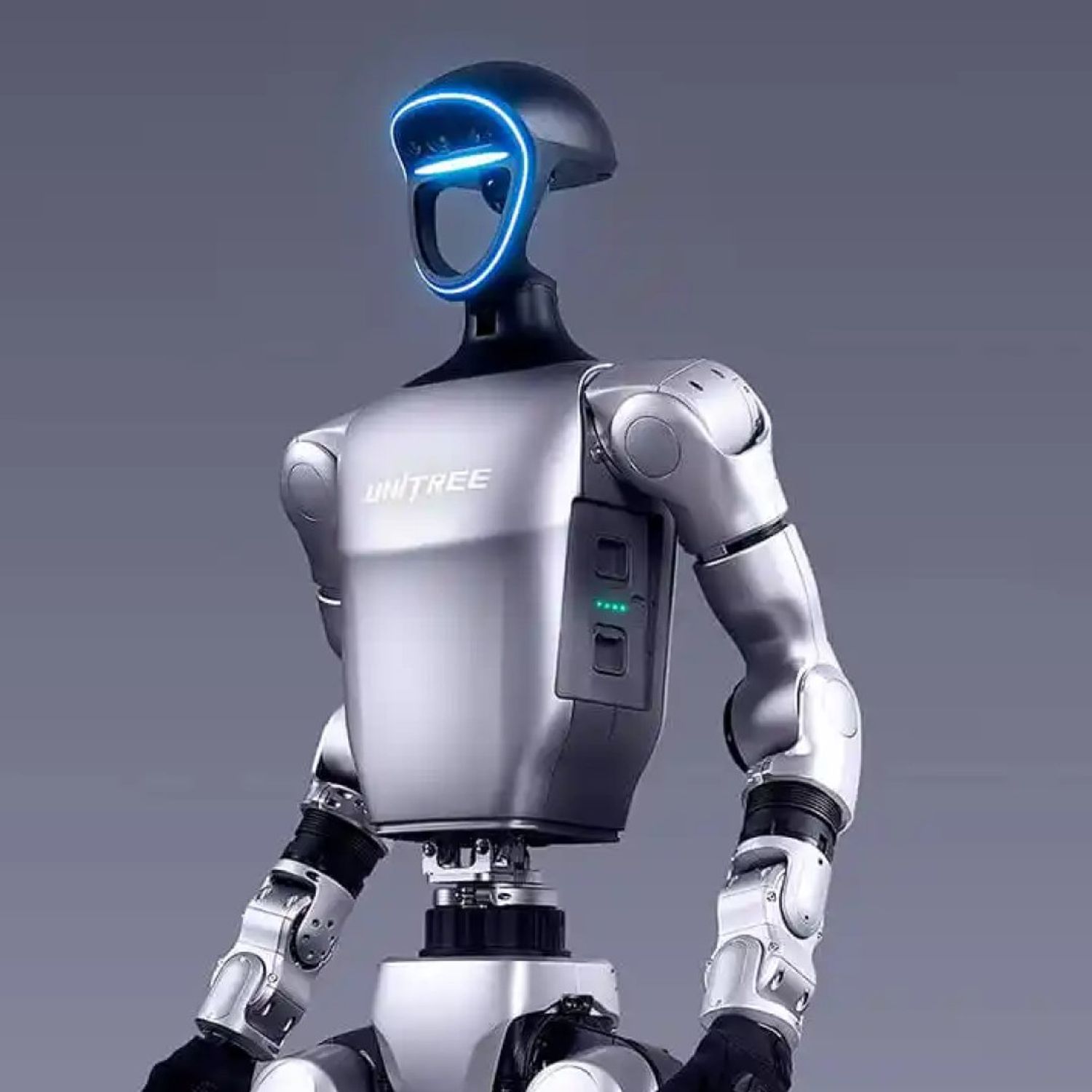
Unitree’s G1 is a compact humanoid, first unveiled in 2023, aimed at research and industrial users. Unitree lists a base price of $13,500 USD for the G1.
Beyond Traditional Robotics
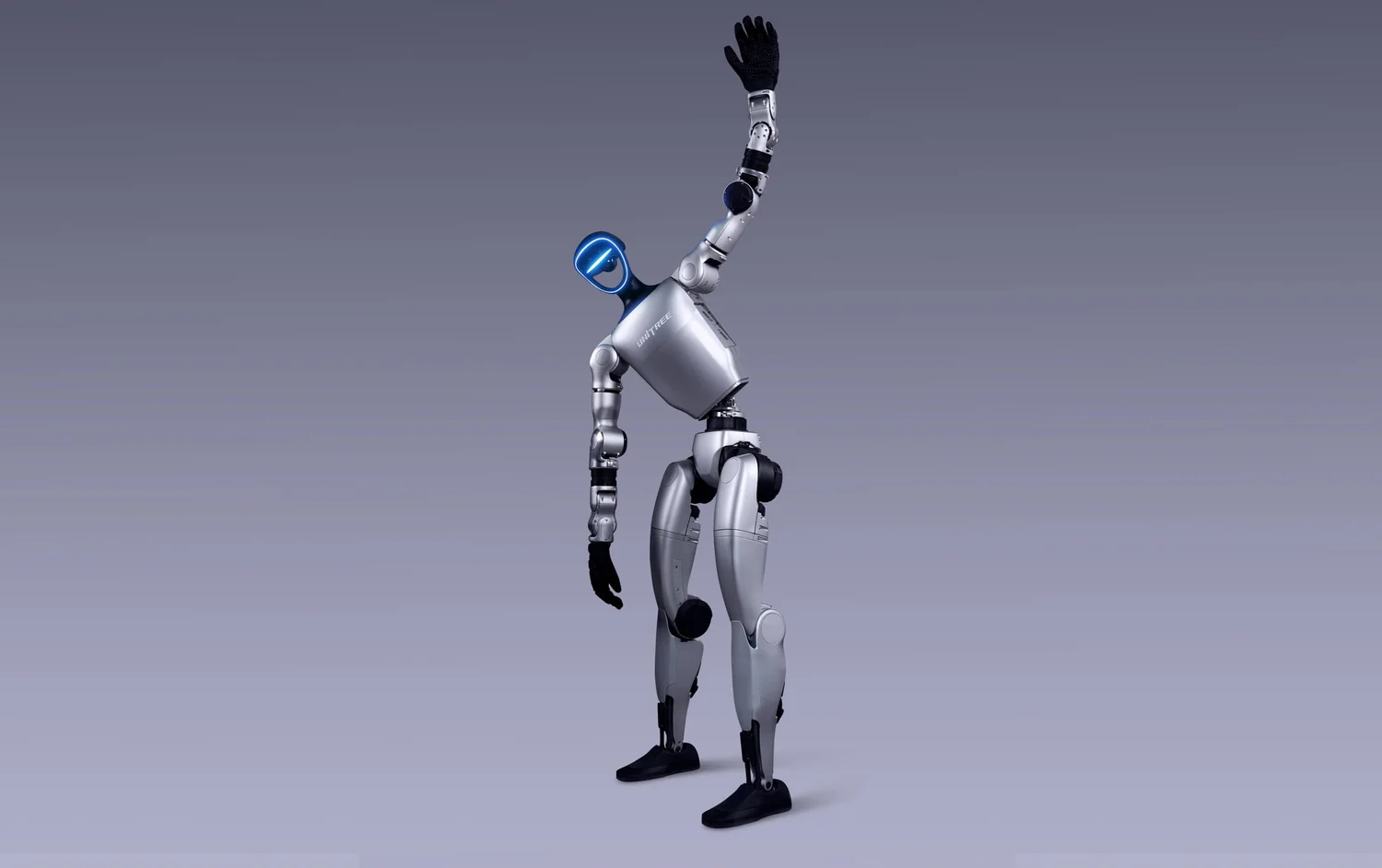
The Unitree G1 distinguishes itself with its unique combination of force-position hybrid control in its dexterous hands and a wide range of motion enabled by 23 to 43 degrees of freedom. This design allows the robot to perform delicate tasks such as welding and assembly with precision previously reserved for specialized industrial robots. Its AI-driven learning system continuously improves performance through imitation and reinforcement learning, setting a new standard for adaptability and finesse in humanoid robotics.
Engineering Meets Intelligence
At the heart of the G1 lies an 8-core high-performance CPU complemented by optional NVIDIA Jetson Orin AI co-processing power, enabling real-time processing of complex sensor data and advanced algorithms. The integration of Intel RealSense D435 depth cameras and Livox MID-360 3D LiDAR provides 360-degree environmental perception, while local air cooling ensures sustained operational efficiency. This architecture delivers fluid dynamic movement and precise spatial awareness, pushing the boundaries of what legged robots can achieve in unstructured environments.
Practicality in Action
The G1’s versatility is evident in its broad spectrum of applications—from research and education to industrial uses like palletization, assembly, and welding. Its ability to carry up to 2 kilograms of goods and perform repetitive tasks with human-like dexterity makes it a valuable asset for manufacturing lines and demonstration environments alike. Additionally, its modular design and support for voice commands in multiple languages enhance user interaction and operational flexibility.
Precision in Numbers
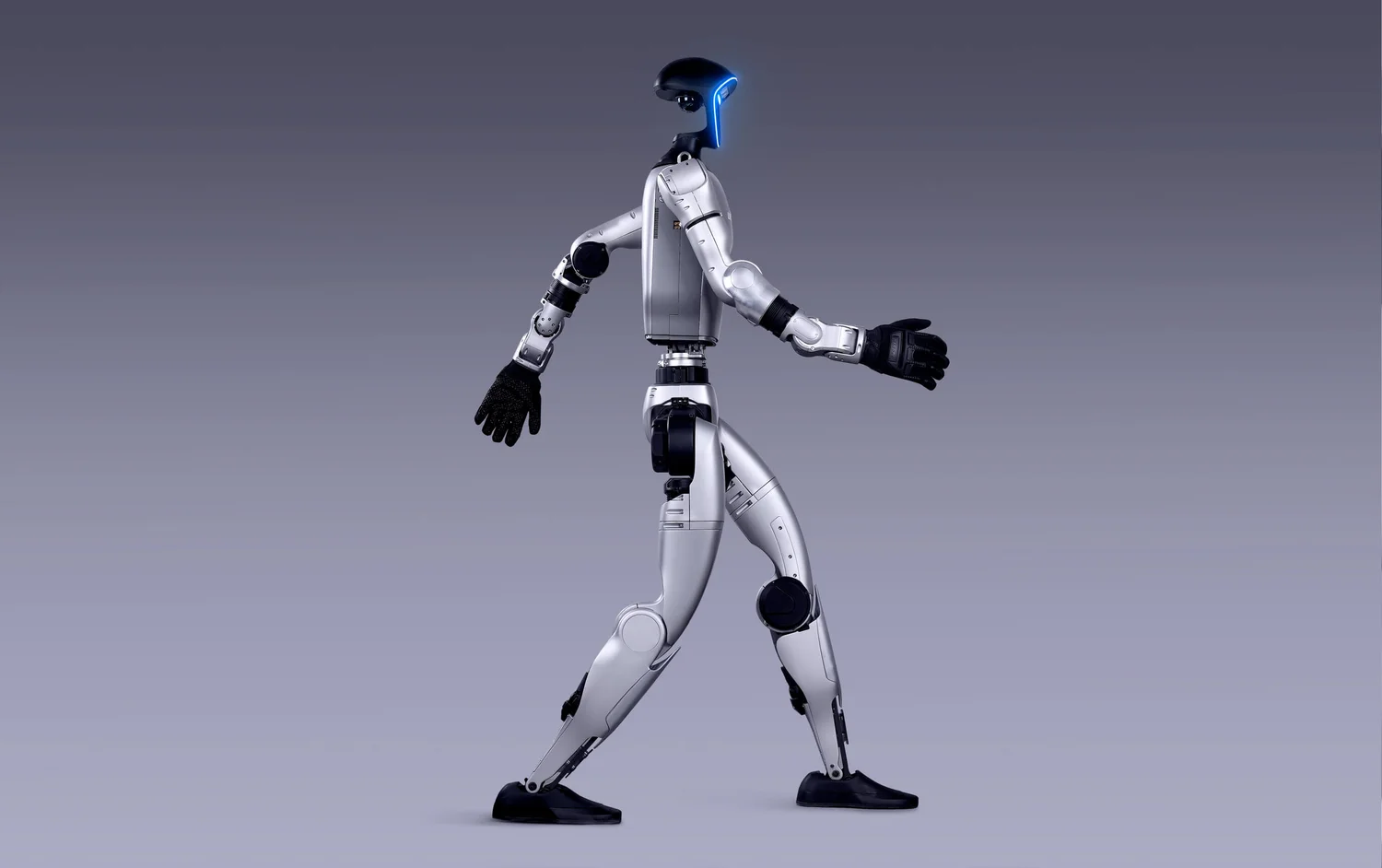
Measuring 132 x 45 x 20 cm and weighing 35 kilograms, the Unitree G1 balances compactness with robustness. Its sensor suite includes the Intel RealSense D435 depth camera, LIVOX MID-360 3D LiDAR, IMU, gyroscope, dual encoders per joint, a 4-microphone array, and a temperature sensor. Navigation is powered by a combination of 3D LiDAR, SLAM, and depth camera technologies. Safety is prioritized through obstacle detection, collision avoidance, and system alerts, all managed via a custom OS with SDK support and OTA updates.
How G1 Stands Apart
When compared to competitors like Star1, T1 Humanoid, ALICE 3, and GR-2, the Unitree G1 shines with its superior sensor integration and force-controlled dexterous hands enabling fine manipulation. Unlike some competitors focused primarily on quadrupedal or simplified humanoid forms, the G1’s legged mobility and hybrid control system provide a more human-like interaction capability. However, its 2-hour operational runtime per charge is shorter than some rivals with longer battery life, and its payload capacity, while sufficient for light industrial tasks, is modest compared to certain specialized robots. Overall, the G1 offers a balanced package of agility, perception, and manipulation, making it a versatile choice for diverse applications.
Shaping Robotics’ Tomorrow
Its emphasis on modularity, AI-powered learning, and comprehensive sensor fusion signals a trend toward smarter, more adaptable robots capable of coexisting with humans in complex settings.

Related Articles
KEENON Shows XMAN-F1 Pouring Johnnie Walker in a Bartending Demo at WAIC 2025
RobotEra L7 Runs at 14.4 km/h as the Humanoid Targets Warehouse Picking

Clone’s Protoclone V1 Mirrors Human Muscles with 1,000 Myofibers, 500 Sensors

Samsung's Bot Handy Is Still a CES 2021 Concept: What It Showed and What Samsung Has Not Said
Related Comparisons
Compare Unitree G1 with similar robots

Optimus vs Unitree G1
Compare Optimus vs Unitree G1 for humanoid mobility, dexterity, autonomy, and payload capacity.
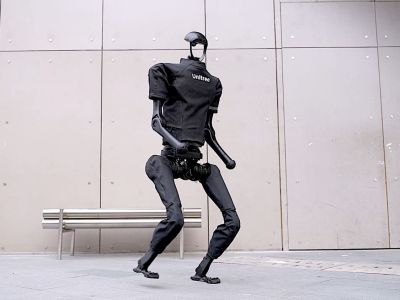
Unitree G1 vs Unitree H1
Unitree G1 vs H1 compared: 132 cm and 35 kg against 180 cm and 47 kg, 2 m/s versus 3.3 m/s, with 23 to 43 joints on the G1. See which to pick.
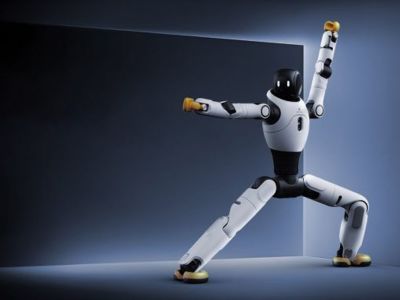
Unitree G1 vs AgiBot X2
Compare Unitree G1 vs AgiBot X2 for humanoid mobility, dexterity, autonomy, and payload capacity.
Unitree G1 vs Unitree H2
Unitree G1 vs H2 compared: 132 cm and 35 kg against 182 cm and 70 kg, 2 h versus 3 h of runtime, 23 versus 31 joints. See which one to pick.
Learn More About This Robot
Discover detailed specifications, reviews, and comparisons for Unitree G1.
View Robot Details →