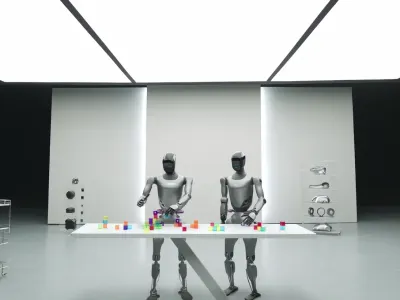
The AgiBot A2 by AgiBot represents a versatile humanoid robot positioned in the industrial and service robotics market, notable for its integration of advanced AI automation and multi-modal sensor arrays. It distinguishes itself through its higher speed, sophisticated navigation system including HIMUS 3D-SLAM, and a broad range of use cases from precision assembly to public interaction. Its software ecosystem features proprietary AimRT communication and WorkGPT AI, emphasizing seamless autonomy and interaction capability.
The GR-2 by Fourier Intelligence is a humanoid robot that targets research and industrial applications with a focus on precise motion control and modular build. It features advanced actuation with 53 degrees of freedom, dual-encoder systems, and a software stack built on ROS, Linux, and NVIDIA Isaac Lab, catering to developers and researchers. GR-2 emphasizes durable hardware design and rich integration with open robotics frameworks for flexible deployment and customization.
Detailed Analysis
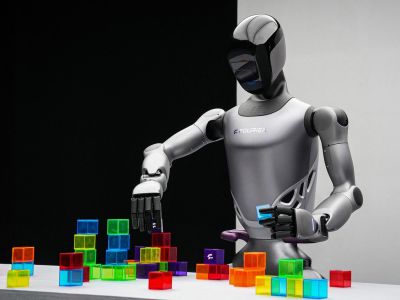
Design & Build Quality
Both robots share similar dimensions (175 cm x 60 cm x 40 cm), but the GR-2 is heavier at 63 kg compared to AgiBot A2's 55 kg. The GR-2 employs a modular design and integrated cable management for tidiness and easier maintenance, while AgiBot A2 focuses on ergonomic design suited for customer-facing roles and precision tasks. AgiBot's lighter frame supports faster movement, whereas GR-2's build prioritizes robustness and component accessibility.
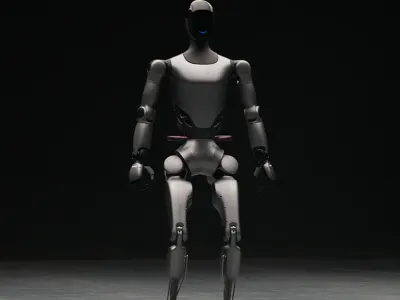
Mobility & Navigation
AgiBot A2 offers a higher maximum speed of 7 km/h versus GR-2's 5 km/h, benefiting tasks requiring quicker locomotion. Navigation-wise, AgiBot uses HIMUS 3D-SLAM combined with VectorFlux planning algorithms, enhancing spatial awareness and path optimization. GR-2 integrates SLAM with LiDAR and vision-based navigation, supported by its control precision through dual encoders, favoring accurate, adaptive movements over speed.
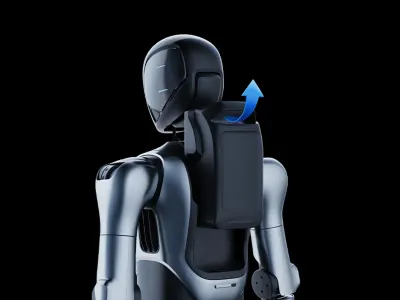
Sensors & Perception
AgiBot A2 features a comprehensive sensor suite including microphone arrays, LiDAR, RGB-D and stereo cameras, visual-based fingertip sensors, force/torque sensors, IMU, and gyroscope. In contrast, GR-2 relies on 6 array-type tactile sensors, dual-encoder systems, IMU, gyroscope, and force sensors, focusing more on tactile feedback and joint monitoring for precise actuation. AgiBot's broader sensor types support enhanced environmental perception and interaction.
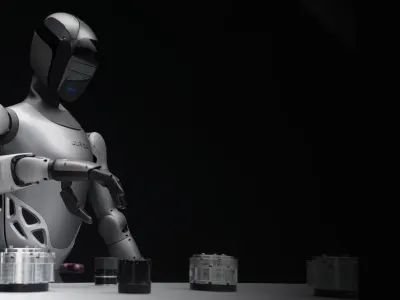
AI Capabilities
AgiBot A2 operates on an AI automation framework powered by WorkGPT combined with AimRT for communication, enabling a blend of autonomous and manual controls with emphasis on interactive tasks. GR-2 supports AI automation alongside remote and manual control, leveraging open-source robotics platforms like ROS and NVIDIA Isaac Lab for flexible AI integration and development, which appeals to researchers and developers needing customizable AI workflows.
Battery & Power Efficiency
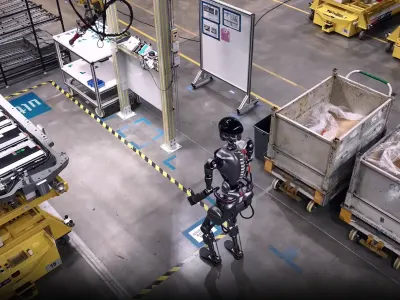
Both robots claim a battery lifespan of up to 5 years; however, GR-2 additionally offers a swappable battery design aimed at shorter operational bursts (notably around two hours per swap) to facilitate continuous use with reduced downtime. AgiBot A2's battery profile suggests longer endurance suited to sustained industrial or service tasks without frequent recharging.
Use-Case Suitability
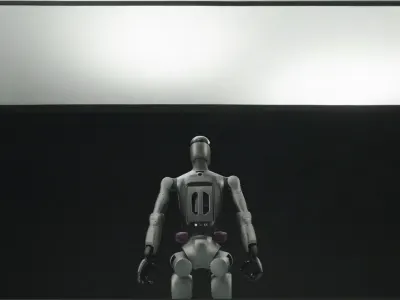
AgiBot A2 targets a wide range of applications including industrial automation, warehouse logistics, customer reception, research assistance, and public interaction, positioning it as a generalist with strengths in human-robot collaboration. GR-2 is specialized towards bipedal locomotion, adaptive grasping, object manipulation, research, and service tasks, often selected for research and advanced robotic control scenarios requiring modularity and precise actuation.
Software Ecosystem
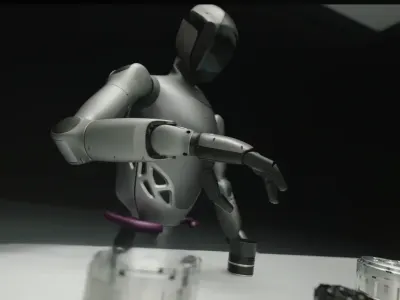
AgiBot A2 uses a proprietary software stack featuring AimRT and WorkGPT AI tailored for communication and task automation. In contrast, GR-2 leverages open-source and widely adopted platforms such as ROS, Linux, NVIDIA Isaac Lab, and Mujoco simulation, facilitating customization and integration in research, education, and development environments.
Safety Features
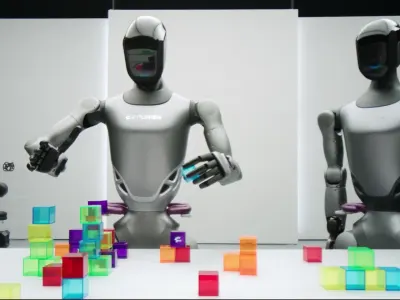
Both robots incorporate standard safety protocols including obstacle detection, collision avoidance, and emergency stop functions. These features ensure operational safety during autonomous and manual operations, supporting deployment in both public-interactive and industrial settings.
Pricing & Value
The AgiBot A2 has a broader price range from $100,000 to $190,000, reflecting different configurations or packages potentially including advanced AI and sensor modules. GR-2 is priced between $90,000 and $120,000, offering a more focused range possibly driven by its modular design and developer-centric software ecosystem.
Analysis Score Summary
Total Score
8
AgiBot A2
VS
Based on Detailed Analysis
Total Score
10
GR-2
📊 Win: 2 points | Trade-off: 1 point each
Scores are summed across every insight: a clear winner earns 2 points, while balanced trade-offs give each robot 1 point. The total reflects how often each robot outperforms the other (or shares the spotlight) throughout the detailed analysis sections.
Capabilities & Operational Tasks
Head-to-head comparison of what AgiBot A2 and GR-2 can do, their applications, and capabilities.
What Can AgiBot A2 & GR-2 Do?
20Core operational tasks, activities, and physical manipulation duties evaluated side-by-side.
| Task & Description | Model AAgiBot A219 supported | Model BGR-216 supported |
|---|---|---|
| Assembly | High | High |
| Autonomous task execution | High | High |
| Caregiving | — | Moderate |
| Carrying and transport | High | High |
| Collaborative work | High | High |
| Greeting and guiding visitors | Moderate | — |
| Human interaction | High | — |
| Inspection | High | High |
| Loading and unloading | High | High |
| Machine operation | High | — |
| Machine tending | High | High |
| Material handling | High | High |
| Move objects | High | High |
| Navigation | High | High |
| Packaging | High | High |
| Pick and place | High | High |
| Quality control | High | — |
| Repetitive physical tasks | High | High |
| Sorting | High | High |
| Tool use | High | High |
Technical Specifications
Head-to-head performance data and metrics
| Specification | Model AAgiBot A2 | Model BGR-2 |
|---|---|---|
Functional Utility & Use Cases4 Comparative Metrics | ||
Control Method | AI automation, manual operation | Remote control, AI automation, manual operation |
Use Cases | Precision electronics assembly, machine tending, industrial kitting, guided commercial showroom tours | Physical rehabilitation assistance, patient companion guidance, light medical item transport, laboratory manipulation (cannot lift adult patients) |
Multi Robot Coord | Supports multi-robot coordination and swarm capabilities via cloud platform | Supported (Designed for collaborative industrial "swarm" tasks) |
Pet Friendly | Not Applicable | Not Applicable |
Manipulation & Load Capacity4 Comparative Metrics | ||
Carrying Capacity | 2–3 kg per arm (up to 5 kg single-arm locked) | 3 kg per arm continuous (~6 kg peak) |
Deadlift Capacity | 5 kg per arm | 6 kg |
Payload Type | 2 to 3 kg per arm continuous dexterous manipulation (single-arm load up to 5 kg locked) | 3 kg payload per arm continuous (~6 kg dual-arm peak, 12-DoF tactile hands) |
Modular Attachments | Dual arms with 7 degrees of freedom each, skill-hand with 12 active DoF | Arms, grippers, sensors |
Kinematic Architecture & Dexterity4 Comparative Metrics | ||
Degrees of Freedom | 40+ active DoF | 53 DoF (including 12 DoF tactile hands) |
Material | Aluminum frame, composite panels, soft materials in joints for safety | Aluminum alloy, engineering plastics, composite |
Mobility Type | Legged (Bipedal locomotion & walking) | Legged (Bipedal locomotion) |
Hardware Interface | USB, Ethernet | USB, GPIO |
Functional Utility & Use Cases
4 Comparative Metrics
Manipulation & Load Capacity
4 Comparative Metrics
Kinematic Architecture & Dexterity
4 Comparative Metrics
Related Comparisons
Discover similar robot matchups to expand your knowledge and find the perfect solution
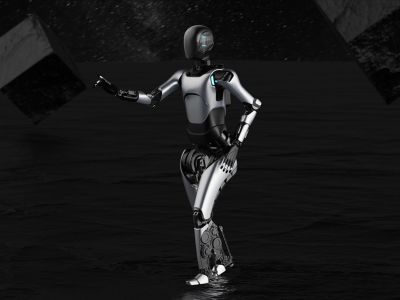

AgiBot A2 vs Martian
Compare AgiBot A2 and Martian. Detailed analysis of sensors, navigation, mobility, and battery life.
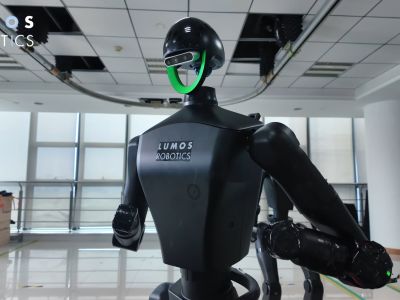
AgiBot A2 vs LUS2
Compare AgiBot A2 and LUS2. Detailed analysis of navigation, sensors, and battery life.
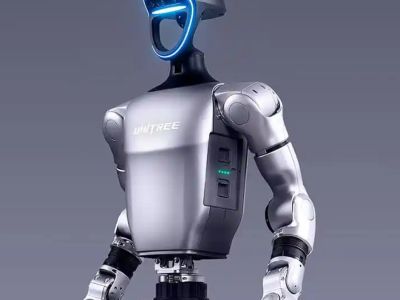
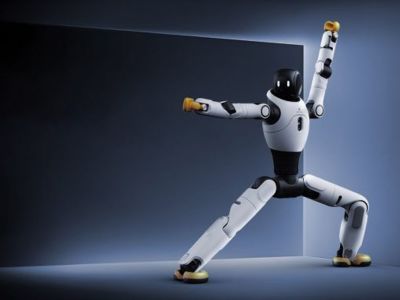
Unitree G1 vs AgiBot X2-N
Compare Unitree G1 vs AgiBot X2 for humanoid mobility, dexterity, autonomy, and payload capacity.
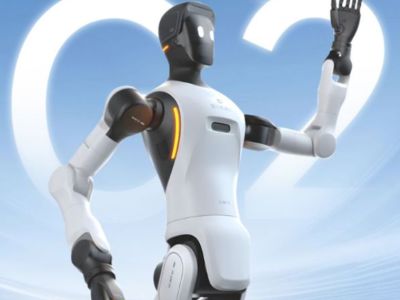
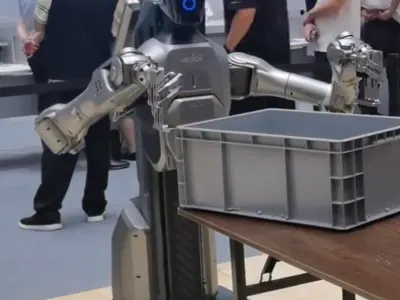
AgiBot G2 vs Cruzr Y1
Compare AgiBot G2 vs Cruzr Y1 for humanoid mobility, dexterity, autonomy, and payload capacity.
Disclaimer
All content, comparisons, and verdicts on this website are based on our research, testing, and opinion. While we strive for accuracy, we do not guarantee the completeness, reliability, or suitability of any information. Performance, specifications, and results may vary depending on usage and conditions. This website and its authors are not responsible for any decisions, actions, or outcomes based on the information provided. Always verify product details with the manufacturer before making purchase or operational decisions.