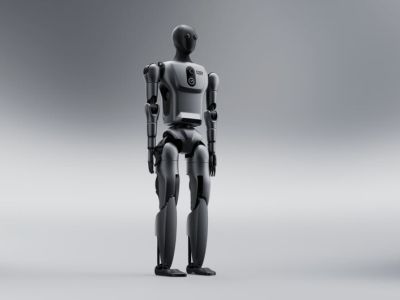
AgiBot G2 by AgiBot is presented as an industrial-grade humanoid focused on high-precision manipulation and factory deployment; it’s being compared here because its specifications target production, logistics, and collaborative industrial tasks and it differentiates itself with a highly articulated body (49+ DoF reported), 360° spatial perception, and a relatively high top speed of 7 km/h for humanoids[1][3]. These characteristics position the AgiBot G2 toward tasks requiring precise force control, continuous operation, and integration with industrial workflows, and its proprietary AI OS and on-board high-performance compute enable reinforcement learning and rapid task adaptation[1][3].
Green by Sberbank is a humanoid aimed at manufacturing, research, logistics, infrastructure inspection, and remote operations and is included for comparison because it targets similar verticals but with different trade-offs in mobility, sensors, and software integration[User data]. Green emphasizes robust perception (RGB, depth, LiDAR) and ROS 2 / Python SDK support, making it a platform for research and field inspection applications[User data]. Its documented battery life (3–5 years typical for industrial batteries), LiDAR-backed visual SLAM, and balance-assisted walking highlight a focus on reliable long-duration deployments and integration into robotics stacks[User data].
Detailed Analysis
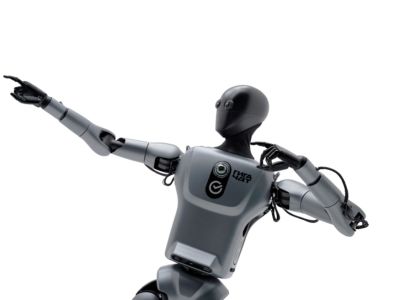
Design & Build Quality
AgiBot G2 is described as a highly articulated humanoid with 49+ degrees of freedom and a human-like form factor enabling complex bending and manipulation; published specs list a 175 cm height and 55 kg weight and note industrial-grade actuators and high-precision torque sensing for fine manipulation[1][3]. Green measures 170 cm x 55 cm x 38 cm with a weight range of 50–80 kg and appears built for robustness and modularity, with conventional humanoid proportions and payload-capable joints suitable for manufacturing and inspection tasks[User data]. Both designs reflect industrial use—AgiBot emphasizes articulation and dexterity while Green emphasizes standard dimensions and a flexible weight/payload envelope for varied deployments[1][User data].
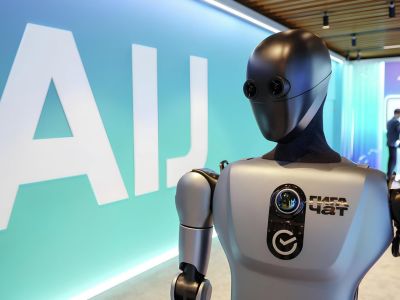
Mobility & Navigation
AgiBot G2 lists a top speed of 7 km/h and is reported to support advanced spatial perception with 360° obstacle avoidance, suggesting faster transit and task throughput for structured industrial environments[1][3]. Green’s walking speed is specified as 1.5–3 m/s (which corresponds to 5.4–10.8 km/h depending on reported values), and it explicitly uses visual SLAM, LiDAR mapping, and balance-assisted walking for stable locomotion and mapping in unstructured areas[User data]. Navigation-wise, both rely on SLAM-like approaches and obstacle avoidance, but AgiBot’s materials emphasize continuous high-speed operation and agility while Green emphasizes sensor-fused mapping and gait stability for inspection and field tasks[1][User data].

Sensors & Perception
AgiBot G2 is noted to include high-precision torque sensors, a 360-degree spatial perception system, cameras, force sensors, and environmental sensors, oriented toward fine force control and full-surround awareness for close-proximity tasks[1][3]. Green provides a clearer sensor list—RGB cameras, depth camera, LiDAR, IMU, gyroscope, accelerometer, joint encoders, and force/torque sensors—supporting multi-modal perception for mapping, localization, and balance[User data]. Both platforms support rich sensing suites; AgiBot emphasizes torque and force sensing for manipulation whereas Green emphasizes LiDAR and visual-depth fusion for robust SLAM and inspection workflows[1][User data].

AI Capabilities
AgiBot G2 runs a proprietary AI OS with on-board high-performance compute (reported NVIDIA-class platforms in demonstrations) and supports autonomous task execution, reinforcement learning, and simulation-based rehearsal for adaptive manipulation and planning[1][3]. Green supports learned behaviors as well as teleoperation and autonomous modes and ships with a Linux-based OS plus ROS 2 support and a Python SDK, which facilitates algorithm development and integration with common robotics toolchains[User data]. The comparison shows AgiBot prioritizes integrated, proprietary AI stacks for end-to-end task automation while Green prioritizes interoperability and developer-facing tooling for custom autonomy and research use-cases[1][User data].
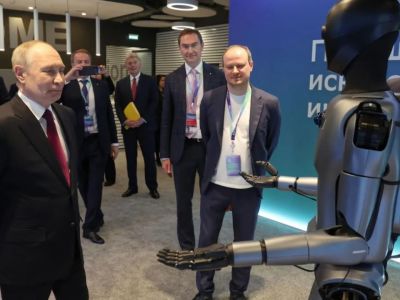
Battery & Power Efficiency
AgiBot G2’s published entries do not list a precise battery spec but mention hot-swappable dual batteries and estimate a pack in the 2–3 kWh range in third-party reporting; manufacturer materials imply continuous-operation features and support for long-run industrial duty cycles[1][3]. Green specifies an industrial battery life expectancy of 3–5 years (typical for industrial lithium packs) and indicates 3–5 year serviceable battery norms, with no single-run runtime provided in the data set[User data]. Both platforms are designed for multi-year battery hardware lifecycles; AgiBot highlights runtime continuity via hot-swap capability while Green emphasizes standard industrial battery longevity and field replaceability[1][User data].
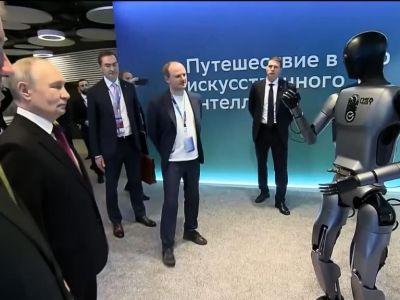
Use-Case Suitability
AgiBot G2 targets auto parts production, precision manufacturing, logistics sorting, guided tours, and collaborative industrial tasks where dexterity, force control, and continuous operation are required[User data][1]. Green targets manufacturing, research, logistics, infrastructure inspection, and remote operations, making it suitable for mapping, inspection, and integration into research workflows where ROS 2 and SDK access are important[User data]. Organizations choosing between them should match AgiBot G2 when dexterous manipulation and proprietary autonomy are primary, and choose Green when sensor diversity, ROS 2 integration, and inspection-oriented mapping are priorities[1][User data].

Software Ecosystem
AgiBot G2 is described as running a proprietary AI operating system, likely Linux-based, with support for reinforcement learning and simulation tools for task rehearsal and on-board planning, which favors turnkey industrial deployment and closed-loop optimization[1]. Green runs a Linux-based OS with explicit ROS 2 support and a Python SDK, enabling custom algorithm development, interoperability with open-source stacks, and researcher-friendly development cycles[User data]. The contrast is between AgiBot’s integrated proprietary stack for packaged autonomy and Green’s open developer ecosystem for customization and third-party integration[1][User data].
Safety Features
AgiBot G2 lists safety measures including emergency stop, real-time force sensing, obstacle avoidance, and impedance control to support safe human-robot interaction in shared workspaces[User data][1]. Green includes force limiting, collision detection, emergency stop, and redundant sensors, emphasizing sensor redundancy and force-based safety limits for both collaborative and remote operations[User data]. Both platforms implement industry-typical safety controls; AgiBot highlights impedance and fine force control while Green emphasizes redundancy and sensor-fused collision detection[User data][1].
Pricing & Value
AgiBot G2 pricing is estimated broadly at $50,000–$200,000+ (published estimates and market listings vary by configuration and region) and the platform is presented with industrial-grade compute and dexterous manipulation capability that influence higher-tier pricing[User data][1]. Green is listed at $50,000–$150,000 depending on configuration and sensor package, offering a narrower documented price band and explicit ROS 2 / SDK support which can reduce integration costs for research and inspection deployments[User data]. The price ranges overlap, so total cost of ownership will depend on chosen sensors, compute, maintenance plan, and software licensing for each deployment[User data].
Analysis Score Summary
Total Score
7
AgiBot G2
VS
Based on Detailed Analysis
Total Score
11
Green
📊 Win: 2 points | Trade-off: 1 point each
Scores are summed across every insight: a clear winner earns 2 points, while balanced trade-offs give each robot 1 point. The total reflects how often each robot outperforms the other (or shares the spotlight) throughout the detailed analysis sections.
Capabilities & Operational Tasks
Head-to-head comparison of what AgiBot G2 and Green can do, their applications, and capabilities.
What Can AgiBot G2 & Green Do?
18Core operational tasks, activities, and physical manipulation duties evaluated side-by-side.
| Task & Description | Model AAgiBot G217 supported | Model BGreen4 supported |
|---|---|---|
| Assembly | High | — |
| Autonomous task execution | High | High |
| Carrying and transport | High | — |
| Collaborative work | High | High |
| Human interaction | — | High |
| Inspection | High | — |
| Loading and unloading | High | — |
| Machine operation | High | — |
| Machine tending | High | — |
| Material handling | High | — |
| Move objects | High | — |
| Navigation | High | High |
| Packaging | High | — |
| Pick and place | High | — |
| Quality control | High | — |
| Repetitive physical tasks | High | — |
| Sorting | High | — |
| Tool use | High | — |
Technical Specifications
Head-to-head performance data and metrics
| Specification | Model AAgiBot G2 | Model BGreen |
|---|---|---|
Functional Utility & Use Cases4 Comparative Metrics | ||
Control Method | AI autonomous, remote teleoperation, multimodal voice interaction | Teleoperation, autonomous, learned behaviors |
Use Cases | Sub-millimeter precision assembly, hole searching, machine tending, industrial kitting, commercial showroom tours | Manufacturing, research, logistics, infrastructure inspection, remote operations |
Multi Robot Coord | Yes | (Inferred · Medium confidence · Typical for industrial fleets) | Multi-robot coordination via network |
Pet Friendly | Not Applicable (Industrial & Commercial Robot) | Yes, with safety protocols |
Manipulation & Load Capacity4 Comparative Metrics | ||
Carrying Capacity | 5 kg per arm (10 kg total) | 15-25 kg per arm |
Deadlift Capacity | 5 kg per arm | 50-100 kg |
Payload Type | 5 kg per arm (Dual 7-DoF force-controlled arms) | Tools, sensors, industrial equipment |
Modular Attachments | Grippers, sensors, possibly custom end-effectors | Tool changers, gripper interfaces, sensor mounts |
Kinematic Architecture & Dexterity4 Comparative Metrics | ||
Degrees of Freedom | 26 DoF base (expandable to 50) | - |
Material | Aluminum frame, automotive-grade composites | Aluminum frame, composite joints, polymer covers |
Mobility Type | Wheeled (Omnidirectional mobile base, speed up to 1.5 m/s) | Legged (bipedal walking) |
Hardware Interface | USB, Ethernet, GPIO (typical for industrial robots) | USB-C, Ethernet, GPIO, CAN bus |
Functional Utility & Use Cases
4 Comparative Metrics
Manipulation & Load Capacity
4 Comparative Metrics
Kinematic Architecture & Dexterity
4 Comparative Metrics
Related Comparisons
Discover similar robot matchups to expand your knowledge and find the perfect solution
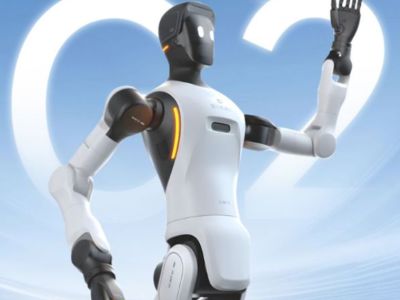
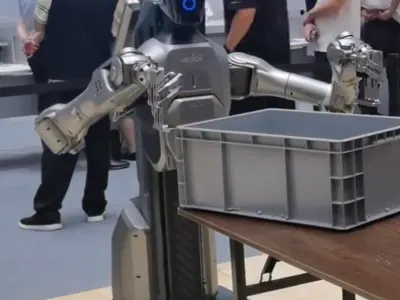
AgiBot G2 vs Cruzr Y1
Compare AgiBot G2 vs Cruzr Y1 for humanoid mobility, dexterity, autonomy, and payload capacity.
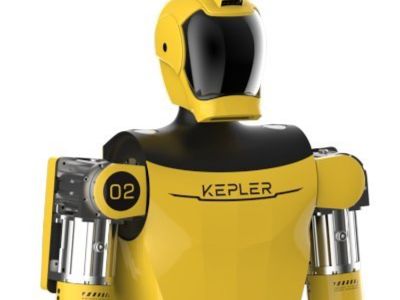
K2 Bumblebee vs Green
K2 Bumblebee or Green? Compare specs, sensors, navigation, speed, and battery performance.

Optimus vs Green
Optimus or Green? Compare specs, navigation, battery, sensors, and speed performance.
AgiBot G2 vs D7
Compare AgiBot G2 and D7. Detailed analysis of navigation, battery, and sensors.
Disclaimer
All content, comparisons, and verdicts on this website are based on our research, testing, and opinion. While we strive for accuracy, we do not guarantee the completeness, reliability, or suitability of any information. Performance, specifications, and results may vary depending on usage and conditions. This website and its authors are not responsible for any decisions, actions, or outcomes based on the information provided. Always verify product details with the manufacturer before making purchase or operational decisions.