The AgiBot X2-N is a humanoid robot designed for robust autonomous operations in dynamic and complex environments. Positioned as a versatile platform for logistics, search-and-rescue, and industrial automation, it stands out with its proprioceptive sensor-based navigation and hybrid locomotion system blending bipedal walking and wheeled movement. These features enable efficient terrain adaptation without relying on cameras or external sensors, highlighting its innovative approach in the humanoid robotics market.
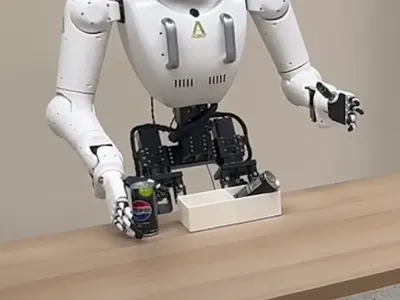
ALICE 4 by AEI Robot is a humanoid robot focused on indoor applications such as pick-and-place workflows, research, and service tasks. It differentiates itself via extensive sensor arrays including RGB and depth cameras, LiDAR, and ultrasonic sensors, supporting advanced navigation through visual and LiDAR SLAM. Its control options encompass teleoperation, autonomous mode, and learned behaviors, making it well-suited for versatile indoor environments and collaborative roles.
Detailed Analysis
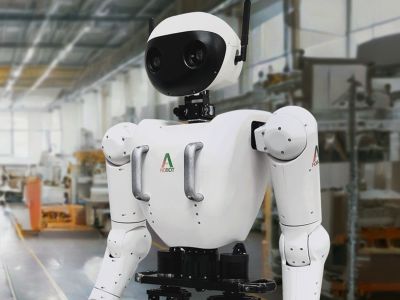
Design & Build Quality
AgiBot X2-N features typical humanoid proportions with a height of 175 cm and an estimated width and length approximating human dimensions, weighing 55 kg. It integrates a hybrid locomotion design that enables walking and rolling for mobility efficiency. ALICE 4 is more compact at 160 x 50 x 30 cm and lighter at 45 kg, emphasizing a more slender and possibly more maneuverable form factor optimized for indoor use.
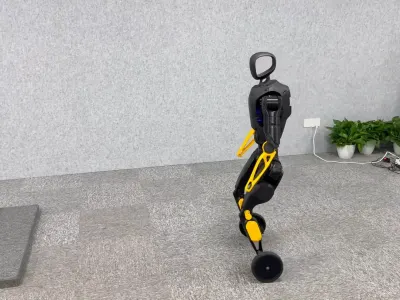
Mobility & Navigation
The AgiBot X2-N achieves a higher speed of 7 km/h through its hybrid locomotion system, relying on proprioceptive feedback without external sensors like GPS or LiDAR. It excels in dynamic, unstructured terrains, adapting gait in real time. ALICE 4 moves slower at 0.8 m/s (~2.88 km/h) but compensates with rich sensor input enabling indoor SLAM via visual and LiDAR mapping, supporting precise navigation in controlled indoor environments.
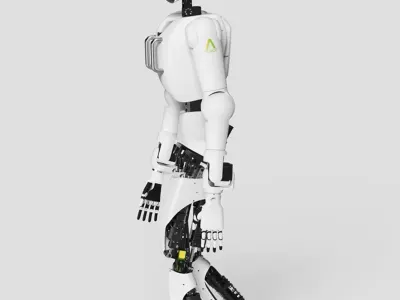
Sensors & Perception
AgiBot X2-N utilizes proprioceptive sensors including joint torque, pressure, and internal gyroscopes exclusively, foregoing cameras or external sensors to maintain robustness in complex settings. In contrast, ALICE 4 is equipped with multiple sensing modalities such as RGB and stereo cameras, depth sensors, LiDAR, ultrasonic sensors, IMU, gyroscope, force, and temperature sensors, providing comprehensive environmental perception and situational awareness.
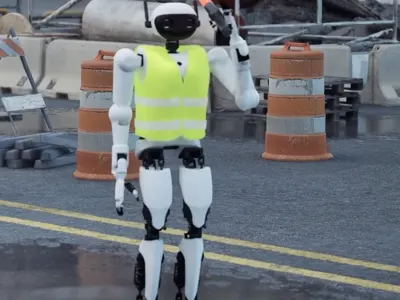
AI Capabilities
AgiBot X2-N operates on an autonomous AI system integrated with Linux/ROS, featuring real-time control and gait adjustments without dependency on visual input. Its reliance on proprioceptive data suggests a strong focus on motion intelligence. ALICE 4 supports teleoperation, autonomous functions, and learned behaviors, utilizing ROS2 and proprietary software with APIs in Python and C++, enabling flexible programming and control paradigms for various applications.

Battery & Power Efficiency
AgiBot X2-N offers a notably long battery life ranging from 3 to 5 years and supports charging within 2-4 hours, indicating a high-capacity battery system suitable for extended deployments. ALICE 4's battery life is approximately 3 years, reflecting typical operational endurance for indoor humanoid robots, and is designed for moderate power consumption in service applications.
Use-Case Suitability
AgiBot X2-N is suited for logistics, search-and-rescue, industrial automation, and navigation in dynamic environments, leveraging its autonomous mobility and proprioceptive sensing. ALICE 4 targets pick-and-place workflows, research, VR teleoperation, and collaborative service applications, emphasizing indoor operation, precise navigation, and interaction through its rich multisensory setup and control versatility.
Safety Features
Both robots incorporate essential safety measures such as emergency stop functions. AgiBot X2-N additionally employs obstacle avoidance through proprioceptive feedback and real-time gait adjustments to maintain stability. ALICE 4 features force limiting, collision detection, and a collaborative mode designed for safe human-robot interaction in shared environments.
Software Ecosystem
AgiBot X2-N runs on a Linux/ROS-based platform emphasizing open systems for control and real-time adjustments. ALICE 4 uses ROS2 alongside proprietary software with APIs supporting Python and C++, offering a robust development environment tailored for research and applications requiring varied programming approaches.
Pricing & Value
The estimated price range for AgiBot X2-N is USD $50,000–$150,000, reflecting its advanced hybrid mobility and autonomy. ALICE 4 is priced between $50,000 and $100,000, aligning with its sensor-rich configuration and indoor application focus. The wider price range of AgiBot X2-N suggests more customizable or scalable configurations.
Analysis Score Summary
Total Score
8
AgiBot X2-N
VS
Based on Detailed Analysis
Total Score
10
ALICE 4
📊 Win: 2 points | Trade-off: 1 point each
Scores are summed across every insight: a clear winner earns 2 points, while balanced trade-offs give each robot 1 point. The total reflects how often each robot outperforms the other (or shares the spotlight) throughout the detailed analysis sections.
Capabilities & Operational Tasks
Head-to-head comparison of what AgiBot X2-N and ALICE 4 can do, their applications, and capabilities.
What Can AgiBot X2-N & ALICE 4 Do?
13Core operational tasks, activities, and physical manipulation duties evaluated side-by-side.
| Task & Description | Model AAgiBot X2-N11 supported | Model BALICE 49 supported |
|---|---|---|
| Assembly | — | High |
| Autonomous task execution | High | High |
| Caregiving | Moderate | — |
| Carrying and transport | High | High |
| Collaborative work | High | High |
| Human interaction | High | High |
| Move objects | High | High |
| Navigation | High | High |
| Obstacle traversal | High | — |
| Patrolling | Moderate | — |
| Pick and place | High | High |
| Sorting | High | — |
| Tool use | — | High |
Technical Specifications
Head-to-head performance data and metrics
| Specification | Model AAgiBot X2-N | Model BALICE 4 |
|---|---|---|
Functional Utility & Use Cases4 Comparative Metrics | ||
Control Method | AI autonomous, real-time control systems | Teleoperation, autonomous, learned behaviors |
Use Cases | Logistics/Warehouse Sorting, Security Patrol, Healthcare/Elderly Care, Research & Education, and Commercial Entertainment | Pick-and-place workflows, research, service applications, VR teleoperation, imitation learning |
Multi Robot Coord | Supported via Swarm Control Planning | Yes |
Pet Friendly | Yes (Equipped with proactive obstacle avoidance) | Yes, with safety protocols |
Manipulation & Load Capacity4 Comparative Metrics | ||
Carrying Capacity | 5.4 kg (single arm) | 5 kg |
Deadlift Capacity | 15 kg (based on 120N.m peak joint torque) | 10 kg |
Payload Type | Packages, tools, cargo | Tools, packages, precision instruments, people interaction |
Modular Attachments | OmniHand Dexterous Hands (5-finger), 3-finger Grippers, and Tool-specific end effectors | Tool changers, end-effector options |
Kinematic Architecture & Dexterity4 Comparative Metrics | ||
Degrees of Freedom | 28 – 31 DOF (Depends on configuration) | 24 |
Material | High-strength Aluminum, Carbon Fiber, and Impact-resistant TPU Foam | Aluminum, composite, soft materials |
Mobility Type | Hybrid (bipedal walking and wheeled) | Wheeled-based |
Hardware Interface | USB, Ethernet, GPIO | USB, GPIO, CAN bus, serial |
Functional Utility & Use Cases
4 Comparative Metrics
Manipulation & Load Capacity
4 Comparative Metrics
Kinematic Architecture & Dexterity
4 Comparative Metrics
Related Comparisons
Discover similar robot matchups to expand your knowledge and find the perfect solution
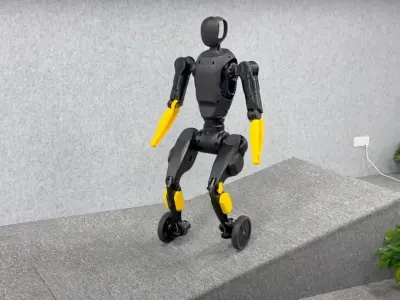

AgiBot X2-N vs Zerith Z1
Which robot wins? AgiBot X2-N vs Zerith Z1 compared across navigation, sensors, and battery.
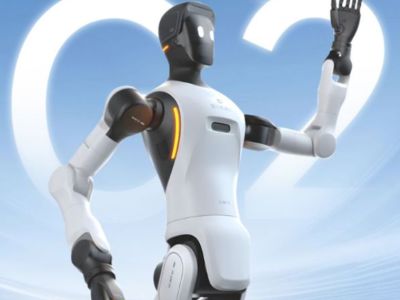
AgiBot G2 vs AgiBot X2-N
AgiBot G2 or AgiBot X2-N? Compare specs, navigation, battery, and sensors.
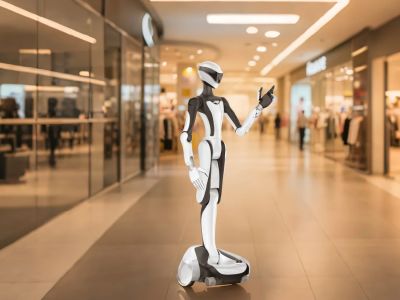
ALICE 4 vs Q5
Which robot wins? ALICE 4 vs Q5 compared across sensors, speed, battery, and navigation.

Figure 03 vs AgiBot X2-N
Compare Figure 03 and AgiBot X2-N. Detailed analysis of sensors, navigation, speed, and AI capabilities.
Disclaimer
All content, comparisons, and verdicts on this website are based on our research, testing, and opinion. While we strive for accuracy, we do not guarantee the completeness, reliability, or suitability of any information. Performance, specifications, and results may vary depending on usage and conditions. This website and its authors are not responsible for any decisions, actions, or outcomes based on the information provided. Always verify product details with the manufacturer before making purchase or operational decisions.