Daimon One by Daimon Robotics targets industrial automation, research, precision assembly, and teleoperation tasks. It positions in markets requiring robust manipulation and navigation in structured environments. Key differentiators include its taller 180 cm height, comprehensive navigation with SLAM, GPS, and LiDAR, and versatile control options like exoskeleton teleoperation.
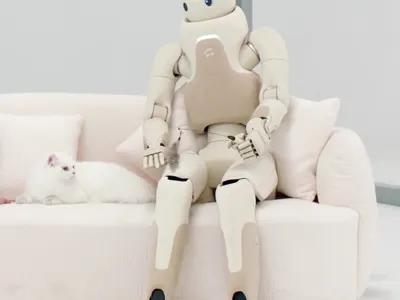
GR-3 by Fourier Intelligence focuses on human-centered applications such as elderly care, home companionship, education, and public engagement. It is designed for interactive and empathetic environments like homes and healthcare facilities. Differentiators encompass its compact 165 cm stature, 5 km/h speed, multimodal perception with voice localization, and proprietary software integrating large language models.
Detailed Analysis
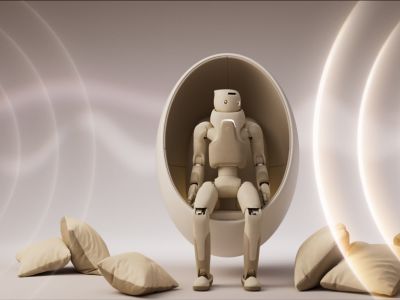
Design & Build Quality
Daimon One measures 60 cm x 40 cm x 180 cm and weighs 75 kg, providing a taller frame suited for industrial reach. GR-3 stands at 165 cm height, 51.5 cm shoulder width, and 32 cm depth with 71 kg weight, emphasizing a compact, approachable form for human interaction. Both feature force sensors and pressure-sensitive elements for safe operation in their domains.
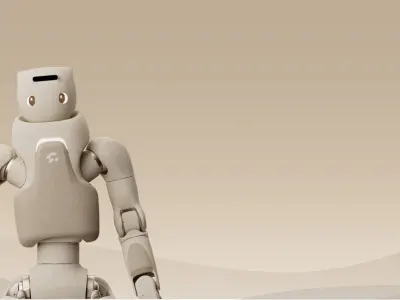
Mobility & Navigation
Daimon One achieves 1.5 km/h speed using SLAM, GPS, and LiDAR for precise navigation in industrial settings. GR-3 reaches 5 km/h with visual SLAM and dynamic tracking, enabling agile movement in dynamic home or public spaces. GR-3's higher speed supports interactive scenarios, while Daimon One prioritizes stability for assembly tasks.
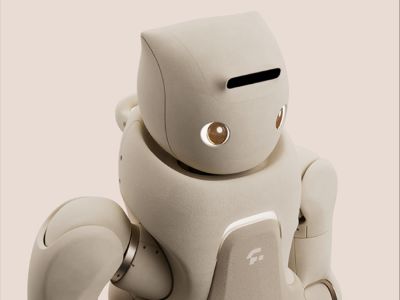
Sensors & Perception
Daimon One integrates vision-based tactile sensors, RGB cameras, depth cameras, IMU, force sensors, and proximity sensors for environmental awareness. GR-3 employs RGB camera, structured-light camera, four-microphone array, 31 distributed pressure sensors, IMU, and gyroscope for multimodal interaction including voice and touch. GR-3 excels in human engagement through auditory and tactile cues, contrasting Daimon One's focus on visual and force feedback.
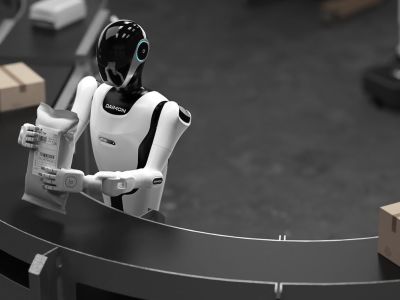
AI Capabilities
Daimon One relies on AI autonomous control alongside teleoperation via exoskeleton, remote, or app interfaces, supported by ROS 2 and Linux. GR-3 uses autonomous control with teleoperation, learned behaviors, rule-based systems enhanced by LLM reasoning in a proprietary platform. GR-3's LLM integration facilitates natural conversations, while Daimon One emphasizes programmable APIs for research.
Battery & Power Efficiency
Daimon One offers a 4-year battery life, suitable for sustained industrial operations. GR-3 provides a 5-year battery duration, supporting prolonged companionship roles. The one-year difference aligns with GR-3's emphasis on continuous human interaction.
Use-Case Suitability
Daimon One suits industrial automation, R&D, precision assembly, service robotics, and teleoperation in controlled settings. GR-3 targets elderly care, healthcare support, home companionship, education, public spaces, and remote assistance with empathetic design. Their applications diverge from task-oriented precision to social engagement.

Safety Features
Daimon One includes emergency stop, obstacle avoidance, collision detection, and force limiters for industrial safety. GR-3 features collaborative design, force-limiting actuators, and collision detection tailored for human proximity. Both prioritize collision avoidance but adapt to their operational contexts.
Software Ecosystem
Daimon One runs on ROS 2, Linux-based OS with C++/Python APIs, enabling open integration for developers. GR-3 uses a proprietary system with large language model integration for intuitive behaviors. This contrast supports Daimon One's research flexibility versus GR-3's seamless interaction focus.
Analysis Score Summary
Total Score
9
Daimon One
VS
Based on Detailed Analysis
Total Score
7
GR-3
📊 Win: 2 points | Trade-off: 1 point each
Scores are summed across every insight: a clear winner earns 2 points, while balanced trade-offs give each robot 1 point. The total reflects how often each robot outperforms the other (or shares the spotlight) throughout the detailed analysis sections.
Capabilities & Operational Tasks
Head-to-head comparison of what Daimon One and GR-3 can do, their applications, and capabilities.
What Can Daimon One & GR-3 Do?
17Core operational tasks, activities, and physical manipulation duties evaluated side-by-side.
| Task & Description | Model ADaimon One12 supported | Model BGR-316 supported |
|---|---|---|
| Assembly | High | High |
| Autonomous task execution | High | High |
| Carrying and transport | — | High |
| Cleaning | High | — |
| Collaborative work | — | High |
| Inspection | High | High |
| Loading and unloading | — | High |
| Machine tending | High | High |
| Material handling | — | High |
| Move objects | High | High |
| Navigation | — | High |
| Packaging | High | High |
| Pick and place | High | High |
| Quality control | High | High |
| Repetitive physical tasks | High | High |
| Sorting | High | High |
| Tool use | High | High |
Technical Specifications
Head-to-head performance data and metrics
| Specification | Model ADaimon One | Model BGR-3 |
|---|---|---|
Functional Utility & Use Cases4 Comparative Metrics | ||
Control Method | AI autonomous control, teleoperation via exoskeleton, remote control, app-based interface | Autonomous with teleoperation, learned behaviors, rule-based control with LLM reasoning |
Use Cases | Industrial automation, research and development, precision assembly, service robotics, teleoperation tasks | Elderly care assistance, healthcare facility support, home companionship, interactive education, public space engagement, teleoperated remote assistance |
Multi Robot Coord | Yes, supports coordinated multi-robot operations via cloud platform | - |
Pet Friendly | Yes, with safety protocols for interaction | Yes, with safety protocols |
Manipulation & Load Capacity4 Comparative Metrics | ||
Carrying Capacity | 10 kg | 5 kg per arm |
Deadlift Capacity | 15 kg | 10 Kg |
Payload Type | Tools, small packages, delicate objects | Interactive objects, assistance tasks, precision manipulation |
Modular Attachments | Interchangeable grippers, sensor modules, tool adapters | Expansion-ready architecture for future end-effectors and sensors |
Kinematic Architecture & Dexterity4 Comparative Metrics | ||
Degrees of Freedom | - | 55 |
Material | Aluminum alloy frame, carbon fiber reinforcements, high-strength plastics | Aluminum alloy, engineering plastics, soft cushioned surfaces with warm tones |
Mobility Type | Legged bipedal locomotion | Legged (bipedal walking) |
Hardware Interface | USB 3.0, GPIO, Ethernet, UART | - |
Functional Utility & Use Cases
4 Comparative Metrics
Manipulation & Load Capacity
4 Comparative Metrics
Kinematic Architecture & Dexterity
4 Comparative Metrics
Related Comparisons
Discover similar robot matchups to expand your knowledge and find the perfect solution
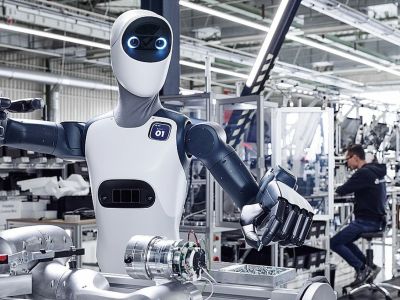
Agile ONE vs GR-3
Agile ONE or GR-3? Compare specs, sensors, navigation, battery, and speed for industrial vs service humanoid performance.
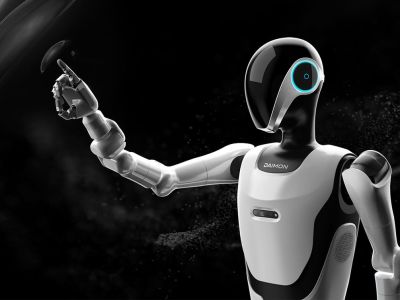
Daimon One vs Agile ONE
Compare Daimon One and Agile ONE. Detailed analysis of navigation, battery, and sensors.
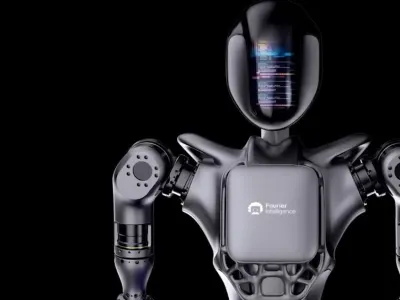
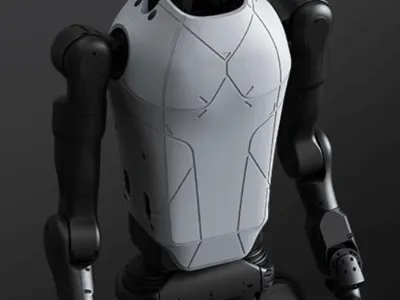
GR-1 vs Unitree H1-2
Head-to-head: GR-1 vs Unitree H1-2 compared on bipedal balance, AI learning, and real-world deployment for research and care.
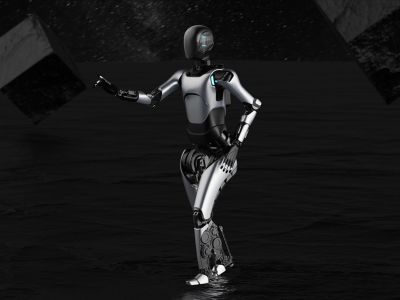

AgiBot A2 vs GR-2
Compare AgiBot A2 and GR-2. Detailed analysis of navigation, battery, sensors, mobility, AI, software, and pricing.
Disclaimer
All content, comparisons, and verdicts on this website are based on our research, testing, and opinion. While we strive for accuracy, we do not guarantee the completeness, reliability, or suitability of any information. Performance, specifications, and results may vary depending on usage and conditions. This website and its authors are not responsible for any decisions, actions, or outcomes based on the information provided. Always verify product details with the manufacturer before making purchase or operational decisions.