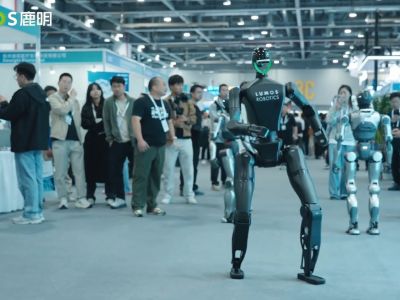
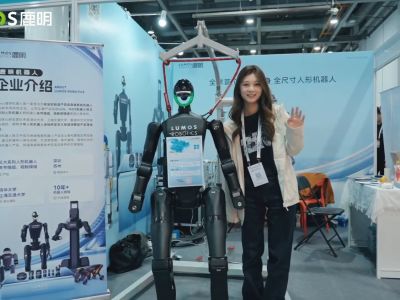
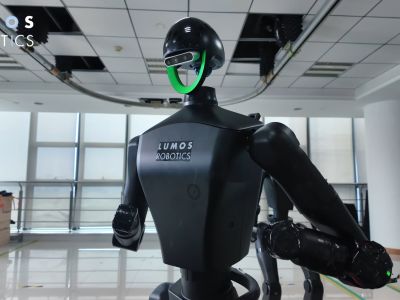
LUS2 by Lumos Robotics is a full-size humanoid robot positioned for demanding industrial, healthcare, and dynamic real-world environments. It emphasizes extreme agility, real-time reflexes, and human-like motion control through neural motion planning and proprioceptive sensing. Key differentiators include its ability to transition from lying flat to standing in about 1 second and its integration-ready architecture for large language models, making it suitable for complex physical and cognitive tasks.
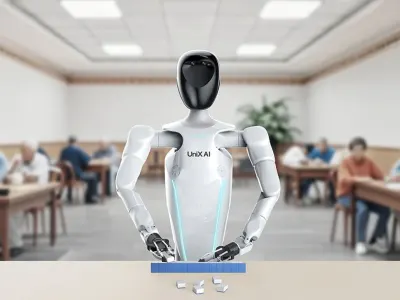
Martian by UniX AI is a general-purpose full-size humanoid robot targeting logistics, manufacturing, household assistance, and service industries. It is designed for high-speed mobility and long-term operation in structured and semi-structured environments. Its main differentiators are higher top speed, lighter weight, and a focus on autonomous learned behaviors in logistics and service use cases.
Detailed Analysis
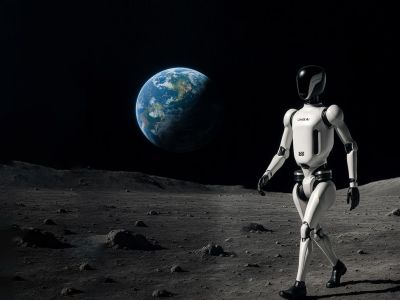
Design & Build Quality
LUS2 has dimensions of 160 x 50 x 30 cm and weighs 57 kg, built with state-of-the-art actuators and sensors for high-torque, dynamic movements. Martian shares the same dimensions (160 x 50 x 30 cm) but is lighter at 50 kg, which may improve energy efficiency and reduce wear in high-speed operations. Both are full-size humanoids with robust frames suitable for industrial and service environments, but LUS2’s slightly heavier build may prioritize strength and stability over pure speed.
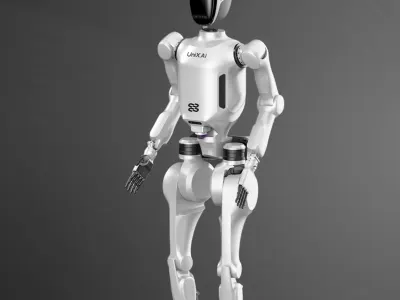
Mobility & Navigation
LUS2 reaches a top speed of 7.2 km/h (2 m/s) and uses real-time full-body dynamics and neural motion control for agile, human-like movement and rapid recovery from falls. Martian is faster at 10.8 km/h (3 m/s), indicating a design optimized for rapid transit in logistics and service settings. Both support indoor SLAM, visual SLAM, and LiDAR mapping, enabling reliable navigation in complex indoor environments.
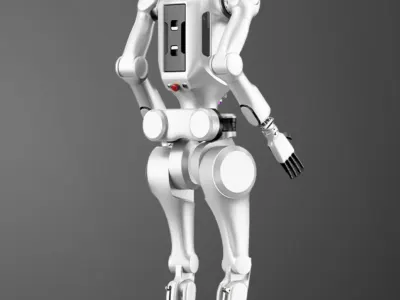
Sensors & Perception
LUS2 is equipped with Intel RealSense D435i, finger and palm tactile sensors, IMU, ultrasonic sensors, 360° LiDAR, gyroscope, force sensors, and temperature sensors, providing rich proprioceptive and environmental feedback. Martian uses RGB cameras, depth cameras, LiDAR, ultrasonic sensors, IMU, gyroscope, force sensors, and temperature sensors, focusing on visual and spatial perception. Both have comprehensive sensor suites, but LUS2’s inclusion of tactile sensors on hands and 360° LiDAR may offer advantages in close interaction and omnidirectional awareness.
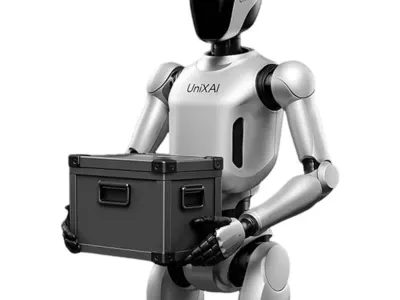
AI Capabilities
LUS2 uses a neural motion control system that processes proprioceptive feedback and external sensor data in real time, enabling fluid, adaptive motion and balance. It is designed with APIs for LLM integration, allowing potential coupling with large language models for higher-level planning and interaction. Martian emphasizes autonomous operation and learned behaviors, with its AI stack focused on task execution in logistics and service roles, though specific LLM integration details are not provided in the available specs.
Battery & Power Efficiency
LUS2 is rated for a 3-year battery life, indicating a design focused on long-term reliability and reduced maintenance cycles in continuous operation. Martian’s battery is estimated to last 3–5 years, suggesting potentially higher energy efficiency or larger capacity, which aligns with its higher speed and logistics focus. Both are built for extended deployments, but Martian’s longer battery life estimate may reduce downtime in high-utilization scenarios.
Use-Case Suitability
LUS2 is optimized for industrial automation, healthcare assistance, search-and-rescue, and research in dynamic, unpredictable environments where agility and rapid recovery are critical. Martian is targeted at logistics, manufacturing, household assistance, research, and service industries, where speed, autonomy, and long operational life are prioritized. Both are general-purpose humanoids, but LUS2 leans toward high-agility, high-risk tasks, while Martian is tuned for high-throughput, structured workflows.
Software Ecosystem
LUS2 runs a proprietary OS with ROS2 compatibility and supports Python, C++, and APIs for LLM integration, enabling flexible development and integration into AI-driven workflows. Martian also supports ROS2, a proprietary system, Python, C++, and APIs, providing a comparable developer environment for autonomous and learned behaviors. Both platforms are developer-friendly, but LUS2’s explicit LLM integration support may give it an edge in conversational and cognitive applications.
Pricing & Value
LUS2 is listed at $99,000, positioning it as a high-end but relatively accessible full-size humanoid for industrial and research use. Martian is estimated at $100,000–$150,000, placing it at a higher price point, likely reflecting its speed, lighter weight, and logistics/service focus. The price difference suggests LUS2 offers better value for agility and recovery performance, while Martian may justify its premium with higher speed and longer battery life in high-utilization settings.
Analysis Score Summary
Total Score
9
LUS2
VS
Based on Detailed Analysis
Total Score
7
Martian
📊 Win: 2 points | Trade-off: 1 point each
Scores are summed across every insight: a clear winner earns 2 points, while balanced trade-offs give each robot 1 point. The total reflects how often each robot outperforms the other (or shares the spotlight) throughout the detailed analysis sections.
Capabilities & Operational Tasks
Head-to-head comparison of what LUS2 and Martian can do, their applications, and capabilities.
What Can LUS2 & Martian Do?
7Core operational tasks, activities, and physical manipulation duties evaluated side-by-side.
| Task & Description | Model ALUS27 supported | Model BMartian7 supported |
|---|---|---|
| Autonomous task execution | High | High |
| Carrying and transport | High | High |
| Collaborative work | High | High |
| Move objects | High | High |
| Navigation | High | High |
| Obstacle traversal | High | High |
| Pick and place | High | High |
Technical Specifications
Head-to-head performance data and metrics
| Specification | Model ALUS2 | Model BMartian |
|---|---|---|
Functional Utility & Use Cases4 Comparative Metrics | ||
Control Method | Autonomous, learned behaviors, teleoperation | Autonomous, learned behaviors |
Use Cases | Industrial automation, healthcare assistance, search-and-rescue, dynamic environments, research and development | Logistics, manufacturing, household assistance, research, service industries |
Multi Robot Coord | Swarm and multi-robot coordination | Yes |
Pet Friendly | Yes, with safety protocols | Yes, with safety protocols |
Manipulation & Load Capacity4 Comparative Metrics | ||
Carrying Capacity | 10 kg per arm | 30 kg |
Deadlift Capacity | 50 kg | 50 kg |
Payload Type | Tools, packages, precision instruments, people interaction | Tools, packages, precision instruments, people interaction |
Modular Attachments | Tool changers, end-effector options | Tool changers, end-effector options |
Kinematic Architecture & Dexterity4 Comparative Metrics | ||
Degrees of Freedom | 38 | 23 |
Material | Aluminum, composite, soft materials | Aluminum, composite, soft materials |
Mobility Type | Legged (bipedal walking) | Legged (bipedal walking) |
Hardware Interface | USB, GPIO, CAN bus, serial | USB, GPIO, CAN bus, serial |
Functional Utility & Use Cases
4 Comparative Metrics
Manipulation & Load Capacity
4 Comparative Metrics
Kinematic Architecture & Dexterity
4 Comparative Metrics
Related Comparisons
Discover similar robot matchups to expand your knowledge and find the perfect solution
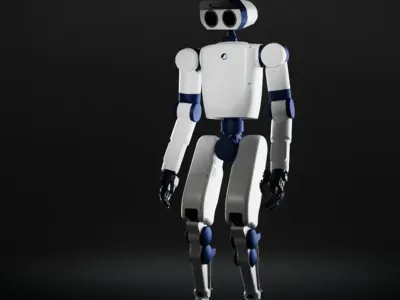
LUS2 vs P-73
Which humanoid robot is better? LUS2 vs P-73 compared for dexterity, AI capabilities, payload, and industrial use cases.
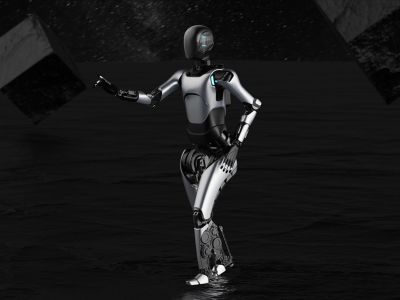
AgiBot A2 vs Martian
Compare AgiBot A2 and Martian. Detailed analysis of sensors, navigation, mobility, and battery life.
AgiBot A2 vs LUS2
Compare AgiBot A2 and LUS2. Detailed analysis of navigation, sensors, and battery life.

Alpha vs Martian
Alpha or Martian? Compare specs, speed, sensors, navigation, and battery performance.
Disclaimer
All content, comparisons, and verdicts on this website are based on our research, testing, and opinion. While we strive for accuracy, we do not guarantee the completeness, reliability, or suitability of any information. Performance, specifications, and results may vary depending on usage and conditions. This website and its authors are not responsible for any decisions, actions, or outcomes based on the information provided. Always verify product details with the manufacturer before making purchase or operational decisions.