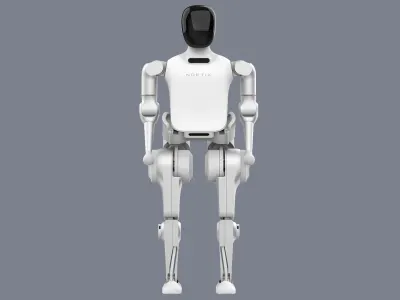
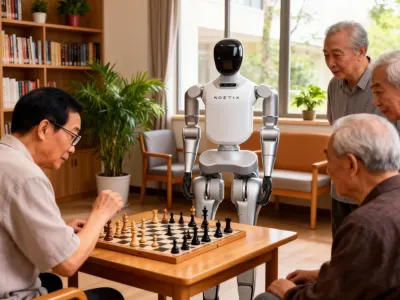
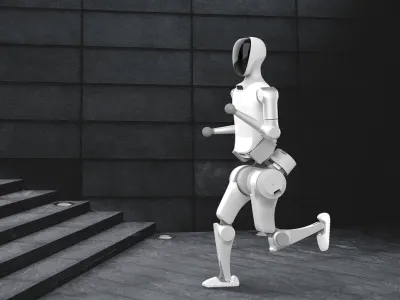
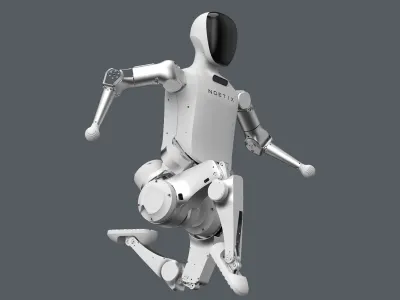
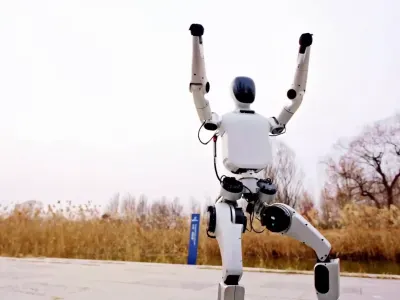
The N2 (Athlete) by Noetix Robotics is positioned as a compact, agile humanoid for home assistance, education, elder care, fashion shows, and sports demonstrations. Its child-sized frame at 118 cm height and 30 kg weight enables high-speed bipedal locomotion up to 12.6 km/h, distinguishing it through acrobatic capabilities like running, jumping, and backflips. With 18 DoF, dual structured-light depth cameras, and up to 67 TOPS compute via NVIDIA Jetson Orin Nano Super, it excels in dynamic, low-inertia movements for semi-autonomous operation.
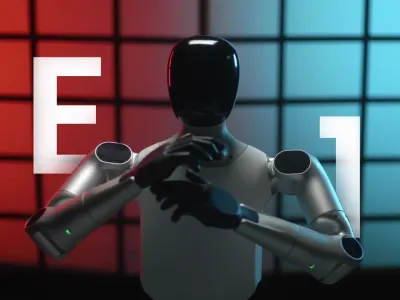
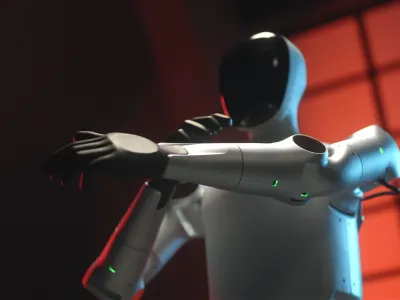
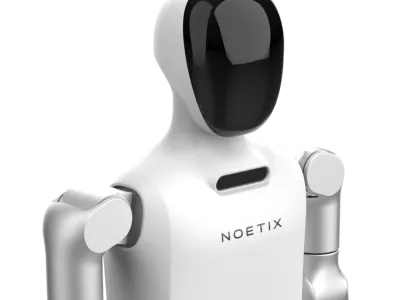
The E1 by Noetix Robotics targets athletic robotics research, STEM education, human-robot interaction studies, and commercial guide roles as a taller humanoid at 136 cm and 36 kg. It offers 21+ DoF for enhanced flexibility in arms, waist, and modular expansions, prioritizing multi-terrain stability and expressive interactions over raw speed at 4.32 km/h. Equipped with dual depth cameras, IMU, joint torque encoders, and optional radar, its semi-autonomous design supports advanced AI-driven perception and gesture synchronization.
Detailed Analysis
Bipedal Mobility & Balance
N2 (Athlete) achieves superior speed at 12.6 km/h (3.5 m/s) with demonstrated backflips, running, and jumping due to low-inertia joint design and 150 Nm peak torque. E1 reaches 1.2 m/s (4.32 km/h) but emphasizes stability on grass, snow, slopes, and steps via motion control algorithms and joint torque encoders. N2's lightweight 30 kg frame reduces inertia for aerial maneuvers, while E1's added 6 kg supports modular terrain adaptability. Both maintain dynamic balance, but N2 prioritizes agility over E1's endurance in varied environments.
Dexterity & Manipulation (Focus on hands/arms)
Both robots provide 5 kg carrying capacity per arm and 10 kg deadlift, enabling light object handling and gesture interaction. N2 (Athlete) with 18 DoF focuses on research-grade manipulation integrated with high-speed arm motions for dynamic tasks. E1's 21+ DoF, including extended arms and waist flexibility, allows for more precise, modular expansions like dexterous hands suited to human-robot studies. Neither specifies finger count or grip force, limiting complex grasping comparisons.
AI, Autonomy & Learning Capabilities
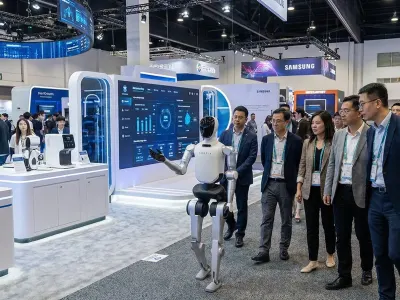
N2 (Athlete) leverages Rockchip RK3588s (6 TOPS) plus NVIDIA Jetson Orin Nano Super (67 TOPS) for edge AI in real-time object recognition, motion planning, and LLM speech-visual interaction under semi-autonomous mode. E1 uses standard RK3588s or EDU model's Orin Nano Super, emphasizing multi-modal AI for speech synthesis, facial animations, and low-latency multilingual engagement. Both support reinforcement learning for locomotion and ROS2/Python APIs, but N2's higher baseline compute aids autonomous decision-making without cloud reliance.
Payload & Lifting Capacity
N2 (Athlete) and E1 match exactly at 5 kg per arm carrying and 10 kg deadlift maximum, suitable for light manipulation in education and research. This equivalence supports gesture-based interactions and basic object handling without differentiation in strength specs. Peak torque of 150 Nm on N2 implies robust arm dynamics, while E1's torque encoders enable precise control. Capacities align for non-industrial tasks.
Battery Runtime & Power Efficiency
Both N2 (Athlete) and E1 claim 3-5 years battery lifespan, with practical runtime around 1-2 hours per 48V charge, enabling swappable operation for continuous demos. N2's lighter weight may yield marginally better efficiency during high-speed activities, while E1's 48V 9Ah pack sustains multi-terrain walking. No direct power consumption data differentiates endurance, but both prioritize low-power systems for memory retention and personality features.
Real-World Use Cases (Industrial vs General Purpose)
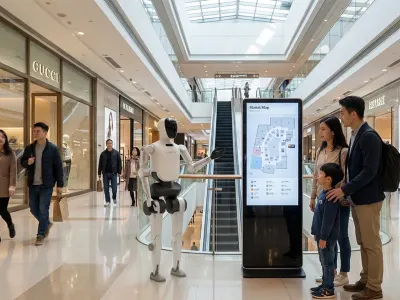
N2 (Athlete) suits general-purpose home assistance, elder care, education, fashion shows, and sports demos with agile, crowd-engaging motions. E1 targets research-specific athletic studies, STEM education, human-robot interaction, and guide roles, leveraging expressive gestures and terrain adaptability. Neither is optimized for industrial manufacturing; both emphasize collaborative, non-heavy-duty applications. Overlap exists in education, but N2 leans consumer-facing while E1 prioritizes structured research.
Sensor Suite & Vision Systems
N2 (Athlete) features dual structured-light depth cameras (one ahead, one downward), 4-mic array, IMU, and 6-axis force sensors for 3D perception and audio interaction. E1 includes dual depth cameras, IMU, joint torque encoders, with optional radar for enhanced environmental awareness. N2's forward/downward camera setup excels in dynamic navigation, while E1's encoders aid precise motion feedback. Both enable obstacle-aware operation.
Which robot offers better value for research and education?
N2 (Athlete) provides higher speed and compute at similar pricing to E1's EDU model, suiting dynamic demos and edge AI experiments. E1's extra DoF and modular options better fit human interaction studies and terrain research. Both share ROS2 compatibility and semi-autonomy. E1 edges for specialized academic use due to flexibility.
Which humanoid excels in dynamic agility demonstrations?
N2 (Athlete) outperforms with 3.5 m/s speed, backflips, and low-inertia design for sports and fashion shows. E1 focuses on stable, expressive motions like jumps up to 1.25 m but lower max speed. Payloads match, but N2's torque and cameras enable superior aerial stability. Choose N2 for high-agility public events.
Analysis Score Summary
Total Score
8
N2 (Athlete)
VS
Based on Detailed Analysis
Total Score
10
E1
📊 Win: 2 points | Trade-off: 1 point each
Scores are summed across every insight: a clear winner earns 2 points, while balanced trade-offs give each robot 1 point. The total reflects how often each robot outperforms the other (or shares the spotlight) throughout the detailed analysis sections.
Capabilities & Operational Tasks
Head-to-head comparison of what N2 (Athlete) and E1 can do, their applications, and capabilities.
What Can N2 (Athlete) & E1 Do?
8Core operational tasks, activities, and physical manipulation duties evaluated side-by-side.
| Task & Description | Model AN2 (Athlete)5 supported | Model BE17 supported |
|---|---|---|
| Autonomous task execution | High | High |
| Carrying and transport | — | High |
| Collaborative work | High | High |
| Human interaction | High | High |
| Move objects | — | High |
| Navigation | High | High |
| Obstacle traversal | High | — |
| Pick and place | — | High |
Technical Specifications
Head-to-head performance data and metrics
| Specification | Model AN2 (Athlete) | Model BE1 |
|---|---|---|
Functional Utility & Use Cases4 Comparative Metrics | ||
Control Method | Teleoperation, autonomous, learned behaviors | autonomous, teleoperation, learned behaviors |
Use Cases | Home assistance, education, elder care, fashion shows, sports demonstrations | Athletic robotics research, STEM education, human-robot interaction studies, and commercial guide roles. |
Multi Robot Coord | Supported (Demonstrated in 2026 Gala fleet) | Supported (Fleet management) |
Pet Friendly | Yes, with safety protocols | Yes, with safety protocols |
Manipulation & Load Capacity4 Comparative Metrics | ||
Carrying Capacity | 5 kg per arm | 5 kg per arm |
Deadlift Capacity | 10 kg | 10 kg maximum |
Payload Type | Tools, packages, precision instruments, people interaction | tools, packages, precision instruments, people interaction |
Modular Attachments | Tool changers, end-effector options | dexterous hands, advanced arms, tool changers |
Kinematic Architecture & Dexterity4 Comparative Metrics | ||
Degrees of Freedom | 18 | 21+ |
Material | Aluminum, composite, plastic | aluminum, composite, plastic |
Mobility Type | Legged (bipedal walking) | Legged (bipedal walking) |
Hardware Interface | USB, GPIO, CAN bus | USB, GPIO, CAN bus |
Functional Utility & Use Cases
4 Comparative Metrics
Manipulation & Load Capacity
4 Comparative Metrics
Kinematic Architecture & Dexterity
4 Comparative Metrics
Frequently Asked Questions
What is the payload and deadlift capacity of Noetix Robotics N2 (Athlete) versus E1?
Both Noetix Robotics N2 (Athlete) and E1 offer 5 kg per arm carrying capacity and 10 kg maximum deadlift.
What autonomy level and teleoperation options exist for Noetix N2 (Athlete) and E1?
Noetix Robotics N2 (Athlete) and E1 are semi-autonomous with ROS2 compatibility, Python APIs, and support for voice, gesture, app teleoperation.
How do walking speeds and stability compare between Noetix N2 (Athlete) and E1?
Noetix Robotics N2 (Athlete) reaches 12.6 km/h with backflips; E1 at 4.32 km/h prioritizes multi-terrain stability on slopes and grass.
What dexterity and manipulation capabilities define Noetix N2 (Athlete) vs E1?
Noetix Robotics N2 (Athlete) has 18 DoF for agile handling; E1's 21+ DoF enables modular arms and waist for precise research tasks.
Which use cases suit Noetix Robotics N2 (Athlete) for home and education deployment?
Noetix Robotics N2 (Athlete) fits home assistance, elder care, education, fashion shows, and sports demos with high agility.
Is Noetix Robotics E1 ready for human-robot interaction research deployments?
Noetix Robotics E1 supports STEM education, interaction studies, and guide roles with expressive AI, multi-modal perception, and modular expansions.
Related Comparisons
Discover similar robot matchups to expand your knowledge and find the perfect solution
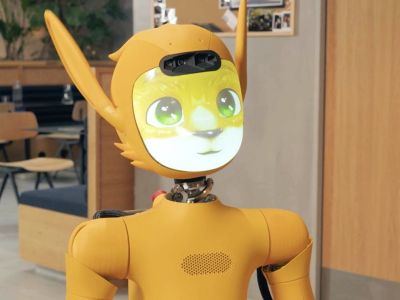

Mirokaï vs Hobbs W1(Guidance Expert)
Head-to-head: Mirokaï vs Hobbs W1(Guidance Expert) compared on bipedal balance, AI learning, dexterity, payload, and real-world service deployment.
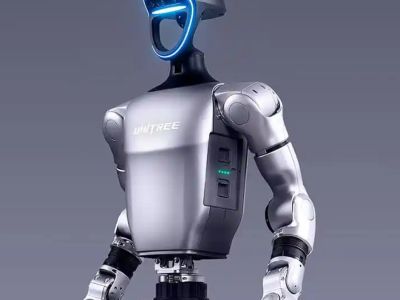
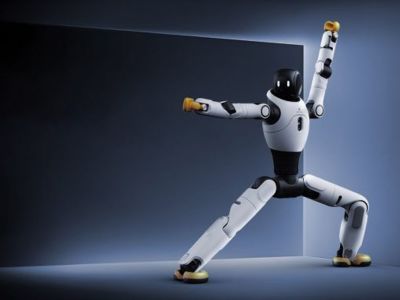
Unitree G1 vs AgiBot X2-N
Compare Unitree G1 vs AgiBot X2 for humanoid mobility, dexterity, autonomy, and payload capacity.
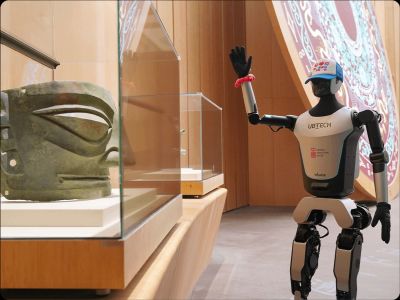
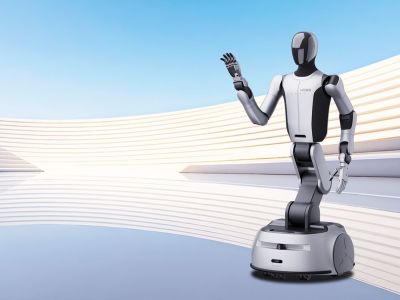
Walker C vs Cruzr S2
In-depth comparison of Walker C and Cruzr S2, covering hardware capabilities, teleoperation, and enterprise readiness.
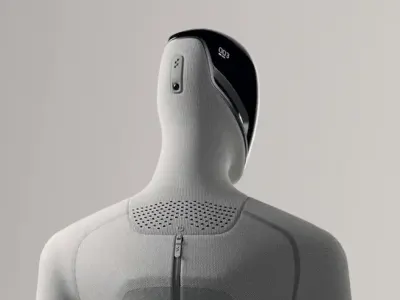
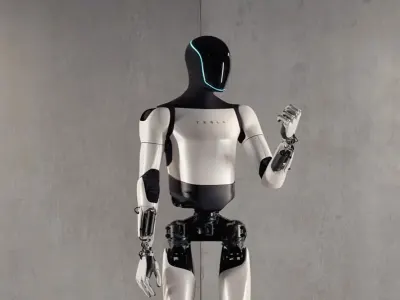
Figure 03 vs Optimus Gen 3
In-depth comparison of Figure 03 and Optimus Gen 3, covering hardware capabilities, teleoperation, and enterprise readiness.
Disclaimer
All content, comparisons, and verdicts on this website are based on our research, testing, and opinion. While we strive for accuracy, we do not guarantee the completeness, reliability, or suitability of any information. Performance, specifications, and results may vary depending on usage and conditions. This website and its authors are not responsible for any decisions, actions, or outcomes based on the information provided. Always verify product details with the manufacturer before making purchase or operational decisions.