Mirokaï vs Hobbs W1(Guidance Expert) at a glance
Mirokaï is the more affordable option at $30,000, while Hobbs W1(Guidance Expert) costs $35,000–$100,000. Mirokaï is quicker, with a top speed of 0.9 m/s versus 0.4 m/s for Hobbs W1(Guidance Expert). Mirokaï is lighter at 26 kg, compared with 40–50 kg for Hobbs W1(Guidance Expert). Mirokaï has more degrees of freedom (26 against 20 for Hobbs W1(Guidance Expert)), which allows finer movement.
Which one fits your use?
Based on the uses each robot is built and marketed for. Open a use to see the specs that matter for it.
| Comparing for… | Mirokaï | Hobbs W1(Guidance Expert) |
|---|---|---|
| Not listed | Suited | |
| Suited | Not listed | |
| Suited | Suited | |
| Suited | Suited |
- Pick Mirokaï for home help and elder care.
- Pick Hobbs W1(Guidance Expert) for education and training.
- Both suit hospitality, retail and public-facing roles and healthcare settings, so compare the specs for that use.
Mirokaï by Enchanted Tools positions as a compact humanoid for social environments like hotels, airports, and hospitals, emphasizing human-robot interaction through its animated face and ball-bot base. Its key differentiators include a lightweight 29 kg frame, superior speed of 3.2 km/h via omnidirectional globe mobility, and extensive sensor array with 2 RGBD cameras, 9 time-of-flight cameras, and 8 torque sensors. Priced at US $30,000 plus monthly maintenance, it targets repetitive tasks such as guiding visitors and carrying trays up to 3 kg per arm.
Hobbs W1(Guidance Expert) by Noetix Robotics targets professional guidance in malls, corporate, and healthcare settings as a taller semi-autonomous humanoid. Differentiators encompass 52 total degrees of freedom including 32 in the bionic head, embedded dual NVIDIA GPUs for compute, and LiDAR-enhanced navigation despite slower 1.5 km/h speed. Priced between USD 35,000–100,000, it excels in reception and concierge roles with 2 kg carrying and 5 kg deadlift capacities.
Detailed Analysis
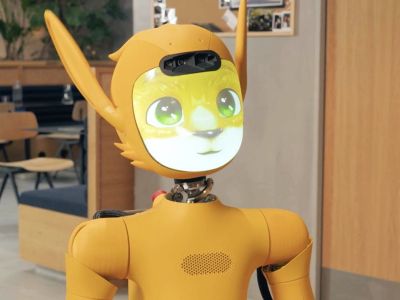
Mirokaï
Bipedal Mobility & Balance
Mirokaï employs a patented 3-DOF ball mobile base for omnidirectional movement at 3.2 km/h, outperforming Hobbs W1(Guidance Expert)'s 1.5 km/h wheeled or bipedal navigation aided by LiDAR and IMU. This globe system enables smoother indoor maneuvering in crowded social spaces without traditional bipedal balance challenges. Hobbs W1 offers stability for guidance tasks but lags in speed. Mirokaï's navigation performance rates competent for structured environments.
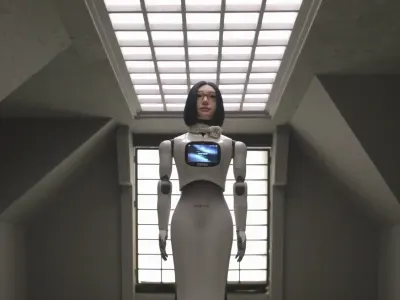
Hobbs W1(Guidance Expert)
Dexterity & Manipulation Capabilities
Mirokaï features 26 DoF total with 2 DoF per hand, 8 fingers, and torque-controlled arms achieving 97% grasping success for standardized objects like trays. Hobbs W1(Guidance Expert) provides 20 DoF in body/arms/base plus 32 in bionic head, supporting precise manipulation despite lower specified hand details. Mirokaï prioritizes reliable gripping over high dexterity. Hobbs emphasizes head expressiveness for interaction.
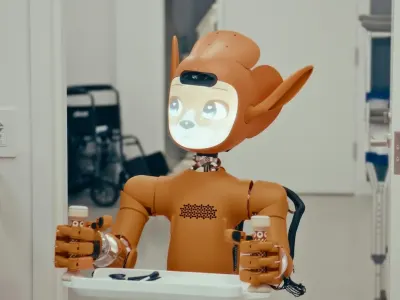
Mirokaï
AI, Autonomy & Learning Capabilities
Both robots operate at semi-autonomous levels, with Mirokaï offering teleoperation fallback and multi-LLM integration for context-aware conversations. Hobbs W1(Guidance Expert) leverages dual 8GB NVIDIA GPUs and x86/ARM CPU for advanced processing in guidance tasks. Neither specifies full autonomy or learning frameworks beyond ROS2 compatibility. Mirokaï focuses on real-time speech and face tracking.

Hobbs W1(Guidance Expert)
Payload & Lifting Capacity Comparison
Mirokaï supports 3 kg carrying per arm and up to 1.5-3 kg payload, while Hobbs W1(Guidance Expert) matches 2 kg per arm carrying but exceeds with 5 kg deadlift. Mirokaï pulls up to 15 kg in some configurations. Hobbs prioritizes deadlift strength for heavier lifts. Capacities suit light service tasks without industrial demands.
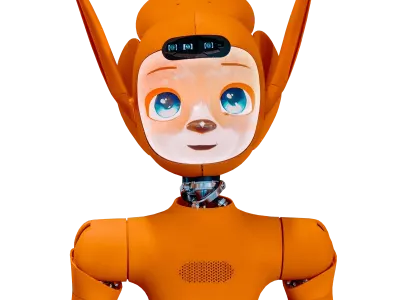
Mirokaï
Battery Runtime & Power Efficiency Details
Mirokaï specifies a 4-hour runtime per charge for full-shift operation. Hobbs W1 lacks detailed runtime but shares similar longevity claims. Mirokaï's lightweight design aids efficiency in social mobility. Power supports extended guidance and interaction sessions.

Hobbs W1(Guidance Expert)
Real-World Use Cases Industrial vs General Purpose
Mirokaï targets general social engagement like visitor guiding, tray carrying, and hospital logistics in public spaces. Hobbs W1(Guidance Expert) focuses on professional reception, mall guidance, corporate concierge, and healthcare info services. Neither suits heavy industrial use; both emphasize structured environments. Mirokaï adds repetitive manipulation versatility.
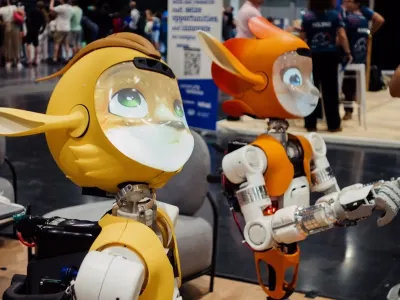
Mirokaï
Sensor Suite & Vision Systems Performance?
Mirokaï's suite includes 2 RGBD, 2 infrared, 9 time-of-flight cameras, 8 torque sensors, 6 ultrasound, 4 microphones, and 3 IMUs for 360° awareness. Hobbs W1(Guidance Expert) uses dual RGB eye cameras, chest camera, linear microphone array, LiDAR, and IMU. Mirokaï offers broader depth sensing. Hobbs prioritizes navigation-focused vision.

Hobbs W1(Guidance Expert)
Which Robot Better for Complex Manipulation Tasks?
Mirokaï excels in reliable 97% grasping of standardized objects with torque sensors and 3 kg arm capacity, while Hobbs W1(Guidance Expert) provides higher 52 DoF and 5 kg deadlift but less sensor detail for manipulation. Mirokaï suits repetitive tray handling; Hobbs aids varied guidance lifts. For complex tasks, Hobbs W1(Guidance Expert) offers superior DoF flexibility.
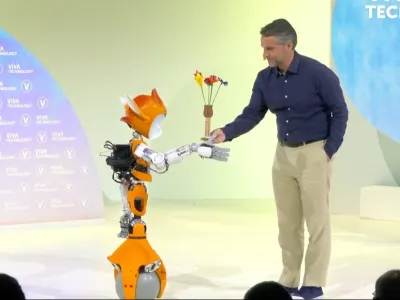
Mirokaï
Which Humanoid Best for Social Guidance Use Cases?
Mirokaï's animated face, multilingual speech, and fast mobility fit visitor informing and social engagement, contrasting Hobbs W1(Guidance Expert)'s bionic head and GPU compute for concierge precision. Both handle healthcare info. Mirokaï edges in speed; Hobbs in height and processing. Choose Mirokaï by Enchanted Tools for dynamic public interactions.
Capabilities & Operational Tasks
Head-to-head comparison of what Mirokaï and Hobbs W1(Guidance Expert) can do, their applications, and capabilities.
What Can Mirokaï & Hobbs W1(Guidance Expert) Do?
107 tasks listed for both, 1 only for Mirokaï, 2 only for Hobbs W1(Guidance Expert).
Technical Specifications
Mirokaï and Hobbs W1(Guidance Expert) differ on 27 of the 52 specifications listed for both.
Functional Utility & Use Cases
4 Comparative Metrics
Manipulation & Load Capacity
4 Comparative Metrics
Kinematic Architecture & Dexterity
4 Comparative Metrics
Frequently Asked Questions
What is the payload and deadlift capacity of Mirokaï versus Hobbs W1(Guidance Expert)?
Mirokaï offers 3 kg per arm carrying and 3 kg deadlift; Hobbs W1(Guidance Expert) provides 2 kg per arm carrying and 5 kg maximum deadlift.
What autonomy level and teleoperation features do these humanoid robots have?
Both Mirokaï by Enchanted Tools and Hobbs W1(Guidance Expert) are semi-autonomous; Mirokaï includes explicit teleoperation fallback.
How do walking speeds and locomotion stability compare between Mirokaï and Hobbs W1?
Mirokaï achieves 3.2 km/h via ball-bot base for omnidirectional stability; Hobbs W1(Guidance Expert) reaches 1.5 km/h with LiDAR navigation.
What dexterity and hand capabilities define Mirokaï by Enchanted Tools and Hobbs W1(Guidance Expert)?
Mirokaï has 26 DoF with 2 DoF hands and 8 fingers for 97% grasping; Hobbs W1(Guidance Expert) totals 52 DoF focused on bionic head.
Which robot is suitable for shopping mall guidance and visitor informing tasks?
Hobbs W1(Guidance Expert) targets mall guidance and reception; Mirokaï by Enchanted Tools handles visitor guiding in public spaces.
What deployment readiness do Mirokaï and Hobbs W1(Guidance Expert) offer for healthcare services?
Both support healthcare info services; Mirokaï adds tray carrying, with 50 units piloted in 2024.
Related Comparisons
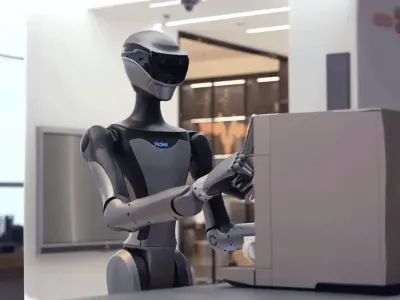
Hiva Haiwa vs Mirokaï
In-depth comparison of Hiva Haiwa by Haier and Mirokaï by Enchanted Tools. Analyze sensors, navigation, battery, and mobility differences.
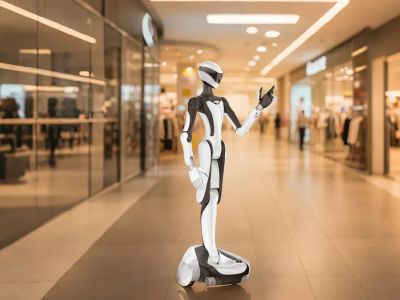
Mirokaï vs RobotEra Q5
Which robot wins? Mirokaï vs Q5 compared across sensors, navigation, speed, battery, and price for service robotics applications.
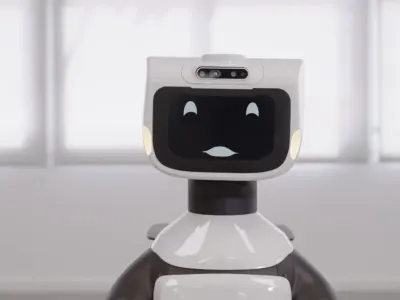
Mirokaï vs TIAGo Pro
Mirokaï or TIAGo Pro? Compare specs, navigation, battery, and sensors.
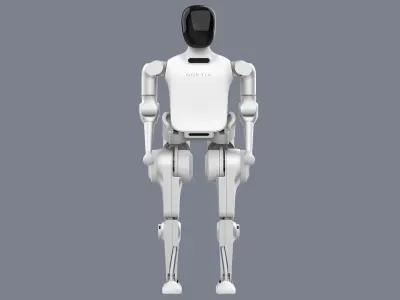
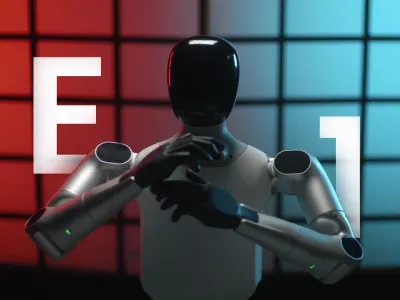
N2 (Athlete) vs Noetix E1
Which humanoid robot is better? N2 (Athlete) vs E1 compared for bipedal agility, dexterity, AI autonomy, payload, and research readiness.
Verdicts reflect our research and opinion. Confirm specifications with the manufacturer before buying.