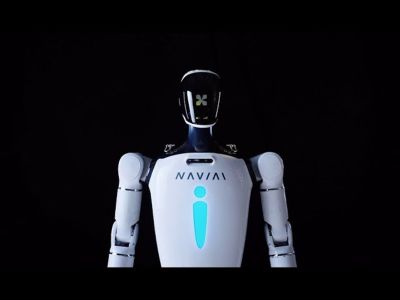
The NAVAI Navigator 2 by Zhejiang Humanoid Robot Innovation Center represents a humanoid robot optimized for home services, education, and clinical assistance, featuring advanced AI computing power at 275 TOPS and 41 degrees of freedom. Its combination of indoor SLAM, visual SLAM, and LiDAR mapping, along with a lightweight design of 60 kg and a top speed of 6 km/h, distinguishes it with a focus on precision tasks and dynamic navigation in varied environments.
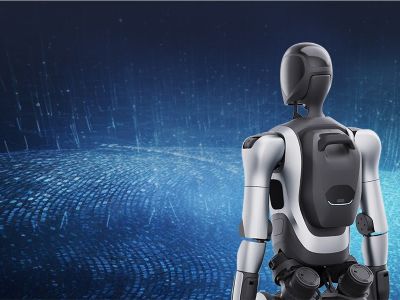
The AgiBot A2 Ultra by AgiBot is a humanoid robot engineered for customer service, logistics, and manufacturing applications, characterized by its 49+ degrees of freedom and a 200 TOPS AI processing system running WorkGPT. Weighing 69 kg and moving at a slower top speed of 2.88 km/h, the A2 Ultra excels in dexterous manipulation and multimodal AI interaction within industrial and research settings, supported by a diverse sensor suite including RGB-D and fisheye cameras.
Detailed Analysis

Design & Build Quality
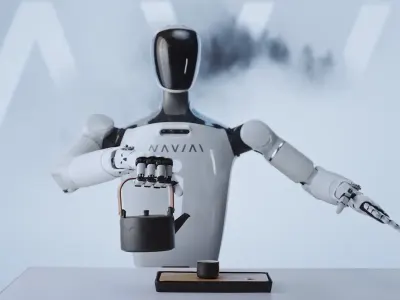
The NAVAI Navigator 2 measures 165 x 50 x 35 cm and weighs 60 kg, exhibiting a slim profile with 41 degrees of freedom suited for complex, precision tasks such as making tea or playing chess. In contrast, the AgiBot A2 Ultra is larger at 169 x 75 x 30 cm and weighs 69 kg, featuring 49+ degrees of freedom that enhance its dexterity for industrial manipulation. Both robots employ humanoid form factors but target slightly different operational emphases with NAVAI focusing on balanced mobility and precision, while AgiBot prioritizes agility and fine motor control.
Mobility & Navigation
NAVAI Navigator 2 achieves a higher maximum speed of 6 km/h (1.67 m/s), making it faster in navigation than the AgiBot A2 Ultra, which travels at 2.88 km/h (0.8 m/s). Both robots utilize indoor SLAM combined with visual SLAM and LiDAR mapping to navigate complex environments autonomously, though NAVAI's speed advantage may benefit dynamic service scenarios. AgiBot’s movement emphasizes stability and dextrous task execution at slower speeds.
Sensors & Perception
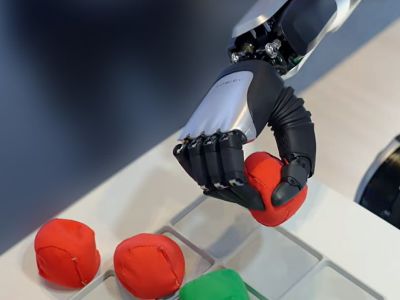
NAVAI Navigator 2 incorporates a broad sensor suite including RGB, stereo, depth cameras, LiDAR, ultrasonic sensors, IMU, gyroscope, force, touch, and temperature sensors, offering extensive environmental and tactile perception. The AgiBot A2 Ultra also deploys LiDAR, RGB-D, fisheye cameras, IMU, gyroscope, and force sensors but lacks some of the touch and temperature sensing available in NAVAI. Both robots support real-time sensory fusion critical for navigation, manipulation, and human interaction.

AI Capabilities
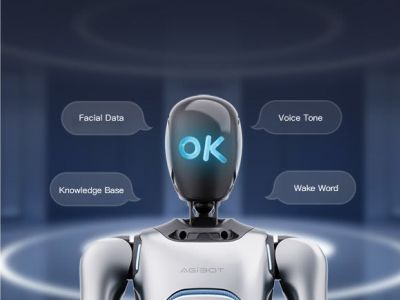
NAVAI Navigator 2 features a proprietary OS with ROS2 integration and supports Python and C++ programming, leveraging a powerful AI computing capacity of 275 trillion operations per second for learned behaviors and autonomous control. Conversely, AgiBot A2 Ultra deploys a 200 TOPS AI system running WorkGPT, a multimodal intelligence that processes text, audio, and visual inputs with 96% accuracy, facilitating complex interaction and task execution in noisy environments. Both platforms emphasize teleoperation, autonomous functions, and AI-assisted learning.

Battery & Power Efficiency
Both robots have battery lifespans estimated between 3 to 5 years, designed for long-term deployment. NAVAI Navigator 2 details imply sustained operational capacity without specifics on runtime but emphasizes extended usability. AgiBot A2 Ultra provides 2-3 hours of runtime with roughly 2-hour charging and supports hot-swappable batteries, enabling multi-shift usage suited for industrial settings.
Use-Case Suitability
NAVAI Navigator 2 targets home and clinical environments, education, exhibitions, and customer service, highlighting its balance of speed, precision, and safety for interactive human environments. The AgiBot A2 Ultra is more industrially oriented, with applications in customer service, logistics, manufacturing, research, and entertainment, leveraging its dexterity and modular AI for complex manipulation and interaction in demanding operational contexts.
Software Ecosystem
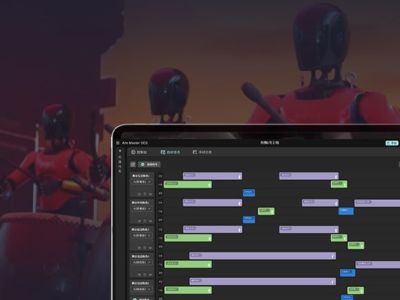
Both robots operate on proprietary operating systems with ROS2 compatibility, supporting Python and C++ development and offering APIs for integration. NAVAI’s software emphasizes autonomous navigation and learned behaviors tailored to multi-domain uses, while AgiBot’s WorkGPT AI introduces advanced multimodal processing and cloud connectivity for context-aware task management and remote operation.
Safety Features
NAVAI Navigator 2 and AgiBot A2 Ultra both include safety protocols such as force limiting, collision detection, emergency stop functionality, and collaborative modes to ensure safe interaction with humans. These features are integral for their deployment in environments with close human-robot interaction, ensuring responsive and adaptive operations to prevent accidents.
Analysis Score Summary
Total Score
7
NAVAI Navigator 2
VS
Based on Detailed Analysis
Total Score
9
AgiBot A2 Ultra
📊 Win: 2 points | Trade-off: 1 point each
Scores are summed across every insight: a clear winner earns 2 points, while balanced trade-offs give each robot 1 point. The total reflects how often each robot outperforms the other (or shares the spotlight) throughout the detailed analysis sections.
Capabilities & Operational Tasks
Head-to-head comparison of what NAVAI Navigator 2 and AgiBot A2 Ultra can do, their applications, and capabilities.
What Can NAVAI Navigator 2 & AgiBot A2 Ultra Do?
19Core operational tasks, activities, and physical manipulation duties evaluated side-by-side.
| Task & Description | Model ANAVAI Navigator 26 supported | Model BAgiBot A2 Ultra17 supported |
|---|---|---|
| Assembly | — | High |
| Autonomous task execution | High | High |
| Carrying and transport | High | High |
| Collaborative work | High | High |
| Human interaction | High | — |
| Inspection | — | High |
| Loading and unloading | — | High |
| Machine operation | — | High |
| Machine tending | — | High |
| Material handling | — | High |
| Move objects | — | High |
| Navigation | High | High |
| Obstacle traversal | High | — |
| Packaging | — | High |
| Pick and place | — | High |
| Quality control | — | High |
| Repetitive physical tasks | — | High |
| Sorting | — | High |
| Tool use | — | High |
Technical Specifications
Head-to-head performance data and metrics
| Specification | Model ANAVAI Navigator 2 | Model BAgiBot A2 Ultra |
|---|---|---|
Functional Utility & Use Cases4 Comparative Metrics | ||
Control Method | Autonomous, learned behaviors, teleoperation | Autonomous, learned behaviors, teleoperation |
Use Cases | Home services, education, training, exhibitions, customer service, clinical assistance, research labs | Customer service, logistics, manufacturing, research, entertainment |
Multi Robot Coord | Yes | Yes, swarm and multi-robot coordination |
Pet Friendly | Yes, with safety protocols | Yes, with safety protocols |
Manipulation & Load Capacity4 Comparative Metrics | ||
Carrying Capacity | 5 kg | About 2 kg (maximum arm load) |
Deadlift Capacity | 10 kg | 3 kg |
Payload Type | Tools, packages, precision instruments, people interaction | Tools, packages, precision instruments, people interaction |
Modular Attachments | Tool changers, end-effector options | Tool changers, end-effector options |
Kinematic Architecture & Dexterity4 Comparative Metrics | ||
Degrees of Freedom | 41 | 40 DoF (neck 2, arm 7 each, leg 6 each, 6-DoF dexterous hands) |
Material | Aluminum, composite, soft materials | Aluminum, composite, soft materials |
Mobility Type | Legged (bipedal walking) | Legged (bipedal walking) |
Hardware Interface | USB, GPIO, CAN bus, serial | USB, GPIO, CAN bus, serial |
Functional Utility & Use Cases
4 Comparative Metrics
Manipulation & Load Capacity
4 Comparative Metrics
Kinematic Architecture & Dexterity
4 Comparative Metrics
Related Comparisons
Discover similar robot matchups to expand your knowledge and find the perfect solution
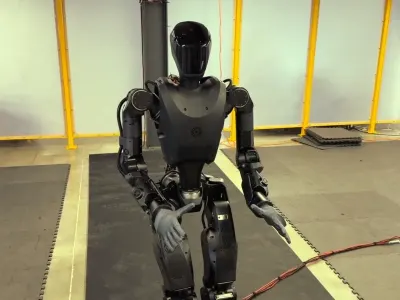
AgiBot A2 Ultra vs Phantom MK1
Which humanoid robot is better? AgiBot A2 Ultra vs Phantom MK1 compared for dexterity, AI capabilities, payload, and defense use cases.
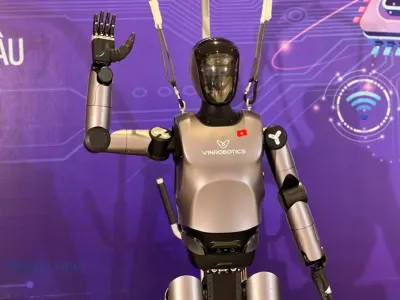
AgiBot A2 Ultra vs VR-H3
Which humanoid robot is better? AgiBot A2 Ultra vs VR-H3 compared for dexterity, AI autonomy, payload capacity, and industrial deployment readiness.
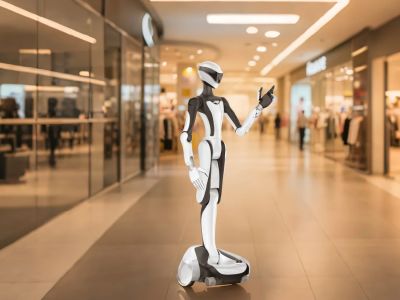
Q5 vs AgiBot A2 Ultra
In-depth comparison of Q5 by Robot Era and AgiBot A2 Ultra by AgiBot. Analyze sensors, navigation, battery life, and mobility differences.
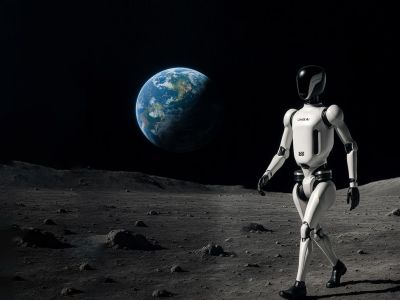
Martian vs AgiBot A2 Ultra
Head-to-head: Martian vs AgiBot A2 Ultra. Explore differences in navigation, battery, sensors, mobility, and software.
Disclaimer
All content, comparisons, and verdicts on this website are based on our research, testing, and opinion. While we strive for accuracy, we do not guarantee the completeness, reliability, or suitability of any information. Performance, specifications, and results may vary depending on usage and conditions. This website and its authors are not responsible for any decisions, actions, or outcomes based on the information provided. Always verify product details with the manufacturer before making purchase or operational decisions.