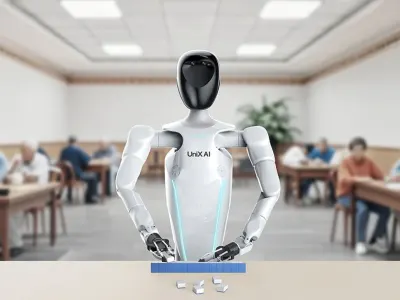
The Q5 by Robot Era is a humanoid service robot designed to excel in diverse indoor environments such as elder care, retail, and hospitality. Positioned as a versatile platform combining teleoperation and autonomous control, it distinguishes itself with a comprehensive sensor suite including stereo cameras and robust safety features like force limiting and collaborative mode. Its emphasis on emotional intelligence and adaptive behaviors aims to enhance human-robot interaction in service and research contexts.
The Martian by UniX AI is a humanoid robot focused on high-speed mobility and software flexibility, targeting logistics, manufacturing, and household assistance applications. It leverages a lightweight design and faster maximum speed to support dynamic operational scenarios. With an open ROS2 ecosystem and advanced sensor integration including depth cameras and thermal sensing, the Martian prioritizes autonomous navigation and scalable deployment in service industries.
Detailed Analysis
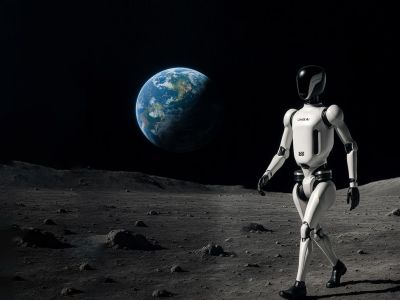
Design & Build Quality
Q5 measures 165 x 50 x 52 cm and weighs 70 kg, featuring a taller and more robust frame suited for stable indoor operation. In contrast, the Martian is slightly shorter and narrower at 160 x 50 x 30 cm and significantly lighter at 50 kg, reflecting a design optimized for mobility and ease of deployment. The Q5's heavier build supports applications requiring physical presence and sturdiness, while Martian's lighter chassis facilitates faster movement and potential agility.
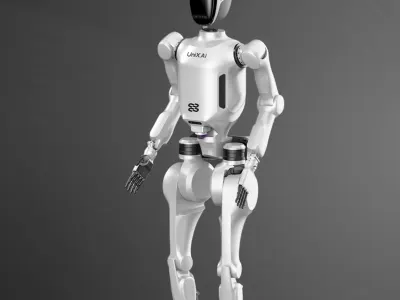
Mobility & Navigation
Q5 moves at a speed of 1.5 m/s with capabilities for teleoperation and autonomous control, emphasizing safe, deliberate navigation in complex environments. The Martian notably outpaces Q5 with a top speed of 3 m/s (10.8 km/h) and focuses exclusively on autonomous and learned behavior control. Both robots utilize indoor SLAM, visual SLAM, and LiDAR mapping, but Martian's higher velocity suits applications demanding rapid transit and efficient route planning.
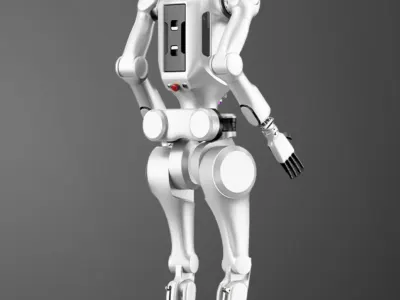
Sensors & Perception
Both robots are equipped with RGB cameras, LiDAR, ultrasonic sensors, IMU, gyroscope, force, and temperature sensors, supporting comprehensive environmental awareness. Q5 incorporates stereo cameras, enhancing depth perception for interaction tasks, while Martian adds depth cameras and thermal sensors, broadening its sensory spectrum for detailed spatial and thermal analysis. Martian's sensor suite is tuned for precise navigation and manipulation in dynamic settings.
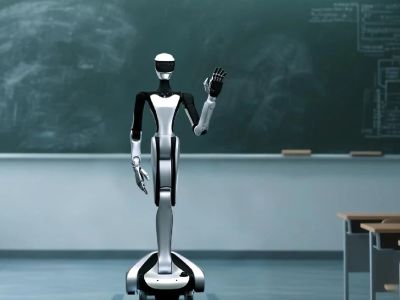
AI Capabilities
Q5 supports teleoperation, autonomous operation, and learned behaviors with integration of ROS2, proprietary OS, and programming in Python and C++. It emphasizes emotional intelligence and adaptive learning to improve human interaction. Martian operates autonomously with learned behaviors within a ROS2 framework and proprietary software, focusing on scalable software development and deployment with extensive API support but excludes teleoperation.
Battery & Power Efficiency
Q5 offers a battery life rated at 4 years, providing consistent operational longevity suitable for continuous service roles. Martian's battery life spans 3 to 5 years, suggesting comparable endurance with potential variability based on usage patterns. Both platforms are engineered for extended deployment with minimal downtime, reflecting their roles in service and industrial environments.
Use-Case Suitability
Q5 is designed for elder care, child interaction, retail, hospitality, research laboratories, and logistics, emphasizing human-centric service and interactive roles. Martian targets logistics, manufacturing, household assistance, research, and service industries, prioritizing operational efficiency and autonomous task execution. Each robot's design and feature set align with these distinct application domains.
Software Ecosystem
Both robots run ROS2 and support Python and C++ programming with APIs for customization, enabling integration into varied robotic workflows. Q5 combines ROS2 with a proprietary OS, potentially offering specialized capabilities for teleoperation and emotional AI. Martian focuses on an open, modular software architecture to accelerate development and facilitate over-the-air updates, supporting scalability and adaptability.
Safety Features
Q5 and Martian both implement force limiting, collision detection, emergency stop, and collaborative modes, ensuring safe operation around humans. These features enable compliance with safety standards for collaborative robotics, allowing both robots to function reliably in shared human environments without additional safety infrastructure.
Analysis Score Summary
Total Score
8
Q5
VS
Based on Detailed Analysis
Total Score
8
Martian
📊 Win: 2 points | Trade-off: 1 point each
Scores are summed across every insight: a clear winner earns 2 points, while balanced trade-offs give each robot 1 point. The total reflects how often each robot outperforms the other (or shares the spotlight) throughout the detailed analysis sections.
Capabilities & Operational Tasks
Head-to-head comparison of what Q5 and Martian can do, their applications, and capabilities.
What Can Q5 & Martian Do?
9Core operational tasks, activities, and physical manipulation duties evaluated side-by-side.
| Task & Description | Model AQ59 supported | Model BMartian7 supported |
|---|---|---|
| Autonomous task execution | High | High |
| Carrying and transport | High | High |
| Collaborative work | High | High |
| Greeting and guiding visitors | Moderate | — |
| Human interaction | High | — |
| Move objects | High | High |
| Navigation | High | High |
| Obstacle traversal | High | High |
| Pick and place | High | High |
Technical Specifications
Head-to-head performance data and metrics
| Specification | Model AQ5 | Model BMartian |
|---|---|---|
Functional Utility & Use Cases4 Comparative Metrics | ||
Control Method | Teleoperation, autonomous, learned behaviors | Autonomous, learned behaviors |
Use Cases | Customer greeting, guided tours, healthcare assistance, object delivery, research demos | Logistics, manufacturing, household assistance, research, service industries |
Multi Robot Coord | No | (Inferred · Medium confidence · Not specified for service focus) | Yes |
Pet Friendly | Yes, with safety protocols | Yes, with safety protocols |
Manipulation & Load Capacity4 Comparative Metrics | ||
Carrying Capacity | 10 kg per arm | 30 kg |
Deadlift Capacity | 10 kg | (Inferred · High confidence · Based on Robot Era's Q5 hand payload specs) | 50 kg |
Payload Type | Tools, packages, precision instruments, people interaction | Tools, packages, precision instruments, people interaction |
Modular Attachments | Tool changers, end-effector options | Tool changers, end-effector options |
Kinematic Architecture & Dexterity4 Comparative Metrics | ||
Degrees of Freedom | 44 | 23 |
Material | Aluminum frame, composite, soft skin elements | (Inferred · Medium confidence · Typical for dexterous service humanoids) | Aluminum, composite, soft materials |
Mobility Type | Wheeled | Legged (bipedal walking) |
Hardware Interface | USB, GPIO, CAN bus, serial | USB, GPIO, CAN bus, serial |
Functional Utility & Use Cases
4 Comparative Metrics
Manipulation & Load Capacity
4 Comparative Metrics
Kinematic Architecture & Dexterity
4 Comparative Metrics
Related Comparisons
Discover similar robot matchups to expand your knowledge and find the perfect solution
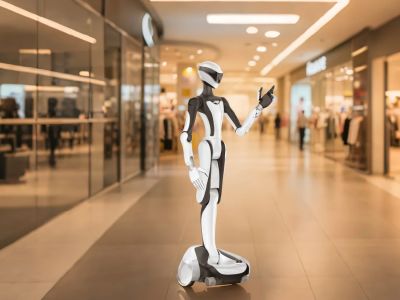
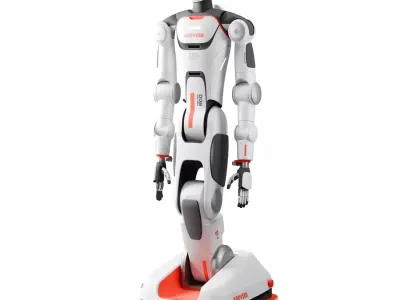
Q5 vs ELIXIS W
Compare Q5 by Robot Era and ELIXIS W by Addverb Technologies. Detailed analysis of sensors, navigation, battery, and price.
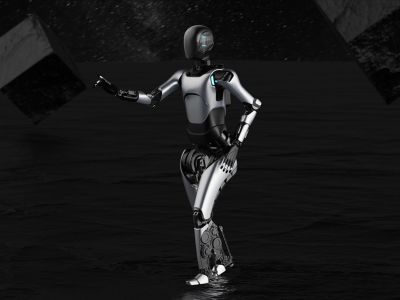
AgiBot A2 vs Martian
Compare AgiBot A2 and Martian. Detailed analysis of sensors, navigation, mobility, and battery life.
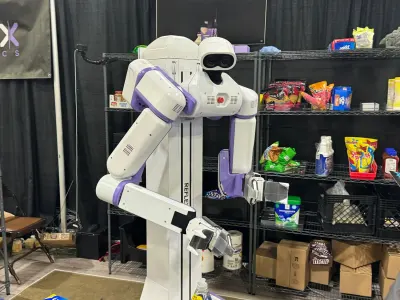
Q5 vs Reflex Humanoid
Which robot wins? Q5 vs Reflex Humanoid compared across sensors, navigation, battery, speed, and price.
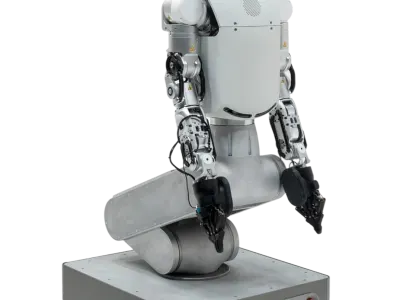
Q5 vs HMND 01 Alpha Wheeled
Q5 or HMND 01 Alpha Wheeled? Compare specs, speed, sensors, navigation, and battery for service vs industrial performance.
Disclaimer
All content, comparisons, and verdicts on this website are based on our research, testing, and opinion. While we strive for accuracy, we do not guarantee the completeness, reliability, or suitability of any information. Performance, specifications, and results may vary depending on usage and conditions. This website and its authors are not responsible for any decisions, actions, or outcomes based on the information provided. Always verify product details with the manufacturer before making purchase or operational decisions.