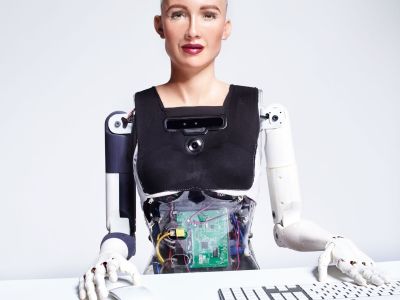
Sophia by Hanson Robotics is a pioneering social humanoid robot developed in 2016, designed primarily for research, education, and public exhibition rather than industrial labor. As a female-presenting robot capable of mimicry and simple conversation on predefined topics like weather or philosophy, Sophia occupies the social robot niche but lacks true autonomy or physical versatility. Key differentiators include its 83 degrees of freedom, extensive sensor suite for facial and audio recognition, and semi-autonomous operation with teleoperation support, though it cannot walk or perform complex manipulation tasks.
Aria - Robot Girlfriend by Realbotix is a high-end, modular humanoid companion robot engineered for social intelligence, emotional engagement, and customizable intimacy, with a focus on replacing human presence in hospitality and companionship roles. Unlike general-purpose robots, Aria features patented silicone skin, 17 facial motors for realistic expression, and the ability to learn from past interactions to build personalized relationships. Its key differentiators include a 5-year battery lifecycle, 44 total degrees of freedom, and a speed of 2 km/h optimized for safe indoor interaction, making it more mobile than Sophia but still not suited for heavy lifting or industrial work.
Detailed Analysis

Does Sophia have bipedal mobility or balance capabilities?
Sophia lacks bipedal mobility entirely; it has no legs and operates on a mobile base with 14 degrees of freedom, meaning it cannot walk, stand independently, or maintain balance on uneven surfaces. In contrast, Aria is designed with a rolling base and optimized for slow indoor movement (2 km/h), offering better stability and purposeful locomotion within controlled environments. While neither robot achieves true bipedal balance like industrial humanoids, Aria’s mobility is more functional for companion roles, whereas Sophia remains stationary during most interactions.

How does Sophia's dexterity compare to Aria's hand capabilities?
Sophia exhibits limited dexterity with 30 degrees of freedom in arms and hands, carrying only 0.6 kg per arm and unable to reliably grasp or manipulate objects. Aria’s dexterity is also minimal, as its design prioritizes facial expression and social interaction over manipulation; it has no specified carrying or deadlift capacity, indicating it is not built for physical tasks. Sophia’s hands include touch and force sensors, but its overall manipulation capability is inferior to even basic robotic arms, while Aria’s focus is entirely on non-physical interaction.

Which robot offers better autonomous learning capabilities?
Sophia operates as a semi-autonomous system with scripted behavior and teleoperation, lacking true general intelligence or the ability to learn independently from interactions; its memory is session-based and does not retain long-term individual data. Aria, however, is explicitly designed to learn and remember previous interactions, enabling it to build personalized relationships and adapt to user preferences over time, representing a higher level of social autonomy. While neither achieves full AGI, Aria’s architecture supports more advanced behavioral learning for companionship, making it superior for autonomous social adaptation.
Which humanoid robot is better for industrial manufacturing?
Neither Sophia nor Aria is suitable for industrial manufacturing, as both lack legs, heavy payload capacity, and the ability to perform practical physical tasks like lifting, assembly, or logistics. Sophia’s deadlift capacity is only 1.2 kg, and Aria has no specified lifting capability, confirming both are incapable of industrial labor. For manufacturing applications, enterprises must consider purpose-built industrial humanoids; between these two, Sophia is more research-oriented while Aria is purely companion-focused, making neither viable for factory use.
How long does Aria's battery run compared to Sophia's?
Aria features a standard high-cycle Lithium battery with a rated lifecycle of 5 years, optimized for continuous social interaction and minimal downtime in companion roles. Sophia’s battery specifications are not publicly disclosed, but its operational use is limited to short sessions due to session-based memory and lack of long-term autonomy, suggesting significantly shorter runtime per charge. Aria’s battery design supports sustained daily deployment, whereas Sophia is typically used intermittently for demonstrations or educational events.

What are the real-world use cases for Sophia versus Aria?
Sophia is deployed in university research, AI and robotics education, museum exhibitions, corporate events, healthcare companion demonstrations, and AI ethics discussions, emphasizing its role as an educational and demonstrative tool. Aria is used for companionship, hospitality greeters, human-AI research, and entertainment, focusing on emotional engagement and personalized interaction in social settings. While Sophia excels in public engagement and academic contexts, Aria is tailored for intimate, long-term companionship and customer service roles where human-like presence is critical.

Which robot offers better facial expression realism?
Aria significantly outperforms Sophia in facial expression realism, featuring 17 dedicated facial motors and patented silicone skin that enable highly lifelike, dynamic expressions and micro-movements indistinguishable from human behavior. Sophia can mimic human gestures and provide basic facial responses but lacks the motor complexity and skin technology for nuanced, real-time expression, making its mimicry more mechanical. For applications requiring emotional authenticity and hyper-realistic interaction, Aria is the superior choice, while Sophia remains a limited testbed for social robotics concepts.
Which robot is more capable for complex manipulation tasks?
Neither robot is capable of complex manipulation tasks; Sophia’s maximum carrying capacity is 0.6 kg per arm with a deadlift of only 1.2 kg, and it cannot reliably grasp or hold objects. Aria has no specified carrying or deadlift capacity, indicating it is not engineered for any physical manipulation whatsoever. Both are designed exclusively for social interaction, with Sophia offering minimal upper-body sensor feedback and Aria focusing entirely on non-physical companionship. For manipulation tasks, neither is viable, and industrial humanoids must be selected instead.
Analysis Score Summary
Total Score
9
Sophia
VS
Based on Detailed Analysis
Total Score
7
Aria - Robot Girlfriend
📊 Win: 2 points | Trade-off: 1 point each
Scores are summed across every insight: a clear winner earns 2 points, while balanced trade-offs give each robot 1 point. The total reflects how often each robot outperforms the other (or shares the spotlight) throughout the detailed analysis sections.
Capabilities & Operational Tasks
Head-to-head comparison of what Sophia and Aria - Robot Girlfriend can do, their applications, and capabilities.
What Can Sophia & Aria - Robot Girlfriend Do?
8Core operational tasks, activities, and physical manipulation duties evaluated side-by-side.
| Task & Description | Model ASophia8 supported | Model BAria - Robot Girlfriend3 supported |
|---|---|---|
| Autonomous task execution | High | High |
| Carrying and transport | Low | — |
| Cleaning | Low | — |
| Collaborative work | High | High |
| Human interaction | High | High |
| Maintenance | Low | — |
| Navigation | High | — |
| Repetitive physical tasks | Low | — |
Technical Specifications
Head-to-head performance data and metrics
| Specification | Model ASophia | Model BAria - Robot Girlfriend |
|---|---|---|
Functional Utility & Use Cases4 Comparative Metrics | ||
Control Method | Autonomous AI with remote telepresence override | AI automation, remote app control, voice interaction |
Use Cases | University research, AI and robotics education, museum and exhibition displays, corporate events, media appearances, healthcare companion demonstrations, AI ethics discussions | Multilingual conversational dialogue, facial expressions, customer greeting, telepresence interaction, social entertainment |
Multi Robot Coord | Limited multi-robot coordination via cloud or central control (Estimated) | Supported (Showcased inter-robot conversation at CES 2026) |
Pet Friendly | Not designed for animal interaction | Not Applicable / Low |
Manipulation & Load Capacity4 Comparative Metrics | ||
Carrying Capacity | 0.6 kg per arm | 0 kg |
Deadlift Capacity | 1.2 kg (Estimated) | 0 kg |
Payload Type | Light objects up to 1 kg | 0 kg payload (Social communication and biomimetic facial telepresence) |
Modular Attachments | No user‑changeable modules | Yes – interchangeable faces, torso units |
Kinematic Architecture & Dexterity4 Comparative Metrics | ||
Degrees of Freedom | 83 DOF (Head and neck: 36 DOF; Arms and hands: 30 DOF; Torso: 3 DOF; Mobile base: 14 DOF) | 44 total DoF (including 17 facial micro-actuators) |
Material | Frubber (actuated skin), carbon fiber, CNC aluminum, steel, Spectra fiber, Delrin thermoplastic, acrylic, polycarbonate, 3D-printed parts | Silicone skin, plastic-polymer body shell, aluminum internal structure |
Mobility Type | Wheeled base with optional walking legs | Wheeled (Motorized wheeled mobile base navigation) |
Hardware Interface | Ethernet RJ‑45, USB‑C (service port) | USB (internal diagnostics), proprietary connectors |
Functional Utility & Use Cases
4 Comparative Metrics
Manipulation & Load Capacity
4 Comparative Metrics
Kinematic Architecture & Dexterity
4 Comparative Metrics
Frequently Asked Questions
What is the maximum payload or lifting capacity of Sophia compared to Aria?
Sophia by Hanson Robotics has a carrying capacity of 0.6 kg per arm and a deadlift capacity of 1.2 kg, while Aria - Robot Girlfriend by Realbotix has no specified carrying or deadlift capacity, indicating it is not designed for lifting tasks.
What is the autonomy level and teleoperation support for each robot?
Sophia by Hanson Robotics is semi-autonomous with teleoperation and scripted behavior support, lacking true decision-making ability. Aria - Robot Girlfriend by Realbotix is semi-autonomous with socially intelligent interaction, designed to learn from and adapt to user inputs over time.
How does walking speed or locomotion stability compare between Sophia and Aria?
Sophia by Hanson Robotics has no legs and moves at 0.5 km/h on a mobile base, unable to walk or balance bipedally. Aria - Robot Girlfriend by Realbotix moves at 2 km/h on a rolling base, optimized for safe indoor interaction with better mobility stability.
What are the dexterity and hand capabilities of Sophia versus Aria?
Sophia by Hanson Robotics has 30 degrees of freedom in arms and hands with touch and force sensors but limited grasping ability. Aria - Robot Girlfriend by Realbotix prioritizes facial expression over manipulation and has no functional hand capabilities for physical tasks.
Which robot is better suited for university research and AI education?
Sophia by Hanson Robotics is explicitly designed for university research and AI and robotics education, serving as a testbed for AGI concepts and social robotics. Aria - Robot Girlfriend by Realbotix is more focused on companionship and human-AI research in social contexts, less ideal for technical education.
Which robot is more ready for deployment in hospitality or entertainment venues?
Aria - Robot Girlfriend by Realbotix is optimized for hospitality greeters and entertainment, with realistic expressions and social intelligence for engaging human interactions. Sophia by Hanson Robotics is used in corporate events and exhibitions but lacks the mobility and emotional adaptability for sustained hospitality roles.
Related Comparisons
Discover similar robot matchups to expand your knowledge and find the perfect solution


Aria - Robot Girlfriend vs Moya
In-depth comparison of Aria - Robot Girlfriend and Moya, covering hardware capabilities, teleoperation, and enterprise readiness for companionship and service applications.

Aria - Robot Girlfriend vs Elf-Xuan 2.0
Aria - Robot Girlfriend or Elf-Xuan 2.0? Compare specs, navigation, battery, sensors, and real-world performance.

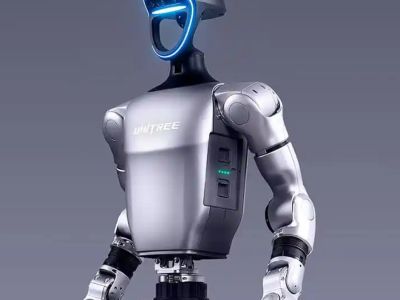
Optimus vs Unitree G1
Compare Optimus vs Unitree G1 for humanoid mobility, dexterity, autonomy, and payload capacity.
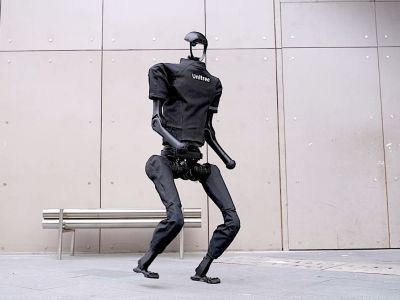
Unitree G1 vs Unitree H1
Head-to-head: Unitree G1 vs Unitree H1 compared on bipedal balance, AI learning, and real-world deployment.
Disclaimer
All content, comparisons, and verdicts on this website are based on our research, testing, and opinion. While we strive for accuracy, we do not guarantee the completeness, reliability, or suitability of any information. Performance, specifications, and results may vary depending on usage and conditions. This website and its authors are not responsible for any decisions, actions, or outcomes based on the information provided. Always verify product details with the manufacturer before making purchase or operational decisions.