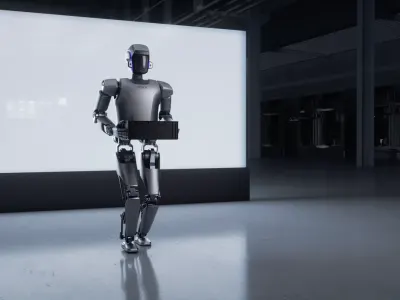
The Walker S1 by UBTECH Robotics is an industrial humanoid robot designed for deployment in manufacturing, logistics, and research environments. It is positioned as a general-purpose bipedal platform that can operate in human-designed spaces, supporting tasks such as assembly, sorting, and inspection. Key differentiators include its anthropomorphic bipedal locomotion, high payload capacity, and integration into existing factory workflows alongside human workers.
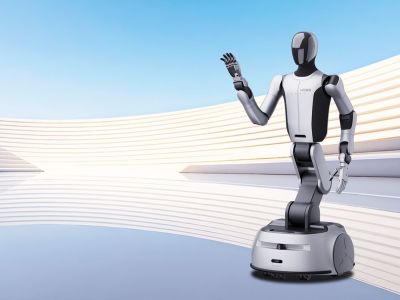
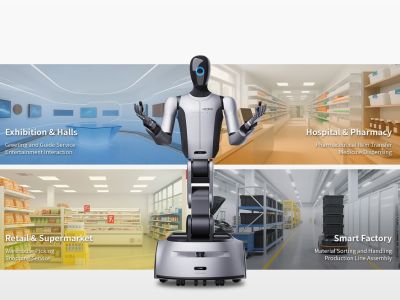
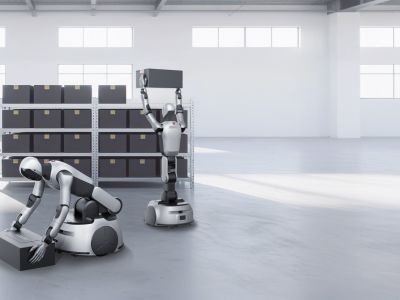
The Cruzr S2 by UBTECH Robotics is a full-sized wheeled humanoid robot aimed at versatile service and light industrial applications. It is positioned as a mobile service and logistics platform capable of tasks ranging from guided tours to factory assembly and material transport. Its main differentiators are its wheeled mobility, visual-laser fusion navigation, and ability to network with other mobile platforms for integrated workflows.
Detailed Analysis
Design & Build Quality
The Walker S1 is a bipedal humanoid with a height of 170 cm and a weight range of 50–80 kg, built for industrial environments. The Cruzr S2 is slightly taller at 176 cm and shares a similar weight range and footprint, but uses a wheeled base instead of legs. Both robots are constructed for durability in dynamic settings, but the Walker S1’s legged design prioritizes human-like movement, while the Cruzr S2’s wheeled form emphasizes stable, continuous rolling mobility.
Mobility & Navigation
The Walker S1 uses balance-assisted bipedal walking with Visual SLAM and LiDAR mapping for navigation in structured indoor environments. The Cruzr S2 employs visual-laser fusion navigation, combining camera and LiDAR data for precise localization and path planning on flat surfaces. While the Walker S1 can navigate stairs and uneven terrain typical of factories, the Cruzr S2 is optimized for smooth floors and service-oriented routes such as showrooms and logistics aisles.
Sensors & Perception
Both robots are equipped with RGB cameras, depth cameras, LiDAR, IMU, force/torque sensors, gyroscopes, accelerometers, and joint encoders. These sensors support 3D environment mapping, obstacle detection, and dynamic balance control. The core perception stack for both includes Visual SLAM and LiDAR-based mapping, enabling autonomous navigation and interaction with objects in shared human spaces.
AI Capabilities
The Walker S1 supports teleoperation, autonomous operation, and learned behaviors, running on a Linux-based OS with ROS 2 and Python SDK support. The Cruzr S2 shares the same control modes and software stack, allowing similar levels of programmability and integration. Both robots can be networked via UBTECH’s Brain Network 2.0 and Co-Agent AI platform, enabling multi-robot coordination in industrial and service scenarios.
Battery & Power Efficiency
Public specifications for the Walker S1’s battery are not disclosed, but it is designed for continuous operation in factory settings with periodic manual charging or swapping. The Cruzr S2 is reported to have a battery life rated for 3–5 years under normal usage, reflecting its service-oriented, wheeled design. Neither robot’s exact runtime per charge is specified, but the Walker S1’s bipedal motion is likely more power-intensive than the Cruzr S2’s wheeled locomotion.
Use-Case Suitability
The Walker S1 is optimized for industrial manufacturing and logistics tasks such as assembly, sorting, and quality checks in smart factories. The Cruzr S2 is better suited for service and light industrial roles including guided tours, reception, and factory logistics on flat surfaces. Both can support research and remote operations, but the Walker S1 targets heavy-duty industrial automation, while the Cruzr S2 focuses on flexible, mobile service applications.
Functional Tools & Payload
The Walker S1 is designed for high-payload industrial tasks, with a reported 15 kg payload capacity and a workspace extending from ground level to 1.8 meters. The Cruzr S2 is intended for lighter payloads typical of service and logistics, though its exact payload limit is not specified in the provided data. Both robots feature dexterous hands and force/torque sensing, but the Walker S1’s mechanical design emphasizes strength and reach for factory work.
Software Ecosystem
Both the Walker S1 and Cruzr S2 run on a Linux-based operating system with ROS 2 support and a Python SDK, enabling standard robotics development workflows. They support teleoperation, autonomous navigation, and learned behaviors, and can be integrated into larger automation systems. Both are compatible with UBTECH’s Brain Network 2.0 and Co-Agent AI platform, allowing for multi-robot coordination and swarm intelligence in industrial deployments.

Adoption & Real-World Deployments
The Walker S1 is described as the most widely deployed industrial humanoid robot in factories, with installations in smart factories operated by major Chinese automakers including BYD, Geely, and Nio. In these deployments, it has reportedly improved sorting efficiency by up to 120% and reduced labor costs by 65%. The Cruzr S2 is positioned for broader service and logistics use, including factory assembly, logistics, and guided tours, and can be networked with other mobile platforms for integrated workflows.
Analysis Score Summary
Total Score
8
Walker S1
VS
Based on Detailed Analysis
Total Score
10
Cruzr S2
📊 Win: 2 points | Trade-off: 1 point each
Scores are summed across every insight: a clear winner earns 2 points, while balanced trade-offs give each robot 1 point. The total reflects how often each robot outperforms the other (or shares the spotlight) throughout the detailed analysis sections.
Capabilities & Operational Tasks
Head-to-head comparison of what Walker S1 and Cruzr S2 can do, their applications, and capabilities.
What Can Walker S1 & Cruzr S2 Do?
16Core operational tasks, activities, and physical manipulation duties evaluated side-by-side.
| Task & Description | Model AWalker S113 supported | Model BCruzr S211 supported |
|---|---|---|
| Assembly | High | — |
| Autonomous task execution | High | High |
| Carrying and transport | High | High |
| Collaborative work | High | High |
| Greeting and guiding visitors | — | Moderate |
| Human interaction | — | High |
| Inspection | High | — |
| Loading and unloading | High | High |
| Machine operation | — | High |
| Machine tending | High | — |
| Material handling | High | High |
| Move objects | High | High |
| Navigation | High | High |
| Pick and place | High | High |
| Quality control | High | — |
| Repetitive physical tasks | High | — |
Technical Specifications
Head-to-head performance data and metrics
| Specification | Model AWalker S1 | Model BCruzr S2 |
|---|---|---|
Functional Utility & Use Cases4 Comparative Metrics | ||
Control Method | Teleoperation, autonomous, learned behaviors | Teleoperation, autonomous, learned behaviors |
Use Cases | Visual quality inspection, walking while carrying material totes, sorting automotive parts, coordinating with factory conveyor belts (deployed at BYD, Geely, Audi-FAW) | Manufacturing, research, logistics, infrastructure inspection, remote operations |
Multi Robot Coord | Multi-robot coordination via network | Multi-robot coordination via network |
Pet Friendly | Not Applicable (Industrial Manufacturing Robot) | Yes, with safety protocols |
Manipulation & Load Capacity4 Comparative Metrics | ||
Carrying Capacity | 15 kg (continuous rated capacity) | 15 kg per arm |
Deadlift Capacity | 16.3 kg (standard tote lifting) | 50-100 kg |
Payload Type | 15 kg continuous rated carrying capacity (operating with 15–16.3 kg industrial totes) | Tools, sensors, industrial equipment |
Modular Attachments | Tool changers, gripper interfaces, sensor mounts | Tool changers, gripper interfaces, sensor mounts |
Kinematic Architecture & Dexterity4 Comparative Metrics | ||
Degrees of Freedom | 41 DoF | - |
Material | Aluminum frame, composite joints, polymer covers | Aluminum frame, composite joints, polymer covers |
Mobility Type | Legged (Industrial bipedal locomotion) | Wheeled |
Hardware Interface | USB-C, Ethernet, GPIO, CAN bus | USB-C, Ethernet, GPIO, CAN bus |
Functional Utility & Use Cases
4 Comparative Metrics
Manipulation & Load Capacity
4 Comparative Metrics
Kinematic Architecture & Dexterity
4 Comparative Metrics
Related Comparisons
Discover similar robot matchups to expand your knowledge and find the perfect solution
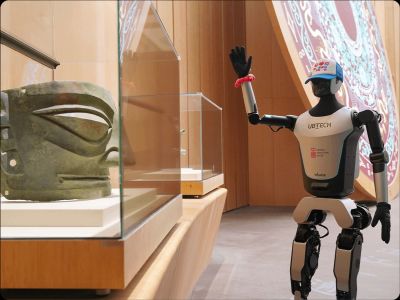
Walker C vs Cruzr S2
In-depth comparison of Walker C and Cruzr S2, covering hardware capabilities, teleoperation, and enterprise readiness.
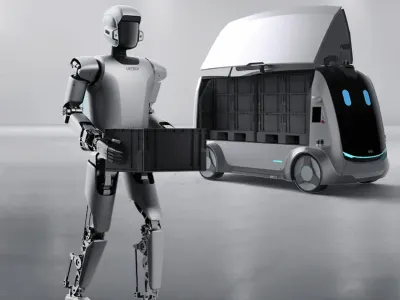
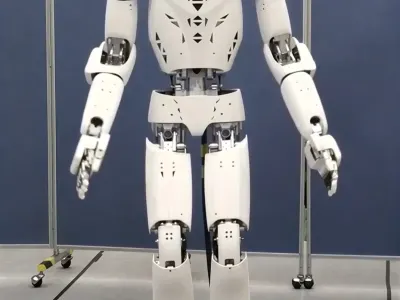
Walker S1 vs Kaleido 8.0
Compare Walker S1 and Kaleido 8.0. Detailed analysis of navigation, battery, sensors, and mobility.

Walker S1 vs AgiBot G2
Walker S1 or AgiBot G2? Compare specs, sensors, navigation, speed, and real-world performance.
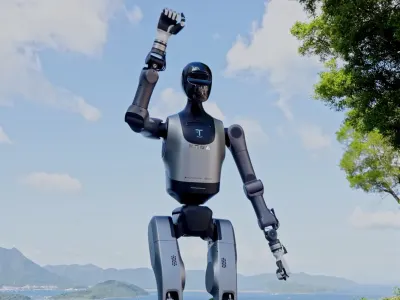
Cruzr S2 vs Walker Tienkung
Which robot wins? Cruzr S2 vs Walker Tienkung compared across navigation, sensors, speed, and software.
Disclaimer
All content, comparisons, and verdicts on this website are based on our research, testing, and opinion. While we strive for accuracy, we do not guarantee the completeness, reliability, or suitability of any information. Performance, specifications, and results may vary depending on usage and conditions. This website and its authors are not responsible for any decisions, actions, or outcomes based on the information provided. Always verify product details with the manufacturer before making purchase or operational decisions.