
Kawasaki BX200L (spot welding)
AI ChatLast updated:
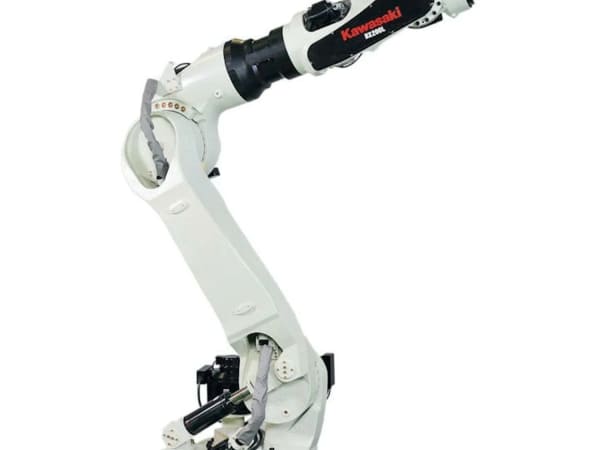
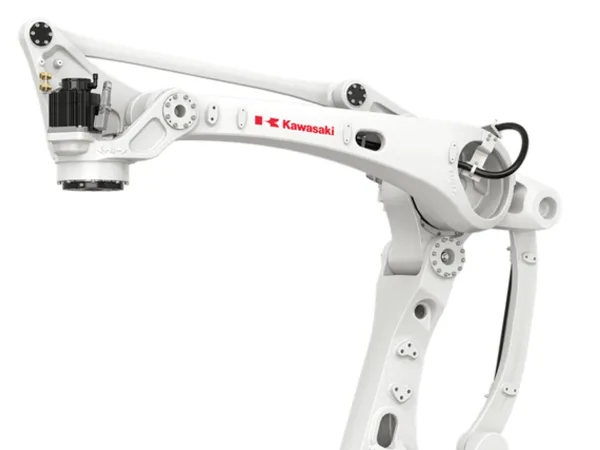
The Kawasaki BX200L is a high-speed, heavy-duty articulated robot designed primarily for spot welding and material handling. It features a hollow wrist for cable and hose management, enabling the use of large weld guns. With a 200 kg payload and a reach of 2,597 mm horizontally and 3,420 mm vertically, it excels in automotive assembly lines and other industrial applications requiring precision and speed. Its advanced servo welding gun control and automatic calibration optimize acceleration and deceleration, enhancing welding quality and cycle times. The robot’s robust yet lightweight arm design ensures flexibility and efficiency across multiple manufacturing tasks.
Quick Overview & Key Facts
Kawasaki BX200L (spot welding) is an industrial robot made by Kawasaki in Japan, launched in 2011 and built for automotive body-in-white (spot welding), friction spot joining, and heavy material handling. Its estimated price is USD 25,000 – 45,000.
- Weight
- 930 kg
- Top speed
- Maximum linear speed 5,000 mm/s at flange
- Handles
- Industrial loads (Welding guns, grippers, automotive parts)
- Battery runtime
- 24/7 continuous operation capability (Industrial standard)
- Sensors
- Position encoders, force sensors, servo welding gun sensors
- Operating environment
- 0°C to 45°C
Image Gallery
Below images are from Kawasaki's official sources
Review Videos
Watch expert reviews and demonstrations of this robot

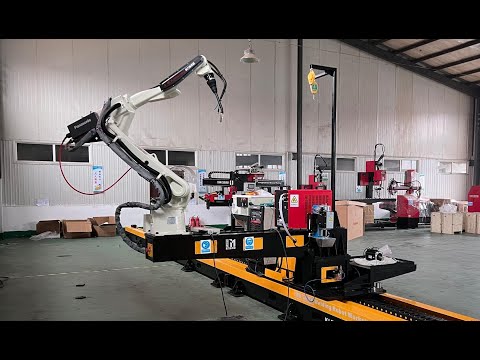
Robot Specifications
Values without a Confirmed badge are compiled from public sources and may not be manufacturer-verified.
Not yet published by Kawasaki: color options and pet safety.
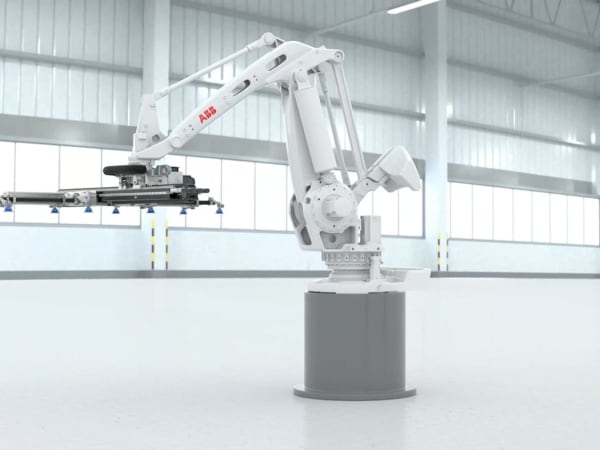
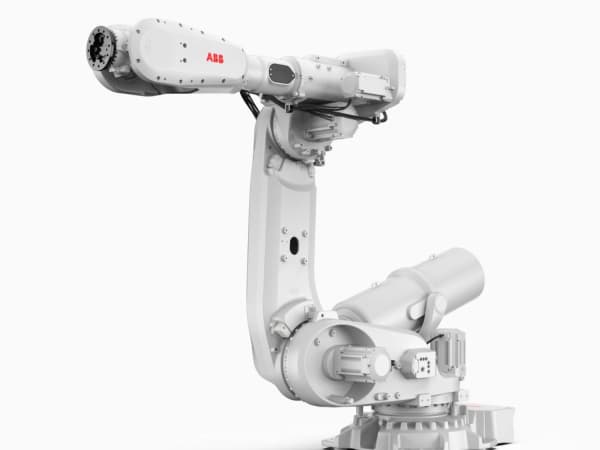
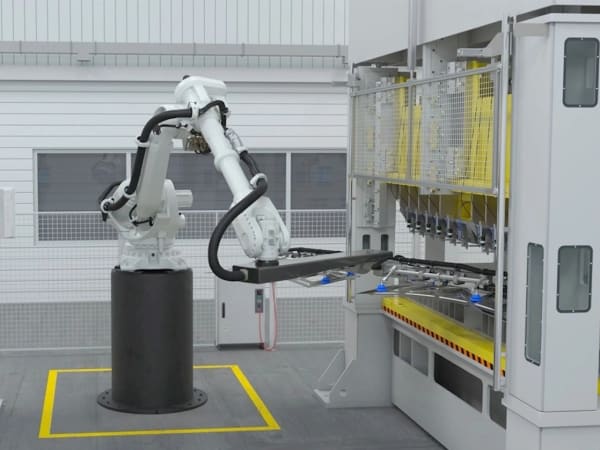
Kawasaki BX200L (spot welding) vs ABB IRB 760PT, IRB 6750S, MELFA RH-10CRH and IRB 6760
Kawasaki BX200L (spot welding) leads this group on weight.
Green marks the best figure in a row (lowest weight). Ranges are not ranked.
| Spec | Kawasaki BX200L (spot welding)Kawasaki | ABB IRB 760PTABB | IRB 6750SABB | MELFA RH-10CRHMitsubishi Electric Corporation | IRB 6760ABB |
|---|---|---|---|---|---|
| Payload | Industrial loads | Heavy industrial loads | — | — | — |
| Weight | 930 kg | 2310 kg | 1760–1850 kg | 20–21 kg | 1480 kg |
| Released | 2011 | 2020 | 2023 | 2025 | 2025 |
| Best For | Automotive body-in-white | Automotive press tending | Giga-press die casting | Automotive part assembly | High-speed press tending |
Notes such as conditions or alternate figures are left out and values are shown in common units; open each page for the full specs. Browse all Robots
More Robots from Kawasaki
Explore other robots from this manufacturer
More Robots
Discover more robots in the same category
Robots From Other Categories
Discover complementary robots from different categories that work well together


Frequently Asked Questions
Get answers to common questions about this robot
Q1. What are Kawasaki BX200L (spot welding)'s primary capabilities?
The BX200L excels in high-speed spot welding with a 200 kg payload, 6-axis articulation, and advanced motion control for precise, short-pitch movements ideal for automotive and heavy-duty welding tasks.
Q2. How to operate Kawasaki BX200L (spot welding)?
Operation involves programming via the teach pendant and controller, setting welding parameters, and using the robot’s motion control system to execute precise spot welds within its 2,597 mm reach.
Q3. What is the maximum carrying capacity of Kawasaki BX200L (spot welding)?
The robot can handle a maximum payload of 200 kg, suitable for heavy welding guns and large parts.
Q4. How long can Kawasaki BX200L (spot welding) operate on a single charge?
As an industrial robot typically powered by a continuous power supply, it does not operate on batteries; it runs continuously when connected to mains power.
Q5. What safety features does Kawasaki BX200L (spot welding) have?
It includes adjustable mechanical stoppers, brakes on all axes, IP67 wrist protection, and IP54 base protection to ensure operational safety and environmental resistance.
Q6. How to maintain Kawasaki BX200L (spot welding)?
Regular maintenance includes lubrication of joints, inspection of cables and hoses in the hollow wrist, checking brake function, and software diagnostics to ensure optimal performance.
Q7. What surfaces can Kawasaki BX200L (spot welding) navigate?
Mounted on the floor, the BX200L operates in fixed positions and does not navigate surfaces; it performs tasks within its articulated arm’s reach.
Q8. How does Kawasaki BX200L (spot welding) handle obstacles?
The robot’s motion control and programming allow it to avoid collisions within its work envelope, but it requires a clear workspace as it is stationary.
Q9. What is Kawasaki BX200L (spot welding)'s maximum speed?
It achieves a maximum linear speed of 5,000 mm/s at the robot flange and joint speeds up to 200°/s on the wrist twist axis.
Q10. What are common use cases for Kawasaki BX200L (spot welding)?
Primarily used for automotive body assembly, heavy-duty spot welding, friction spot joining, and collaborative assembly tasks requiring high precision and speed.
Q11. How to reset Kawasaki BX200L (spot welding)?
Resetting is done via the controller interface or teach pendant by executing a system reset command, which reinitializes the robot’s control system and clears errors.
Q12. How to control Kawasaki BX200L (spot welding)?
Control is through the E02 controller and teach pendant, allowing manual programming, jogging, and automated execution of welding programs.
Q13. How to connect Kawasaki BX200L (spot welding) to Wi-Fi?
The BX200L typically connects via wired industrial networks; Wi-Fi connectivity is not standard and would require additional network interface modules.
Q14. What is Kawasaki BX200L (spot welding)'s warranty?
Standard warranty periods are typically 12 to 14 months covering defects in materials and workmanship, but exact terms depend on the purchase agreement.
Q15. How to update Kawasaki BX200L (spot welding)'s software?
Software updates are performed via the controller interface using Kawasaki’s official update tools, often requiring connection to a PC or USB device with the latest firmware.
Rating and Reviews
Share your experience and help others decide!
Loading...
User Reviews
No user reviews. Be the first one to review!
User Comments (No Login needed)
Share your thoughts, experiences, or questions about this robot.
Comments appear after moderator review.