The 5 Humanoid Robot Companies Most Likely to Dominate by 2030
The New Robot Race
The race to dominate humanoid robotics by 2030 is being shaped by a handful of companies that combine manufacturing scale, AI capability, and a credible path to deployment. Tesla leads the conversation because Optimus links robotics to one of the world’s most advanced industrial systems, while Figure AI has quickly become the best-funded pure-play startup in the sector. Unitree Robotics brings lower-cost hardware and faster iteration from China, Agility Robotics already has a commercial foothold with Digit, and UBTECH is pushing industrial and logistics use cases with Walker-family robots. Together, they represent the clearest paths from prototypes to revenue-generating humanoids, which is why they are the names investors and customers are watching most closely.
Why These Five Matter
What separates these five is not just engineering ambition but the ability to turn demos into repeatable production. Tesla has said Optimus is moving toward Gen 3 and mass production, with internal manufacturing as its edge. Figure AI has used major funding rounds and partnerships to accelerate development of general-purpose humanoids for warehouses and other labor-intensive settings. Unitree has built momentum through aggressively priced humanoids and rapid hardware refinement, while Agility has focused on logistics pilots that prove utility in real facilities. UBTECH, meanwhile, has leveraged China’s industrial ecosystem to target factories and service environments, making it one of the most commercially grounded humanoid plays outside the United States.
Quick Overview
The ranking below reflects a blend of scale, funding, technical readiness, and likely commercialization by 2030.
| Rank | Company | HQ | Key Strength | Notable Product |
|---|---|---|---|---|
| #1 | 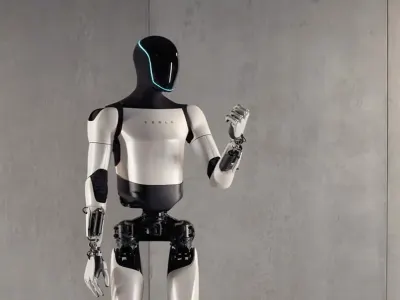 Tesla Tesla | Austin, Texas, United States | Manufacturing scale and AI integration | Optimus |
| #2 |  Figure AI Figure AI | San Jose, California, United States | Heavy funding and rapid product iteration | Figure 02 |
| #3 | 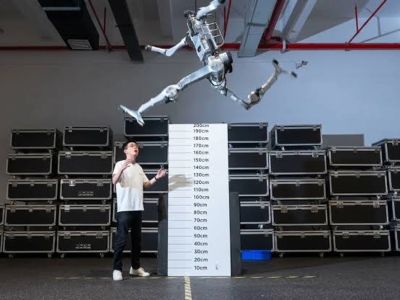 Unitree Robotics Unitree Robotics | Hangzhou, China | Cost-efficient hardware and fast commercialization | H1 |
| #4 | 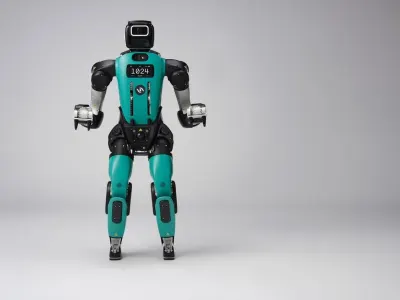 Agility Robotics Agility Robotics | Salem, United States | Real-world logistics deployment | Digit |
| #5 |  UBTECH Robotics UBTECH Robotics | Shenzhen, China | Industrial and service robotics ecosystem | Walker S2 |
These five are ranked highest because they have the clearest combination of capital, engineering progress, and market access, but the order could still shift as production, reliability, and customer adoption become the real test.
Explore the Companies
Tesla
Tesla makes electric vehicles, energy products, and the Optimus humanoid robot, which it is trying to turn into a mass-market platform for factory and eventually consumer use. Its market position is unusual because it can combine AI, manufacturing, batteries, and supply-chain control at a scale that most robotics startups cannot match. Recent milestones include efforts to stand up a dedicated Optimus production line at Fremont, with a second factory planned in Texas, plus repeated guidance that production will start in a measured way before scaling later. Tesla stands apart by treating humanoid robotics as an extension of its manufacturing and autonomy stack rather than a standalone hardware business.
Figure AI
Figure AI builds humanoid robots for labor tasks across logistics, retail, healthcare, and other enterprise settings, with Figure 02 emerging as its best-known platform. The company has quickly become one of the most closely watched players in the sector because it has paired technical ambition with very large financing and marquee commercial relationships. Its rise has been driven by a belief that humanoids can solve labor shortages in structured environments faster than many rivals expect. Figure AI stands apart through its startup agility, premium investor base, and strategy of targeting real customer use cases early rather than waiting for a perfect general-purpose robot.
Unitree Robotics
Unitree Robotics makes legged robots and humanoid systems for consumer, research, and industrial use, and it has built a reputation for shipping hardware faster and at lower price points than many competitors. Its market position strengthened sharply as it broadened international visibility with humanoid demonstrations, commercial launches, and a new model dubbed Superman that highlighted speed and agility. The company has also drawn attention from major industry players and investors, while pursuing a public-market path in China. Unitree stands apart because it has made humanoid robotics feel more accessible, combining aggressive pricing with fast iteration and a broad product portfolio.
Agility Robotics
Agility Robotics focuses on humanoid robots for warehouses, distribution centers, manufacturing, and third-party logistics, with Digit as the centerpiece of its commercial push. The company has earned a strong position by narrowing its target market to repetitive material-handling work where humanoids can generate measurable ROI. Its most important milestone has been the transition from research showcase to deployment-oriented production and customer testing, especially in logistics environments. Agility stands apart because it is one of the few pure-play humanoid companies that has consistently framed the business around near-term operational value, not just long-range autonomy promises.
UBTECH Robotics
UBTECH Robotics develops humanoid and service robots for education, smart logistics, elder care, business services, and industrial manufacturing, giving it one of the broadest application ranges in the field. Its market position is strongest in China, where it benefits from local enterprise demand and a willingness to deploy robots in practical, task-specific roles. The company’s Walker family of humanoids has helped establish it as a recognizable name in commercial robotics, and its recent activity has centered on expanding use cases rather than chasing pure spectacle. UBTECH stands apart for its diversified commercial strategy and its focus on markets where humanoids can slot into existing service and industrial workflows.
Sources
Related Articles
These 5 Companies Building the Most Advanced Humanoid Robots in 2026
6/22/2026
Top 10 Humanoid Robot Companies with the Biggest Funding & Market Momentum in 2026
9/9/2026
Top 10 Humanoid Robot Companies in 2026: Ranked by Technology, Real-World Deployments & Market Impact
6/19/2026
Top 9 European Humanoid Companies to Watch in 2026-2027
9/12/2026
Top 7 US Humanoid Robotics Companies Leading the Commercial Race in 2026
9/10/2026

The 10 Chinese Humanoid Robotics Companies Scaling Mass Production the Fastest in 2026
9/9/2026