These 5 Companies Building the Most Advanced Humanoid Robots in 2026
Humanoids Hit Commercial Scale
The humanoid robot race has moved from prototype theater to industrial deployment, and these five companies now define the market’s center of gravity. Figure AI sits at Rank #1 because it has combined rapid model progress, high-profile commercial contracts, and a massive funding base that reportedly topped $1 billion in late 2025, giving it a scale advantage over the field. Boston Dynamics remains the benchmark for dynamic mobility, while Tesla is pushing a vertically integrated, manufacturing-led approach. Unitree and UBTECH round out the ranking with aggressive pricing, production momentum, and growing reach in China’s industrial robotics market. What makes this group especially relevant in 2026 is that each company is attacking the same labor gap from a different angle. Figure is chasing general-purpose humanoids for logistics and household work; Boston Dynamics is translating decades of locomotion expertise into industrial utility; Tesla is betting that in-house AI, chip design, and vehicle-scale manufacturing can compress costs; Unitree is using lower-cost hardware to expand access; and UBTECH is scaling commercial humanoids through logistics, elder care, and factory applications. Recent milestones across the sector include large funding rounds, new robot generations, and production plans aimed at moving humanoids from controlled demos into repeatable, revenue-generating operations.
Winners By Strategy
The ranking reflects both technical maturity and commercial readiness. Figure’s recent production ramp for Figure 03 and its Helix intelligence stack have strengthened its lead, while Boston Dynamics’ Atlas program keeps it at the frontier of athletic manipulation even as the company focuses on practical deployment. Tesla’s Optimus effort benefits from massive capital resources and manufacturing discipline, but it still trails the most deployment-ready peers on proven autonomy. Unitree’s G1 and H1 families have made it a price-performance disruptor, and UBTECH’s Walker line has become one of China’s most visible enterprise humanoid platforms. Together, they show how the category is splitting between premium autonomy, industrial scale, and cost-driven expansion. Competition is intensifying as customers demand not just movement, but uptime, task completion, and economics that justify adoption. That is why recent partnerships matter as much as robot specs: warehouse operators, manufacturers, and retail logistics firms are becoming the first real proving grounds for humanoids. The companies on this list are no longer judged mainly by viral videos or lab demonstrations. They are being measured by production capacity, software reliability, deployment contracts, and how quickly they can turn humanoid labor into a service that enterprises can buy at scale.
Quick Overview
Here is a concise ranking of the five companies and the strengths driving their position.
| Rank | Company | HQ | Key Strength | Notable Product |
|---|---|---|---|---|
| #1 | 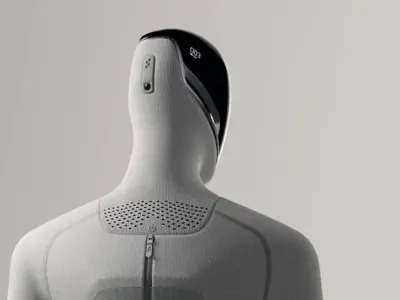 Figure AI Figure AI | San Jose, California, United States | Fastest commercial momentum and major funding | Figure 03 |
| #2 | 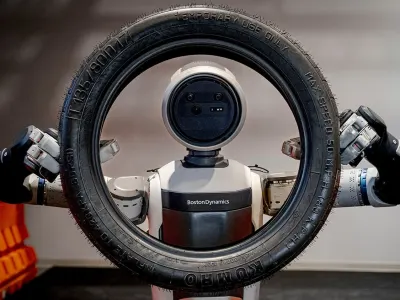 Boston Dynamics Boston Dynamics | Waltham, United States | Best-in-class mobility and dynamic control | Atlas |
| #3 | 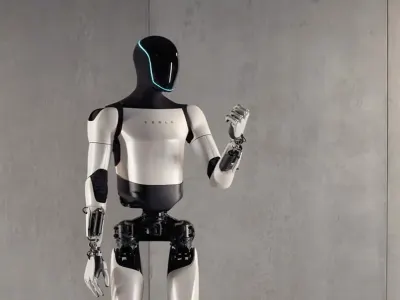 Tesla Tesla | Austin, Texas, United States | Manufacturing scale and vertical integration | Optimus |
| #4 | 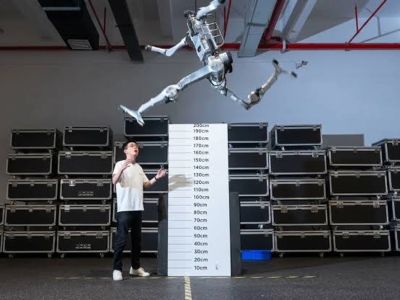 Unitree Robotics Unitree Robotics | Hangzhou, China | Cost-efficient humanoids and broad accessibility | G1 |
| #5 |  UBTECH Robotics UBTECH Robotics | Shenzhen, China | Enterprise deployment in China and production scale | Walker S |
Figure AI leads because it is closest to turning humanoid robots into a commercial product category, Boston Dynamics is the mobility reference point, Tesla brings scale, Unitree drives price competition, and UBTECH strengthens the enterprise market in Asia.
Explore the Companies
Figure AI
Figure AI is building general-purpose humanoid robots designed to work in logistics, manufacturing, retail, and eventually homes, with Figure 03 as its latest public-facing platform. The company is widely viewed as Rank #1 in this list because it pairs strong technical ambition with exceptional funding momentum and a fast-growing customer pipeline. In 2025 and 2026, it reportedly surpassed $1 billion in Series C capital at a valuation near $39 billion, and it has been signaling production scale through BotQ and Helix, its embodied intelligence stack. That combination of software, hardware, and commercial contracts sets it apart as the clearest near-term contender for broad humanoid deployment.
Boston Dynamics
Boston Dynamics builds advanced mobile robots, best known for the Atlas humanoid and the Spot and Stretch platforms that anchor its industrial credibility. It holds Rank #2 because its machines remain among the most capable in the world for dynamic movement, manipulation, and sensing, even if its commercialization path is more measured than Figure’s. The company’s recent work has centered on translating research-grade robotics into practical warehouse and inspection use cases. Its edge comes from decades of locomotion expertise, a reputation for reliability, and the ability to set the technical standard that other humanoid makers still chase. That makes Boston Dynamics the field’s performance benchmark.
Tesla
Tesla is developing Optimus as part of a broader robotics strategy tied to its strengths in manufacturing, AI, batteries, and vertical integration. It ranks #3 because its long-term potential is enormous, but its humanoid program is still maturing relative to the most deployment-ready rivals. Tesla’s advantage is not just capital, but the ability to design, produce, and iterate at vehicle-industry scale if the product reaches the right reliability threshold. The company has continued to position Optimus as a labor automation platform for factory and commercial tasks, making it one of the most watched robotics efforts in the market. Its progress is important because Tesla can compress costs faster than most peers.
Unitree Robotics
Unitree Robotics is one of the most aggressive humanoid makers in China, known for building capable robots at far lower prices than many Western rivals. It ranks #4 because its cost-performance model has made it a major force in consumer and industrial robotics, even if its brand still carries less global enterprise weight than the top three. The company’s humanoid lines, especially G1 and H1, have helped it gain attention for agile movement, accessible pricing, and rapid product iteration. Unitree’s significance lies in democratizing humanoid hardware and forcing the rest of the industry to rethink unit economics, which is increasingly important as customers move from demos to purchasing decisions.
UBTECH Robotics
UBTECH Robotics is a Shenzhen-based humanoid and service robotics company with a strong position in education, logistics, wellness, and industrial manufacturing. It ranks #5 because it has built one of the most visible commercial humanoid portfolios in China, led by the Walker family, while also pushing into enterprise deployments rather than pure research. Recent momentum has centered on scaling production and attracting capital to expand humanoid manufacturing and customer adoption. UBTECH stands out for combining education and service robotics with industrial use cases, giving it a broader application mix than many competitors. Its market value comes from being an early commercial bridge between experimental humanoids and practical, repeatable deployments.
Sources
Related Articles
Top 10 Humanoid Robot Companies with the Biggest Funding & Market Momentum in 2026
9/9/2026
The 5 Humanoid Robot Companies Most Likely to Dominate by 2030
6/22/2026
Top 10 Humanoid Robot Companies in 2026: Ranked by Technology, Real-World Deployments & Market Impact
6/19/2026
Top 9 European Humanoid Companies to Watch in 2026-2027
9/12/2026
Top 7 US Humanoid Robotics Companies Leading the Commercial Race in 2026
9/10/2026

The 10 Chinese Humanoid Robotics Companies Scaling Mass Production the Fastest in 2026
9/9/2026