Top 10 Humanoid Robot Companies in 2026: Ranked by Technology, Real-World Deployments & Market Impact
Humanoids Move Commercially
The humanoid robot market in 2026 is shifting from prototype spectacle to deployable product, with buyers now looking for evidence of factory uptime, warehouse utility, and measurable autonomy rather than demo videos. Figure AI, Agility Robotics, Tesla, Boston Dynamics, UBTECH, Apptronik, Unitree, Sanctuary AI, 1X Technologies, and rising Chinese entrants such as EngineAI are competing on different versions of the same promise: machines that can operate in human-built environments without costly retrofits. The result is a market defined by a few visible pilots, growing manufacturing capacity, and heavy investor belief that embodied AI will become a platform business rather than a lab curiosity.
Deployment Is The Divider
What separates the leaders is not only robot design, but how quickly each company turns technical progress into repeatable commercial work. Agility and Figure are pushing toward enterprise deployments, Tesla is leaning on its manufacturing scale and AI stack, and Boston Dynamics is translating elite mobility into an industrial Atlas program. In China, Unitree and UBTECH are using broader product lines and aggressive pricing to widen adoption, while EngineAI is gaining attention through rapid hardware iteration. Sanctuary AI and 1X are betting on teleoperation and embodied intelligence for harder-to-automate settings, and Apptronik is building around industrial partnerships and human-safe design. In a crowded field, execution now matters more than promises.
Quick Overview
The table below compares the leading humanoid robot companies on headquarters, core strength, and their most visible platform.
| Rank | Company | HQ | Key Strength | Notable Product |
|---|---|---|---|---|
| #1 | 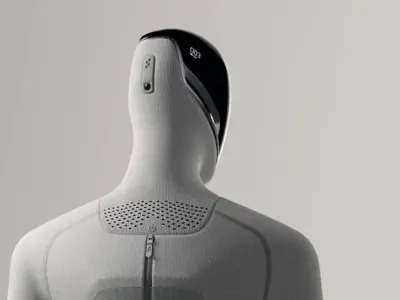 Figure AI Figure AI | San Jose, California, United States | General-purpose enterprise autonomy | Figure 02 |
| #2 | 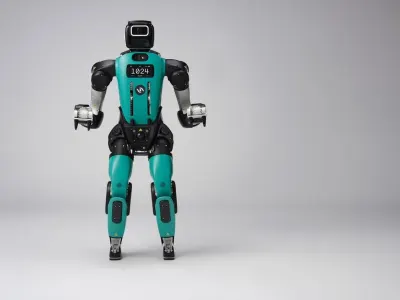 Agility Robotics Agility Robotics | Salem, United States | Commercial warehouse deployment | Digit |
| #3 | 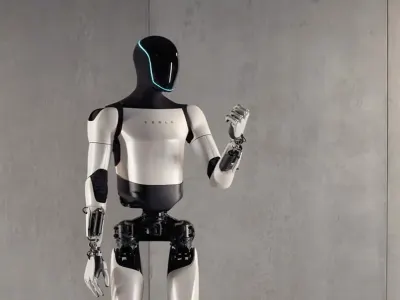 Tesla Tesla | Austin, Texas, United States | Manufacturing scale and AI integration | Optimus |
| #4 | 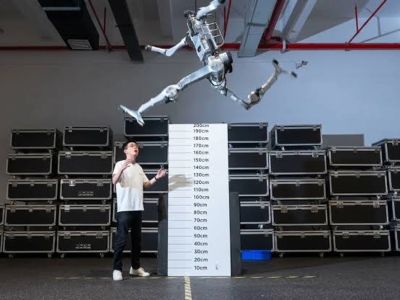 Unitree Robotics Unitree Robotics | Hangzhou, China | Low-cost, high-visibility humanoids | G1 |
| #5 | 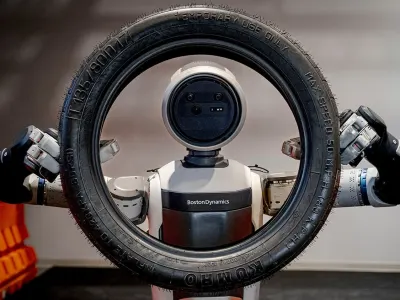 Boston Dynamics Boston Dynamics | Waltham, United States | Dynamic mobility and research-grade robotics | Atlas |
| #6 |  UBTECH Robotics UBTECH Robotics | Shenzhen, China | Industrial and service humanoid deployment | Walker series |
| #7 | 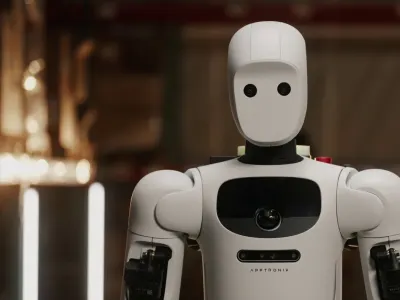 Apptronik Apptronik | Austin, United States | Industrial humanoids and logistics automation | Apollo |
| #8 | 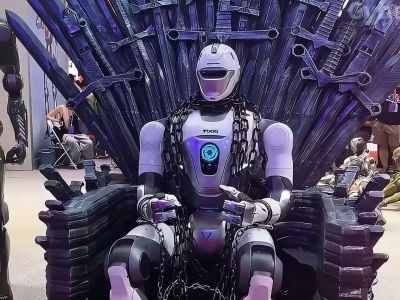 EngineAI EngineAI | Shenzhen, China | Fast-moving humanoid and quadruped hardware | PM01 |
| #9 | 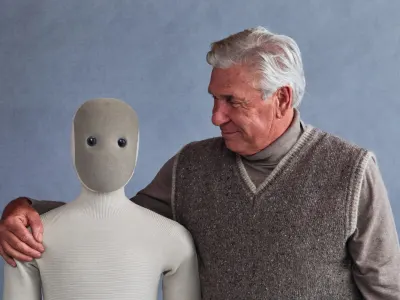 1X Technologies 1X Technologies | Palo Alto, California, USA | Home-focused embodied AI | NEO |
| #10 |  Sanctuary AI Sanctuary AI | Vancouver, Canada | Teleoperation-led embodied AI | Phoenix |
The leaders are separating on deployment readiness, scale, and whether their robots are built for factories, warehouses, or homes rather than generic humanoid performance.
Explore the Companies
Figure AI
Figure AI designs general-purpose humanoid robots built for factory, logistics, retail, healthcare, and other enterprise tasks, with Figure 02 emerging as its flagship system. The company has become the market’s most visible front-runner thanks to a major funding trajectory, a high-profile OpenAI partnership, and commercial attention from industrial customers. Its appeal lies in a blend of strong manipulation progress, AI-first robot control, and a strategy aimed squarely at real work rather than research demos. That positioning has made Figure a reference point for the entire humanoid category in 2026.
Agility Robotics
Agility Robotics is best known for Digit, a humanoid designed for logistics and warehouse operations, and it has built one of the strongest real-world deployment records in the sector. The company’s production and commercialization push gained momentum with a new Fremont facility and a growing roster of customers, including Toyota Motor Manufacturing Canada, which signed a commercial agreement after a successful pilot. Agility’s standing comes from proving that humanoids can operate in structured environments now, not just in future prototypes. Its model is increasingly tied to robots-as-a-service and repeatable enterprise workflows.
Tesla
Tesla’s humanoid program centers on Optimus, a project backed by the company’s scale in manufacturing, AI, and capital allocation. While still earlier in commercialization than leaders like Figure and Agility, Tesla’s long-term potential is hard to ignore because it can draw on internal robotics, autonomy, and production expertise across the broader company. Recent progress has focused on pushing Optimus from R&D toward production-line development, with Tesla signaling a manufacturing ramp and first external customer targets later in the cycle. Tesla remains a powerful contender because it can absorb losses and iterate quickly at industrial scale.
Unitree Robotics
Unitree Robotics has become one of the most aggressive humanoid challengers by combining low pricing with fast product iteration and strong developer visibility. Its G1 humanoid helped bring broad attention to the category, especially among robotics enthusiasts and smaller developers who see Unitree as a path into humanoid experimentation without the price tag of premium enterprise systems. The company’s market position is built on speed, accessibility, and a consumer-meets-industrial strategy that broadens adoption. In 2026, Unitree matters because it is forcing the rest of the industry to think harder about affordability and mass adoption.
Boston Dynamics
Boston Dynamics remains the technical benchmark for robot mobility, even though its humanoid commercialization trail is narrower than some rivals. Atlas continues to symbolize elite robotics engineering, with motion control and dynamic performance that set expectations across the industry. The company’s influence comes from the depth of its robotics research and its track record in mobile systems, inspection, and warehouse automation. While it has not matched the deployment scale of some newer competitors in humanoids, Boston Dynamics still commands enormous respect because it defines the upper edge of what advanced motion systems can do.
UBTECH Robotics
UBTECH Robotics is one of China’s most established humanoid and service robotics companies, with a strong commercial footprint across smart logistics, industrial manufacturing, wellness, and education. Its Walker line has helped position it as a commercialization leader rather than only a technology demonstrator, and the company has built traction through factory-oriented partnerships and practical deployments. UBTECH stands out for showing how humanoid robotics can fit into broader enterprise automation strategies. In a competitive Chinese market, that mix of scale, visibility, and industrial relevance keeps UBTECH near the top of the global ranking.
Apptronik
Apptronik has carved out a strong position in humanoid robotics by focusing on safe, practical industrial automation with Apollo as its flagship robot. The Austin-based company benefits from deep robotics credibility and a partnership-driven strategy that has included interest from large manufacturers. Its approach emphasizes human-friendly design, logistics support, and manufacturing workflows rather than flashy demonstrations. Apptronik’s market value lies in its engineering discipline and its ability to translate NASA-era robotics expertise into enterprise-ready systems. That combination makes it one of the most credible U.S. challengers in the humanoid race.
EngineAI
EngineAI is one of the fastest-rising humanoid robotics startups in China, gaining international attention through its PM01 platform and broader work in humanoid and quadruped systems. The company’s momentum comes from rapid iteration, high-profile locomotion demos, and a cost-performance profile that has helped it stand out in a crowded market. EngineAI is still building its commercial identity, but its technical ambition and speed have made it one of the most watched newcomers in the field. Its ranking reflects the belief that the company could move quickly from viral visibility to broader industrial relevance.
1X Technologies
1X Technologies is pursuing humanoid robotics through the lens of home automation and embodied AI, with NEO representing its push toward robots that can operate in human environments. Backed by strong AI interest and known for a teleoperation-heavy development approach, the company is focused on learning from real-world interaction rather than only synthetic training. That strategy gives 1X a different profile from industrial-first rivals, placing it closer to consumer robotics and long-term personal assistance. Its market relevance comes from its ambition to build a humanoid that feels useful in homes, not just factories.
Sanctuary AI
Sanctuary AI is a Canada-based robotics and AI company best known for its teleoperation and embodied intelligence strategy, which is designed to teach robots tasks through human-guided demonstrations. Its Phoenix platform has made the company a notable player in dexterity and task learning, where the challenge is not only walking but doing useful work with human-level hand control. Sanctuary’s position in the ranking reflects its strong AI training philosophy and its focus on accumulating task knowledge at scale. It remains one of the more intellectually ambitious companies in humanoid robotics, especially for workflows requiring fine manipulation.
Sources
Related Articles
The 5 Humanoid Robot Companies Most Likely to Dominate by 2030
6/22/2026
These 5 Companies Building the Most Advanced Humanoid Robots in 2026
6/22/2026
Top 10 Humanoid Robot Companies with the Biggest Funding & Market Momentum in 2026
9/9/2026
Top 9 European Humanoid Companies to Watch in 2026-2027
9/12/2026
Top 7 US Humanoid Robotics Companies Leading the Commercial Race in 2026
9/10/2026

The 10 Chinese Humanoid Robotics Companies Scaling Mass Production the Fastest in 2026
9/9/2026