German Aerospace Center (DLR) & HIT
The German Aerospace Center (DLR) Institute of Robotics and Mechatronics, in partnership with TUM MIRMI, develops advanced humanoid assistive robotics. Its flagship healthcare service humanoid, GARMI (Geriatronik Assistiver Roboter zur Mobilen Interaktion), features dual torque-controlled robotic arms, an expressive multimodal robotic head, and a holonomic mobile platform. Engineered for telemedicine and elderly assistance, GARMI executes remote physical examinations, rehabilitation therapy, and daily caregiving.
💡Notable Achievement: GARMI is the world's first mobile healthcare humanoid coupled with dual force-feedback avatar teleoperation stations (PARTI and MUCKI), allowing medical doctors to conduct palpation and physical ultrasound exams on remote patients with realistic haptic force feedback.
What Does German Aerospace Center (DLR) & HIT Do?
The German Aerospace Center (DLR) pioneered space and terrestrial robotics technology. Through the GARMI project, DLR and TUM translate space-grade impedance control into a compassionate medical humanoid that allows doctors to physically touch, diagnose, and care for elderly patients from hundreds of miles away.
“GARMI brings space-grade whole-body torque control and haptic telepresence to telemedicine and elderly care.”
Haptic Tele-Medicine
Enables remote doctors to palpate patients and perform diagnostic ultrasound with real force feedback.
Whole-Body Torque Control
Space-proven DLR impedance controllers ensure inherently compliant, injury-free physical contact.
Digital Twin Simulation
MuJoCo-based hardware-in-the-loop physics twins accelerate software behaviors safely.
What Can German Aerospace Center (DLR) & HIT Robots Actually Do?
Cross-portfolio operational capabilities, manipulation tasks, and environmental competencies
High-dexterity space humanoids (Rollin' Justin) and medical assistance platforms (GARMI).
Teleoperated Medical Diagnostics
Haptic remote ultrasound and physical rehabilitation.
Space & Terrestrial Manipulation
Whole-body mobile manipulation in extreme environments.
German Aerospace Center (DLR) & HIT Robot Hands
Showing 2 of 2 total models
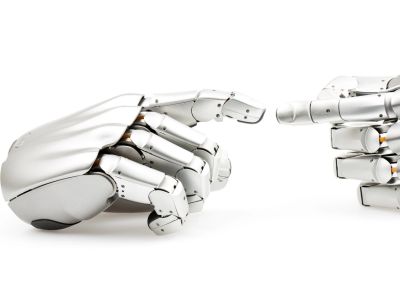
DLR-HIT Hand II
By: German Aerospace Center (DLR) & HIT
Launched: 2009
The DLR-HIT Hand II is a highly integrated, five-finger dexterous robot hand developed through a collaboration between DLR and HIT. It serves as a more compact, lighter, and more powerful successor to the DLR-HIT Hand I. Each of its five modular fingers features four joints and three active degrees of freedom, with all actuators, high-speed communication electronics, and multisensory systems integrated directly into the finger and palm. This design allows for complex telemanipulation and autonomous grasping, famously winning the IF-Product Design Award in 2009 for its seamless mechanical integration.
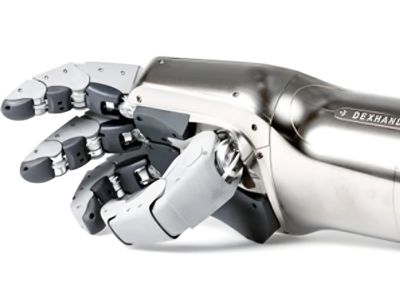
DLR-HIT Hand
By: German Aerospace Center (DLR) & HIT
Launched: 2004
The DLR-HIT Hand, jointly developed by DLR and HIT based on DLR Hand II, features four identical fingers (one as opposing thumb) with four joints each, enabling human-like motor functions for fine manipulation and power grasping. It integrates brushless DC motors, joint torque/angle sensors, and FPGA-based communication in a compact design for medium-cost applications. Recognized worldwide as technologically leading, it mounts easily to robot arms with multisensory capabilities for dexterous tasks.
German Aerospace Center (DLR) & HITSoftware & AI Ecosystem
Developer platforms, fleet management portals, autonomy intelligence, and enterprise integrations
Software Feature
What Makes German Aerospace Center (DLR) & HIT Different?
Editorial AnalysisOrigin of Bots objective strategic assessment, engineering moats, and commercial hurdles
Key Strengths & Moats
- ✓World-class DLR force-torque control algorithms and space-heritage engineering
- ✓Clinically validated haptic tele-ultrasound examination capability
Core Strategic Focus
Expanding clinical pilot studies in senior care residences across Bavaria.
Road Ahead & Challenges
- •High system cost preventing immediate consumer adoption without state healthcare subsidies
German Aerospace Center (DLR) & HIT vs Key Competitors
Strategic capability matrix across platform categories, commercial readiness, and target markets
| Strategic Dimension | GARMI (DLR/TUM) | Moxi (Diligent) | aeo (Aeolus) | Reachy 2 (Pollen) |
|---|---|---|---|---|
| Force Control | Whole-Body Joint Torque (All Joints) | Joint Torque Compliant Arm | Torque Limited | Orbita Elastic Actuation |
| Haptic Tele-Exam | Yes (Full Haptic Reflection) | No (Logistics Only) | No | VR Teleop (No Haptic Feedback) |
| Primary Role | Telemedicine & Geriatric Care | Hospital Logistics Delivery | Eldercare Assistance | AI Manipulation Research |
Corporate Ecosystem & Ownership Structure
Parent company relationships, historical acquisitions, and global operating facilities
Robot Comparisons
Showing 2 in-depth comparisons featuring German Aerospace Center (DLR) & HIT — Explore all comparisons →


Ameca (Engineered Arts) vs Moya (DroidUp)
Which humanoid robot is better? Ameca vs Moya compared for dexterity, AI capabilities, and price.


Sophia by Hanson Robotics vs Aria - Robot Girlfriend by Realbotix 2025
Head-to-head: Sophia vs Aria - Robot Girlfriend compared on bipedal balance, AI learning, and real-world deployment.
Frequently Asked Questions
10 AnswersVerified answers, company specifications, and deployment details about German Aerospace Center (DLR) & HIT
What is the cost or acquisition model for GARMI?
GARMI is an advanced public-sector research platform funded by the Bavarian Ministry of Economic Affairs and DLR; prototype fabrication and avatar teleoperation stations cost approximately €250,000 to €400,000.
What is the commercial timeline and deployment status of GARMI?
Developed in 2018 under the Geriatronics lighthouse initiative, GARMI operates in active clinical living labs in Garmisch-Partenkirchen and Munich, expanding field trials through 2026.
Where is GARMI deployed in real-world environments?
Stationed at the Geriatronics Research Center in Garmisch-Partenkirchen, TUM MIRMI research hospitals, and simulated elderly care living apartments.
What target medical workflows does GARMI perform?
Performs tele-ultrasound examinations, physical spinal palpation, rehabilitation range-of-motion therapy, drinking cup handover, and emergency tele-presence.
What mechanical drivetrain and actuator architecture powers GARMI?
Features dual torque-controlled robotic arms using DLR-developed harmonic reducers with joint torque sensors, an expressive pan-tilt neck, and a holonomic wheeled chassis with active suspension.
What end-effector dexterity and haptic sensing does GARMI feature?
Equipped with multi-axis force-torque sensorized parallel grippers or modular DLR-style articulated hands capable of bi-directional haptic force reflection back to remote physicians.
What is GARMI's continuous battery runtime and charging system?
Powered by an internal 48V medical-grade lithium battery delivering 4 to 6 hours of mobile tele-medical shifts, with continuous charging via medical wall hookup.
What is GARMI's operational autonomy level versus teleoperation?
Employs a hybrid shared-autonomy model: autonomous collision-free navigation and posture stabilization, with high-fidelity haptic teleoperation by doctors for medical procedures.
What sensory perception suite and AI models govern GARMI?
Equipped with dual Intel RealSense D435 depth cameras (forehead and torso), whole-body torque sensors, and active 3D object detection neural networks.
What worker and patient safety compliance measures are built into GARMI?
Inherently safe whole-body impedance control limits contact forces to strict biomechanical safety thresholds (ISO/TS 15066), guaranteeing immediate passive backdrivability.
Verified Data & Editorial Assurance
Compiled from verified corporate filings, official German Aerospace Center (DLR) & HIT datasheets, and robotics engineering registries. Information has been verified against official manufacturer documentation. For commercial procurement or proprietary integrations, contact the manufacturer directly.