
Matrix Robotics
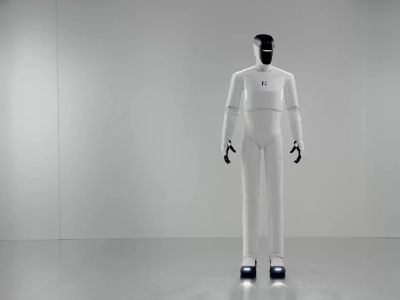
Matrix Robotics (矩阵机器人) engineers full-sized general-purpose bipedal humanoids for intelligent manufacturing, logistics kitting, and commercial services. Its flagship third-generation humanoid, MATRIX-3, features an electric bipedal powertrain, 3D-woven tactile biometric skin with distributed pressure sensing across its chassis, and high-DoF dexterous hands. Capable of carrying up to 30 kg and sensing 0.1 N contact forces, MATRIX-3 bridges high-payload industrial duty with delicate tactile dexterity.
💡Notable Achievement: Matrix Robotics unveiled MATRIX-3 at WAIC 2026 as China's first mass-produced humanoid robot featuring a full-chassis 3D-woven flexible tactile skin and 27-DoF hands capable of delicate 0.1 N force detection, priced at $99,000 USD.
What Does Matrix Robotics Do?
Matrix Robotics (矩阵机器人) is solving one of the toughest challenges in humanoid robotics: giving machines human-like tactile sensitivity. While most humanoids rely almost exclusively on computer vision, Matrix Robotics' MATRIX-3 wraps its entire body in a 3D-woven flexible tactile biometric skin. Combined with 27-DoF dexterous hands that register contact forces down to a tenth of a Newton, MATRIX-3 handles delicate components in factories without crushing them while maintaining the strength to lift 30 kg payloads.
“Matrix Robotics builds tactile-sensing general-purpose humanoids that combine heavy industrial strength with biological sensitivity.”
Full-Body Tactile Dermis
Integrated 3D-woven sensing skin detects physical contact across the arms, chest, and chassis for safe human collaboration.
27-DoF Dexterous Hands
Human-grade hand kinematics with 0.1 N precision for handling delicate electronic connectors and flexible materials.
High-Payload Bipedal Mobility
Robust electric bipedal chassis capable of carrying up to 30 kg during active walking in industrial facilities.
What Can Matrix Robotics Robots Actually Do?
Cross-portfolio operational capabilities, manipulation tasks, and environmental competencies
Matrix Robotics produces full-body bipedal humanoids, high-DoF tactile robotic hands, and industrial inspection units.
Sub-0.1 N Tactile Perception
30 kg Heavy Manipulation
Dynamic Bipedal Walking
Matrix Robotics Robots
Showing 2 Humanoid Robots of 2 total models

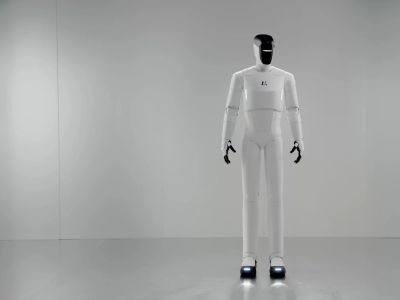
Matrix 3
By: Matrix Robotics
Launched: 2026
MATRIX-3 is a next-generation humanoid robot that integrates biomimetic design with advanced AI for autonomous task execution in commercial, industrial, and domestic environments. The robot features a 3D woven bionic skin with distributed tactile sensors capable of detecting micro-forces as low as 0.1 newtons, enabling safe human-robot interaction and delicate object manipulation. Its 27-degree-of-freedom Lingxi Hand uses cable-driven actuation to perform complex tasks including tool operation and fabric handling. Full-body motion is powered by algorithms trained on human motion capture data, allowing natural gait patterns across uneven terrain. The cognitive core enables zero-shot generalization, allowing the robot to adapt to new tasks without extensive retraining.
Matrix 1
By: Matrix Robotics
Launched: 2024 (Global debut and mass-production readiness announcement)
Matrix 1 is a full-size bipedal humanoid robot standing 180 cm tall, engineered for versatile real-world tasks in manufacturing, logistics, and service environments. Featuring self-developed motors and actuators, it achieves human-like flexibility with wide joint ranges and a top walking speed of 7.6 km/h. The DexH13GEN2 or 3rd-generation hands provide 22 degrees of freedom (DOF) with tactile sensors and force-position hybrid control for precise manipulation of objects up to 10 kg per arm. Powered by an advanced AI stack with 4x improved reasoning over prior models, it supports imitation and reinforcement learning, natural language processing, and autonomous navigation via 8 RGB cameras, optional LiDAR, ultrasonic sensors, and IMUs. With 5-hour endurance, soft enclosures for safe human interaction, and capabilities like obstacle avoidance and dexterous gripping, Matrix 1 excels in unstructured spaces, collaborative assembly, sorting, and complex locomotion including stairs and uneven terrain.
Matrix RoboticsSoftware & AI Ecosystem
Developer platforms, fleet management portals, autonomy intelligence, and enterprise integrations
Software Feature
What Makes Matrix Robotics Different?
Editorial AnalysisOrigin of Bots objective strategic assessment, engineering moats, and commercial hurdles
Key Strengths & Moats
- ✓Breakthrough full-body tactile skin integration addressing the critical tactile blindspot of vision-only humanoids
- ✓High dexterity 27-DoF hands capable of industrial assembly and micro-force regulation
- ✓Competitive commercial mass-production pricing at $99,000 USD
Core Strategic Focus
Scaling pilot manufacturing lines in East China and completing early access deployments with automotive partners.
Road Ahead & Challenges
- •Long-term wear and tear on tactile woven fabrics in dirty industrial machining environments
- •High computational overhead of processing thousands of tactile taxels alongside vision models
Matrix Robotics vs Key Competitors
Strategic capability matrix across platform categories, commercial readiness, and target markets
| Strategic Dimension | MATRIX-3 (Matrix) | Figure 02 | AgiBot A2 | Unitree G1 |
|---|---|---|---|---|
| Hand Degrees of Freedom | 27 DoF per Hand | 16 DoF per Hand | 12 DoF per Hand | 3–7 DoF Gripper |
| Tactile Sensitivity | 0.1 N (Full Body Skin) | Fingertip Pressure Only | Fingertip Tactile Array | Basic Force Feedback |
| Payload Capacity | 30 kg Dual-Arm | 25 kg Dual-Arm | 20 kg Dual-Arm | 3 kg Dual-Arm |
| Target Base Price | ~$99,000 USD | Enterprise Lease Only | ~$75,000 USD | ~$16,000 USD |
Corporate Ecosystem & Ownership Structure
Parent company relationships, historical acquisitions, and global operating facilities
Articles & Industry News
Showing 2 recent articles and news updates about Matrix Robotics
Frequently Asked Questions
10 AnswersVerified answers, company specifications, and deployment details about Matrix Robotics
What is the unit purchase price or RaaS lease pricing model for MATRIX-3?
The MATRIX-3 flagship bipedal humanoid is priced at approximately $99,000 USD (~700,000 RMB) for commercial mass-production units, with industrial pilot RaaS subscriptions starting around $4,000 USD/month.
What is the commercial timeline and current availability status of MATRIX-3?
Matrix Robotics announced MATRIX-1 in 2024 and officially unveiled the mass-production MATRIX-3 on January 10, 2026, entering pilot deployments across industrial partner sites in mid-2026.
Where are Matrix Robotics humanoids actively deployed in real-world facilities?
Deployed in pilot manufacturing cells in Shanghai and Jiangsu for precision component kitting, logistics packaging, and exhibition trials at BEYOND Expo Macao and WAIC 2026.
What target industrial and everyday workflows does MATRIX-3 automate?
Automates automotive parts handling, delicate PCB tray insertion, mixed-SKU warehouse sorting, fragile glassware transfer, and collaborative machine tending.
What mechanical drivetrain and actuator architecture powers MATRIX-3?
MATRIX-3 features an electric bipedal drivetrain with high-power planetary and harmonic joint actuators delivering up to 350 N·m peak joint torque for dynamic balance and 30 kg lifting.
What end-effector dexterity, hand degrees of freedom (DoF), and tactile sensing are used?
Features dual 27-DoF anthropomorphic hands with fingertip tactile sensors detecting pressure down to 0.1 N, enabling delicate manipulation of wire harnesses, bottles, and eggs.
What is MATRIX-3's continuous battery runtime, capacity, and charging mechanism?
Powered by an onboard 48V 1.5 kWh lithium-ion battery delivering 3 to 4 hours of continuous bipedal walking and manipulation, supported by a rapid 2-minute battery-swap bay.
What is MATRIX-3's operational autonomy level versus remote teleoperation dependency?
Operates at Level 4 autonomy using on-device vision-tactile closed-loop models for autonomous picking, while offering teleoperation interfaces for complex demonstration data collection.
What sensory perception suite and foundation AI models govern MATRIX-3?
Equipped with 360-degree panoramic RGB cameras, depth sensors, 3D-woven full-body tactile skin arrays, and Matrix's proprietary adaptive embodied foundation model.
What worker safety mechanisms, force compliance, and physical limits protect humans?
Employs full-body tactile collision detection, compliant backdrivable joints, real-time safety braking, and certified dual emergency stop circuits.
Verified Data & Editorial Assurance
Compiled from verified corporate filings, official Matrix Robotics datasheets, and robotics engineering registries. Information has been verified against official manufacturer documentation. For commercial procurement or proprietary integrations, contact the manufacturer directly.