Mirsee Robotics
Mirsee Robotics is a humanoid robot company based in Cambridge, Ontario, Canada, founded in 2017 and led by chief executive and co-founder Tarek Rahim, with co-founder and roboticist Robert Ings. It builds practical, wheeled humanoid robots for factories and warehouses, deliberately choosing a wheeled base over legs to prioritise reliability. Its third-generation humanoid, the MH3, can lift about 30 kg per arm and run up to 10 hours per charge. It can work with AI or be teleoperated through a VR headset and haptic gloves from up to 1,500 km away, so skilled workers can control robots remotely while their actions train future autonomy. Mirsee has worked with Canadian automation company Eclipse Automation to develop humanoids for industrial use. By early 2026 Mirsee had built eight MH3 prototypes and was testing them ahead of a planned move to mass production in 2027. Earlier models include the MH1 and the heavier MH2.
💡Notable Achievement: Mirsee has built eight MH3 prototypes and plans mass production in 2027; the MH3 lifts about 30 kg per arm and runs up to 10 hours per charge.
What Does Mirsee Robotics Do?
Mirsee Robotics is a Cambridge, Ontario company founded in 2017 that builds wheeled humanoids that can be teleoperated.
“Practical wheeled humanoids over flashy design.”
MH3
30 kg per arm and up to 10 hours per charge.
Teleoperation
VR headset and haptic gloves from up to 1,500 km away.
Eclipse Automation
Working with Canadian automation firm Eclipse.
What Can Mirsee Robotics Robots Actually Do?
Cross-portfolio operational capabilities, manipulation tasks, and environmental competencies
Factory and warehouse handling.
Line Feeding
Handles parts in factories.
Teleoperation
Remote operation trains autonomy.
Mirsee Robotics Robots
Showing 3 Humanoid Robots of 3 total models
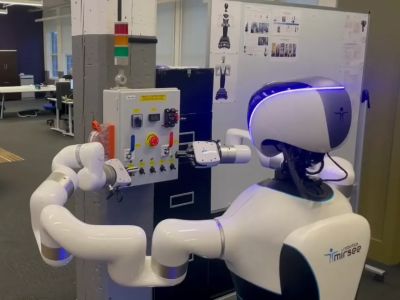
MH2
By: Mirsee Robotics
Launched: 2023
MH2 is a wheeled humanoid robot designed for skilled labor augmentation in hazardous, remote, and labor-intensive environments. It features 24 degrees of freedom enabling human-like dexterity and mobility, with a long arm reach and high payload capacity suitable for precise manipulation and carrying tasks. The robot supports remote teleoperation exclusively, allowing operators to perform complex tasks safely from a distance. MH2 offers continuous operation with an 8 to 10-hour runtime supported by hot-swappable batteries and wireless charging. Its omni-directional mobile base and advanced sensors enable reliable navigation and interaction in indoor and controlled outdoor environments. MH2 is built to enhance productivity, safety, and economic efficiency in industrial, infrastructure, and service sectors.
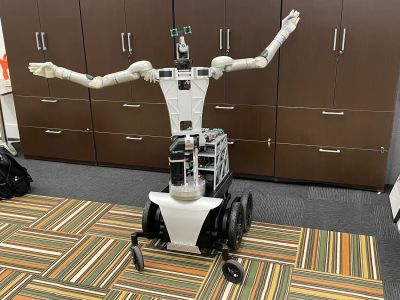
MH1
By: Mirsee Robotics
Launched: 2021
The MH1 is a third-generation humanoid robot from Mirsee Robotics, designed for remote teleoperation in environments where human presence is hazardous or impractical. It features bipedal locomotion, advanced manipulation, and continuous operation with wireless charging. MH1 is engineered for precision tasks, offering reliable performance in repetitive or labor-intensive scenarios. Its design emphasizes safety, durability, and seamless integration with existing infrastructure, making it suitable for industrial maintenance, inspection, and collaborative applications. The robot supports immersive teleoperation via virtual reality, enabling skilled operators to perform complex manual tasks remotely with high dexterity and situational awareness.
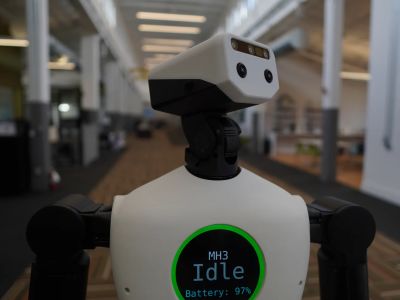
Mirsee Robotics MH3
By: Mirsee Robotics
Launched: 2024
MH3 is a third-generation humanoid robot designed by Mirsee Robotics to augment skilled labor through precise dual-arm manipulation and advanced mobility. It features teleoperation via immersive VR with haptic feedback, enabling operators to perform complex manual tasks remotely in hazardous or labor-intensive environments. MH3 supports up to 27 kg combined arm force, integrates omni-directional mobility for maneuvering in confined spaces, and emphasizes safe human-robot collaboration with force limiting and collision detection. Its design targets industrial, manufacturing, and service sectors, enhancing productivity and reducing physical strain while operating continuously with wireless charging and a 10-hour runtime.
Mirsee Robotics Timeline & Milestones
Evolutionary history, landmark prototypes, major acquisitions, and commercial roadmap
Mirsee Robotics founded
Tarek Rahim and Robert Ings found Mirsee Robotics in Cambridge, Ontario, to build practical humanoid robots.
Source: letsdatascience.com
Collaboration with Eclipse Automation
Mirsee and Eclipse Automation work together to build practical humanoid robots for industrial use.
Source: eclipseautomation.com
Eight MH3 prototypes built ahead of 2027 production
Mirsee has built eight MH3 humanoid prototypes and is testing them ahead of planned mass production in 2027.
Source: bnnbloomberg.ca
Mirsee Robotics Competitors by Category
Direct industry rivals grouped by specific robotics domain
What Makes Mirsee Robotics Different?
Editorial AnalysisOrigin of Bots objective strategic assessment, engineering moats, and commercial hurdles
Key Strengths & Moats
- ✓Reliability-first design.
- ✓Industrial partner.
Core Strategic Focus
Preparing for 2027 mass production.
Road Ahead & Challenges
- •Pre-production.
- •Prices not published.
Mirsee Robotics vs Key Competitors
Strategic capability matrix across platform categories, commercial readiness, and target markets
Deployment Target
- MH3 (Mirsee)
- Automotive Parts & Metal Fab
- Digit v5 (Agility)
- Warehouse Logistics
- Apollo (Apptronik)
- Automotive Assembly
- Figure 02
- Automotive Plants (BMW)
Continuous Battery Life
- MH3 (Mirsee)
- 6 Hours
- Digit v5 (Agility)
- 4–5 Hours
- Apollo (Apptronik)
- 4 Hours
- Figure 02
- 5 Hours
Full-Body DoF
- MH3 (Mirsee)
- 28 DoF
- Digit v5 (Agility)
- 30+ DoF
- Apollo (Apptronik)
- 30+ DoF
- Figure 02
- 35+ DoF
Commercial Model
- MH3 (Mirsee)
- Direct Sale & RaaS
- Digit v5 (Agility)
- RaaS Subscription
- Apollo (Apptronik)
- RaaS & Strategic Lease
- Figure 02
- Commercial Strategic Pilot
| Strategic Dimension | MH3 (Mirsee) | Digit v5 (Agility) | Apollo (Apptronik) | Figure 02 |
|---|---|---|---|---|
| Deployment Target | Automotive Parts & Metal Fab | Warehouse Logistics | Automotive Assembly | Automotive Plants (BMW) |
| Continuous Battery Life | 6 Hours | 4–5 Hours | 4 Hours | 5 Hours |
| Full-Body DoF | 28 DoF | 30+ DoF | 30+ DoF | 35+ DoF |
| Commercial Model | Direct Sale & RaaS | RaaS Subscription | RaaS & Strategic Lease | Commercial Strategic Pilot |
Corporate Ecosystem & Ownership Structure
Parent company relationships, historical acquisitions, and global operating facilities
Global Facilities & Operating Hubs
Mirsee Robotics Headquarters
HQCambridge, Ontario, Canada
Articles & Industry News
Showing 1 recent article and news updates about Mirsee Robotics
Robot Comparisons
Showing 2 in-depth comparisons featuring Mirsee Robotics — Explore all comparisons →
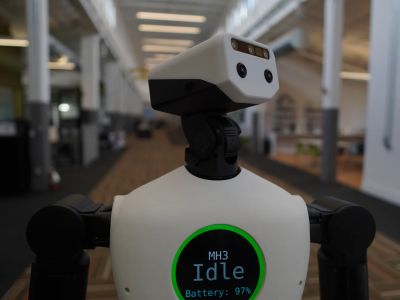
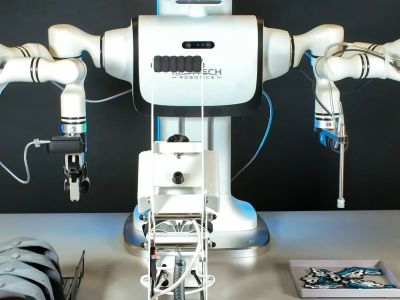
MH3 (Mirsee Robotics) vs Dex (Richtech Robotics)
Which robot wins? MH3 vs Dex compared across navigation, battery, sensors, mobility, and price.
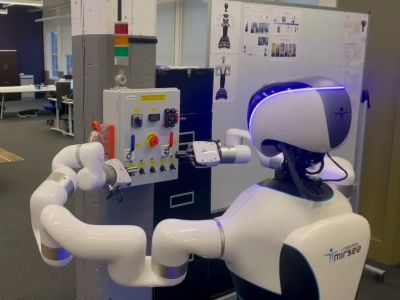
MH3 vs MH2 by Mirsee Robotics
MH3 or MH2? Compare specs, navigation, sensors, and AI capabilities for humanoid robotics performance.
Frequently Asked Questions
8 AnswersVerified answers, company specifications, and deployment details about Mirsee Robotics
What is Mirsee Robotics?
Mirsee Robotics is a Cambridge, Ontario company, founded in 2017, that builds wheeled humanoid robots such as the MH3 for factory and warehouse work.
Who founded Mirsee Robotics?
Mirsee was co-founded in 2017 by Tarek Rahim, its chief executive, and Robert Ings, a roboticist and inventor, in Cambridge, Ontario, to build practical humanoid robots.
What is the Mirsee MH3?
MH3 is Mirsee's third-generation wheeled humanoid. It lifts about 30 kg per arm, runs up to 10 hours per charge and can be controlled by AI or remote operators.
Can the MH3 be teleoperated?
Yes. Operators can control the MH3 through a VR headset and haptic gloves from up to 1,500 km away, and their actions help train the robot to work on its own.
Why does Mirsee use wheels instead of legs?
Mirsee chose a wheeled base to prioritise reliability and stability over flashy design, which suits flat factory and warehouse floors.
When will Mirsee robots be mass produced?
Mirsee plans to move the MH3 into mass production in 2027, after building and testing eight prototypes in 2026 with industrial partners including Eclipse Automation.
How much does the Mirsee MH3 cost?
Mirsee Robotics has not published a price for the MH3. Industrial customers need to contact the company directly, as robots are supplied for factory and warehouse projects.
Where is Mirsee Robotics based?
Mirsee Robotics is based in Cambridge, Ontario, Canada, and has worked with Canadian automation firm Eclipse Automation on building practical humanoid robots for industrial use.
Verified Data & Editorial Assurance
Compiled from verified corporate filings, official Mirsee Robotics datasheets, and robotics engineering registries. Information has been verified against official manufacturer documentation. For commercial procurement or proprietary integrations, contact the manufacturer directly.