ROBROS
ROBROS (로브로스) is an advanced robotics enterprise developing production-ready humanoid robots and AI manipulation platforms. Its flagship humanoid, IGRIS-C (and ROBROS H1), features an agile 29-joint bipedal architecture engineered to bridge complex physical AI research with real-world industrial shop floor deployment. Capable of dynamic whole-body motion, heavy tool manipulation, and collaborative logistics, ROBROS provides flexible platforms for industrial automation across East Asia.
💡Notable Achievement: ROBROS debuted IGRIS-C at CES and the NextRise Summit, showcasing dynamic whole-body motion and multi-floor obstacle traversal while demonstrating verified commercial readiness across Korean and Chinese manufacturing supply chains.
What Does ROBROS Do?
ROBROS (로브로스) is bridging the gap between theoretical AI robotics research and grueling real-world industrial production. Developed by a veteran team of South Korean robotics engineers, ROBROS designs full-size bipedal humanoids engineered from the ground up to operate reliably inside human-designed factories, warehouses, and assembly cells. Its flagship platform, IGRIS-C, combines robust whole-body dynamic motion with versatile industrial end-effectors, providing manufacturing enterprises with a dependable, production-ready robotic teammate for parts kitting, machine tending, and logistics transfer.
“ROBROS builds production-ready humanoid robots that bridge advanced AI research with real-world industrial factory deployment.”
Production-Ready Durability
Engineered specifically for round-the-clock industrial duty cycles rather than fleeting exhibition demonstrations.
Dynamic Whole-Body Coordination
Maintains biological-grade balance and posture stabilization while handling dynamic payload shifts up to 12 kg.
Modular Tooling Architecture
Features standard quick-change end-effector wrists compatible with industrial grippers, vacuum cups, and tactile hands.
What Can ROBROS Robots Actually Do?
Cross-portfolio operational capabilities, manipulation tasks, and environmental competencies
ROBROS produces industrial bipedal humanoids, robotic manipulators, and automated assembly solutions.
Industrial Parts Kitting & Feeding
Navigates shop floor aisles to transfer parts between automated conveyors and manual assembly stations.
Dynamic Whole-Body Balance
Maintains robust stability across uneven factory flooring, ramps, and obstacle thresholds.
Flexible End-Effector Modularity
Rapidly swaps between 2-finger heavy parallel grippers and dexterous anthropomorphic hands.
ROBROS Robots
Showing 2 Humanoid Robots of 2 total models
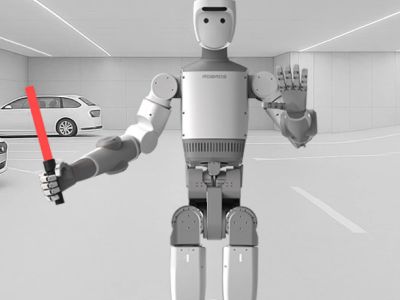
IGRIS-C
By: ROBROS
Launched: 2025
The IGRIS-C is a compact humanoid robot from ROBROS, standing at 154 cm tall and weighing 56 kg, designed for human-robot collaboration in service environments like cafes and retail spaces. Featuring 31 degrees of freedom in the body and 11 DOF in tendon-driven 5-finger hands, it excels in dexterous manipulation and bipedal locomotion. Powered by reinforcement learning for agile walking, running, jumping, backflips, and cartwheels, and imitation learning for precise object handling, it adapts to unstructured indoor settings. Equipped with stereo cameras, RealSense depth sensors, IMU for balance, and NVIDIA Jetson Orin NX plus Intel Core i7 computing, it supports teleoperation, autonomous tasks, and data collection for AI training. With a 17000mAh 48V battery, torque-based control at 150Nm max torque, and 7 DOF arms plus 3 DOF waist and 2 DOF neck, IGRIS-C offers robust performance in narrow, complex spaces, emphasizing safe, lifelike interactions and developer-friendly research capabilities.

IGRIS-A
By: ROBROS
Launched: 2024
The IGRIS-A is a compact service-oriented humanoid robot from ROBROS, standing at approximately 154 cm tall with 29 articulated joints in the body and an advanced 11-joint tendon-driven hand for dexterous manipulation. It excels in human-robot collaboration for customer-facing environments like cafes, leveraging reinforcement learning for stable bipedal walking and imitation learning for precise object handling that mimics human motions. Powered by NVIDIA Jetson Orin AI hardware, it features a dual battery system, 30:1 gear ratio for smooth torque control, and fast motion planning up to three times quicker than prior models. Adaptive hands grip varied objects dynamically, while stereo cameras, RealSense depth sensors, and IMU enable navigation and balance in unstructured spaces. Designed for lifelike interactions, it supports remote teleoperation, data collection for AI training, and tasks like serving, product handling, and hospitality assistance, prioritizing safe, efficient partnership with humans.
ROBROSSoftware & AI Ecosystem
Developer platforms, fleet management portals, autonomy intelligence, and enterprise integrations
Software Feature
What Makes ROBROS Different?
Editorial AnalysisOrigin of Bots objective strategic assessment, engineering moats, and commercial hurdles
Key Strengths & Moats
- ✓Robust mechanical engineering and high-reliability 29-joint industrial biped architecture
- ✓Strong regional partnerships with automotive and electronics manufacturers across Korea and China
- ✓Pragmatic focus on proven industrial tasks and standardized quick-change tooling
Core Strategic Focus
Scaling batch assembly and deepening pilot integrations on high-volume automotive production lines.
Road Ahead & Challenges
- •Brand visibility competition against high-profile Silicon Valley and Chinese humanoid unicorns
- •Navigating international certification processes for expanded European exports
ROBROS vs Key Competitors
Strategic capability matrix across platform categories, commercial readiness, and target markets
| Strategic Dimension | IGRIS-C (ROBROS) | Digit v5 | RB-Y1 (Rainbow) | Walker S1 (UBTECH) |
|---|---|---|---|---|
| Form Factor | 29-Joint Biped | Backward-Knee Biped | Wheeled Dual-Arm | 41-DoF Biped |
| Arm Payload Capacity | 12 kg | 16 kg | 3 kg / arm | 15 kg |
| Communication Bus | EtherCAT (1kHz) | EtherCAT / CAN | EtherCAT | CAN-FD |
| Primary Application | Automotive & Electronics | Logistics Tote Handling | Research & Service | Automotive Assembly |
Corporate Ecosystem & Ownership Structure
Parent company relationships, historical acquisitions, and global operating facilities
Articles & Industry News
Showing 3 recent articles and news updates about ROBROS
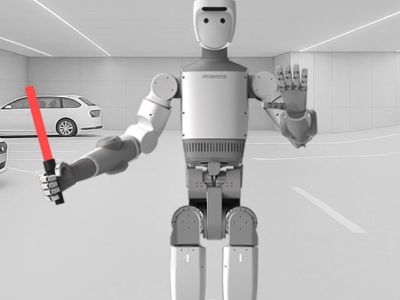
ROBROS IGRIS-C Wows CES 2026 with Tendon Hands
News about IGRIS-C
ROBROS Unveils IGRIS-C at CoRL 2025, Positioning Compact Humanoid for Service Industry Transformation
News about IGRIS-C

ROBROS Crafts IGRIS-C into Humanoid Partner Powerhouse
News about IGRIS-A
Frequently Asked Questions
10 AnswersVerified answers, company specifications, and deployment details about ROBROS
What is the unit purchase price or RaaS lease pricing model for IGRIS-C?
IGRIS-C is sold directly to industrial and research clients with hardware configurations priced between $80,000 and $110,000 USD (approximately 110M to 150M KRW). ROBROS also provides turnkey industrial trial leases starting around $3,500 USD per month with dedicated application engineering support.
What is the commercial timeline and current availability status of IGRIS-C?
ROBROS introduced early prototypes in 2023, debuted the commercial IGRIS-C at global tech forums in 2025, and entered full-scale commercial shipping in 2026. The platform is actively supplied to automotive and electronics manufacturing clients.
Where are IGRIS-C robots actively deployed in real-world facilities?
IGRIS-C humanoids are deployed in automotive component assembly cells in Ulsan and Gyeonggi-do, industrial test facilities in Eastern China, and robotics institutes in Seoul.
What target industrial and everyday workflows does IGRIS-C automate?
IGRIS-C automates parts kitting, conveyor line loading, tote bin conveyance, quality inspection via handheld scanners, and precision tool operation.
What mechanical drivetrain and actuator architecture powers IGRIS-C?
IGRIS-C is built on a 29-joint bipedal architecture driven by custom brushless rotary actuators with harmonic reducers delivering up to 280 N·m of peak joint torque with high-frequency EtherCAT bus communications.
What end-effector dexterity, hand degrees of freedom (DoF), and tactile sensing does IGRIS-C feature?
IGRIS-C utilizes modular quick-change wrist interfaces supporting heavy-duty parallel 2-finger grippers with high-load capacity (up to 12 kg payload) or optional 5-finger dexterous hands with multi-axis force-torque sensing.
What is IGRIS-C's continuous battery runtime, capacity, and charging mechanism?
IGRIS-C is equipped with a 48V 1.2 kWh high-discharge lithium-ion battery system delivering 3 to 4 hours of continuous operational shifts, supporting quick-swap battery packs.
What is IGRIS-C's operational autonomy level versus remote teleoperation dependency?
IGRIS-C operates at Level 4 autonomy for structured factory navigation and component handling, utilizing autonomous vision pipelines while supporting master-slave teleoperation for complex irregular manipulations.
What sensory perception suite and foundation AI models govern IGRIS-C?
IGRIS-C integrates head-mounted stereo depth cameras, dual torso-mounted 3D LiDAR scanners, and joint torque sensors, powered by a whole-body model-predictive control (MPC) and reinforcement learning policy engine.
What worker safety mechanisms, force compliance, and physical limits protect human collaborators?
Complies with ISO 10218 and ISO/TS 15066 safety standards. Joint torque sensing detects contact forces exceeding 30 N and triggers safe stop modes, complemented by LiDAR safety zones.
Verified Data & Editorial Assurance
Compiled from verified corporate filings, official ROBROS datasheets, and robotics engineering registries. Information has been verified against official manufacturer documentation. For commercial procurement or proprietary integrations, contact the manufacturer directly.