ROBROS Unveils IGRIS-C at CoRL 2025, Positioning Compact Humanoid for Service Industry Transformation
Robot Details
IGRIS-C • ROBROSPublished
January 28, 2026
Reading Time
3 min read
Author
Origin Of Bots Editorial Team
Compact Humanoid Enters Market
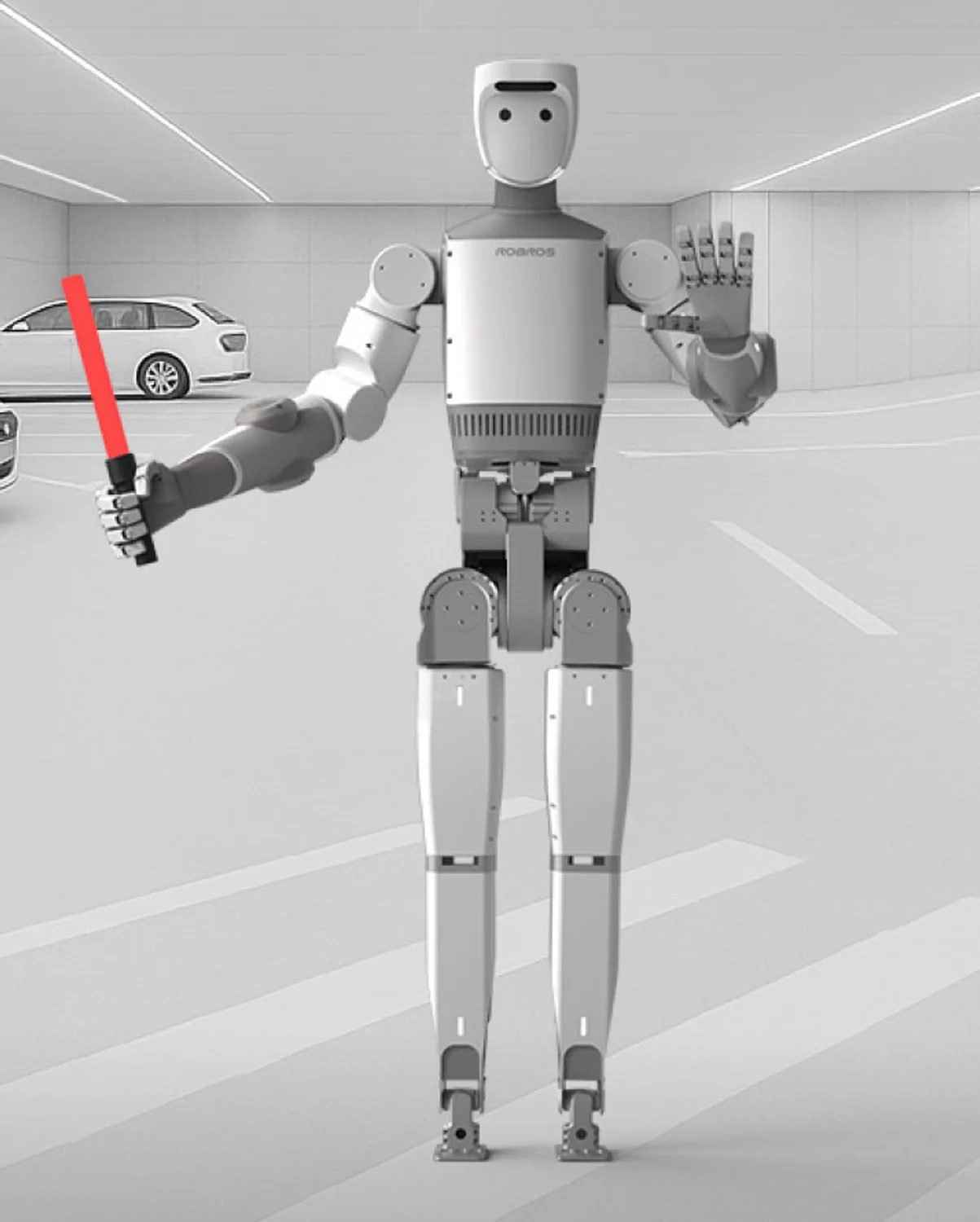
South Korean robotics firm ROBROS introduced the IGRIS-C, a 154-centimeter humanoid robot engineered for collaborative service environments, at the Conference on Robot Learning in 2025. The platform represents a strategic pivot toward human-robot collaboration in hospitality and retail sectors, where the robot's adaptive tendon-driven hands and reinforcement learning capabilities enable it to perform complex manipulation tasks alongside human workers. ROBROS positions IGRIS-C as a developer-friendly research platform, emphasizing safe indoor operation and dexterous object handling over raw industrial power.
Dexterous Hands Redefine Interaction
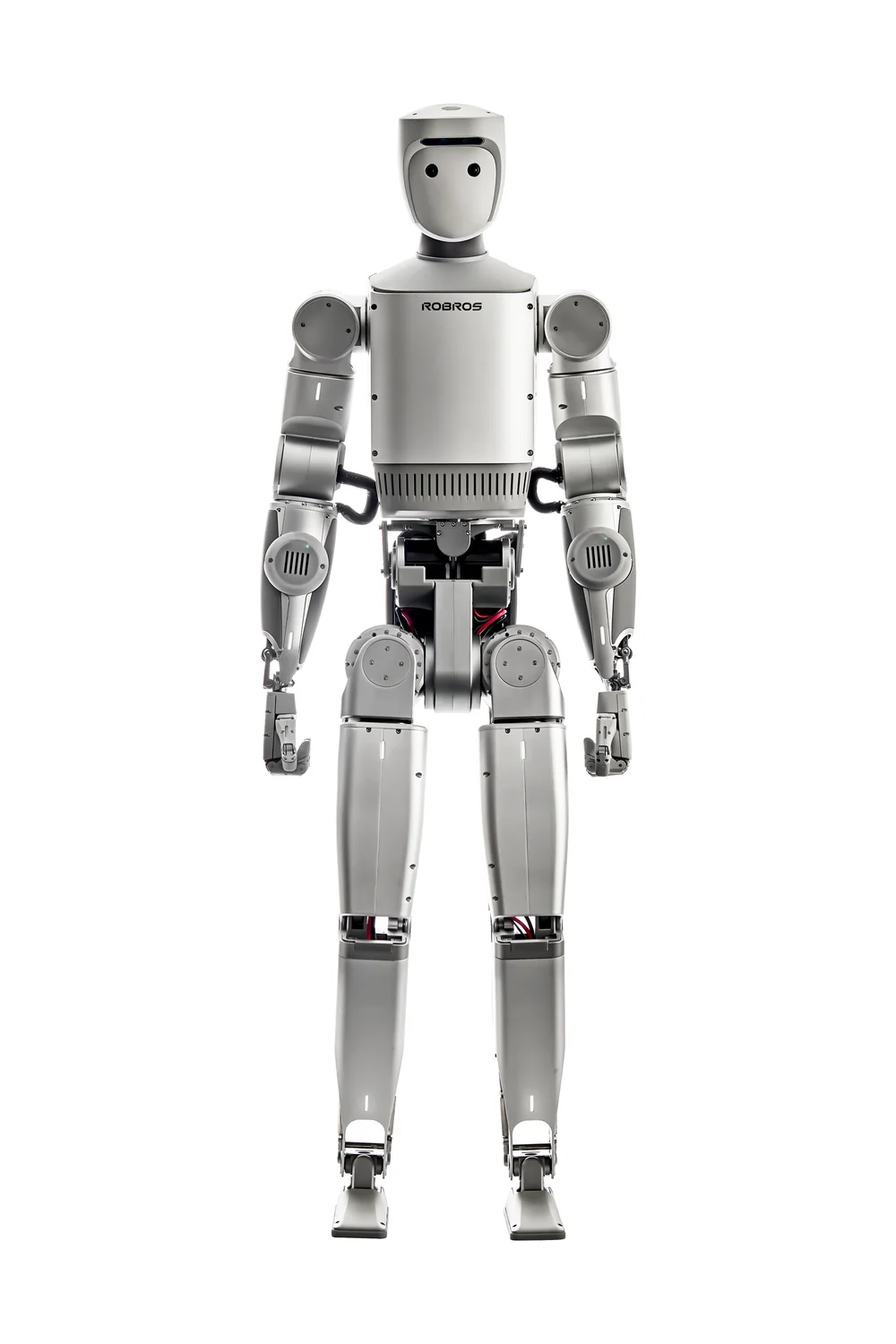
The defining innovation of IGRIS-C lies in its in-house tendon-driven hand architecture, where cable routing couples joint motion while preserving independent finger control. Each hand operates with six degrees of freedom, allowing the robot to grasp delicate objects, tools, and precision instruments with human-like sensitivity. This design eliminates bulky linkages that plague competing platforms, enabling IGRIS-C to work seamlessly in narrow cafes, retail counters, and laboratory spaces where traditional robotic arms prove unwieldy. The hands adapt dynamically to object geometry, a capability trained through imitation learning from human demonstrations.
Learning from Human Movement
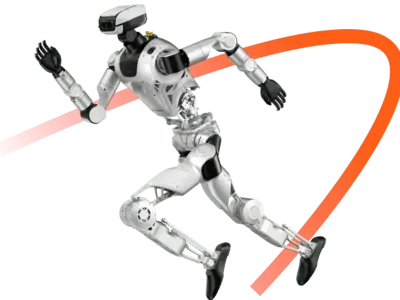
IGRIS-C employs a dual-learning framework that distinguishes it from earlier humanoid generations. Reinforcement learning powers autonomous bipedal locomotion, enabling the robot to walk at 3.6 km/h, run up to 7 km/h, and execute dynamic stunts including backflips and cartwheels. Meanwhile, imitation learning for manipulation allows operators to teleoperate using a master hand controller, repeating tasks multiple times to build training datasets that the robot then reproduces autonomously. This approach accelerates deployment timelines and reduces reliance on hand-coded motion primitives that limit flexibility in unstructured environments.
Real-World Service Deployment
IGRIS-C targets four primary use cases: industrial manufacturing floors seeking collaborative assembly partners, warehouse logistics operations requiring precise object sorting, laboratory research environments demanding sterile handling, and hospitality venues like cafes needing customer-facing task automation. In cafes, the robot can carry trays, interact with customers, and assist with inventory management. Retail deployments leverage its compact 1.54-meter frame to navigate tight aisles and high shelves. Its 6-kilogram dual-arm payload capacity suits light assembly, inspection, and service tasks without the safety concerns associated with heavier industrial arms.
Engineering Precision for Collaboration
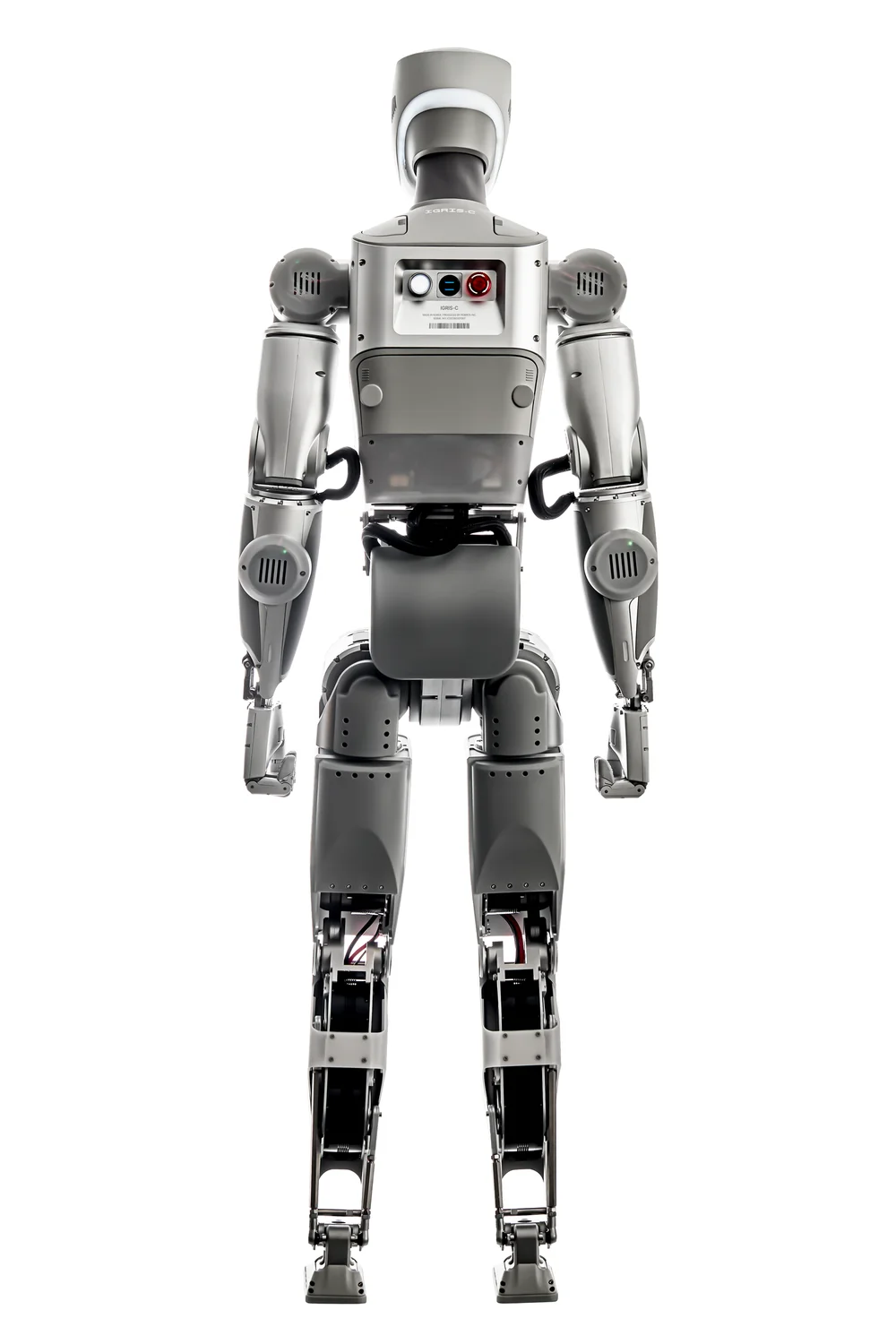
IGRIS-C combines 31 body degrees of freedom with 11-joint hands to achieve fluid, human-like movement across diverse tasks. The robot weighs 56 kilograms and measures 1,540 by 440 by 300 millimeters, fitting comfortably in human workspaces. Its 17,000 mAh 48-volt battery supports extended service sessions, while 150 Nm maximum torque—delivered through low-reduction-ratio drive systems—enables stable collaborative operation without crushing force. Sensor integration includes stereo RGB cameras, Intel RealSense depth sensing, and six-axis IMU for balance, feeding real-time environmental data to an NVIDIA Jetson Orin NX processor running ROS 2 and Python-based control stacks. Force-limiting and collision-detection systems enforce safe human-robot proximity, critical for hospitality and retail deployments where unexpected contact is inevitable.
Versus Rivals Breakdown
| Robot | Strengths over IGRIS-C | IGRIS-C Advantages | Weaknesses vs. IGRIS-C |
|---|---|---|---|
| Optimus | Higher payload capacity; industrial-grade durability | Tendon-driven hands enable delicate manipulation; faster motion planning (3x predecessors) | Larger frame limits cafe/retail navigation; less dexterous hand design |
| Atlas (Electric Atlas, 2025) | Superior running speed and parkour capability | Compact size for indoor service; imitation learning reduces training overhead | Lower dynamic performance; cannot match acrobatic stunts |
| Figure 02 | Advanced AI reasoning for complex task planning | Specialized for service interaction; proven CoRL 2025 deployment readiness | Emerging platform with limited real-world hospitality data |
| Unitree H1 | Lower cost entry point for research labs | Superior hand dexterity through cable-driven design; collaborative safety features | Unitree emphasizes speed over precision manipulation tasks |
Explore Humanoids
Related Articles
PAL Robotics Kangaroo Redefines Legged Robot Research with Advanced Dynamic Control
PAL Robotics Boosts REEM-C Balance with Renishaw Encoders
LG CLOiD Home Robot Powers Zero-Labor Homes at CES 2026

Figure 02 Showcases Helix-Powered Household Autonomy
Related Comparisons
Compare IGRIS-C with similar robots

Optimus vs Unitree G1
Compare Optimus vs Unitree G1 for humanoid mobility, dexterity, autonomy, and payload capacity.
Unitree G1 vs Unitree H1
Head-to-head: Unitree G1 vs Unitree H1 compared on bipedal balance, AI learning, and real-world deployment.
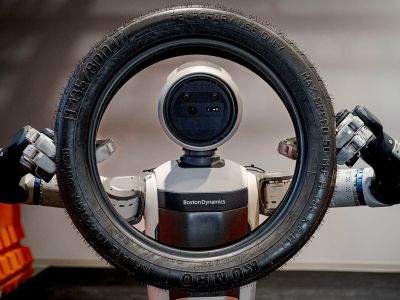
Optimus vs Atlas (Electric 2025)
In-depth comparison of Optimus and Atlas (Electric Atlas, 2025), covering hardware capabilities, teleoperation, and enterprise readiness.
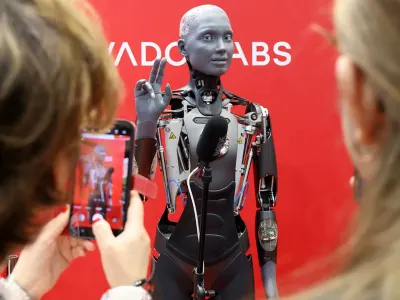

Ameca vs Moya
Which humanoid robot is better? Ameca vs Moya compared for dexterity, AI capabilities, and price.
Learn More About This Robot
Discover detailed specifications, reviews, and comparisons for IGRIS-C.
View Robot Details →