ROBROS Crafts IGRIS-C into Humanoid Partner Powerhouse
Robot Details
IGRIS-A • ROBROSPublished
January 28, 2026
Reading Time
3 min read
Author
Origin Of Bots Editorial Team
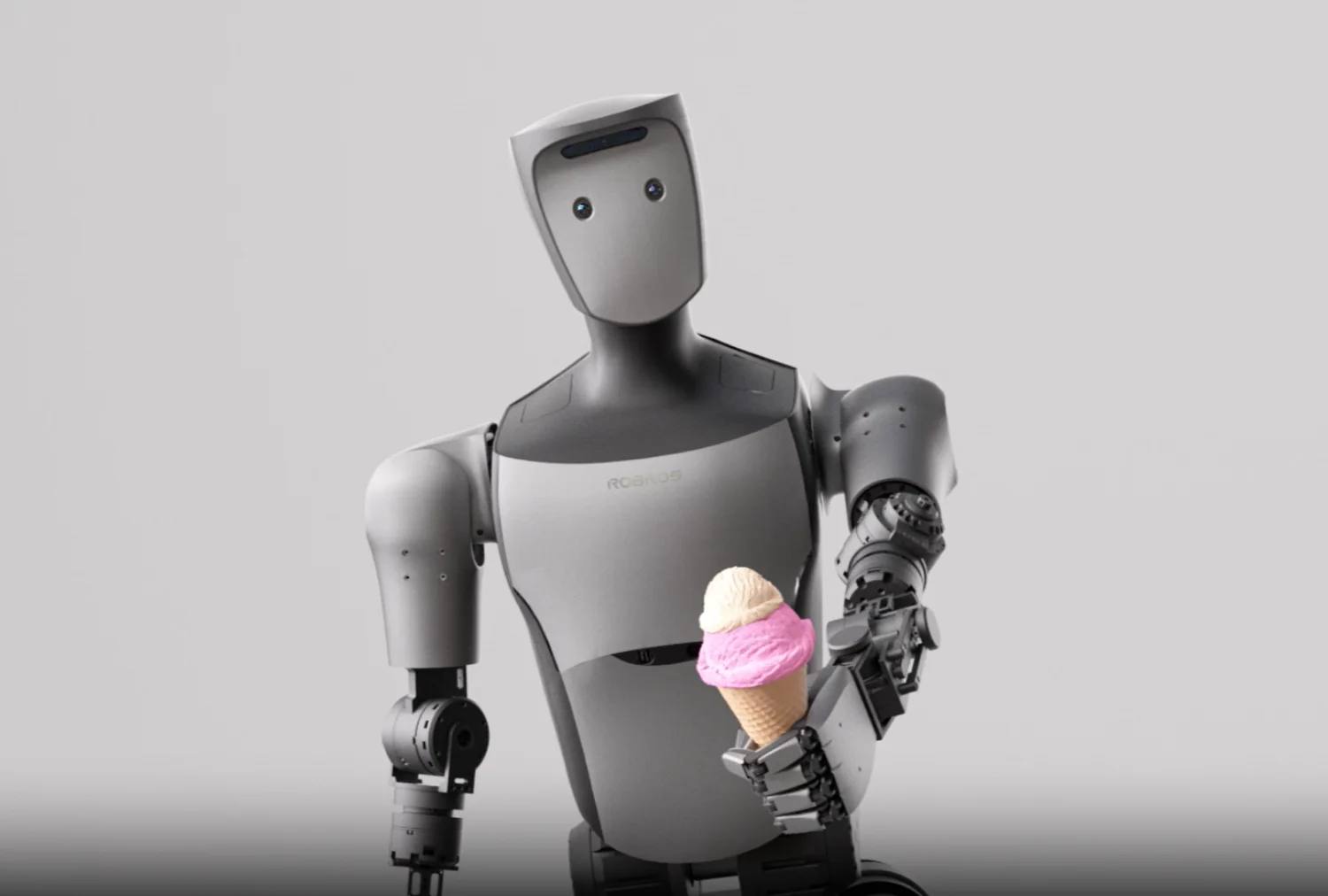
Powerhouse Unveiled
South Korean innovator ROBROS has transformed its IGRIS lineup with the production-ready IGRIS-C, a compact humanoid robot debuting as the ultimate collaborative partner for AI labs and service fronts. Launched in 2025 and showcased at CES 2026, this 154cm dynamo bridges research experimentation and industrial grit, enabling seamless human-robot teamwork in tight spaces. Unlike bulkier predecessors, IGRIS-C prioritizes indoor agility and dexterous aid, redefining how machines assist without dominating workspaces. Early adopters praise its role in accelerating data gathering for foundation models, signaling a shift toward everyday humanoid deployment.
Dexterity Redefined
IGRIS-C stands out with its tendon-driven hands, boasting 11 degrees of freedom powered by just six motors, allowing independent finger control for human-like grasping of delicate tools or packages. Reinforcement learning powers its stable bipedal strides, while imitation learning lets it mirror operator demos for precise tasks like box packing. This setup delivers three times faster motion planning than prior models, making interactions feel intuitive and responsive. Developers teleoperate via a master hand to build datasets, turning complex manipulations into repeatable skills that evolve with use.
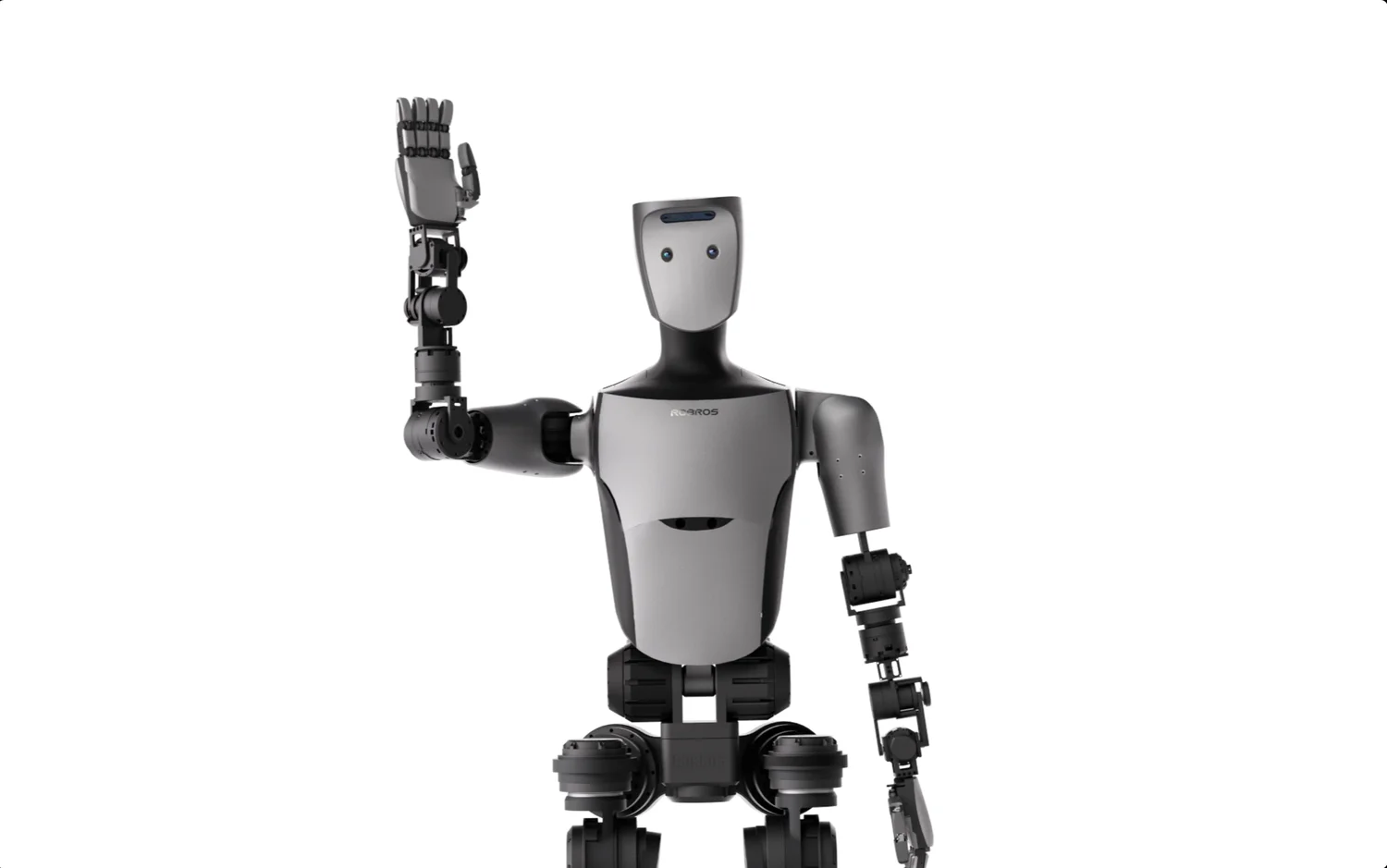
Engineering Leaps Forward
At its core, IGRIS-C leverages NVIDIA Jetson Orin NX alongside an Intel Core i7 for onboard AI processing, paired with stereo cameras, RealSense depth sensing, and IMU for real-time environmental awareness. A low gear ratio and 150Nm max torque enable feats like jumps and cartwheels, all while maintaining collaborative safety through compliant actuation. The 17,000mAh 48V battery supports two-hour runtime bursts, with tendon hands absorbing impacts for safe human proximity. This hardware stack disrupts traditional rigid robotics, fostering adaptive behaviors in unstructured settings.
Deployment Horizons Expand
Picture IGRIS-C navigating cafe counters to deliver orders or aiding restaurant staff with inventory checks, its five-finger grips handling trays effortlessly. In AI research, it collects manipulation data for model training; in logistics, it pilots package sorting amid clutter. Industrial pilots highlight its unstructured navigation, from manufacturing lines to R&D benches, where it validates behaviors over extended sessions. By emphasizing human-centric outcomes like reduced worker strain, ROBROS positions IGRIS-C as a transformative ally across service industries and beyond.

Interaction Skills Blueprint
IGRIS-C's skill architecture empowers nuanced human partnerships through torso-integrated sensors like stereo depth vision, LiDAR, IMU, and high-sensitivity tactile feedback in its hands, enabling gentle object handling and collision avoidance. Bipedal walking at up to 3.6 km/h supports fluid navigation in crowded indoors via Visual SLAM, while 6-axis force/torque sensing ensures precise people interactions. Linux-based ROS2 with Python APIs facilitates custom dexterity training, and its 5-7 year industrial battery endurance powers prolonged collaboration sessions without downtime.
Rivals Face-Off
| Robot | Strengths over IGRIS-C | IGRIS-C Advantages | Weaknesses vs. IGRIS-C |
|---|---|---|---|
| Figure 02 | Superior payload (20kg) | Compact 56kg frame fits tight spaces | Shorter 2-hour runtime |
| Optimus | Higher speed (8km/h) | Tendon hands for finer dexterity | Less indoor SLAM focus |
| Atlas (Electric Atlas, 2025) | Dynamic acrobatics | Affordable production-ready price | Bulkier 89kg build |
| Digit | Proven logistics use | Faster motion planning (3x) | Lower 150Nm torque |
Explore Humanoids


Related Articles
PAL Robotics Unveils ARI Upgrades at CES 2026
PAL Robotics Kangaroo Redefines Legged Robot Research with Advanced Dynamic Control
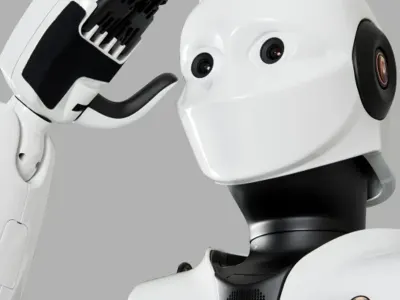
PAL Robotics Boosts REEM-C Balance with Renishaw Encoders

LG CLOiD Home Robot Powers Zero-Labor Homes at CES 2026
Related Comparisons
Compare IGRIS-A with similar robots

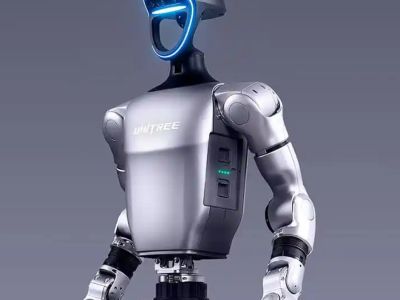
Optimus vs Unitree G1
Compare Optimus vs Unitree G1 for humanoid mobility, dexterity, autonomy, and payload capacity.

Unitree G1 vs Unitree H1
Head-to-head: Unitree G1 vs Unitree H1 compared on bipedal balance, AI learning, and real-world deployment.
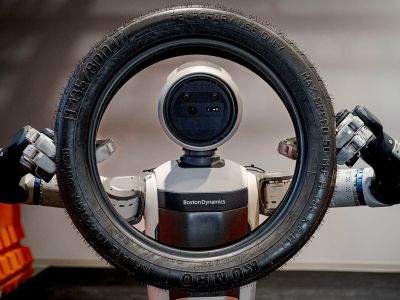
Optimus vs Atlas (Electric 2025)
In-depth comparison of Optimus and Atlas (Electric Atlas, 2025), covering hardware capabilities, teleoperation, and enterprise readiness.


Ameca vs Moya
Which humanoid robot is better? Ameca vs Moya compared for dexterity, AI capabilities, and price.
Learn More About This Robot
Discover detailed specifications, reviews, and comparisons for IGRIS-A.
View Robot Details →