Alphabet's Intrinsic Open-Sources Intrinsic Core at ROSCon 2026 to Standardize Physical AI and Manipulation
Robot Details
Robotics & AI News • OriginOfBotsPublished
September 22, 2026
Reading Time
4 min read
Author
Origin Of Bots Editorial Team
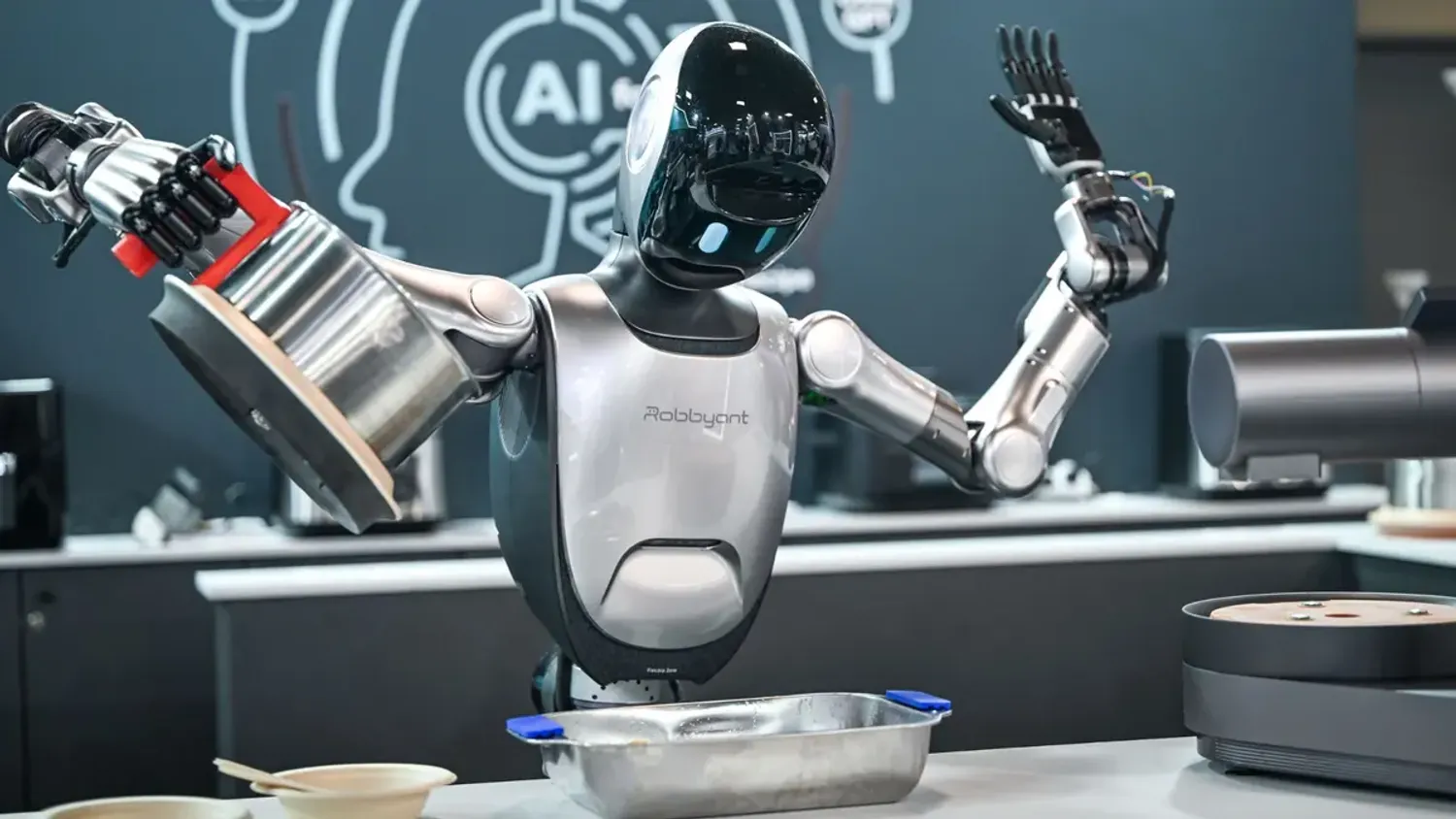
Unveiling Intrinsic Core at ROSCon 2026 in Toronto
At the ROSCon 2026 developer conference in Toronto, Alphabet robotics subsidiary Intrinsic made a historic open-source announcement. The company officially released Intrinsic Core, a comprehensive suite of Robot Operating System-compatible software building blocks for physical AI. Distributed under the permissive Apache 2.0 license, the software release democratizes the foundational capabilities that Intrinsic developed for enterprise factories.
Robotics engineering teams across academia and industry have historically squandered thousands of engineering hours reinventing baseline motion planning and driver stacks. Intrinsic Core resolves this systemic friction by packaging production-tested behavioral primitives into a modular, hardware-agnostic developer environment. Industry observers hailed the release as a pivotal milestone that will dramatically accelerate the velocity of robotics application development worldwide.
Intrinsic Control: Real-Time Hardware-Agnostic Execution
At the technical heart of the open-source release lies Intrinsic Control, an advanced real-time robotic motion and control framework. Intrinsic Control decouples high-level AI policy generation from low-level joint hardware, enabling dynamic sensor-based trajectory adaptations mid-flight. If an obstacle enters a workcell or an object shifts unexpectedly, the controller instantaneously recalculates smooth kinematic paths without joint stutter.
Crucially, the architecture allows robotics integrators to hot-swap different robot arms, multi-fingered grippers, and depth cameras without rewriting low-level drivers. Pre-configured, ROS-compatible interfaces provide seamless interoperability with leading industrial hardware manufacturers, including FANUC and Universal Robots. By eliminating proprietary hardware lock-in, Intrinsic Control establishes a universal execution standard for modern adaptive manipulation systems.
FoundationPose Integration: Eliminating Costly Physical Fixtures
A standout technical capability bundled within Intrinsic Core is native integration with NVIDIA's FoundationPose foundation model. FoundationPose delivers instantaneous six-degree-of-freedom object pose estimation and tracking for arbitrary 3D industrial parts from raw camera feeds. This unified vision capability allows robots to recognize, localize, and grasp novel components instantly without requiring custom training datasets.
Eliminating the need to design and fabricate rigid, expensive mechanical locating fixtures removes a massive capital hurdle for manufacturing automation. Robots can identify and extract randomly oriented parts directly from unstructured bins, conveyor belts, or cluttered assembly totes. By combining out-of-the-box foundation models with real-time control, Intrinsic Core brings zero-shot physical perception to mainstream industrial robotics.
Automated Collision-Free Motion and Dynamic Grasp Planning
Intrinsic Core also replaces antiquated manual robot programming with automated, sensor-guided path generation and dynamic grasp planning. Traditionally, industrial automation technicians had to painstakingly teach robots every coordinate point, joint angle, and safety clearance manually. Intrinsic Core auto-generates mathematically optimal, collision-free trajectories that adapt autonomously to changing workcell boundaries and fixture locations.
Concurrently, the integrated grasp planning engine utilizes real-time tactile and optical feedback to evaluate part orientation and surface friction. The system calculates optimal gripper finger placement, adjusting closing force dynamically to prevent delicate workpieces from slipping or cracking. This closed-loop coordination ensures high first-pass grasping reliability across diverse industrial manipulation workflows.
Cloud-Native Simulation and Linux Containerized Architecture
To streamline application development and testing, Intrinsic Core integrates seamlessly with Gazebo-powered simulation and visualization services. Developers can model complex multi-robot workcells, simulate material physics, and debug finite-state logic within virtual environments before physical deployment. Real-time telemetry and state-machine dashboards allow engineers to isolate software bottlenecks and test emergency stop routines safely.
Furthermore, Intrinsic has unified the entire software stack using standard Linux containerization and Kubernetes orchestration architectures. Packaging ROS nodes into reproducible, isolated containers solves the notorious dependency conflicts that have long complicated multi-robot deployments. This cloud-native packaging enables automated over-the-air firmware updates and distributed fleet management across sprawling enterprise manufacturing facilities.
Open Machine Tending Solution: A Reference Blueprint for Machine Shops
Alongside the core architecture, Intrinsic released the Open Machine Tending Solution as a fully functional, open-source reference application. Engineered specifically for CNC machine shops and fabrication facilities, the package demonstrates an end-to-end implementation of automated workpiece handling. The reference design shows developers exactly how to orchestrate machine tending using standard collaborative robot arms and off-the-shelf 3D sensors.
Brian Gerkey, Chief Technology Officer at Intrinsic, emphasized that providing open reference blueprints keeps developers honest and accelerates adoption. Fabricators worldwide can deploy the tending package to automate low-value machine loading, boosting spindle utilization while mitigating skilled machinist shortages. Providing well-documented, working application templates bridges the persistent gap between abstract developer libraries and profitable factory deployments.
Becoming the 'Red Hat of Robotics' for the Embodied AI Era
Leadership at the Open Source Robotics Foundation praised Intrinsic Core as a crucial step toward establishing the Linux-style foundation of robotics. Geoffrey Biggs, CTO of OSRF, noted that the industry is approaching a threshold where platform providers will serve as the Red Hat or Canonical of robotics. By standardizing the unglamorous middleware of drivers, calibration, and motion planning, Intrinsic enables developers to focus entirely on specialized value-add AI.
While Intrinsic Core currently targets industrial robotic arms and fixed workcells, the underlying architecture provides a scalable foundation for mobile manipulators and humanoids. Alphabet’s durable open-source commitment ensures that the global robotics ecosystem can build atop an enterprise-grade software foundation. Standardizing the foundational operating layer of physical AI will undoubtedly unleash a wave of rapid commercial innovation across global automation.
Sources
Related Articles

Samsung Begins Prototype 2nm AI5 Chip Fabrication for Tesla FSD and Optimus Humanoid Robots
Spirit AI Forecasts General-Purpose Humanoid Robot Brains Poised for a 'ChatGPT-Style' Inflection by 2027
Tesla AI VP Ashok Elluswamy Delivers Candid Reality Check on Optimus Remote Control and Physical Safety Stakes
Alphabet's Intrinsic Open-Sources Intrinsic Core at ROSCon 2026 to Standardize Physical AI and Manipulation
Learn More About This Robot
Discover detailed specifications, reviews, and comparisons for Robotics & AI News.
View Robot Details →