Cuddle-Fish Robot Elicits Hugs in Therapeutic Indoor Demos
Robot Details
Cuddle‑Fish Robot • EPFLPublished
March 18, 2026
Reading Time
2 min read
Author
Origin Of Bots Editorial Team
Hugs Sparked in Study
Researchers at EPFL demonstrated the Cuddle-Fish robot's unique appeal during controlled indoor trials in mid-2025, where participants spontaneously hugged, patted, and stroked the floating device without any prompting. This user study involving 24 individuals revealed the robot's capacity to foster genuine emotional connections, transforming sterile lab settings into spaces of warmth and interaction. The demos, detailed in a July 2025 video release, highlighted how the robot's gentle drifts elicited cheek-touching and affectionate gestures, marking a shift in how aerial companions engage humans safely indoors.
Flapping Wings Redefine Safety
Cuddle-Fish disrupts traditional drone designs by pairing a helium-filled soft body with low-frequency flapping wings, creating propulsion that mimics natural animal glides rather than mechanical whirs. This bioinspired approach ensures whisper-quiet operation and zero propeller risks, allowing the robot to hover and maneuver in tight apartment confines. Participants in the 2025 trials reported feeling instinctively drawn to its organic movements, which prioritize huggable presence over speedy navigation, redefining indoor robotics for everyday coexistence.
Soft Engineering Breakthroughs Emerge
Engineering advances in Cuddle-Fish center on its lighter-than-air structure, where helium lift minimizes energy demands on the flapping mechanism, enabling stable, collision-proof flights. The soft silicone skin absorbs impacts effortlessly, while integrated sensors maintain balance during unexpected human contacts. These innovations, tested rigorously in EPFL's recent setups, achieve seamless visual navigation that follows light sources autonomously, proving that vulnerability in design can yield robust performance in human-centric environments.
Therapy Applications Take Flight
In domestic and therapeutic scenarios, Cuddle-Fish serves as a social companion for isolated individuals, guiding users through homes or enhancing affective therapy sessions with its responsive drifts. Recent indoor play trials showed it excelling as an interactive toy, drawing children into gentle pursuits without safety fears. For elderly care or mental health support, its ability to provoke unscripted hugs positions it as a transformative tool, bridging emotional gaps in confined spaces where rigid robots falter.
Specs Enable Gentle Drifts
Measuring 50 x 40 x 20 cm and weighing just 0.2-0.5 kg, Cuddle-Fish achieves speeds of 0.2-0.5 m/s, optimized for slow, drift-like motions that invite interaction. An IMU ensures stability, proximity sensors detect nearby humans, and micro-cameras enable vision-based light-following navigation. LiPo batteries last 2-3 years before major degradation, supporting extended indoor use, while safety relies on its soft body, sluggish wing flaps, and no propellers for emergency low-battery descents. Custom ROS-compatible software powers aerial flapping-wing mobility focused purely on companionship.
Related Articles
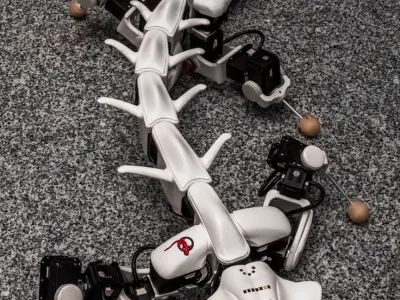
Pleurobot Masters 30-Degree Slopes, Swimming in 2026 Trials
Octobot Powers Soft Robotics with 4-8 Minute Chemical Autonomy
RoboBee Masters Crane Fly-Inspired Landings on Rough Terrain

Japan Deploys 330 Robot Wolves Against Bear Surge 2026
Learn More About This Robot
Discover detailed specifications, reviews, and comparisons for Cuddle‑Fish Robot.
View Robot Details →