Octobot Powers Soft Robotics with 4-8 Minute Chemical Autonomy
Robot Details
Octobot • Harvard University (Wyss Institute)Published
March 18, 2026
Reading Time
2 min read
Author
Origin Of Bots Editorial Team
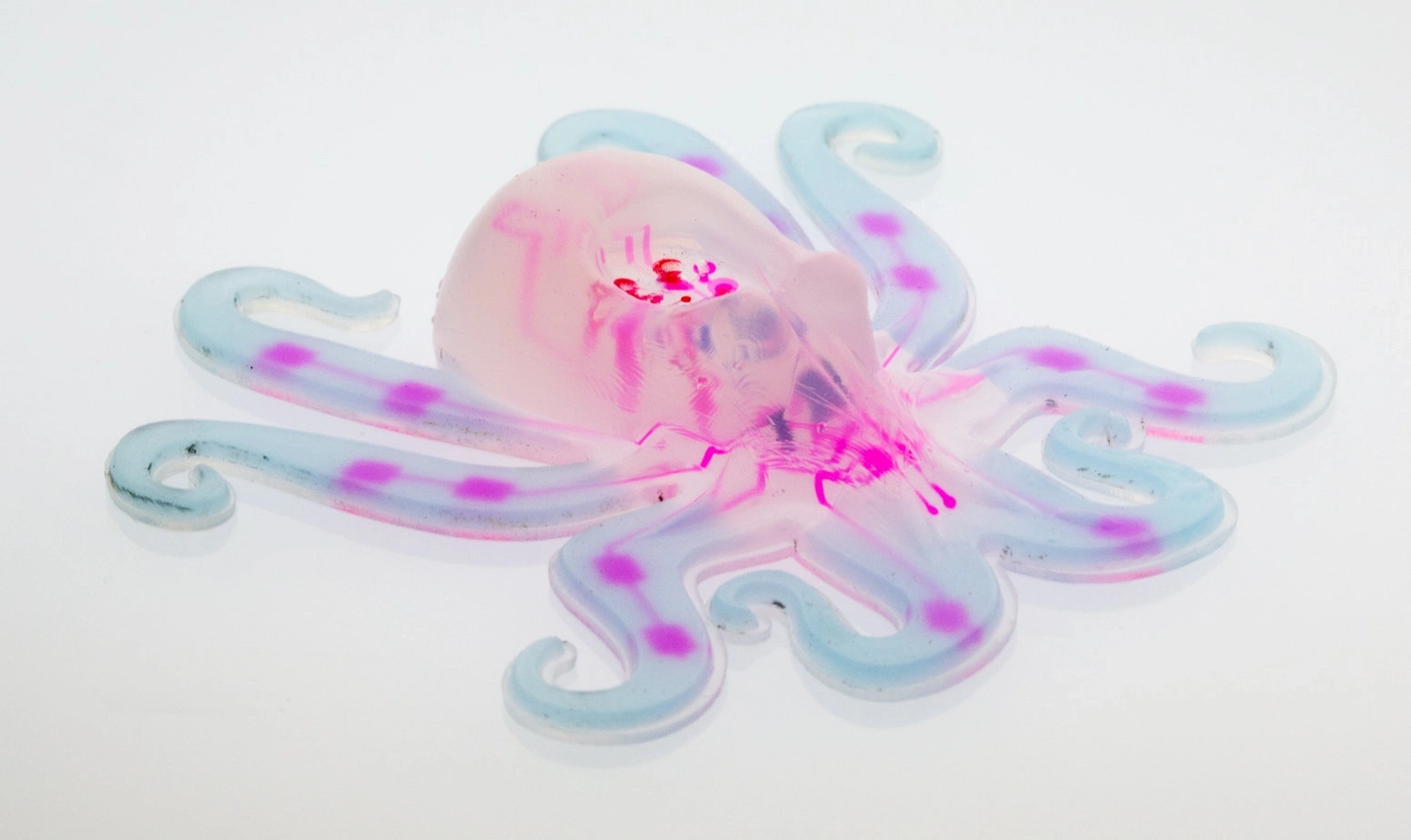
Chemical Power Breakthrough
Harvard University's Wyss Institute researchers recently demonstrated the Octobot's chemical-fueled operation in fresh lab trials during early 2026, showcasing its ability to run autonomously for 4 to 8 minutes on a single 1 mL hydrogen peroxide charge. This milestone disrupts traditional soft robotics by eliminating batteries and electronics entirely, proving that chemical reactions can drive untethered movement. The demonstration highlights Octobot's potential to transform research into flexible machines capable of navigating confined spaces without rigid tethers, marking a pivotal step toward practical, biology-inspired automation in sensitive environments.
Limb Inflation Mastery
Octobot achieves pulsating arm motions through pneumatic inflation, where gas from decomposing fuel expands soft silicone limbs in pre-set cycles, mimicking octopus dexterity without any motors. This innovation enables repeated twitching and oscillation, laying groundwork for more dynamic behaviors like crawling or swimming in future iterations. Researchers emphasize how this fully integrated design redefines actuation, allowing the bot to flex and contract reliably in prototypes tested over the past year, pushing boundaries beyond hybrid systems that rely on hard components.
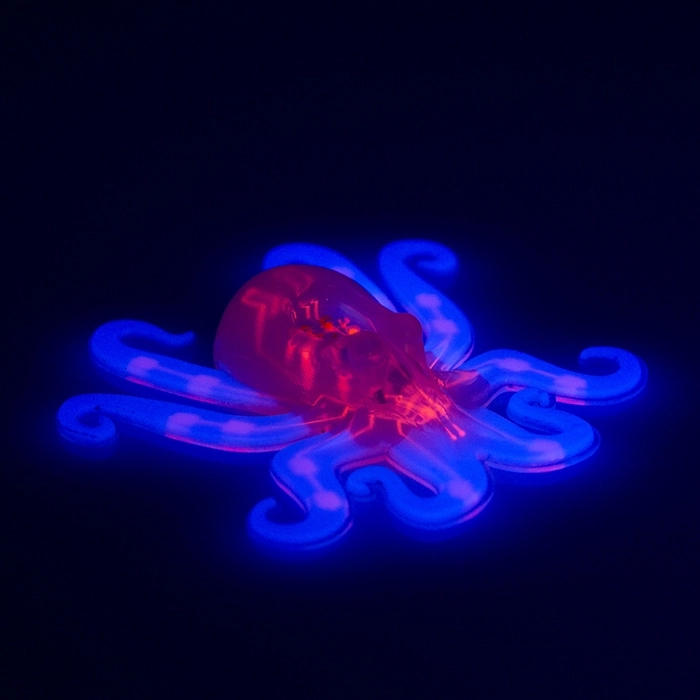
Microfluidic Control Revolution
Engineers at the Wyss Institute pioneered a soft microfluidic logic circuit that oscillates fuel flow like an electronic timer, directing gas precisely to inflate arms on demand. Fabricated via 3D printing, soft lithography, and molding, this system embeds power, control, and storage into one seamless body, slashing assembly time for complex soft devices. The approach, refined in ongoing experiments, demonstrates scalable manufacturing that could accelerate deployment of autonomous soft robots in labs worldwide.
Delicate Task Potential
In biomedical labs, Octobot's gentle pneumatic limbs position it for manipulating fragile cells or tissues without damage, while its chemical autonomy supports untethered trials in sterile settings. Researchers envision deployments for environmental sampling in tight crevices or micro-surgery aids, where flexibility trumps speed. Recent tests confirm its proof-of-concept status, inspiring adaptations for real-world scenarios like handling lab samples or exploring confined biomedical pathways with minimal intrusion.
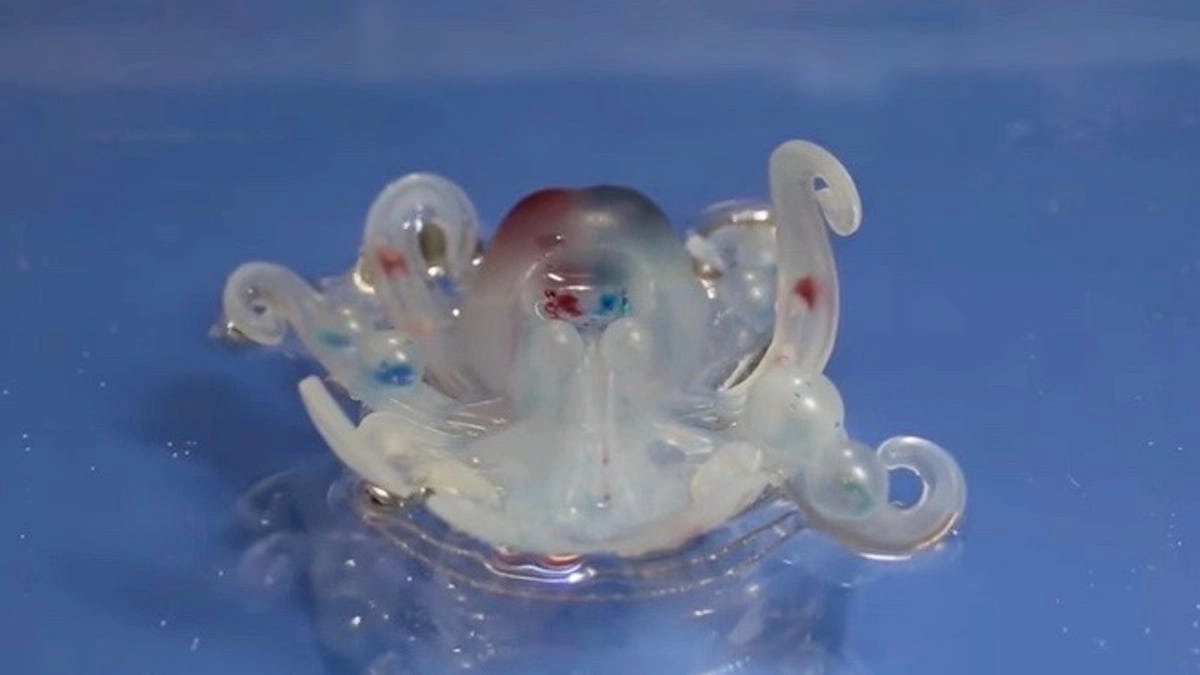
Specs Drive Capabilities
Octobot measures roughly 5.0 x 5.0 x 3.0 cm and weighs 10 to 20 grams, enabling access to microscopic spaces for precision tasks in research settings. It moves at 0.0001 m/s via pneumatic soft limbs that twitch through inflation, powered by chemical fuel for 4-8 minutes per charge without batteries or electronics. Lacking sensors or navigation, it relies on pre-programmed microfluidic cycles, ideal for controlled lab demos in soft robotics and delicate object handling, with no payload or safety features as a pure prototype.
Sources
Related Articles
Magnecko Conquers Disaster Sites in ARCHE 2025 Trials
Mi-Mo Developer Kit Opens Waitlist for AI Robot Customization
AmphiBot IV Deploys Pollution Sensors in Lakes 2026
Pleurobot Masters 30-Degree Slopes, Swimming in 2026 Trials
Learn More About This Robot
Discover detailed specifications, reviews, and comparisons for Octobot.
View Robot Details →