Humanoid Summit Seoul 2026 Convenes at COEX as Industry Pivots from Staged Demos to Industrial Deployment
Robot Details
Robotics & AI News • OriginOfBotsPublished
September 22, 2026
Reading Time
5 min read
Author
Origin Of Bots Editorial Team
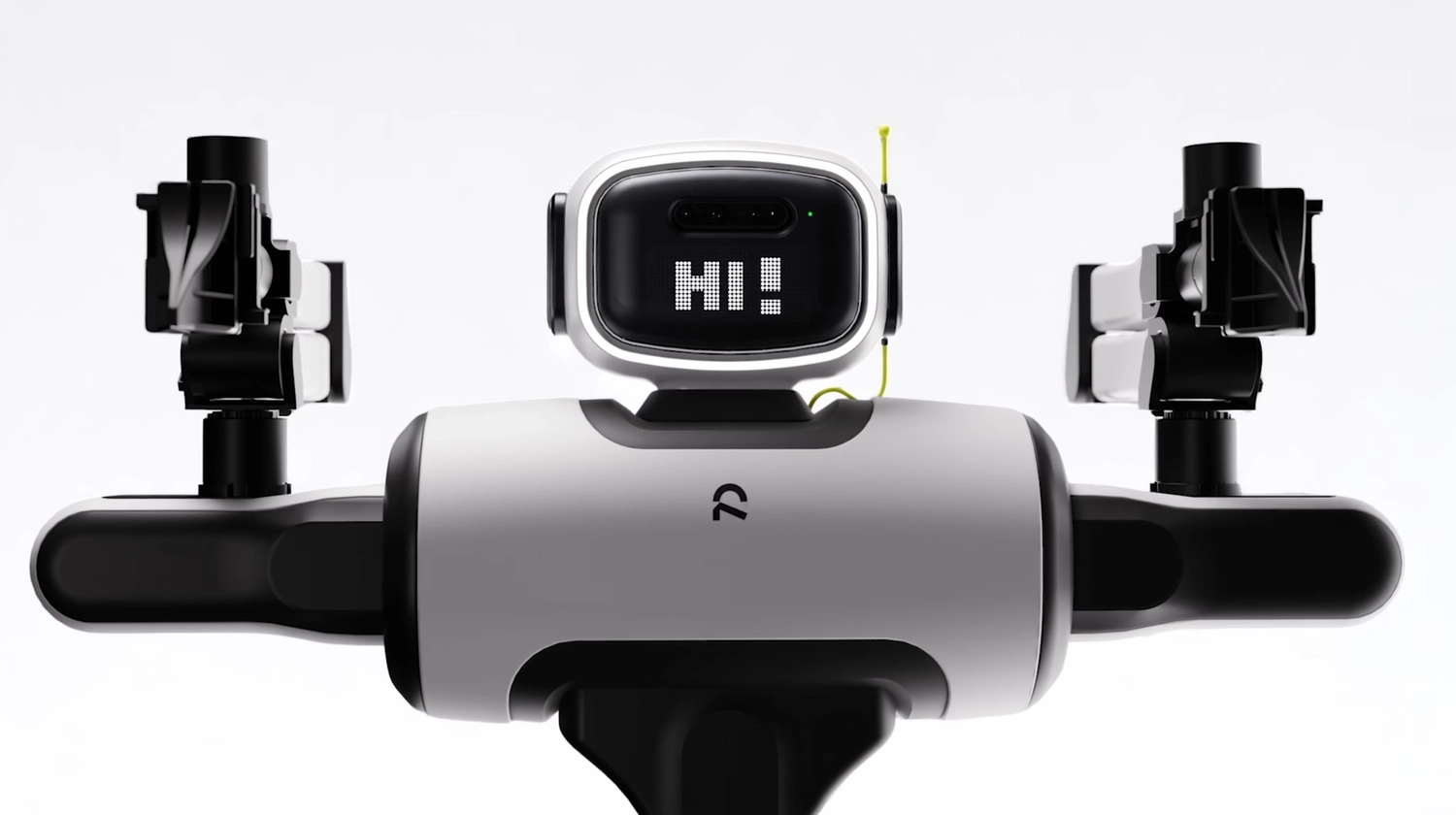
Inaugural Asian Edition of Humanoid Summit Convenes in Seoul
The premier international conference for physical artificial intelligence and embodied robotics, Humanoid Summit Seoul 2026, opened on September 22. Hosted at the COEX Grand Ballroom in Seoul's Gangnam district, the two-day summit marks the prestigious event's inaugural expansion into Asia. Global hardware manufacturers, chipmakers, and foundation model researchers gathered to evaluate the state of commercial humanoid technology.
Participating corporate giants included NVIDIA, Qualcomm, and Unitree, alongside leading South Korean physical AI pioneers such as RLWRLD and Robotis. The packed convention halls reflected intense international interest in East Asia's highly integrated robotics supply chain and manufacturing ecosystem. Delegates noted that holding the summit in South Korea underscores the region's central importance in commercializing physical artificial intelligence.
Decisive Pivot from Staged Marketing Demonstrations to Factory Reality
The overarching thematic takeaway echoing across keynote presentations was a decisive, industry-wide rejection of superficial marketing theatrics. Executive speakers unanimously asserted that the competitive axis in humanoid robotics has pivoted permanently toward verified on-site industrial deployment. The era of viral social media clips showcasing backflips and choreographed dances is giving way to rigorous assessments of mean-time-between-failures.
Enterprise buyers are demanding concrete proof that humanoid workers can operate safely, reliably, and profitably across multi-shift factory operations. Startups that built multi-billion-dollar paper valuations on prototype hype are facing intense pressure to produce verifiable balance-sheet revenues. Proving economic return on investment inside complex, unscripted industrial environments has become the sole arbiter of corporate survival.
Live Demonstration of RLWRLD's RLDX-1 Foundation Model
Providing a compelling showcase of real-time physical AI, domestic South Korean robotics pioneer RLWRLD demonstrated its flagship humanoid platform. Equipped with the proprietary RLDX-1 robot foundation model, the humanoid performed continuous sorting of diverse objects arriving on an active conveyor belt. The robot identified varying shapes, materials, and weights using optical vision feeds, dynamically modulating the tactile grip of its five-fingered hands.
Without dropping items or damaging fragile structures, the machine fluidly sorted water bottles, plastic cups, soft plush toys, and rigid boxes. RLWRLD representative Ryu Joong-hee revealed that the company is currently conducting live verification pilots across more than twenty enterprise industrial sites. This live demonstration confirmed that foundation models trained on diverse physical datasets can achieve robust zero-shot adaptability in fast-paced logistics environments.
Heavy Industry Deployments: PersonaAI Tests Autonomous Shipyard Welding
Highlighting the ruggedization of embodied robotics, U.S. humanoid developer PersonaAI detailed its aggressive heavy-industry deployment initiatives. PersonaAI announced that it has initiated live autonomous welding trials using bipedal humanoids across South Korean shipbuilding and steel manufacturing facilities. Collaborating directly with industrial powerhouses HD Hyundai and POSCO, the robots are tackling labor-starved, hazardous fabrication operations.
PersonaAI executive Michael Perry emphasized that the company's objective is to engineer robots that integrate seamlessly into existing shipyard workcells. Bipedal humanoids must operate standard welding torches, climb scaffolding, and collaborate directly with human pipefitters under punishing ambient conditions. Deploying humanoids into heavy manufacturing proves that physical AI is rapidly moving beyond lightweight warehousing into heavy industrial labor.
Universal Foundation Brains: FieldAI's 30-Hardware Integration
Another prominent technical breakthrough showcased at the summit was FieldAI's hardware-agnostic physical artificial intelligence architecture. FieldAI Chief Executive Officer Ali Agha explained how the company's universal foundation brain is currently deployed across more than thirty distinct robotic form factors. The universal model operates seamlessly across bipedal humanoids, quadrupedal scouts, wheeled logistics carts, and massive autonomous construction vehicles.
FieldAI's platforms are actively deployed in extreme real-world environments, including high-altitude mining sites, maritime shipyards, and subterranean tunnels. Agha highlighted that every deployed machine continuously harvests empirical interaction telemetry, feeding high-value edge data back into centralized models. This continuous deployment creates a powerful virtuous data flywheel that steadily enhances model robustness across every supported hardware embodiment.
Confronting the Sensorimotor Data Gap in Industrial Workspaces
Technical panel discussions at COEX placed heavy emphasis on the critical bottleneck confronting next-generation Vision-Language-Action models. Unlike language models that train on vast public internet corpora, physical robots suffer from an acute global shortage of grounded sensorimotor telemetry. Robotics researchers emphasized that foundation models cannot achieve true common-sense physics without absorbing millions of hours of real-world contact data.
Speakers debated the optimal balance between synthetic physics simulations, human teleoperation demonstrations, and autonomous fleet exploration. While simulation accelerates basic locomotion, mastering delicate contact physics requires models to experience authentic friction, material deformation, and motor backlash. Establishing shared, high-quality physical datasets was broadly recognized as the prerequisite for triggering an exponential cognitive leap in robotic versatility.
The Strategic Outlook for Asian Embodied AI Leadership
As Humanoid Summit Seoul 2026 concluded its opening sessions, industry leaders underscored East Asia's commanding position in the global robotics landscape. The unique convergence of world-class semiconductor manufacturing, dense industrial supply chains, and forward-leaning enterprise adopters provides the region with unmatched velocity. By rapidly integrating foundation models directly into automotive, semiconductor, and heavy shipbuilding facilities, regional pioneers are setting global benchmarks.
The transition from viral laboratory spectacles to rigorous industrial deployment marks the definitive maturation of the humanoid robotics industry. The companies that survive this transition will be those that deliver measurable cost reductions, flawless safety records, and dependable operational uptime. Humanoid Summit Seoul 2026 proved that the race for embodied AI supremacy will ultimately be decided on the concrete floors of working factories.
Sources
Related Articles

Samsung Begins Prototype 2nm AI5 Chip Fabrication for Tesla FSD and Optimus Humanoid Robots
Spirit AI Forecasts General-Purpose Humanoid Robot Brains Poised for a 'ChatGPT-Style' Inflection by 2027
Tesla AI VP Ashok Elluswamy Delivers Candid Reality Check on Optimus Remote Control and Physical Safety Stakes
Alphabet's Intrinsic Open-Sources Intrinsic Core at ROSCon 2026 to Standardize Physical AI and Manipulation
Learn More About This Robot
Discover detailed specifications, reviews, and comparisons for Robotics & AI News.
View Robot Details →