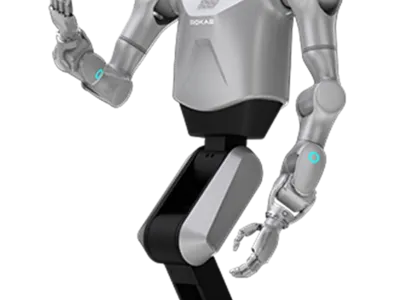
ROKAE Delivers 10,000th Force-Controlled Arm Built for Humanoid Robots

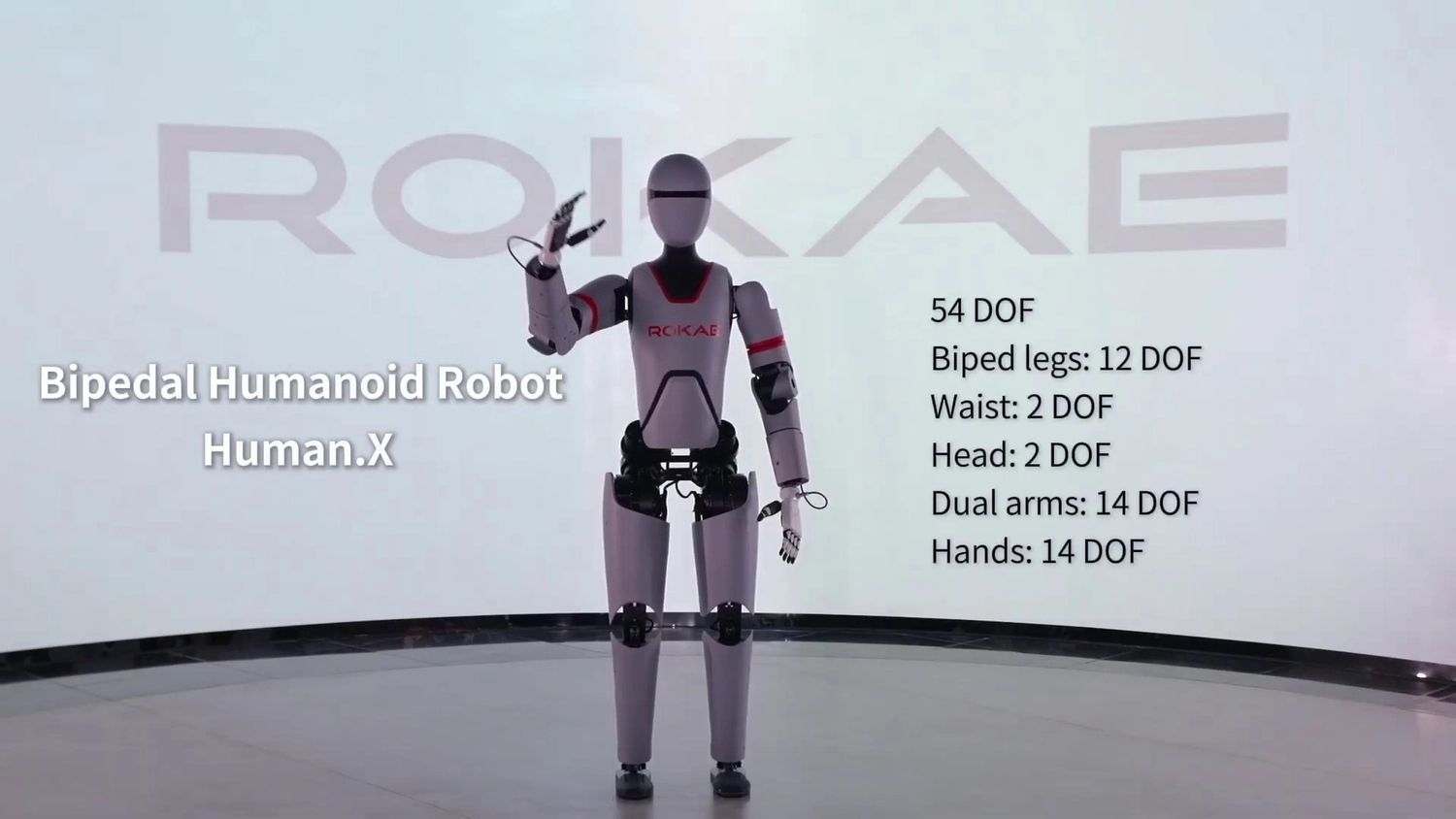


A Round Number in a Young Industry
On October 26, Chinese company ROKAE Robotics announced it has delivered its 10,000th humanoid force-controlled arm. The unit rolled off its production line in Shandong Province in September, and the company calls it a milestone for the hardware behind so-called embodied AI, meaning artificial intelligence that acts in the physical world.
Ten thousand arms is a modest number next to car or phone production, but humanoid robotics is still young. Parts that are built, shipped and working in quantity are one of the more reliable signs that the field is moving past the demo stage.
What Makes an Arm Force-Controlled
A typical industrial arm repeats a motion with great precision but little sense of touch. A force-controlled arm measures how hard it is pushing or pulling and adjusts on the fly, much like a person who eases off when a screw begins to bind.
That feel matters for humanoids, which are meant to handle varied objects, fit parts together and work near people. ROKAE's founder and CEO Tuo Hua put it simply in the announcement: there are no shortcuts in force control.

The Small Box That Runs the Limbs
ROKAE's compact MAC controller measures 213 by 145.5 by 45 millimetres, roughly the size of a thick paperback. Depending on configuration it can drive seven joints in a single arm, 14 across a pair of arms, or more than 20 across a whole humanoid.
Packing so much control into a small unit helps because a humanoid has little spare room. Every cubic centimetre and gram counts when the machine has to balance on its own power and carry its own electronics.
A Product Family, Not a Single Part
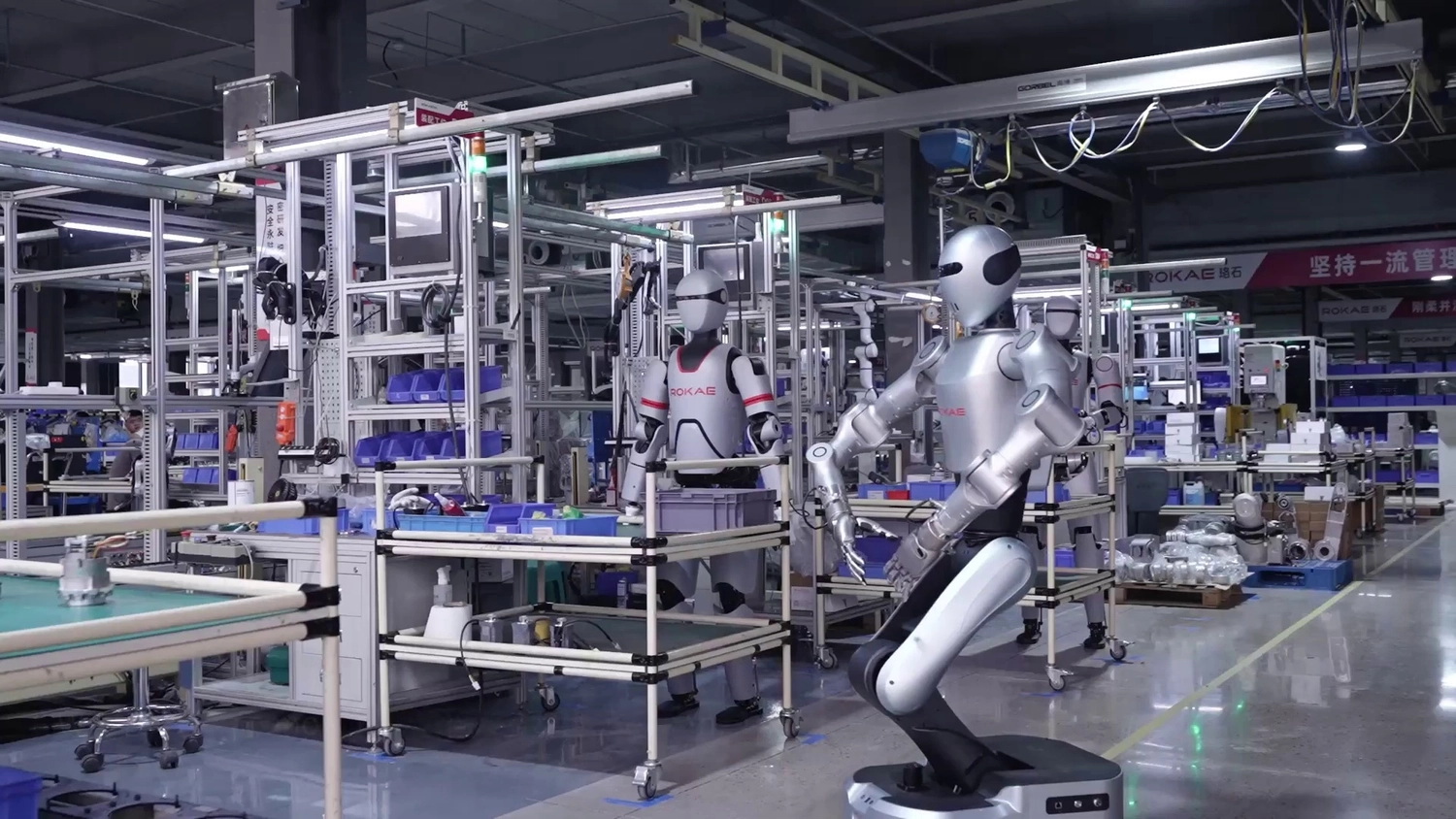
The arm is part of a wider lineup. ROKAE also sells HSA Series integrated force-controlled joints, an embodied AI control system called iNex, and Helios, a wheeled humanoid robot that rolls instead of walking.
Selling pieces and complete robots lets the company serve two kinds of buyers: manufacturers building their own humanoids who need quality limbs, and factories that want a ready-made worker. It is a common strategy for suppliers in a fast-forming market.
Five Robots on a Lighthouse Factory Floor
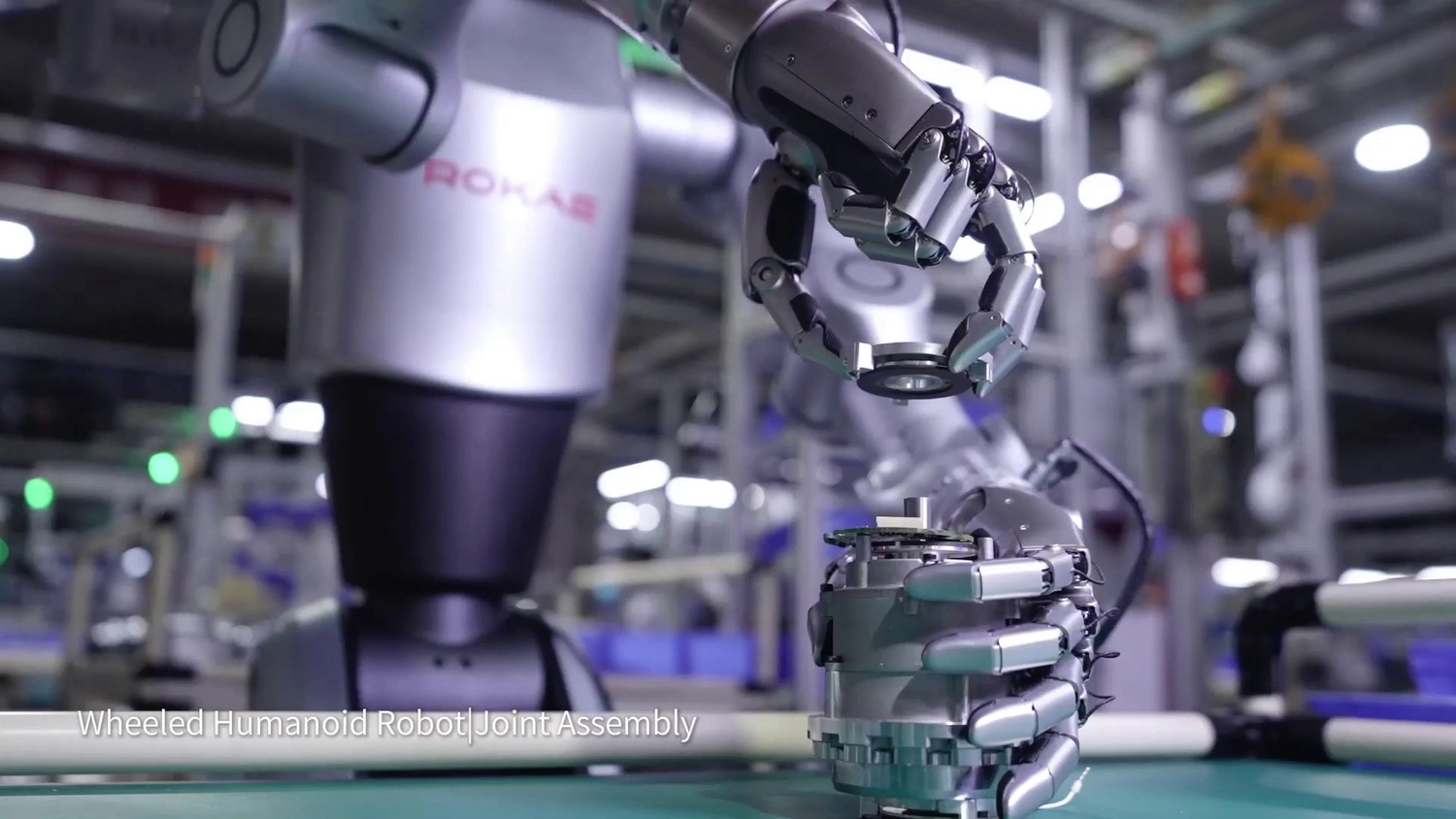
One showcase is Schaeffler's Lighthouse Factory in Taicang, China. There, five ROKAE Helios robots with AR Series arms work on an assembly line that itself makes humanoid robot components, handling parts, assembling them and inspecting the results.
The detail is a neat loop: humanoid-style machines helping build the parts for more humanoids. A lighthouse factory is the term used for plants chosen to demonstrate advanced manufacturing, so the setting is as much a display as a production line.
More Than 80 Industrial Partners
According to company figures, more than 80 industrial partners have built the arms into their production. ROKAE says its separate industrial and collaborative robots are deployed across more than 40 countries and regions, and that it serves more than 1,000 enterprise customers.
Those figures come from the company itself, and the announcement does not name most of the partners. The broader customer base reflects ROKAE's older business, founded in 2014, rather than demand for the humanoid arm alone.
The Supplier Behind the Spotlight
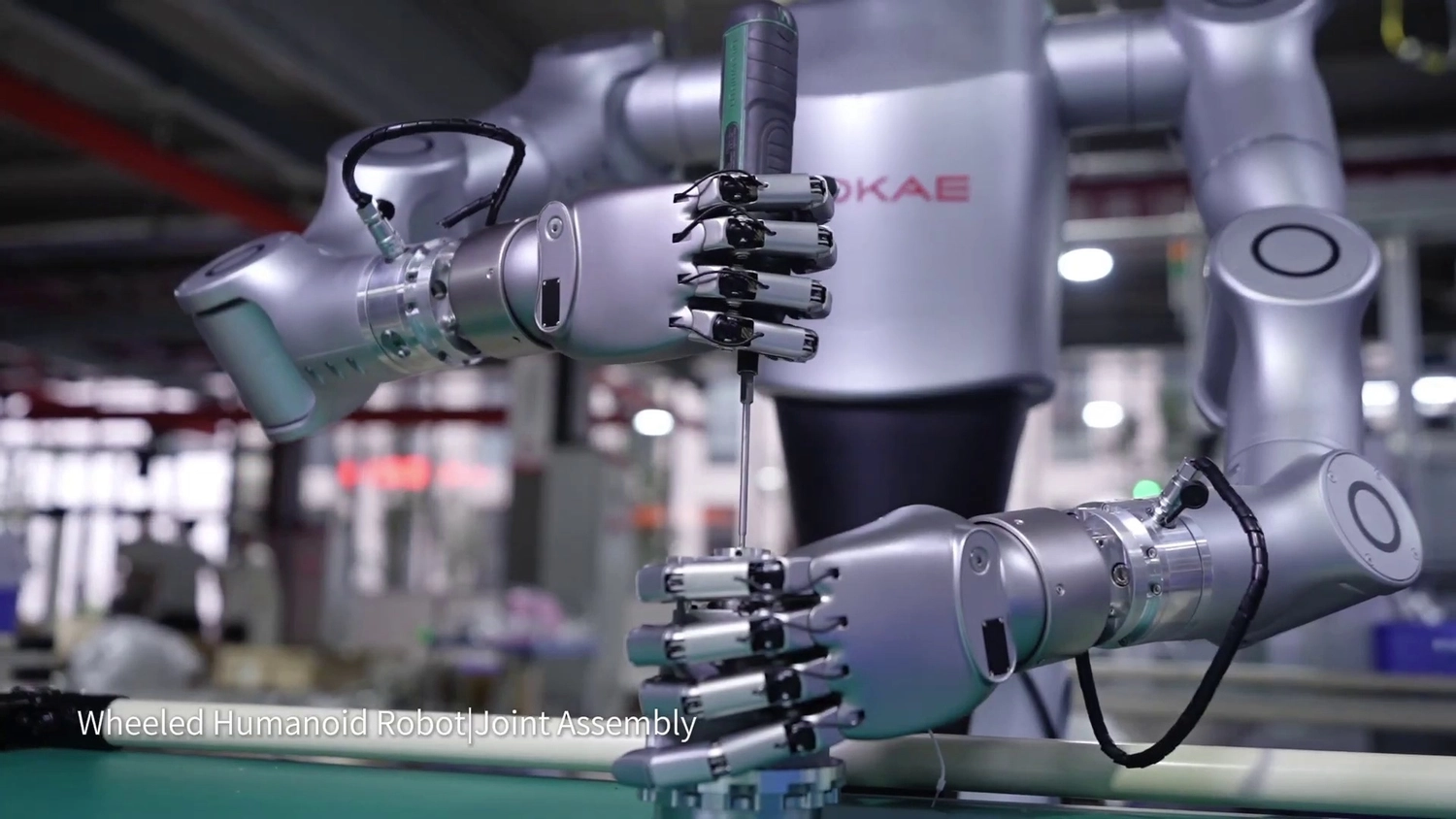
Most headlines go to the companies that build whole humanoids, yet each robot depends on dozens of specialised parts from suppliers like ROKAE. As more humanoid makers move toward volume production, firms that can deliver reliable components in quantity may quietly gain influence.
ROKAE is listed on the Hong Kong stock exchange under the code 3752, which puts its results under public scrutiny. The company said the number matters less to it than the trust behind it, a line aimed squarely at skeptical industrial buyers.
Counting Arms Is Not Counting Robots
The 10,000 figure covers only ROKAE's humanoid force-controlled arm line, and a single humanoid typically uses two arms. It does not tell us how many complete robots are working, how long the arms last, or how much the work pays for itself.
The next questions are about durability and price. If force-controlled arms keep getting cheaper and more dependable, more humanoid makers can build capable hands-on robots. For now, the milestone is a claim of scale from the company, and outside verification will tell the rest of the story.
Related Articles
Unitree H2-X: The Kung Fu Guardian Robot Built to Stand Watch for About Eight Hours
Voxel Series-1: A Home Robot Trained With Animator Motion Opens $200 Reservations
Agility Robotics Picks NVIDIA IGX Thor as the Brain of Its Digit 5 Humanoid