Shanghai's RoboParty Open-Sources Its Entire RP1 Humanoid, From Motors to Code
Robot Details
ROBOTO ORIGIN • RoboPartyPublished
October 15, 2026
Reading Time
4 min read
Author
Origin Of Bots Editorial Team
A Robot With No Secrets
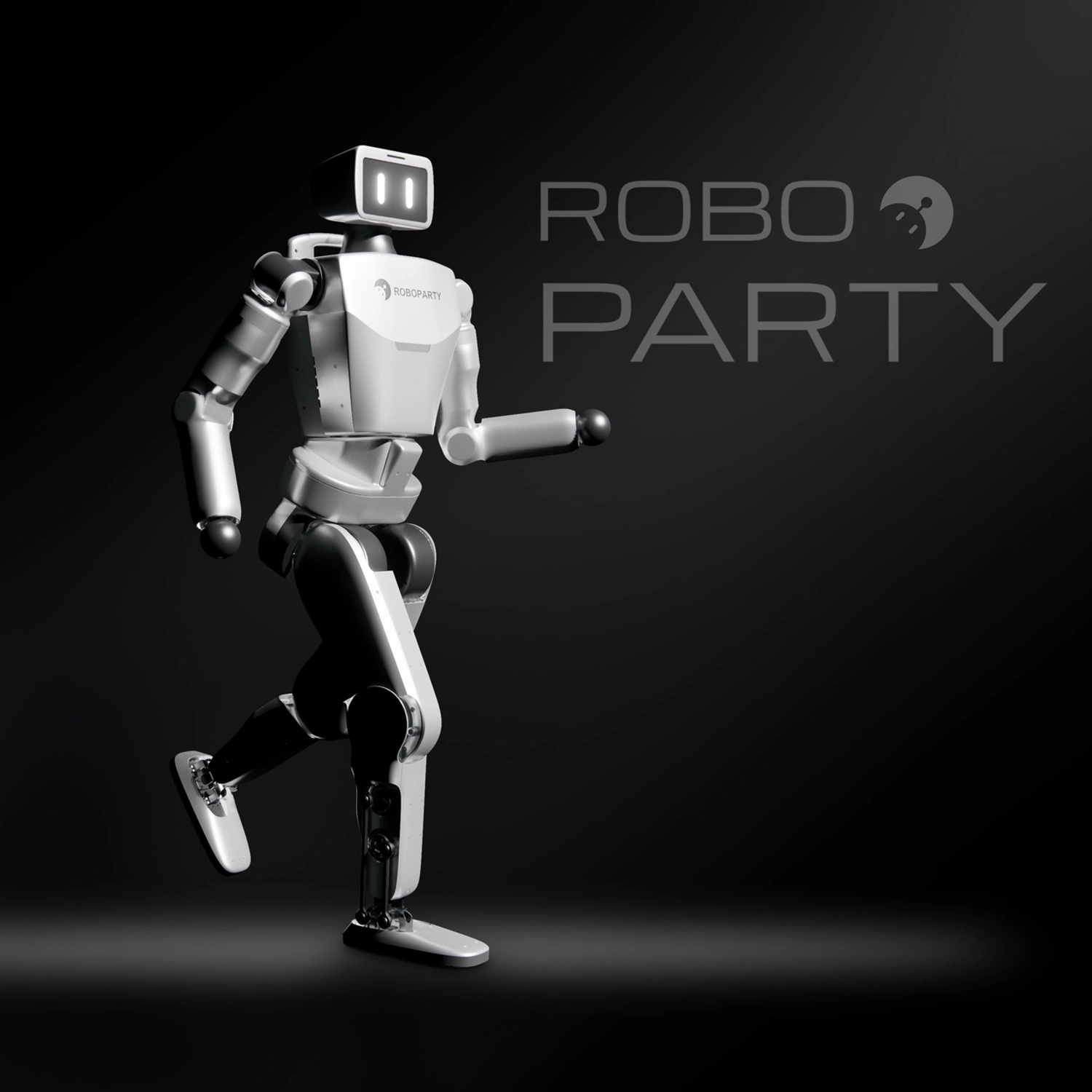
On October 15, Shanghai startup RoboParty launched RP1, a humanoid robot about 1.3 metres tall, roughly the height of a ten-year-old child, and made almost everything about it public. The mechanical design, the motors, the control software and the training tools are all being released for anyone to study, change and rebuild.
That matters because most humanoids today are black boxes. Researchers can buy them, but cannot see how the joints are engineered or how the walking software really works. RoboParty argues that opening the whole machine will let universities and small teams make faster progress, instead of waiting on a handful of big companies.
Two Sizes of Ambition
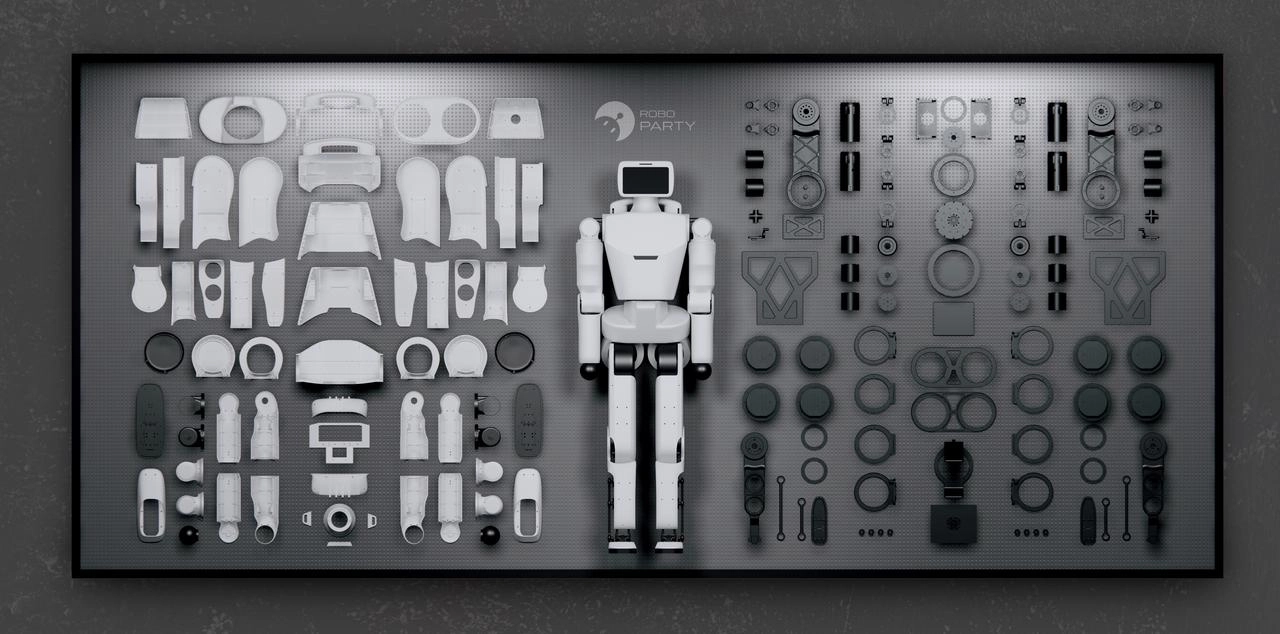
RP1 comes in two versions. The Standard model has 24 actuated degrees of freedom, meaning 24 joints driven by motors, which makes it well suited to studying walking and balance. The Pro model raises that to 30, adding a neck that can tilt and turn and two arms with seven joints each, much like a human arm.
Those counts do not include the hands. RP1 is modular, so researchers can swap in different heads and attach different tools at the wrists, including RoboParty's own RP Hand, a dexterous hand designed for grasping. The company has not yet published RP1's weight, battery life, onboard computer or price.
The Muscles Are Open Too
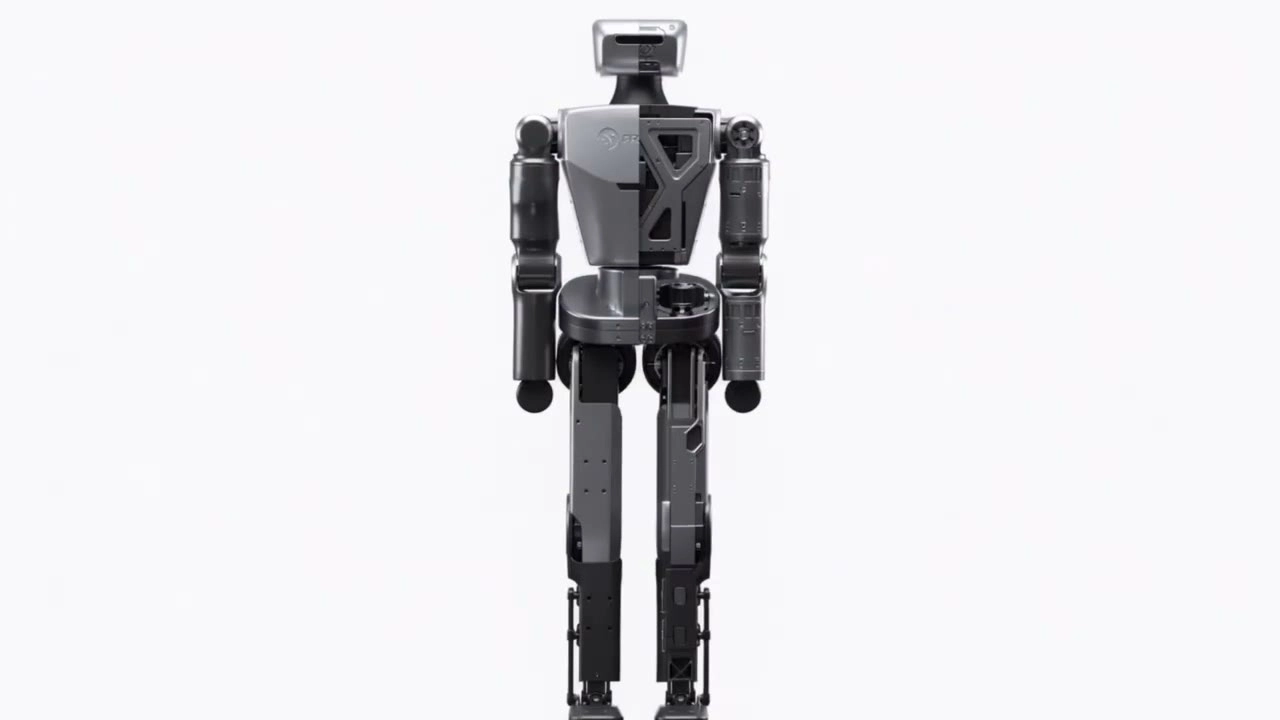
The heart of any humanoid is its actuators, the motors and gearboxes that move each joint. RP1 uses RoboParty's own ROMOMO actuator modules, and the company is publishing their technical details along with the low-level drivers, the software that translates commands into precise motor movements.
Sharing this layer is unusual. Actuators are often the most closely guarded part of a robot because they determine how strong, fast and durable it is. By opening them, RoboParty is inviting outsiders to find weaknesses, suggest improvements and build their own versions, much as open-source software communities do for code.
From Firmware to Learning Tools
Above the hardware sits a full software stack. RoboParty is releasing firmware, simulation resources, software development kits and robot learning frameworks, including its UFO reinforcement learning system, where robots improve by trial and error in a virtual world, and MimicLite, which helps a robot copy human motion.
RP1 also runs PartyOS, the company's operating system for embodied AI, a term for artificial intelligence that lives inside a physical body rather than on a screen. The code and documents are hosted on GitHub, though the announcement does not say which open-source licence governs commercial use.
Who It Is Built For
RoboParty is pitching RP1 squarely at researchers. The Standard model targets work on gait, balance and sim-to-real transfer, the tricky step of moving a skill learned in simulation onto real hardware. The Pro model is meant for manipulation, human-robot interaction and collecting training data.
For a university lab, the appeal is visibility. When a robot stumbles, researchers can trace whether the fault lies in the AI model, the control policy, the actuator or the mechanics, and then fix it themselves. With closed robots, that kind of investigation often stops at the edge of the manufacturer's secrets.
A Young Company With a Track Record
RoboParty was founded in Shanghai in 2025 and is led by founder Yi Huang. In January 2026 it released RPO, an earlier open-source humanoid project that published mechanical and electrical designs plus training materials, and which has since gathered more than 2,600 stars on GitHub, a common measure of developer interest.
RP1 builds directly on that foundation. Huang framed the launch as a philosophical choice, saying the company believes the future of embodied AI should not be defined by just a handful of closed systems. The firm wants researchers to be able to understand and modify every layer of the machine.
What Is Still Unknown
Openness does not answer every question. Without a published price, weight or battery figure, it is hard to compare RP1 with rival research robots, and the absence of a stated licence leaves companies unsure whether they can build commercial products on its designs.
Open hardware also depends on a healthy community. Code on GitHub is only as useful as the documentation, spare parts and support around it. RoboParty's earlier project suggests real interest, but RP1 will be judged on whether outside labs actually build, fix and improve it in the months ahead.
Why Open Robots Could Speed Things Up
Open-source software transformed computing by letting millions of people inspect and improve shared code. Robotics has struggled to follow, because hardware is expensive and hard to copy. Full-stack projects like RP1 are an attempt to change that, giving students and small labs a complete, documented robot to learn from.
If RP1 gains traction, it could become a shared reference design, a common robot that researchers around the world use to test and compare ideas. That kind of common ground has helped other fields move quickly, and humanoid robotics may be ready for its own version.
Explore Humanoids
Sources
Related Comparisons
Compare ROBOTO ORIGIN with similar robots

Optimus vs Unitree G1
Compare Optimus vs Unitree G1 for humanoid mobility, dexterity, autonomy, and payload capacity.
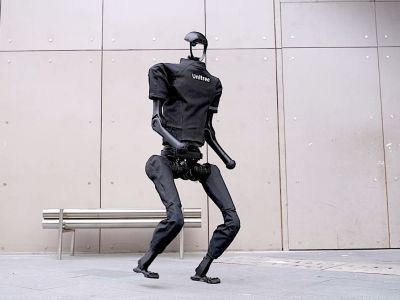
Unitree G1 vs Unitree H1
Head-to-head: Unitree G1 vs Unitree H1 compared on bipedal balance, AI learning, and real-world deployment.
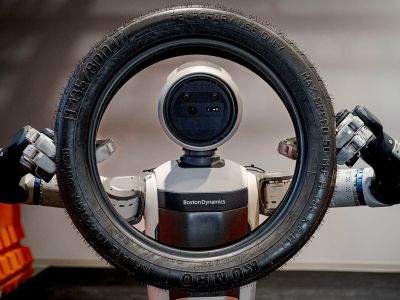
Optimus vs Atlas (Electric 2025)
In-depth comparison of Optimus and Atlas (Electric Atlas, 2025), covering hardware capabilities, teleoperation, and enterprise readiness.
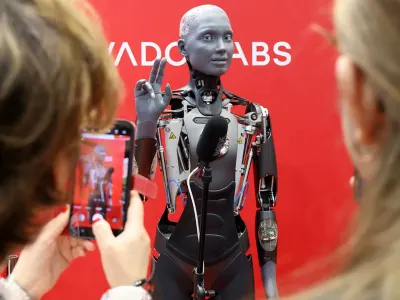
Ameca vs Moya
Which humanoid robot is better? Ameca vs Moya compared for dexterity, AI capabilities, and price.
Learn More About This Robot
Discover detailed specifications, reviews, and comparisons for ROBOTO ORIGIN.
View Robot Details →