U.S. National Robotics Roadmap Urges Cohesive Federal Physical AI Strategy to Counter Foreign Dominance
Robot Details
Robotics & AI News • OriginOfBotsPublished
September 12, 2026
Reading Time
4 min read
Author
Origin Of Bots Editorial Team
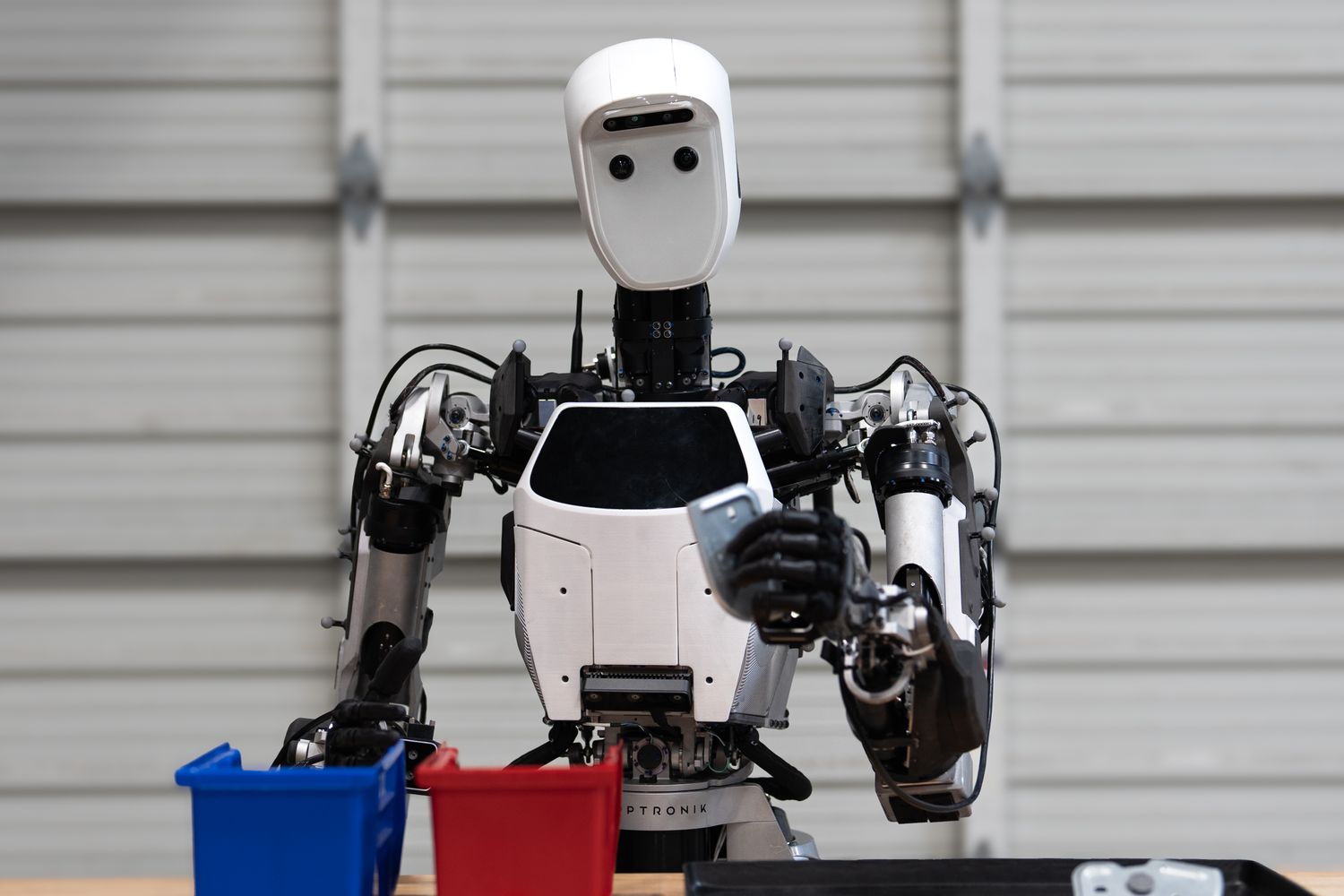
Comprehensive Review of American Robotics Competitiveness
The IEEE Robotics and Automation Society and leading American robotics coalitions released their September 2026 National Robotics Roadmap spotlight. The landmark policy document provides a rigorous, unsparing assessment of the United States' competitive standing across commercial, industrial, and embodied robotics. While celebrating American leadership in digital AI models, the authors sounded an urgent alarm regarding the nation's lagging physical robotics manufacturing base.
The report warns that frontier artificial intelligence software cannot deliver economic dominance if the nation lacks the physical machines to execute physical work. Without immediate, coordinated federal action, the United States risks becoming a technological bystander in the multi-trillion-dollar embodied physical economy.
Critical Supply Chain Dependencies in Electro-Mechanical Actuation
At the heart of the roadmap's warnings is America's severe dependency on foreign supply chains for core humanoid mechatronic components. Over ninety percent of high-precision strain wave gearboxes, frameless brushless torque motors, and tactile sensor arrays are currently manufactured overseas. This extreme concentration leaves domestic robotics developers vulnerable to geopolitical trade friction, component export controls, and supply chain blockades.
The report calls for aggressive federal capital matching grants to onshore precision gear cutting and high-power actuator winding facilities. Establishing a sovereign, resilient domestic component manufacturing ecosystem is identified as a vital national security and economic imperative.
Funding Open Physical AI Foundation Models and Simulation Testbeds
To counter heavily subsidized foreign robotics initiatives, the roadmap advocates establishing national physical AI computing centers. These shared infrastructure facilities would provide academic researchers and small startups with exascale computing power to train open-source Vision-Language-Action models. Centralizing compute resources would prevent a small handful of trillion-dollar tech conglomerates from monopolizing embodied cognitive breakthroughs.
Furthermore, the roadmap emphasizes funding massive, open-access physical simulation environments and real-world testing grounds. Lowering algorithmic training costs ensures that independent roboticists can rapidly iterate locomotion policies without needing multi-billion-dollar private capital.
Bridging the Notorious Academic 'Valley of Death'
The roadmap highlights a persistent structural flaw in the American innovation model: the notorious 'Valley of Death' separating university labs from commercial production. While American universities produce peerless foundational research in bipedal kinematics, promising concepts routinely languish due to a lack of commercialization capital. Foreign state-backed incubators frequently acquire or replicate these American academic breakthroughs, scaling them into mass-produced commercial products.
To close this commercialization gap, the report urges the creation of specialized public-private translational research institutes. These institutes would pair university roboticists with experienced automotive manufacturing engineers, accelerating the journey from lab bench to serialized factory line.
Modernizing Regulatory Frameworks and Collaborative Safety Standards
In addition to capital investment, the policy roadmap calls for updating antiquated workplace safety regulations that impede humanoid adoption. Existing industrial safety standards were drafted decades ago for rigid, blind robotic arms that required isolation behind heavy steel cages. These obsolete rules create regulatory ambiguity for agile bipedal humanoids designed to walk and work collaboratively alongside human personnel.
The authors advocate adopting performance-based kinetic safety standards that certify real-time vision-based collision avoidance and compliant force-limiting joints. Providing clear regulatory certainty will encourage domestic manufacturing executives to invest boldly in collaborative humanoid workforces.
Workforce Transition and Skilled Mechatronics Apprenticeships
Addressing inevitable public anxieties over labor displacement, the roadmap outlines a comprehensive national strategy for workforce evolution. The document stresses that humanoids will primarily absorb dirty, dangerous, and repetitive tasks that suffer from chronic, generational labor deficits. Simultaneously, the widespread deployment of robotic fleets will create hundreds of thousands of high-wage domestic careers in robot maintenance and system integration.
The authors urge federal investment in nationwide vocational apprenticeships to train industrial technicians in mechatronic repair and fleet software management. Proactively preparing the workforce ensures that economic gains from physical automation are shared broadly across industrial communities.
A Call to Action for American Technological Sovereignty
The 2026 National Robotics Roadmap presents American policymakers with an unambiguous historical crossroad. The nation can either passively watch foreign manufacturing powerhouses capture the embodied robotics revolution, or mobilize its vast industrial and cognitive resources to lead it. With global competitors investing aggressively in physical automation, the window for decisive American leadership is rapidly narrowing.
By establishing a cohesive national robotics strategy backed by targeted funding and domestic supply chain investments, the United States can secure its physical sovereignty. The recommendations outlined in the roadmap provide the essential blueprint for ensuring that the future of automated physical labor is built on American innovation.
Sources
Related Articles
Unitree’s Superman humanoid puts speed first as China’s robotics race accelerates
Lumos Robotics positions MOS 2 as a factory-ready humanoid built for teleoperation and heavy handling

Unitree Expands Commercial Footprint with G1 Mass Deployments and Shanghai Market Momentum
World's First Humanoid Robot Sports League 'CyberHero' Launches in Riyadh with Eight-City Global Tour
Learn More About This Robot
Discover detailed specifications, reviews, and comparisons for Robotics & AI News.
View Robot Details →