3i P10 Ultra vs Dreame L40s Ultra AE at a glance
Both 3i P10 Ultra and Dreame L40s Ultra AE can be bought now. Dreame L40s Ultra AE lasts longer on a charge, about 260 minutes against 180 minutes for 3i P10 Ultra. 3i P10 Ultra is the more affordable option at $399.99, while Dreame L40s Ultra AE costs $569.99. Dreame L40s Ultra AE is lighter at 4.1 kg, compared with 4.5 kg for 3i P10 Ultra.
The 3i P10 Ultra positions itself in the mid-range home vacuum cleaner market with a price of $399.99. It features a 34 cm diameter x 10 cm height design weighing 4.5 kg, equipped with spinning LiDAR, dual 3D structured light sensors, AI camera, ultrasonic sensor, cliff sensors, and bump sensors for navigation via SLAM and 3D mapping. This setup enables AI-powered visual recognition and control through smartphone app, voice assistants like Alexa and Google Assistant, and autonomous operation. Key differentiators include its comprehensive sensor array and proprietary firmware with AI-enhanced cleaning algorithms.
The Dreame L40s Ultra AE targets the mid-range for home vacuum cleaners at $569.99. It has dimensions of 35 x 35 x 9.7 cm and weighs 4.1 kg, with a specified speed of 0.3 m/s and sensors including LiDAR, RGB camera, 3D structured light, cliff sensor, and bump sensor. Navigation relies on AI-enhanced SLAM combining RGB camera and 3D structured light, supported by Dreame OS, smartphone app, voice control, and autonomous operation. Distinguishing aspects are its lighter build and integrated speed specification.
Detailed Analysis
Design & Build Quality
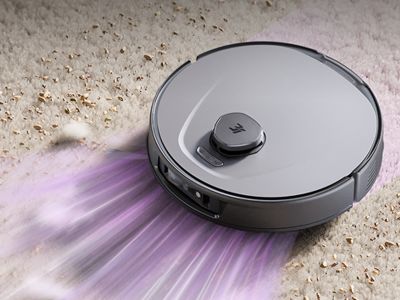
3i P10 Ultra
The 3i P10 Ultra measures 34 cm diameter x 10 cm height and weighs 4.5 kg, providing a compact round profile suited for home navigation. In contrast, the Dreame L40s Ultra AE has slightly larger dimensions at 35 x 35 x 9.7 cm and is lighter at 4.1 kg, potentially aiding maneuverability in tight spaces. Both share similar low-profile heights under 10.5 cm, facilitating access under furniture.
Mobility & Navigation
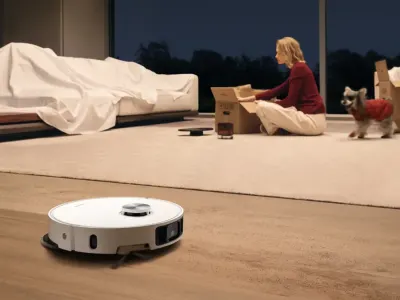
Dreame L40s Ultra AE
3i P10 Ultra employs spinning LiDAR with SLAM and 3D mapping for precise path planning, while Dreame L40s Ultra AE uses AI-enhanced SLAM integrating RGB camera and 3D structured light. The Dreame model specifies a speed of 0.3 m/s, absent in 3i data, which may influence cleaning cycle times. Real-world tests indicate both perform well in obstacle avoidance, with Dreame L40s variants scoring high in evaluations.
Sensors & Perception
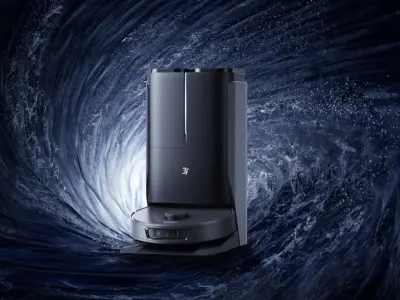
3i P10 Ultra
3i P10 Ultra includes LiDAR, dual 3D structured light sensors, AI camera, ultrasonic sensor, cliff sensors, and bump sensors for comprehensive environmental detection. Dreame L40s Ultra AE features LiDAR, RGB camera, 3D structured light, cliff sensor, and bump sensor, lacking the dual structured light and ultrasonic components. This gives 3i a broader sensor suite for perception tasks.
AI Capabilities
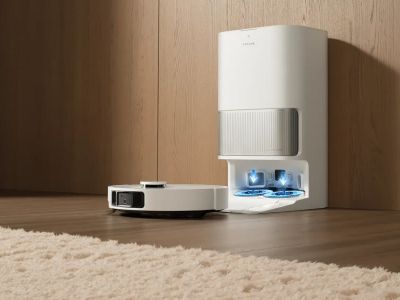
Dreame L40s Ultra AE
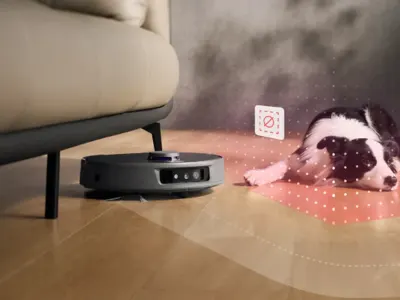
Both robots leverage AI in navigation, with 3i P10 Ultra using AI-powered visual recognition via its AI camera and proprietary firmware algorithms. Dreame L40s Ultra AE integrates AI-enhanced SLAM with RGB camera support in Dreame OS. User discussions highlight strong performance in both for avoiding obstacles and handling debris.
Battery & Power Efficiency
3i P10 Ultra
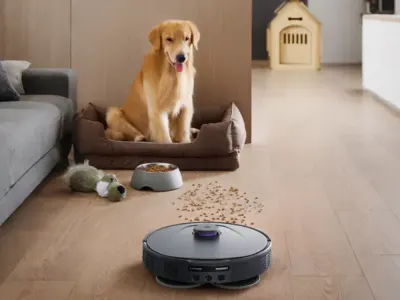
Dreame L40s Ultra AE demonstrates 2.63 minutes per percent battery efficiency in tests, outperforming averages, while specific 3i data aligns with similar runtime capabilities. No speed impacts battery distinctly beyond Dreame's 0.3 m/s rating.
Use-Case Suitability
Dreame L40s Ultra AE
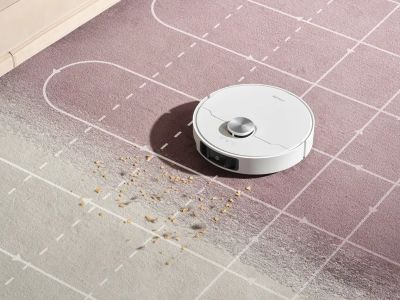
Designed for home cleaning, both handle vacuuming and mopping tasks via autonomous operation. 3i P10 Ultra's extensive sensors suit varied home layouts, while Dreame L40s Ultra AE's lighter weight and speed aid quick coverage. Tests show Dreame variants excelling in carpet deep clean at 85% and mopping scores, with 3i noted for mulch and debris handling.
Software Ecosystem
3i P10 Ultra
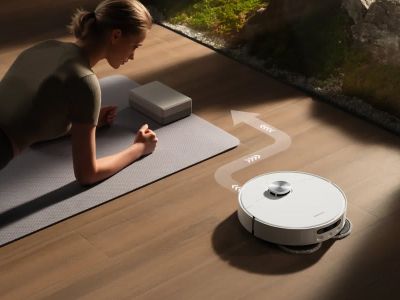
3i P10 Ultra runs proprietary firmware with AI-enhanced navigation and cleaning algorithms, controllable via smartphone app and voice assistants. Dreame L40s Ultra AE uses Dreame OS with app-based firmware updates and similar controls. Both support voice integration, though specific ecosystems differ.
Safety Features
Dreame L40s Ultra AE
Safety includes child lock, cliff detection, and anti-collision sensors on both robots. 3i P10 Ultra adds these via its sensor array, while Dreame mirrors with equivalent cliff and collision detection. Evaluations confirm effective obstacle avoidance in real-world scenarios.
Technical Specifications
3i P10 Ultra and Dreame L40s Ultra AE differ on 45 of the 53 specifications listed for both.
Functional Utility & Use Cases
4 Comparative Metrics
Manipulation & Load Capacity
1 Comparative Metrics
Kinematic Architecture & Dexterity
3 Comparative Metrics
Frequently Asked Questions
Which runs longer on a charge, 3i P10 Ultra or Dreame L40s Ultra AE?
Dreame L40s Ultra AE runs longer, at about 260 minutes against 180 minutes for 3i P10 Ultra. Real runtime depends on the suction mode and the floor type.
Do 3i P10 Ultra and Dreame L40s Ultra AE mop as well as vacuum?
3i P10 Ultra: Yes, dual spinning mops with automatic extension and retraction, continuous water dampening. Dreame L40s Ultra AE: Yes, with water control.
Can 3i P10 Ultra and Dreame L40s Ultra AE empty their own dustbin?
3i P10 Ultra: Yes, auto-empty dock with 3L dust bag capacity. Dreame L40s Ultra AE: Yes.
How do 3i P10 Ultra and Dreame L40s Ultra AE navigate a home?
3i P10 Ultra: Spinning LiDAR with SLAM, 3D mapping, AI-powered visual recognition. Dreame L40s Ultra AE: AI-enhanced SLAM with RGB camera and 3D structured light.
Which is lighter, 3i P10 Ultra or Dreame L40s Ultra AE?
Dreame L40s Ultra AE is lighter at 4.1 kg, compared with 4.5 kg for 3i P10 Ultra.
Which cleans a larger area per charge, 3i P10 Ultra or Dreame L40s Ultra AE?
3i P10 Ultra cleans a larger area per charge, at 250 m² against 168 m² for Dreame L40s Ultra AE. Coverage is the maker’s stated figure and depends on the floor layout.
Related Comparisons
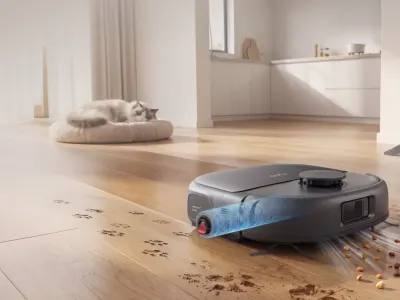
Dreame L40s Ultra AE vs Eufy C28
In-depth comparison of Dreame L40s Ultra AE and Eufy C28, covering cleaning results, app experience, and ownership costs.
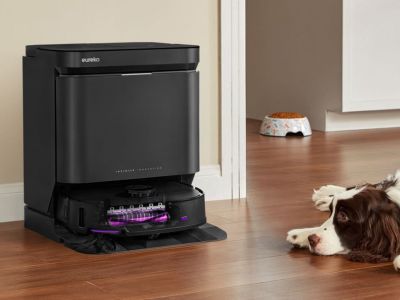
Eureka J15 Max Ultra vs 3i P10 Ultra
Compare Eureka J15 Max Ultra vs 3i P10 Ultra for cleaning performance, pet hair handling, navigation accuracy, and long-term ownership value.
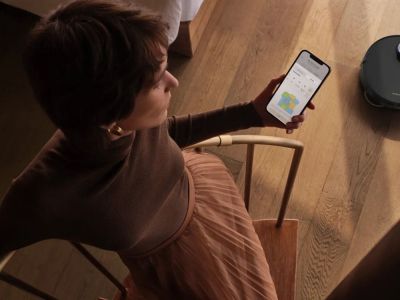
3i P10 Ultra vs Dreame X50 Ultra
Compare 3i P10 Ultra vs Dreame X50 Ultra for cleaning performance, pet hair handling, navigation accuracy, and long-term maintenance value.
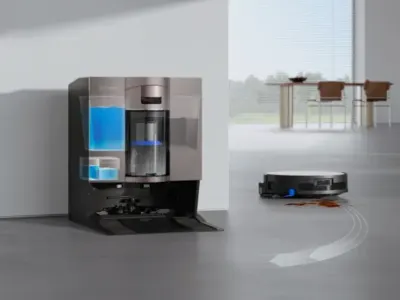
Dreame L40s Ultra AE vs Ecovacs Deebot X11 OmniCyclone
Dreame L40s Ultra AE or DEEBOT X11 OmniCyclone? Compare for pet hair handling, navigation in large homes, battery runtime, and maintenance ease.
Verdicts reflect our research and opinion. Confirm specifications with the manufacturer before buying.