ANAFI Ai vs ANAFI UKR at a glance
ANAFI Ai is the more affordable option at $4,000–$5,000, while ANAFI UKR costs $16,000–$22,000. ANAFI UKR lasts longer on a charge, about 38 minutes against 32 minutes for ANAFI Ai.
ANAFI Ai by Parrot, launched in 2022, is a foldable 898 g quadcopter built for surveying, mapping, inspection and construction work. Its defining feature is 4G LTE connectivity, which lets a pilot fly and stream over the cellular network with no fixed range limit, paired with a 48 MP Quad Bayer camera and 360° obstacle avoidance. It is the more accessible of the two Parrot drones, aimed at businesses that want automated photogrammetry and mission planning through the FreeFlight 7 app.
ANAFI UKR by Parrot, launched in 2025, is a security-focused quadcopter designed for military reconnaissance, public safety and emergency response. It swaps the single high-resolution camera for a 21 MP RGB camera with 35x digital zoom plus a 640 x 512 FLIR Boson+ thermal camera, and adds GNSS-denied navigation, encrypted multi-radio links and NDAA and Blue UAS compliance. Compared with ANAFI Ai, it targets agencies and defense buyers who need thermal imaging, resilient communications and tactical durability rather than survey-grade stills.
Detailed Analysis
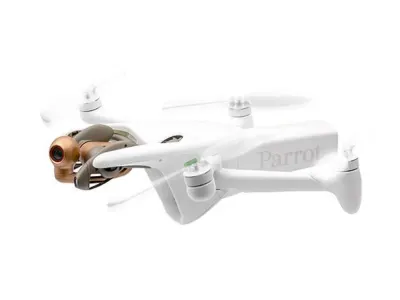
ANAFI Ai
Which drone has better camera quality and sensors?
ANAFI Ai carries a 48 MP (8000 x 6000) camera on a 1/2-inch Quad Bayer CMOS sensor with HDR10 and a 6x digital zoom that stays lossless up to 2x at 4K. ANAFI UKR uses a 21 MP RGB camera on a 1/2.4-inch Sony IMX230 sensor with 35x digital zoom, and adds a 640 x 512 FLIR Boson+ thermal camera that ANAFI Ai does not have. Both record 4K video at up to 200 Mbps. ANAFI Ai produces higher-resolution still images for mapping and photogrammetry, while ANAFI UKR trades pixel count for long-distance zoom and the ability to see heat signatures.
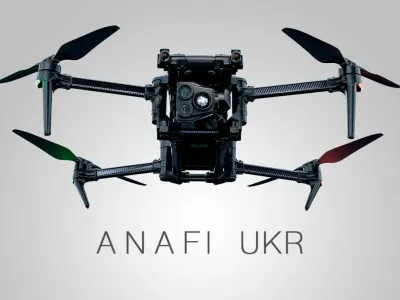
ANAFI UKR
How do flight time and battery life compare?
ANAFI Ai flies for about 32 minutes on its 2700 mAh battery and recharges in roughly 1 hour. ANAFI UKR reaches 38 minutes on the standard 6,800 mAh smart battery and 50 minutes on the 20,200 mAh XLR pack, though the larger pack needs about 5 hours to charge compared with 2.5 hours for the standard one. Both drones use hot-swappable batteries, so a crew can keep working by exchanging packs in the field. ANAFI UKR offers the longer mission window, while ANAFI Ai charges much faster between flights.
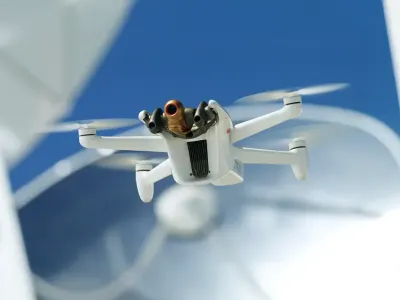
ANAFI Ai
Which drone has longer range and more reliable transmission?
ANAFI Ai connects through Wi-Fi and 4G LTE across 28 bands, so its control range is effectively unlimited wherever there is cellular coverage, with 1080p/30 live streaming at about 300 ms latency. ANAFI UKR combines encrypted dual-band Wi-Fi (5 km), 5G, a MARS radio link (15 km) and LoRa (20 km), giving it several independent paths if one fails. ANAFI Ai depends on a cellular network being available, whereas ANAFI UKR keeps working in remote or contested areas through its own radios. Pilots operating beyond cell coverage will find ANAFI UKR the more dependable link.
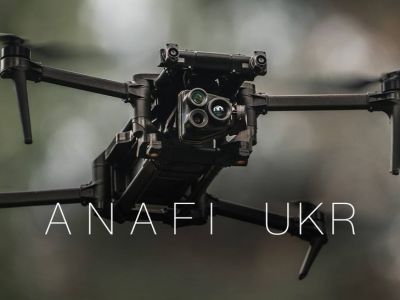
ANAFI UKR
How do obstacle avoidance and navigation without GPS compare?
ANAFI Ai offers 360° obstacle avoidance, SLAM and visual odometry alongside GPS, GLONASS and Galileo positioning, plus automatic return-to-home and geofencing. ANAFI UKR uses front and vertical stereo cameras for AI obstacle avoidance and navigates with visual-inertial odometry, optical navigation and satellite image matching in addition to GPS, GLONASS, Galileo and BeiDou. That extra navigation layer lets it operate in GNSS-denied environments and even indoors. For routine outdoor survey flights, both are well covered, but only ANAFI UKR is designed to keep flying when satellite signals are jammed or unavailable.
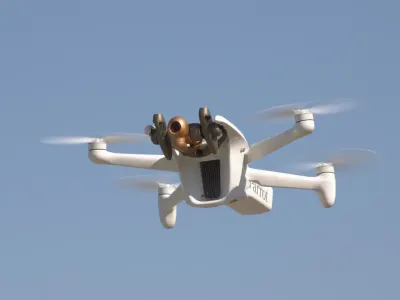
ANAFI Ai
What intelligent flight modes and tracking do both drones offer?
ANAFI Ai includes AI target following and autonomous framing, along with mission planning, area mapping and photogrammetry processing through FreeFlight 7. ANAFI UKR provides AI-powered object tracking, gesture recognition control, mission learning and environment mapping, and can coordinate swarms over its MARS radio. Both support live streaming and mission automation, but the emphasis differs. ANAFI Ai is tuned to repeatable survey workflows, while ANAFI UKR is tuned to tactical situations where a team may run several drones together.
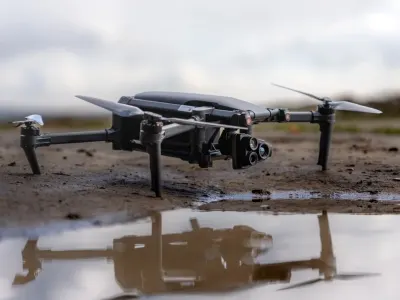
ANAFI UKR
How do portability, build quality and weather resistance compare?
ANAFI Ai weighs 0.898 kg and measures 32 x 44 x 11.8 cm unfolded, with carbon fiber arms and a rating of IP53. ANAFI UKR weighs 0.959 kg at standard mass and 1.45 kg at maximum take-off, folds down to 245 x 160 x 116 mm, and is also IP53 rated. Its operating range of -35°C to 50°C is much wider than the -10°C to 40°C of ANAFI Ai, and it is drop-tested from 1 m for field use. Both fit in a backpack, but ANAFI UKR is built to survive harsher handling and temperatures.
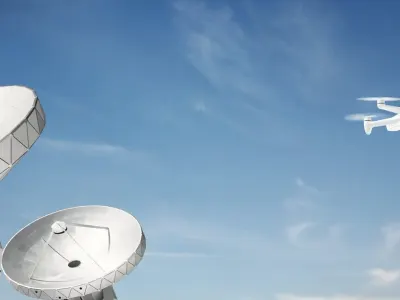
ANAFI Ai
Which drone is better for professional inspection and public safety work?
ANAFI UKR is the stronger fit for public safety, emergency response and tactical surveillance because it adds thermal imaging, 35x zoom, long-range encrypted radios and GNSS-denied navigation. Thermal imaging allows searches in darkness and detection of heat sources that a visible-light camera cannot show. ANAFI Ai can still handle visual inspection of structures, construction sites and agriculture, and its 4G piloting suits remote operations in covered areas. For agencies that need thermal capability and security compliance, ANAFI UKR is the better choice; for visual-only inspection on a smaller budget, ANAFI Ai is sufficient.
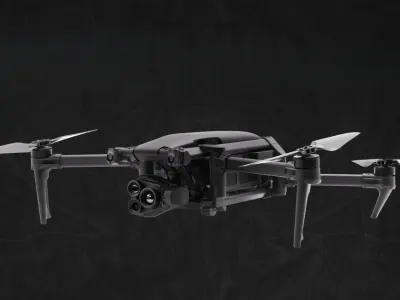
ANAFI UKR
Which drone is better for mapping, surveying and general aerial photography?
ANAFI Ai is better aligned with mapping and surveying because its 48 MP sensor captures more detail per image, and FreeFlight 7 supports mission planning and photogrammetry processing. It is also priced at USD 4,000 to 5,000, compared with USD 16,000 to 22,000 for ANAFI UKR, so it delivers survey capability at a lower cost of entry. ANAFI UKR has a 2-year warranty versus 1 year for ANAFI Ai, but most of its added cost goes to thermal imaging and secure communications. Teams focused on mapping, construction and agriculture will get more value from ANAFI Ai.
Technical Specifications
ANAFI Ai and ANAFI UKR differ on 52 of the 59 specifications listed for both.
Functional Utility & Use Cases
4 Comparative Metrics
Manipulation & Load Capacity
2 Comparative Metrics
Kinematic Architecture & Dexterity
3 Comparative Metrics
Frequently Asked Questions
Which drone performs better for thermal imaging and low-light work, ANAFI Ai or ANAFI UKR?
ANAFI UKR performs better because it includes a 640 x 512 FLIR Boson+ thermal camera. ANAFI Ai has no thermal sensor and relies on its 48 MP visible-light camera.
What is the maximum control range of ANAFI Ai compared with ANAFI UKR?
ANAFI Ai has no fixed limit when flown over 4G LTE coverage. ANAFI UKR reaches 5 km on Wi-Fi, 15 km on its MARS radio and 20 km on LoRa, and is unlimited on 5G.
How long can ANAFI Ai and ANAFI UKR fly on a single battery?
ANAFI Ai flies about 32 minutes per battery. ANAFI UKR flies 38 minutes on the standard battery and up to 50 minutes with the XLR battery.
Which drone is easier to carry and set up in the field, ANAFI Ai or ANAFI UKR?
Both fold into a compact body and weigh under 1 kg at standard mass. ANAFI Ai weighs 0.898 kg and ANAFI UKR 0.959 kg, and both use hot-swappable batteries.
Is ANAFI Ai or ANAFI UKR better for mapping and photogrammetry projects?
ANAFI Ai is better suited because its 48 MP camera captures higher-resolution images and FreeFlight 7 supports mission planning and photogrammetry processing.
Can ANAFI UKR fly where GPS is jammed or unavailable?
Yes. ANAFI UKR uses visual-inertial odometry, optical navigation and satellite image matching to keep flying in GNSS-denied environments, which ANAFI Ai is not designed for.
Related Comparisons
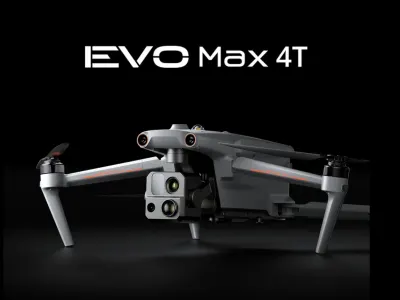
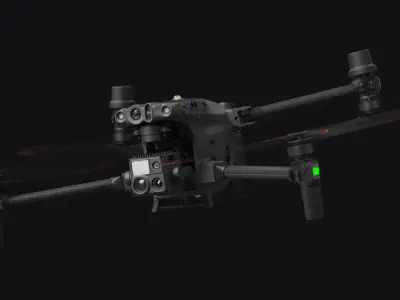
EVO Max 4T vs DJI Matrice 30 series
Which camera drone is better? EVO Max 4T vs DJI Matrice 30 series compared for image quality, battery life, and value.
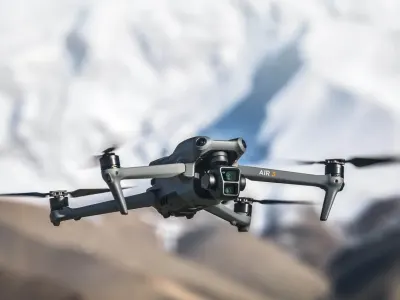
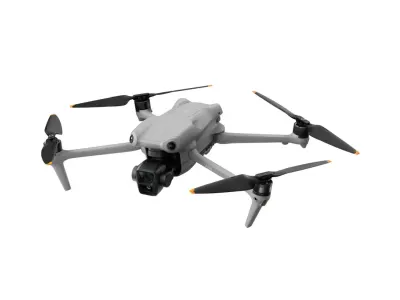
DJI Air 3 vs DJI Air 3S
Compare DJI Air 3 vs DJI Air 3S for camera quality, low-light sensors, obstacle avoidance, battery life, and pro videography outcomes.
DJI Avata 360 vs DJI Neo 2
DJI Avata 360 vs DJI Neo 2: 8K 360° video, flight time, speed, range, safety and price compared to help you choose between FPV and selfie flying.
Skydio X2D vs Skydio X10
Compare Skydio X2D vs Skydio X10 for camera quality, flight time, range, and cinematic capabilities in defense and inspection.
Verdicts reflect our research and opinion. Confirm specifications with the manufacturer before buying.