Aria - Robot Girlfriend vs Elf-Xuan 2.0 at a glance
Aria - Robot Girlfriend has more degrees of freedom (44 against 30 for Elf-Xuan 2.0), which allows finer movement. Aria - Robot Girlfriend is priced at $135,000–$175,000 and Elf-Xuan 2.0 at $50,000–$150,000, so their price ranges overlap.
Which one fits your use?
Based on the uses each robot is built and marketed for. Open a use to see the specs that matter for it.
| Comparing for… | Aria - Robot Girlfriend | Elf-Xuan 2.0 |
|---|---|---|
| Suited | Suited | |
| Suited | Suited | |
| Suited | Not listed | |
| Suited | Suited | |
| Suited | Not listed |
- Pick Aria - Robot Girlfriend for home help and elder care and healthcare settings.
- Both suit research labs, education and training and hospitality, retail and public-facing roles, so compare the specs for that use.
Realbotix's Aria is a hyper-realistic companion humanoid that debuted at CES 2025. Seventeen facial motors give it subtle expressions, it holds AI-driven conversations, it rolls on a motorised base, and interchangeable faces and voices let owners customise it, at prices from about $135,000 to $175,000.
Elf-Xuan 2.0 is an upper-body bionic robot from AheadForm's ELF series, built around a lifelike face. AheadForm drives the face with a very high number of degrees of freedom for fluid, asymmetrical expressions (the original Elf-Xuan face has more than 30), and version 2.0 adds an articulated upper body and arms. It stays in one place and is designed for natural face-to-face interaction.
Detailed Analysis

Aria - Robot Girlfriend
Design & Build Quality
Aria and Elf-Xuan 2.0 are both built around lifelike faces, but they differ in body and mobility. Aria is a 175 cm, 54 kg humanoid with 44 degrees of freedom, including 17 facial motors, and a modular design with interchangeable faces and voices. Elf-Xuan 2.0 is a stationary upper-body robot whose face uses a very high number of degrees of freedom for fluid, asymmetrical expressions, and version 2.0 adds articulated arms. Aria offers a full human-sized figure, while Elf-Xuan 2.0 concentrates everything on the face and upper body.

Elf-Xuan 2.0
Mobility & Navigation
Aria moves at about 2 km/h on a motorised wheeled base guided by waypoints, which suits smooth indoor floors. Elf-Xuan 2.0 does not walk or drive; it stays where it is installed. Aria can move to greet people, while Elf-Xuan 2.0 waits for people to come to it. Neither is designed to navigate complex spaces on its own.

Aria - Robot Girlfriend
Sensors & Perception
Aria has cameras in its eyes and a wide-angle camera in its chest, plus microphones and proximity sensors. AheadForm has not published a sensor list for Elf-Xuan 2.0. Aria's eye cameras let it look at the person it is talking to. Ask AheadForm what cameras and microphones support Elf-Xuan 2.0's interaction.

Elf-Xuan 2.0
AI Capabilities
Aria runs Realbotix software with conversational AI and can connect to external AI models through REST APIs. Elf-Xuan 2.0 is designed for face-to-face interaction, using its expressive face to make conversations feel natural. Aria's open connection to outside AI models gives owners more control over how it talks. Elf-Xuan 2.0's strength is the subtlety of its facial expressions.

Aria - Robot Girlfriend
Battery & Power Efficiency
Aria's 1.5 kWh lithium-ion pack gives 4 to 8 hours of use and recharges in 2 hours. AheadForm has not published power details for Elf-Xuan 2.0. Aria needs its battery to move around, while Elf-Xuan 2.0 can be installed near a power supply. For a full day of greeting, plan for a charging break with Aria.

Elf-Xuan 2.0
Use-Case Suitability
Aria is aimed at companionship, customer greeting, telepresence and social entertainment. Elf-Xuan 2.0 suits reception desks, exhibitions and human-robot interaction research, where an expressive face matters more than mobility. Both are social robots rather than workers. Choose Aria for lifelike conversation and greeting on a mobile base, or Elf-Xuan 2.0 for expressive face-to-face interaction.

Aria - Robot Girlfriend
Software Ecosystem
Aria runs Realbotix OS, with REST APIs and support for external AI models. AheadForm has not published SDK details for Elf-Xuan 2.0. Aria is the more open and better-documented platform for developers. Research teams interested in Elf-Xuan 2.0 should ask AheadForm about access to its face and arm controls.

Elf-Xuan 2.0
Safety Features
Aria has an emergency stop, collision-avoidance thresholds and power cut-offs. Elf-Xuan 2.0 stays in one place and handles only light objects of about 1 to 2 kg, so it poses little risk of collision. Neither robot is designed to carry loads. Aria needs its safety features more because it moves among people.

Aria - Robot Girlfriend
Pricing & Value
Realbotix sells Aria from about $135,000 for the modular version to $175,000 for the full body. Elf-Xuan 2.0 is priced at around $50,000 to $150,000. Elf-Xuan 2.0 can come in well below Aria's entry price. Aria's premium buys a full-height mobile body, interchangeable faces and published battery and software details.
Capabilities & Operational Tasks
Head-to-head comparison of what Aria - Robot Girlfriend and Elf-Xuan 2.0 can do, their applications, and capabilities.
What Can Aria - Robot Girlfriend & Elf-Xuan 2.0 Do?
43 tasks listed for both, 1 only for Aria - Robot Girlfriend, 0 only for Elf-Xuan 2.0.
Technical Specifications
Aria - Robot Girlfriend and Elf-Xuan 2.0 differ on 26 of the 45 specifications listed for both.
Functional Utility & Use Cases
4 Comparative Metrics
Manipulation & Load Capacity
4 Comparative Metrics
Kinematic Architecture & Dexterity
4 Comparative Metrics
Related Comparisons

Sophia vs Aria - Robot Girlfriend
Head-to-head: Sophia vs Aria - Robot Girlfriend compared on bipedal balance, AI learning, and real-world deployment.

Elf-Xuan 2.0 vs Moya
Elf-Xuan 2.0 vs Moya: AheadForm's stationary lifelike-face robot against DroidUp's walking companion humanoid, compared on faces, hands and uses.
Aria - Robot Girlfriend vs Moya
In-depth comparison of Aria - Robot Girlfriend and Moya, covering hardware capabilities, teleoperation, and enterprise readiness for companionship and service applications.
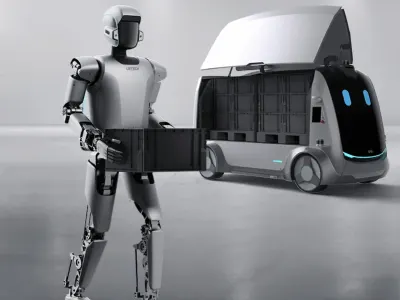
Walker S1 vs Elf-Xuan 2.0
Walker S1 vs Elf-Xuan 2.0: UBTECH's factory humanoid against AheadForm's lifelike-face humanoid, compared on size, mobility, sensors, AI and best uses.
Verdicts reflect our research and opinion. Confirm specifications with the manufacturer before buying.