Which one fits your use?
Based on the uses each robot is built and marketed for. Open a use to see the specs that matter for it.
| Comparing for… | Pudu D7 | Cruzr S2 |
|---|---|---|
| Suited | Suited | |
| Suited | Suited | |
| Suited | Suited |
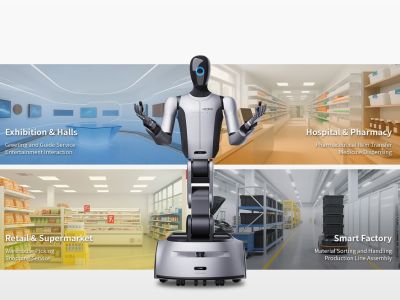
- Both are aimed at the same uses (warehouse and logistics work, factory and manufacturing work and hospitality, retail and public-facing roles), so the spec differences decide it.
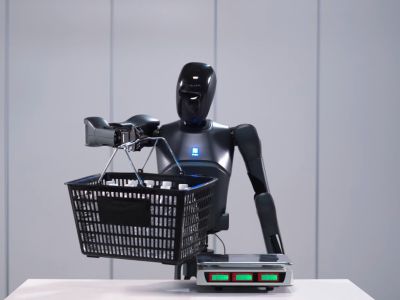
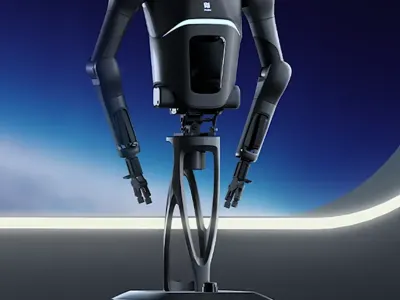
D7 is Pudu Robotics' first semi-humanoid: a human-like upper body with two arms on an omnidirectional wheeled base. It is 165 cm tall, weighs 45 kg, moves at up to 2 m/s and works for more than eight hours on a charge.
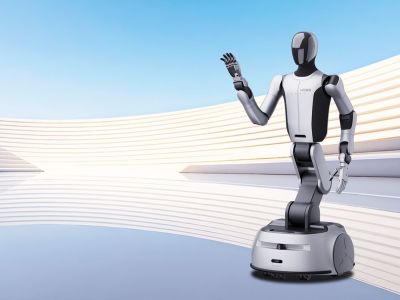
UBTECH introduced Cruzr S2 in August 2025 as a full-size humanoid on wheels. It is 176 cm tall with 44 degrees of freedom, moves at 2 m/s and sorts and assembles parts with Gen-4 industrial dexterous hands.
Detailed Analysis
Pudu D7
Design & Build Quality
D7 and Cruzr S2 share the same basic shape, a humanoid upper body on a wheeled base, but they are built to different proportions. D7 stands 165 cm and weighs 45 kg, while Cruzr S2 is taller at 176 cm; UBTECH has not published its weight. The degree-of-freedom counts need care: 22 of Cruzr S2's 44 sit in its two 11-joint hands, whereas D7 has 30 before any hands are fitted and 50 with dexterous hands. Cruzr S2's standout is its waist, which rotates ±170°, bends from +90° to -35° and lifts 40 cm so its hands can work anywhere from the floor to 1.8 m, while D7's arms reach 65 cm and place their tips to within 0.1 mm.
Cruzr S2
Mobility & Navigation
Both robots roll rather than walk, and both are rated at the same top speed of 2 m/s. D7's 360° omnidirectional chassis can move in any direction and climbs slopes of up to 10°, which helps on ramps and at lift thresholds. Cruzr S2 is built for tight layouts: it can turn around in a 0.8 m passage and finds its way with stereo vision and radars at the front and rear of its base. Either is at home on flat indoor floors, and neither is designed for stairs.
Pudu D7
Sensors & Perception
This is where the published information is most lopsided. UBTECH lists Cruzr S2's full kit: two fisheye and two RGB cameras for stereo vision, RGB-D cameras in the chest and base, radars at both ends of the base, a four-microphone array, six-axis force sensors in both wrists and six tactile arrays in each hand. Pudu has not released a sensor list for D7, so its cameras and depth sensing cannot be compared like for like. Buyers who need to review perception hardware for a safety case or an integration plan can do that today with Cruzr S2, but will need to ask Pudu directly about D7.
Cruzr S2
AI Capabilities
The two makers describe their AI in different terms. D7 uses a hierarchical system in which a high-level layer plans the task and a low-level layer reacts to sensor input in real time, and Pudu says the robot keeps refining its skills from operating data. Cruzr S2 plans its work with UBTECH's Co-Agent, which UBTECH calls the first industrial agent for humanoid robots, and adds large-language-model voice chat for talking with staff and customers. If spoken interaction is part of the job, Cruzr S2 is the one that offers it on paper.
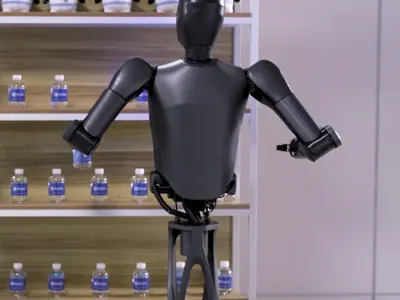
Pudu D7
Battery & Power Efficiency
D7 is the clear choice on endurance as far as published figures go: a battery of more than 1 kWh gives it over eight hours of continuous work, enough for a full shift. UBTECH has not published Cruzr S2's battery capacity or runtime, saying only that it charges through a fast-charging port in its base. Neither maker lists a charging time or a swappable battery. For sites that run long hours, ask UBTECH for Cruzr S2's runtime under your workload before comparing the two on uptime.
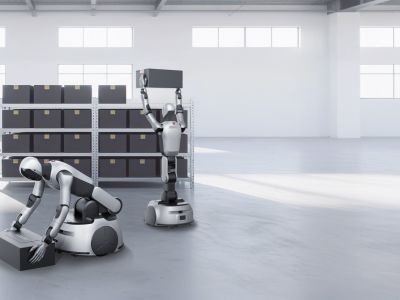
Cruzr S2
Use-Case Suitability
Pudu pitches D7 at service spaces and industrial sites, where it can ride lifts, carry items and sort goods. Cruzr S2 is aimed at sorting and component assembly with its dexterous hands, wider enterprise operations, and customer-facing roles that use its voice and face display. The overlap is sorting; the difference is that D7 leans toward moving things through a building all day, while Cruzr S2 leans toward fine handling and dealing with people. Choose D7 for long-shift transport and lift operation, or Cruzr S2 for assembly-style handling and customer service.
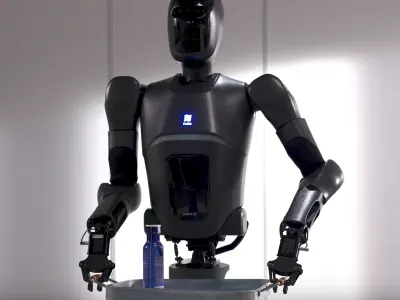
Pudu D7
Functional Tools & Payload
On lifting, D7 has the edge per arm: each of its arms lifts 10 kg. Cruzr S2's two arms carry 15 kg together, and UBTECH also rates the grip itself at 7.5 kg in a single hand and 1 kg in a finger pinch. Cruzr S2's Gen-4 hands have 11 degrees of freedom each and tactile arrays, which suits small parts and assembly, whereas D7 reaches 50 degrees of freedom only with optional dexterous hands. Pick by the item: D7 for heavier single-arm lifts, Cruzr S2 for small parts that need a sensitive grip.

Cruzr S2
Software Ecosystem
D7 runs Pudu's in-house embodied-AI system, built around the same split between high-level planning and low-level control. Cruzr S2 runs UBTECH's Co-Agent industrial agent with learning-based motion control, and offers Gigabit Ethernet and USB 3.0 for wired integration. Neither maker lists a developer SDK for these models in its published specifications. Teams that plan to build their own applications should ask both vendors which interfaces they open up before committing.
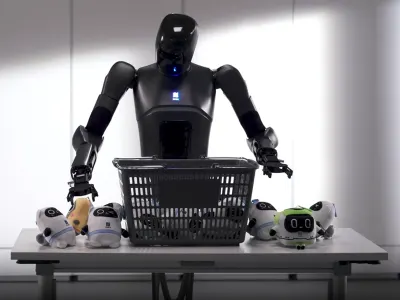
Pudu D7
Safety Features
Cruzr S2 has the better-documented safety kit: an emergency stop button, radars at the front and rear of its base, six-axis force sensing in its wrists and learning-based self-balancing. Pudu has not published D7's safety features. Both stand on wheeled bases rather than legs, so neither has to keep its balance while walking. Neither maker has published safety certifications, so sites with strict compliance rules should request them from both.
Cruzr S2
Pricing & Value
Cruzr S2 costs less, at around $80,000, against D7's $100,000 to $150,000. The extra $20,000 or more for D7 pays for a published runtime of over eight hours and arms that each lift 10 kg. Cruzr S2 answers with dexterous tactile hands, a flexible lifting waist and voice interaction at the lower price. On the published specs, Cruzr S2 gives more for fine handling and customer-facing work, while D7 earns its premium where a robot must keep moving goods all day.
Capabilities & Operational Tasks
Head-to-head comparison of what Pudu D7 and Cruzr S2 can do, their applications, and capabilities.
What Can Pudu D7 & Cruzr S2 Do?
148 tasks listed for both, 1 only for Pudu D7, 5 only for Cruzr S2.
Technical Specifications
Pudu D7 and Cruzr S2 differ on 30 of the 52 specifications listed for both.
Functional Utility & Use Cases
4 Comparative Metrics
Manipulation & Load Capacity
4 Comparative Metrics
Kinematic Architecture & Dexterity
4 Comparative Metrics
Related Comparisons
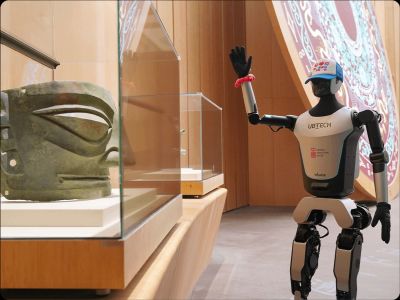
Walker C vs Cruzr S2
Walker C vs Cruzr S2: UBTECH's walking reception humanoid against its wheeled assembly and service humanoid, compared on build, hands and uses.
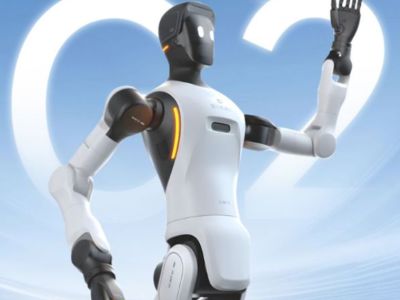
AgiBot G2 vs Pudu D7
AgiBot G2 vs D7: AgiBot's wheeled precision-assembly humanoid against Pudu's wheeled semi-humanoid, compared on size, mobility, sensors, AI and best uses.
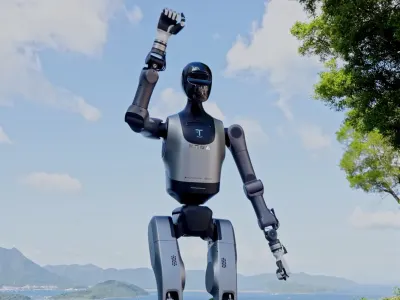
Pudu D7 vs Walker Tienkung
D7 vs Walker Tienkung: Pudu's wheeled semi-humanoid against UBTECH's full-size research humanoid, compared on size, mobility, sensors, AI and best uses.
Cruzr S2 vs Walker Tienkung
Cruzr S2 vs Walker Tienkung: UBTECH's wheeled assembly and service humanoid against UBTECH's full-size research humanoid, compared on specs and uses.
Verdicts reflect our research and opinion. Confirm specifications with the manufacturer before buying.