KUAVO 4PRO (KUAVO-MY) vs Green at a glance
Green is quicker, with a top speed of 0.9 m/s versus 0.4 m/s for KUAVO 4PRO (KUAVO-MY). Green has more degrees of freedom (41 against 22 for KUAVO 4PRO (KUAVO-MY)), which allows finer movement. KUAVO 4PRO (KUAVO-MY) is lighter at 55 kg, compared with 75 kg for Green.
Which one fits your use?
Based on the uses each robot is built and marketed for. Open a use to see the specs that matter for it.
| Comparing for… | KUAVO 4PRO (KUAVO-MY) | Green |
|---|---|---|
| Suited | Not listed | |
| Suited | Suited | |
| Suited | Suited | |
| Suited | Not listed | |
| Suited | Suited |
- Pick KUAVO 4PRO (KUAVO-MY) for warehouse and logistics work and education and training.
- Both suit factory and manufacturing work, research labs and hospitality, retail and public-facing roles, so compare the specs for that use.
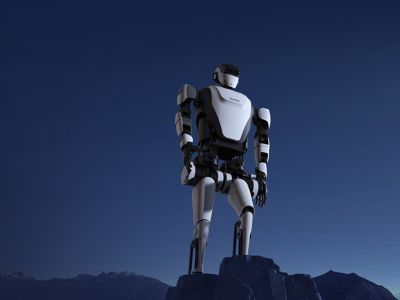
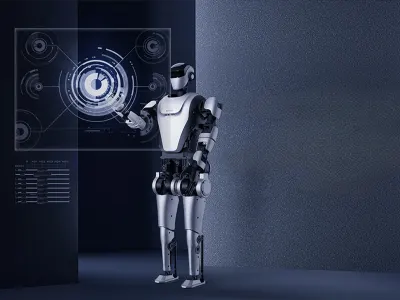
KUAVO-MY (KUAVO 4PRO) is Leju Robotics' full-size bipedal humanoid for research labs, enterprises and innovation centres. It stands 166 cm tall, weighs 55 kg and has 22 degrees of freedom (28 on the exhibition version with a moving head and dexterous hands); it walks at 0.4 m/s, can run at up to 5 km/h, and the KUAVO-MY edition runs KaihongOS, an OpenHarmony-based operating system. Typical jobs include carrying totes, guiding customers and teleoperated tool work.
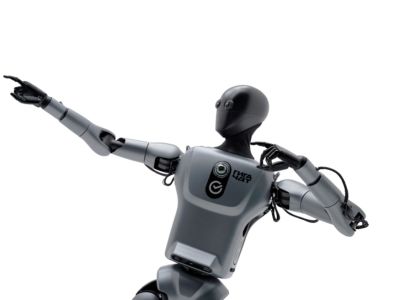
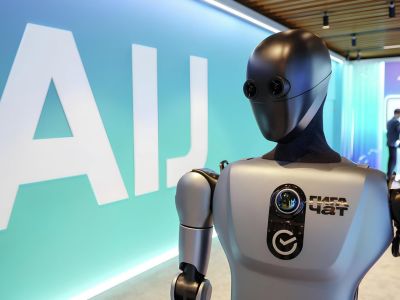
Green is Sber's first humanoid, presented at AI Journey 2025 in Moscow. It is 180 cm tall, weighs 75 kg and has 41 degrees of freedom, including 12 finger joints with force-torque sensing. Green talks through Sber's GigaChat model and manipulates objects with the Green-VLA vision-language-action model, and Sber plans to use it in retail, catering, manufacturing, labs and room service.
Detailed Analysis
KUAVO 4PRO (KUAVO-MY)
Design & Build Quality
Green is a 180 cm, 75 kg humanoid with anthropomorphic hands: 12 of its 41 degrees of freedom are in the fingers and 4 in the wrists. KUAVO-MY is smaller and lighter at 166 cm and 55 kg, with 22 degrees of freedom on the standard version (28 with head and dexterous hands), and Leju focuses on whole-body motion control for research use.
Green
Mobility & Navigation
Green walks faster at 0.9 m/s against KUAVO-MY's 0.4 m/s, although KUAVO-MY can also run at up to 5 km/h. Green navigates on its own in unfamiliar indoor spaces and steers around obstacles using its cameras and LiDARs.
KUAVO 4PRO (KUAVO-MY)
Sensors & Perception
Green carries eight RGB cameras and two LiDARs, plus inertial sensors for balance and force-torque sensors in its fingertips. KUAVO-MY combines a Livox Mid-360 3D LiDAR and an Orbbec Gemini 335L depth camera with a six-microphone array that locates sounds in 360°. Green's fingertip force sensing is the clearer differentiator for handling small or fragile objects.
Green
AI Capabilities
KUAVO-MY uses Leju's KaihongOS embodied AI algorithms and supports teleoperation and learning-based control. Green runs Sber's GigaChat for conversation and the Green-VLA model (about 1.3 billion parameters, open weights) for manipulation, and it can detect and correct its own mistakes. Green is the stronger pick if natural voice interaction matters.
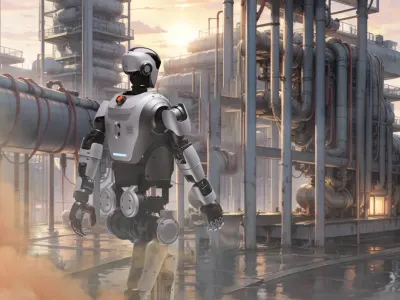
KUAVO 4PRO (KUAVO-MY)
Battery & Power Efficiency
Sber says Green runs on a 48 V battery but has not published its capacity, runtime or charging time. KUAVO-MY's 60 V, 6 Ah pack gives about an hour of walking and recharges in 1.5 hours or less, so it suits demos and research sessions more than full shifts.

Green
Use-Case Suitability
KUAVO-MY is aimed at robotics research, industrial testing and service tasks such as customer guidance and tote carrying. Green is positioned for paid work in shops (picking items and stocking shelves), factories (assembling and packing), labs (handling test tubes) and room service, with Sber planning pilot projects with businesses.
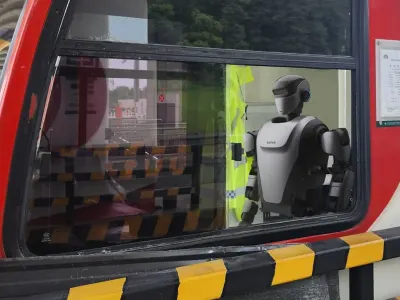
KUAVO 4PRO (KUAVO-MY)
Software Ecosystem
KUAVO-MY's ecosystem is KaihongOS, which makes it a fit for teams developing on OpenHarmony. Green's software is built on Sber's GigaChat and the open-weight Green-VLA model, and Sber's Green Challenge lets outside teams train controllers in a simulator of the robot. Sber has not announced a public SDK.

Green
Safety Features
Sber has not published safety certifications for Green; it relies on balance sensing, obstacle avoidance and self-correction of errors. Neither maker lists formal certifications in our records, so organisations planning to run either robot near people should request safety documentation directly.
Capabilities & Operational Tasks
Head-to-head comparison of what KUAVO 4PRO (KUAVO-MY) and Green can do, their applications, and capabilities.
What Can KUAVO 4PRO (KUAVO-MY) & Green Do?
144 tasks listed for both, 5 only for KUAVO 4PRO (KUAVO-MY), 5 only for Green.
Technical Specifications
KUAVO 4PRO (KUAVO-MY) and Green differ on 29 of the 53 specifications listed for both.
Functional Utility & Use Cases
4 Comparative Metrics
Manipulation & Load Capacity
4 Comparative Metrics
Kinematic Architecture & Dexterity
4 Comparative Metrics
Related Comparisons
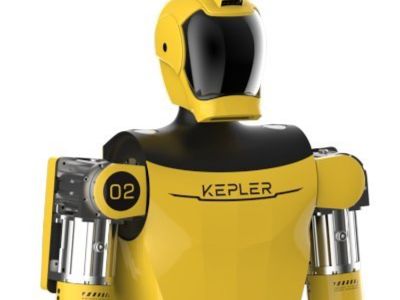
K2 Bumblebee vs Green
K2 Bumblebee vs Green: Kepler's 52-DOF industrial humanoid against Sber's GigaChat-powered Green, compared on hands, sensors, battery and price.

Optimus vs Green
Optimus vs Green: Tesla's humanoid against Sber's GigaChat-powered Green, compared on size, hands, AI, target jobs and availability.
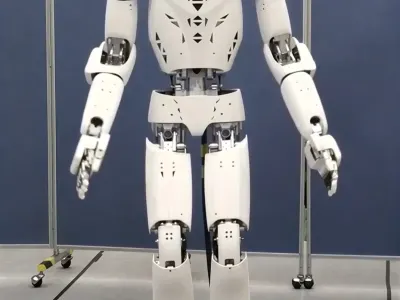
KUAVO 4PRO (KUAVO-MY) vs Kaleido 8.0
KUAVO-MY vs Kaleido 8.0: Leju's research and service humanoid against Kawasaki's robust bipedal humanoid, compared on size, mobility, sensors, AI and best uses.
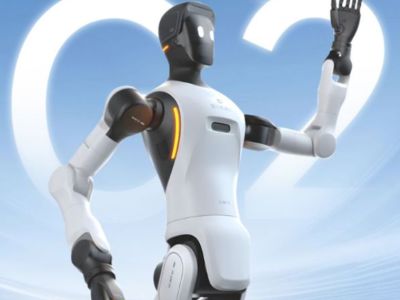
AgiBot G2 vs Green
AgiBot G2 vs Green: AgiBot's wheeled precision-assembly humanoid against Sber's walking GigaChat robot, compared on build, sensors, battery and price.
Verdicts reflect our research and opinion. Confirm specifications with the manufacturer before buying.