Robot Era L7 vs T800 at a glance
Robot Era L7 is quicker, with a top speed of 4 m/s versus 2 m/s for T800. Robot Era L7 has more degrees of freedom (55 against 25–46 for T800), which allows finer movement. Robot Era L7 lasts longer on a charge, about 6 hours against 3–5 hours for T800. Robot Era L7 is lighter at 65 kg, compared with 75–85 kg for T800.
Which one fits your use?
Based on the uses each robot is built and marketed for. Open a use to see the specs that matter for it.
| Comparing for… | Robot Era L7 | T800 |
|---|---|---|
| Suited | Not listed | |
| Suited | Not listed | |
| Suited | Suited | |
| Suited | Suited | |
| Suited | Suited |
- Pick Robot Era L7 for warehouse and logistics work and factory and manufacturing work.
- Both suit research labs, education and training and hazardous or high-risk work, so compare the specs for that use.
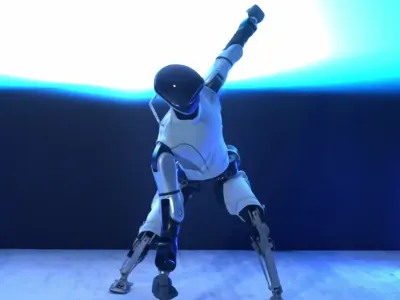
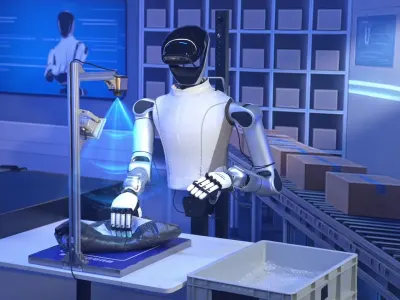
The L7 by Robot Era is a 171 cm tall, 65 kg humanoid robot priced at $120,000, positioned for factory automation, sorting, and research labs. It differentiates with a maximum speed of 14.4 km/h, 55 degrees of freedom including 12-DoF hands, and multi-sensor fusion navigation using stereo RGB-D cameras and 3D LiDAR. Powered by the ERA-42 onboard AI computer, it supports AI autonomous control, teleoperation, and app-based manual override.
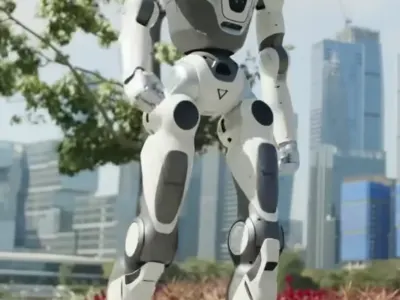
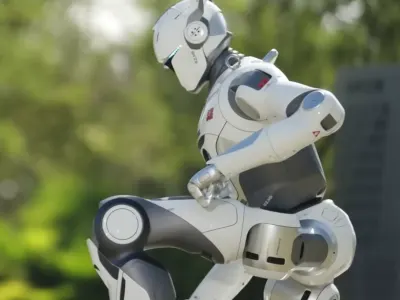
The T800 by EngineAI, priced at about $25,000-$80,000, is a 173 cm tall, 75–85 kg humanoid designed for heavy-duty industrial tasks, logistics, and human-robot interaction. It stands out with a broader range of use cases including robot boxing and retail assistance, supported by visual SLAM and LiDAR mapping for navigation. Control options include autonomous behaviors, teleoperation, and a proprietary OS with ROS2 integration.
Detailed Analysis
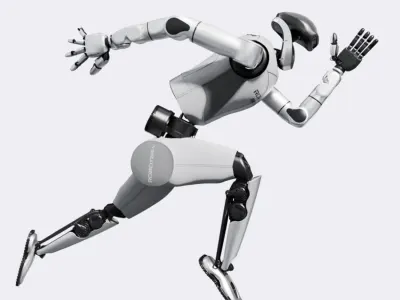
Robot Era L7
Design & Build Quality
L7 measures 171 x 50 x 40 cm and weighs 65 kg, using alloy frame and polymer shells with 55 degrees of freedom and 12-DoF hands for dexterous manipulation. T800 is slightly taller at 173 cm and heavier at 75–85 kg, suited for heavy-duty tasks. L7's quasi-direct drive joints provide high torque up to 400 N·m and peak speeds of 25 rad/s, while T800 emphasizes robust build for industrial environments.
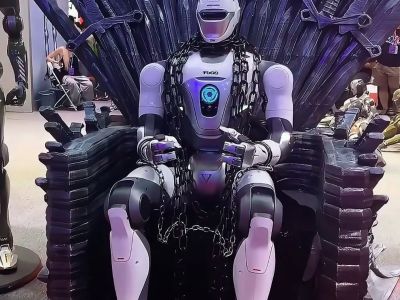
T800
Mobility & Navigation
L7 achieves 14.4 km/h speed with SLAM-based navigation via multi-sensor fusion, including 3D LiDAR and stereo vision for agile movement. T800 reaches 2 m/s or more using visual SLAM and LiDAR mapping, prioritizing stability in heavy-duty scenarios. L7's higher speed supports dynamic tasks like tool handling, contrasting T800's focus on reliable locomotion in logistics.
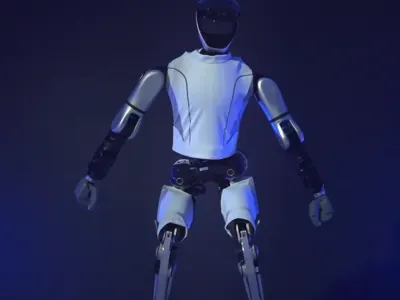
Robot Era L7
Sensors & Perception
L7 features stereo RGB-D cameras, LiDAR, IMU, gyroscope, force sensors, and ultrasonic sensors for real-time environmental sensing. T800 includes RGB cameras, stereo cameras, LiDAR, ultrasonic sensors, IMU, gyroscope, force sensors, and temperature sensors. Both enable obstacle avoidance, but L7's panoramic vision enhances 360° spatial perception.
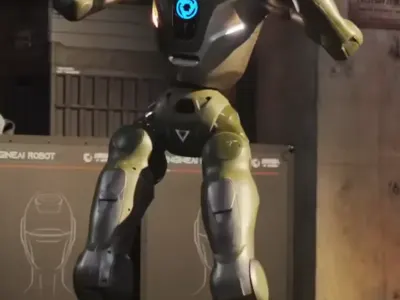
T800
AI Capabilities
L7 uses custom AI software with ERA-42 embodied AI computer, supporting Linux-based OS, ROS integration, and APIs for autonomous control. T800 employs proprietary OS with ROS2, Python, and C++ for learned behaviors and teleoperation. L7 integrates LLM for vision and language, while T800 focuses on collaborative human-robot interaction.
Robot Era L7
Battery & Power Efficiency
L7 uses typical lithium-ion batteries, supporting extended operations in factory settings. Both emphasize long-term power without specified runtime per charge, suitable for automation tasks.
T800
Use-Case Suitability
L7 targets factory automation, sorting, tool handling, and research labs with agile dexterity for precise manipulation. T800 suits heavy-duty industrial tasks, robot boxing, retail assistance, human-robot interaction, and logistics. L7 excels in speed-demanding environments, while T800 handles broader interactive and robust applications.
Robot Era L7
Software Ecosystem
L7's software includes custom AI with ERA-42, likely Linux OS and ROS integration, plus APIs for programming. T800 runs proprietary OS alongside ROS2, Python, and C++ for flexible development. Both support teleoperation and autonomous modes, enabling varied control interfaces.
T800
Pricing & Value
L7 is priced at $120,000, offering high speed and dexterity for its cost. T800 ranges from about $25,000 for the base model to $80,000 for the top configuration, reflecting its larger build and heavy-duty focus. Value differs by application, with L7 providing agility at lower entry price.
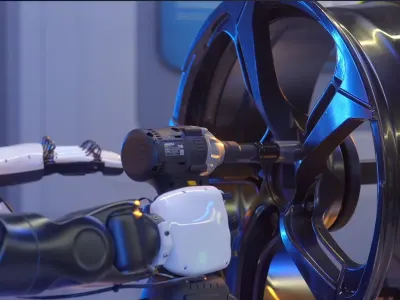
Robot Era L7
Safety Features
L7 includes emergency stop, obstacle avoidance, real-time sensing, and torque-limited joints. T800 features force limiting, collision detection, emergency stop, and collaborative mode. Both prioritize safe operation in shared human environments.
Capabilities & Operational Tasks
Head-to-head comparison of what Robot Era L7 and T800 can do, their applications, and capabilities.
What Can Robot Era L7 & T800 Do?
206 tasks listed for both, 13 only for Robot Era L7, 1 only for T800.
Technical Specifications
Robot Era L7 and T800 differ on 30 of the 53 specifications listed for both.
Functional Utility & Use Cases
4 Comparative Metrics
Manipulation & Load Capacity
4 Comparative Metrics
Kinematic Architecture & Dexterity
4 Comparative Metrics
Related Comparisons
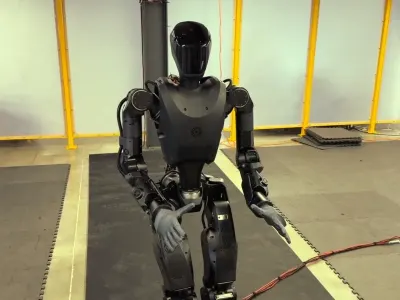
T800 vs Phantom MK1
Compare T800 by EngineAI vs Phantom MK1 by Foundation for humanoid mobility, dexterity, autonomy, payload, and industrial vs defense use cases.
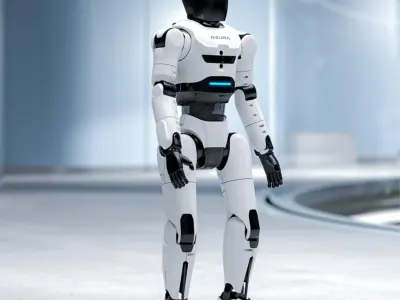
T800 vs 4NE-1 Mini
T800 or 4NE-1 Mini? See which humanoid robot performs better for manufacturing, logistics, and research with comparisons on dexterity, autonomy, and payload.
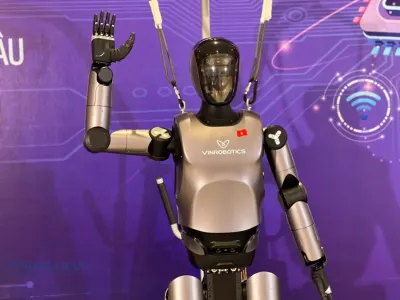
Robot Era L7 vs VR-H3
Compare L7 by Robot Era vs VR-H3 by VinRobotics for humanoid mobility, dexterity, autonomy, and payload capacity in industrial applications.

NEO Home Robot vs T800
1X NEO Home Robot vs EngineAI T800: size, strength, battery, sensors, safety and price for home help versus heavy-duty industrial work.
Verdicts reflect our research and opinion. Confirm specifications with the manufacturer before buying.