The NEO Gamma by 1X Technologies represents a consumer-oriented humanoid robot priced at $20,000–$30,000, positioned for home and service applications. It stands at 165 cm tall and weighs 30 kg, enabling agile mobility with a max walking speed of 5 km/h and running up to 6.2 m/s. Key differentiators include high deadlift capacity of 70 kg, 5 kg per arm carrying, and use cases like elderly assistance and home cleaning. Its 25 DoF and semi-autonomous operation with teleoperation fallback support versatile object manipulation.
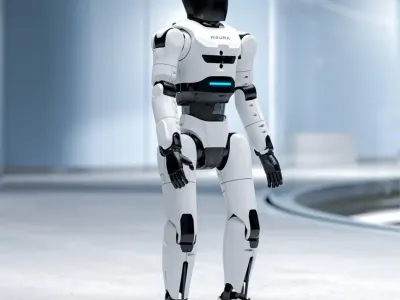
The 4NE-1 Mini by NEURA Robotics, priced from $19,999 to $29,999, targets educational and research environments as a compact humanoid. Measuring 132 cm in height and weighing 36 kg, it offers controlled mobility at 3 km/h. Distinct features encompass advanced sensors like stereo cameras and touchless human detection, alongside 3 kg per arm carrying and 10 kg deadlift limits. With 25 DoF and semi-autonomous capabilities, it excels in human-robot interaction training and STEM skills development.
Detailed Analysis
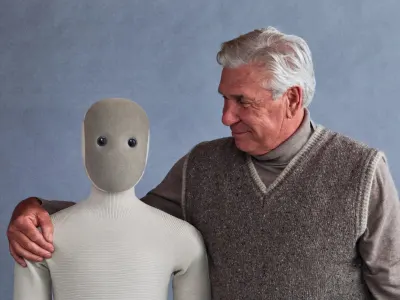
Bipedal Mobility & Balance
NEO Gamma demonstrates superior bipedal mobility with a max walking speed of 5 km/h and running capability up to 6.2 m/s, derived from similar 1X models, supporting dynamic home navigation. In contrast, 4NE-1 Mini operates at 3 km/h, prioritizing stability for lab settings over speed. Both utilize IMU and gyroscope for balance, but NEO Gamma's taller 165 cm frame and lighter 30 kg weight enhance stride efficiency. 4NE-1 Mini's shorter 132 cm height aids maneuverability in confined research spaces. Overall, NEO Gamma suits varied terrains better due to higher speeds.
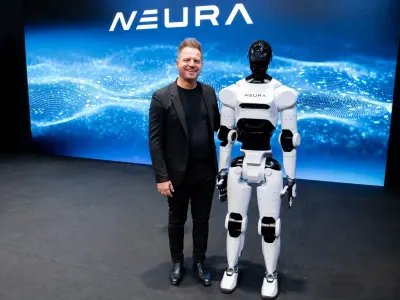
Dexterity & Manipulation (Focus on hands/arms)
Both robots feature 25 DoF, enabling precise arm and hand movements, with force sensors in NEO Gamma's hands and joints, and force-torque sensors in 4NE-1 Mini. NEO Gamma supports 5 kg carrying per arm for object manipulation tasks like cleaning. 4NE-1 Mini limits to 3 kg per arm, optimized for educational handling. Tactile feedback in both ensures safe grasping, but NEO Gamma's specs indicate finer control in dynamic scenarios. This positions NEO Gamma for practical dexterity in homes.
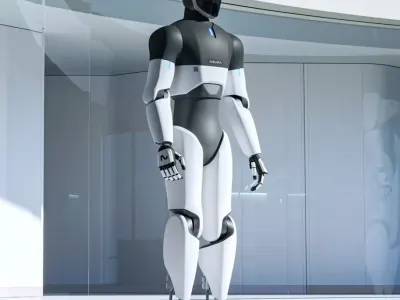
AI, Autonomy & Learning Capabilities
NEO Gamma operates semi-autonomously with teleoperation fallback, powered by proprietary real-time OS and custom AI models for tasks like social companionship. 4NE-1 Mini matches semi-autonomous levels via Neuraverse OS, ROS2-compatible for research algorithms. Both lack specified compute units, relying on embedded AI. NEO Gamma emphasizes learning for home adaptation, while 4NE-1 Mini focuses on skills development in STEM. Teleoperation in NEO Gamma provides flexibility for complex learning.

Payload & Lifting Capacity
NEO Gamma excels with 5 kg carrying per arm and 70 kg deadlift, based on base model data, ideal for heavy household lifts. 4NE-1 Mini offers 3 kg per arm and 10 kg maximum deadlift, sufficient for lab objects. The disparity highlights NEO Gamma's strength for manipulation-intensive roles. Both maintain 25 DoF for balanced payload handling. NEO Gamma's capacity supports broader utility.
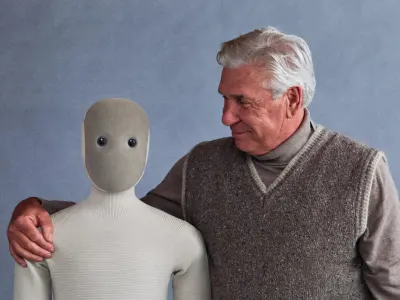
Battery Runtime & Power Efficiency
NEO Gamma provides a 5-year battery lifespan, suggesting extended operational cycles for continuous home use. 4NE-1 Mini offers 3-5 years, aligning with intermittent research sessions. Lighter weight of NEO Gamma at 30 kg versus 36 kg for 4NE-1 Mini implies better efficiency during mobility. No runtime hours specified, but long-term battery design favors sustained deployment. NEO Gamma edges in longevity.
Real-World Use Cases (Industrial vs General Purpose)
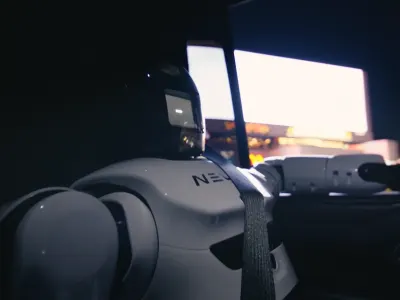
NEO Gamma targets general-purpose home tasks including elderly assistance, cleaning, and remote monitoring. 4NE-1 Mini focuses on educational demonstrations, lab research, and human-robot training. Neither is industrial-grade, but NEO Gamma's payload suits domestic logistics. 4NE-1 Mini's sensors enable controlled STEM interactions. Use cases diverge by environment: homes for NEO Gamma, labs for 4NE-1 Mini.
Sensor Suite & Vision Systems
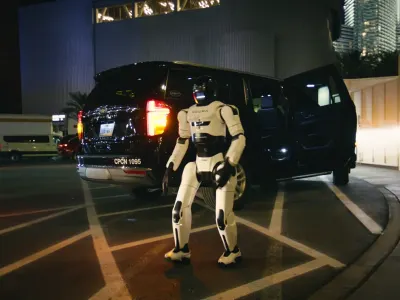
4NE-1 Mini boasts RGB/stereo cameras, ultrasonic sensors, touchless detection, and environmental perception for comprehensive lab awareness. NEO Gamma includes RGB cameras, four microphones, three speakers, IMU, gyro, and force sensors, possibly ultrasonic/tactile. 4NE-1 Mini's stereo vision enhances depth perception for research. NEO Gamma prioritizes audio and force feedback for interaction. Both ensure robust environmental sensing.
Which robot is more capable for complex manipulation tasks?
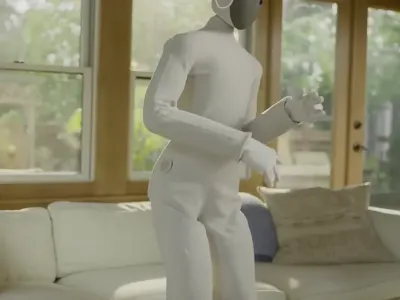
NEO Gamma outperforms in complex manipulation with 70 kg deadlift and 5 kg arm capacity versus 4NE-1 Mini's 10 kg and 3 kg limits. Its force sensors in hands/joints enable precise heavy lifts for home objects. 4NE-1 Mini's force-torque sensors suit lighter educational tasks. Both share 25 DoF, but NEO Gamma handles dynamic scenarios better. For complex tasks, NEO Gamma is the recommended choice.

Which humanoid robot offers better payload for home deployment?
NEO Gamma provides superior payload with 5 kg per arm and 70 kg deadlift, aligning with home carrying and lifting needs like groceries or furniture. 4NE-1 Mini's 3 kg arms and 10 kg deadlift limit it to lighter research items. Heights and weights influence stability: 165 cm NEO Gamma versus compact 132 cm 4NE-1 Mini. For home deployment, NEO Gamma offers better payload capacity.
Analysis Score Summary
Total Score
13
NEO Home Robot
VS
Based on Detailed Analysis
Total Score
5
4NE-1 Mini
📊 Win: 2 points | Trade-off: 1 point each
Scores are summed across every insight: a clear winner earns 2 points, while balanced trade-offs give each robot 1 point. The total reflects how often each robot outperforms the other (or shares the spotlight) throughout the detailed analysis sections.
Capabilities & Operational Tasks
Head-to-head comparison of what NEO Home Robot and 4NE-1 Mini can do, their applications, and capabilities.
What Can NEO Home Robot & 4NE-1 Mini Do?
12Core operational tasks, activities, and physical manipulation duties evaluated side-by-side.
| Task & Description | Model ANEO Home Robot12 supported | Model B4NE-1 Mini7 supported |
|---|---|---|
| Autonomous task execution | High | High |
| Carrying and transport | High | High |
| Cleaning | High | — |
| Collaborative work | High | High |
| Human interaction | High | High |
| Maintenance | High | — |
| Move objects | High | High |
| Navigation | High | High |
| Obstacle traversal | High | — |
| Pick and place | High | High |
| Repetitive physical tasks | High | — |
| Sorting | High | — |
Technical Specifications
Head-to-head performance data and metrics
| Specification | Model ANEO Home Robot | Model B4NE-1 Mini |
|---|---|---|
Functional Utility & Use Cases4 Comparative Metrics | ||
Control Method | Autonomous AI control with remote override via companion app | Teleoperation, autonomous, learned behaviors |
Use Cases | Household chores, object retrieval, delivery inside homes, elder assistance, telepresence, robotics research | Educational demonstrations, lab research, human-robot interaction training, skills development in science and STEM |
Multi Robot Coord | Yes, fleet coordination and remote operator scheduling | (Inferred · Medium confidence · Common for service-robot platforms) | Yes via Neuraverse shared learning |
Pet Friendly | Yes, low-force joints and safe motion profiles around pets | Yes, with safety protocols |
Manipulation & Load Capacity4 Comparative Metrics | ||
Carrying Capacity | 8 kg per arm | 3 kg per arm |
Deadlift Capacity | 68 kg | 10 kg maximum |
Payload Type | Household items up to 5 kg | Tools, packages, precision instruments, people interaction |
Modular Attachments | Magnetic wrist tool mounts for brushes, grippers, and vacuums | Interchangeable forearms, tool changers |
Kinematic Architecture & Dexterity4 Comparative Metrics | ||
Degrees of Freedom | 75 | 25 |
Material | Aluminum, composite polymer, soft-touch covers | (Inferred · Medium confidence · Typical lightweight humanoid construction) | Aluminum, composite, soft skin materials |
Mobility Type | Bipedal legged | Legged (bipedal walking) |
Hardware Interface | USB-C service port, hidden GPIO header | USB, GPIO, CAN bus, Ethernet |
Functional Utility & Use Cases
4 Comparative Metrics
Manipulation & Load Capacity
4 Comparative Metrics
Kinematic Architecture & Dexterity
4 Comparative Metrics
Frequently Asked Questions
What is the payload and lifting capacity of NEO Gamma by 1X Technologies?
NEO Gamma by 1X Technologies carries 5 kg per arm and deadlifts 70 kg, based on base model specs.
Does 4NE-1 Mini by NEURA Robotics support teleoperation fallback?
4NE-1 Mini by NEURA Robotics is semi-autonomous without specified teleoperation, unlike NEO Gamma.
How does walking speed compare between NEO Gamma and 4NE-1 Mini?
NEO Gamma walks at 5 km/h max with 6.2 m/s run; 4NE-1 Mini at 3 km/h, prioritizing lab stability.
What dexterity features do hands of 4NE-1 Mini by NEURA Robotics have?
4NE-1 Mini by NEURA Robotics uses force-torque sensors for 3 kg per arm manipulation in research tasks.
What are primary use cases for NEO Gamma by 1X Technologies?
NEO Gamma by 1X Technologies targets elderly assistance, home cleaning, object manipulation, and companionship.
Is 4NE-1 Mini by NEURA Robotics ready for STEM education deployment?
4NE-1 Mini by NEURA Robotics suits educational demonstrations, lab research, and human-robot interaction training.
Related Comparisons
Discover similar robot matchups to expand your knowledge and find the perfect solution

NEO Home Robot vs ELIXIS
NEO Home Robot or ELIXIS? See which humanoid robot performs better for manufacturing, logistics, and research.

T800 vs 4NE-1 Mini
T800 or 4NE-1 Mini? See which humanoid robot performs better for manufacturing, logistics, and research with comparisons on dexterity, autonomy, and payload.

Optimus vs 4NE-1 Mini
Which humanoid robot is better? Optimus vs 4NE-1 Mini compared for dexterity, AI capabilities, payload, and industrial vs research use cases.
NEO Home Robot vs T800
In-depth comparison of NEO Gamma by 1X Technologies and T800 by EngineAI. Analyze navigation, sensors, and battery performance.
Disclaimer
All content, comparisons, and verdicts on this website are based on our research, testing, and opinion. While we strive for accuracy, we do not guarantee the completeness, reliability, or suitability of any information. Performance, specifications, and results may vary depending on usage and conditions. This website and its authors are not responsible for any decisions, actions, or outcomes based on the information provided. Always verify product details with the manufacturer before making purchase or operational decisions.