Optimus vs 4NE-1 Mini at a glance
Optimus is quicker, with a top speed of 2.2 m/s versus 0.8 m/s for 4NE-1 Mini. Optimus has more degrees of freedom (40 against 25 for 4NE-1 Mini), which allows finer movement. 4NE-1 Mini is lighter at 36 kg, compared with 57 kg for Optimus.
Which one fits your use?
Based on the uses each robot is built and marketed for. Open a use to see the specs that matter for it.
| Comparing for… | Optimus | 4NE-1 Mini |
|---|---|---|
| Suited | Not listed | |
| Suited | Not listed | |
| Not listed | Suited | |
| Not listed | Suited | |
| Not listed | Suited | |
| Not listed | Suited | |
| Not listed | Suited |
- Pick Optimus for warehouse and logistics work and factory and manufacturing work.
- Pick 4NE-1 Mini for research labs, education and training, home help and elder care, hospitality, retail and public-facing roles and healthcare settings.
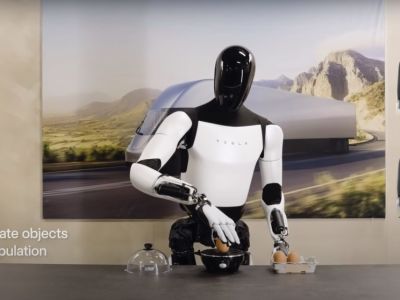
Tesla's Optimus is positioned as a versatile humanoid robot for industrial-scale applications, leveraging Tesla's AI expertise from Full Self-Driving technology. It stands at 173 cm tall and weighs 57 kg, enabling it to achieve a maximum speed of 8 km/h and carry up to 20 kg or deadlift 68 kg. With over 40 degrees of freedom and semi-autonomous to fully autonomous operation, Optimus differentiates through its robust payload capacity and extended 8-hour battery life, targeting manufacturing, logistics, and infrastructure tasks.
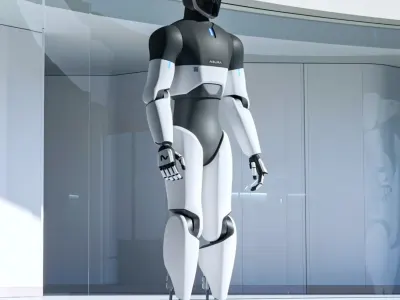
NEURA Robotics' 4NE-1 Mini serves as a compact humanoid for research and educational environments, measuring 132 cm in height and weighing 36 kg. Priced from $19,999 to $29,999, it offers 25 degrees of freedom and semi-autonomous capabilities suited for human-robot interaction and STEM training. Key differentiators include its smaller form factor, lighter 3 kg per arm carrying capacity, and a 3-5 year battery lifespan, emphasizing accessibility for lab demonstrations over heavy-duty operations.
Detailed Analysis

Optimus
How do Optimus and 4NE-1 Mini compare in bipedal mobility and balance?
Tesla Optimus demonstrates superior bipedal mobility with a maximum speed of 8 km/h, enabling faster navigation in dynamic environments compared to the 4NE-1 Mini's 3 km/h limit. Optimus's taller 173 cm frame and 57 kg weight contribute to stable balance for industrial tasks, while the lighter 36 kg 4NE-1 Mini prioritizes agility in confined lab spaces. Both utilize IMUs and gyroscopes for balance, but Optimus's higher speed suits logistics, whereas 4NE-1 Mini focuses on controlled educational movements. Sensor integration enhances Optimus's obstacle avoidance during faster locomotion.
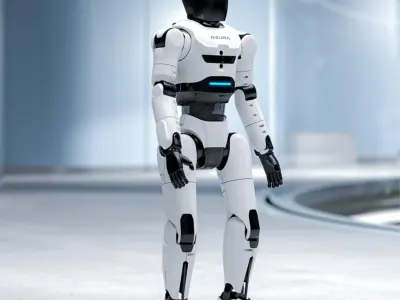
4NE-1 Mini
What differentiates dexterity and manipulation capabilities of these humanoid robots?
Optimus excels in dexterity with over 40 degrees of freedom across its full body, including dexterous hands for complex manipulation tasks like handling heavy objects up to 68 kg deadlift. In contrast, 4NE-1 Mini's 25 degrees of freedom limit it to lighter 10 kg deadlifts and 3 kg per arm carrying, suitable for precise but low-force lab interactions. Force-torque sensors in both enable compliant grasping, yet Optimus's higher DoF supports industrial precision assembly. The 4NE-1 Mini emphasizes touch-sensitive operations for human-robot collaboration in training scenarios.
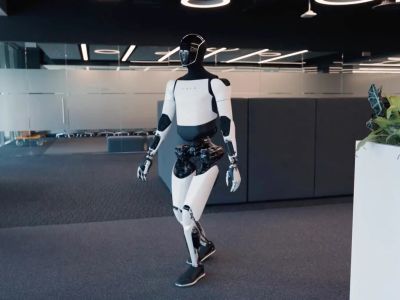
Optimus
How do AI, autonomy, and learning capabilities stack up between Optimus and 4NE-1 Mini?
Optimus integrates Tesla's custom OS with FSD-derived AI for semi-to fully autonomous operation, enabling end-to-end neural network learning for navigation and task adaptation. 4NE-1 Mini relies on Neuraverse OS, ROS2-compatible with Python and C++, maintaining semi-autonomous control focused on structured research environments. Optimus's AI supports memory of human-like motions for repetitive tasks, while 4NE-1 Mini prioritizes programmable skills development. Both advance through sensor feedback, but Optimus targets broader autonomy scaling.
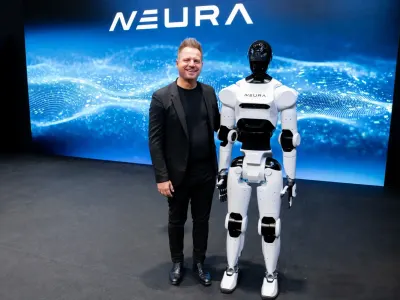
4NE-1 Mini
Which robot offers superior payload and lifting capacity for heavy tasks?
Optimus provides 20 kg carrying capacity and 68 kg deadlift, far exceeding 4NE-1 Mini's 3 kg per arm and 10 kg maximum. This makes Optimus viable for logistics and manufacturing, while 4NE-1 Mini suits light demonstration loads. Both employ force sensors for safe handling, but Optimus's actuators handle industrial demands. Payload disparity highlights Optimus for material transport over 4NE-1 Mini's research focus.
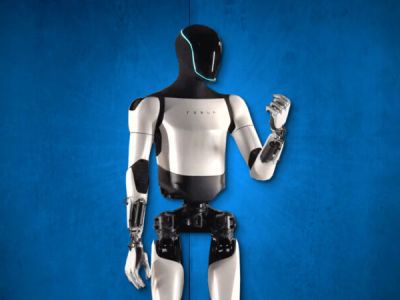
Optimus
What are the differences in battery runtime and power efficiency?
Optimus delivers approximately 8 hours of operational use per charge, supporting extended shifts in practical settings. Optimus prioritizes runtime for continuous tasks, while 4NE-1 Mini emphasizes durability for intermittent lab use. Power efficiency aligns with their respective scales, with Optimus optimized for higher energy demands.
4NE-1 Mini
How do real-world use cases differ for industrial vs general purpose applications?
Optimus targets manufacturing, logistics, infrastructure inspection, and remote operations, leveraging high payload and speed for industrial deployment. 4NE-1 Mini focuses on educational demonstrations, lab research, human-robot interaction, and STEM skills training in controlled settings. Optimus scales to fleet operations, while 4NE-1 Mini excels in collaborative learning environments. Use case divergence reflects their design priorities: heavy-duty versatility versus accessible experimentation.
Optimus
Which humanoid robot is better for industrial manufacturing tasks?
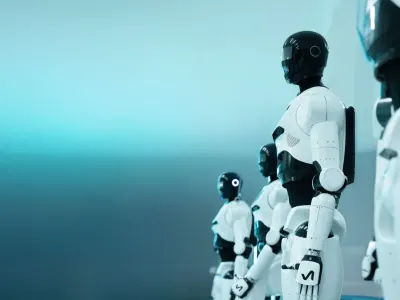
Optimus outperforms 4NE-1 Mini in industrial manufacturing due to its 20 kg carrying capacity, 68 kg deadlift, 8 km/h speed, and 40+ DoF for precise assembly. 4NE-1 Mini's lighter specs limit it to non-industrial demos. For manufacturing requiring payload and autonomy, Optimus is the recommended choice.
4NE-1 Mini
Which robot provides better sensor suite and vision systems?
Optimus relies on cameras rather than LiDAR, following the vision-first approach of Tesla's cars, plus tactile sensing in its fingers. 4NE-1 Mini includes RGB/stereo cameras, ultrasonic sensors, and touchless detection for close-range interaction. Optimus's camera-based vision handles navigation, while 4NE-1 Mini's ultrasonic sensors help it avoid collisions in labs. Both suites support their autonomy levels effectively.
Capabilities & Operational Tasks
Head-to-head comparison of what Optimus and 4NE-1 Mini can do, their applications, and capabilities.
What Can Optimus & 4NE-1 Mini Do?
123 tasks listed for both, 5 only for Optimus, 4 only for 4NE-1 Mini.
Technical Specifications
Optimus and 4NE-1 Mini differ on 32 of the 46 specifications listed for both.
Functional Utility & Use Cases
4 Comparative Metrics
Manipulation & Load Capacity
4 Comparative Metrics
Kinematic Architecture & Dexterity
4 Comparative Metrics
Frequently Asked Questions
What is the maximum payload and deadlift capacity of Tesla Optimus versus 4NE-1 Mini?
Tesla Optimus carries 20 kg and deadlifts 68 kg. 4NE-1 Mini carries 3 kg per arm and deadlifts 10 kg maximum.
How does the autonomy level of NEURA Robotics 4NE-1 Mini compare to Tesla Optimus?
Tesla Optimus offers semi-autonomous to fully autonomous operation. NEURA Robotics 4NE-1 Mini is semi-autonomous with ROS2 compatibility.
What are the walking speeds and stability features of these humanoid robots?
Tesla Optimus reaches 8 km/h with IMU and force sensors for stability. 4NE-1 Mini maxes at 3 km/h using IMU, gyroscope, and ultrasonic sensors.
How many degrees of freedom do the hands and arms have in Optimus and 4NE-1 Mini?
Tesla Optimus has 40+ DoF including full-body dexterity with hands. 4NE-1 Mini provides 25 DoF total for manipulation.
What industrial use cases is Tesla Optimus designed for compared to 4NE-1 Mini?
Tesla Optimus targets manufacturing, logistics, and infrastructure. 4NE-1 Mini focuses on lab research and educational demonstrations.
Is NEURA Robotics 4NE-1 Mini ready for deployment in human-robot interaction training?
Yes, 4NE-1 Mini supports human-robot interaction training with touchless detection, collaborative safety, and STEM use cases.
Related Comparisons
Optimus vs Unitree G1
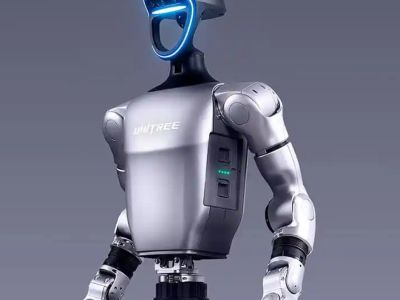
Compare Optimus vs Unitree G1 for humanoid mobility, dexterity, autonomy, and payload capacity.
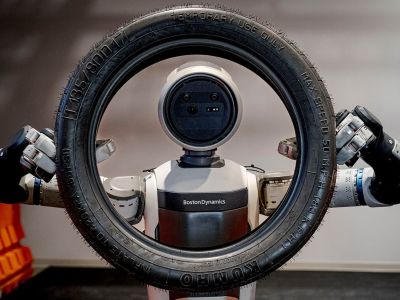
Optimus vs Atlas (Electric 2025)
In-depth comparison of Optimus and Atlas (Electric Atlas, 2025), covering hardware capabilities, teleoperation, and enterprise readiness.
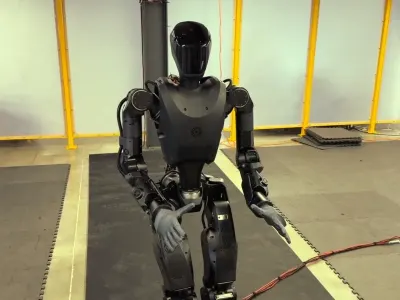
Optimus vs Phantom MK1
Optimus or Phantom MK1? See which humanoid robot performs better for manufacturing, logistics, defense, dexterity, autonomy, and payload in enterprise deployments.
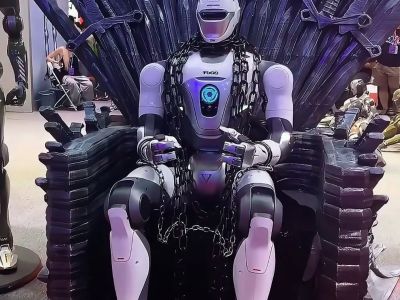
T800 vs 4NE-1 Mini
T800 or 4NE-1 Mini? See which humanoid robot performs better for manufacturing, logistics, and research with comparisons on dexterity, autonomy, and payload.
Verdicts reflect our research and opinion. Confirm specifications with the manufacturer before buying.