Optimus vs NEO Beta at a glance
Optimus is quicker, with a top speed of 2.2 m/s versus 1.1 m/s for NEO Beta. NEO Beta is lighter at 30 kg, compared with 57 kg for Optimus. Optimus is priced at $20,000–$50,000 and NEO Beta at $20,000, so their price ranges overlap.
Which one fits your use?
Based on the uses each robot is built and marketed for. Open a use to see the specs that matter for it.
| Comparing for… | Optimus | NEO Beta |
|---|---|---|
| Suited | Suited | |
| Suited | Suited | |
| Not listed | Suited | |
| Not listed | Suited | |
| Not listed | Suited | |
| Not listed | Suited | |
| Not listed | Suited |
- Pick NEO Beta for research labs, education and training, home help and elder care, hospitality, retail and public-facing roles and healthcare settings.
- Both suit warehouse and logistics work and factory and manufacturing work, so compare the specs for that use.
Tesla's Optimus is a humanoid robot positioned for versatile applications across manufacturing, logistics, elder care, and domestic assistance. Leveraging Tesla's automotive AI and Full Self-Driving (FSD) technology, Optimus emphasizes autonomous operation, advanced navigation, and extended battery life. Key differentiators include its integration of Tesla's custom OS with AI and FSD systems, a robust sensor suite, and an operational duration of approximately 8 hours.
NEO Beta by 1X Technologies is a humanoid robot tailored primarily for home assistance, elderly care, and household task automation, also serving as a research platform for embodied AI. It distinguishes itself with a lighter build, higher running speeds, and a sensor suite that combines RGB-D cameras and LiDAR for SLAM navigation. Its software ecosystem is Linux-based with ROS 2 and proprietary AI SDKs, supporting autonomous AI control with teleoperation override.
Detailed Analysis

Optimus
Design & Build Quality
Optimus is larger and heavier, measuring 173 x 55 x 38 cm and weighing 57 kg, designed for robustness suitable for industrial and domestic environments. NEO Beta is more compact at 165 x 45 x 30 cm and lighter at 30 kg, prioritizing portability and consumer-friendly design. Both feature humanoid form factors but differ significantly in weight and size, reflecting their intended deployment contexts.

NEO Beta
Mobility & Navigation
Optimus achieves a top speed of 8.06 km/h (2.24 m/s) with navigation based on Tesla's FSD vision system using stereo cameras and internal proprioception. NEO Beta offers dual-mode mobility with 4 km/h walking speed and a higher running speed of 12 km/h (3.3 m/s), navigating via SLAM that integrates LiDAR and visual odometry. This gives NEO Beta an advantage in dynamic movement speed, while Optimus benefits from advanced automotive-grade vision processing.
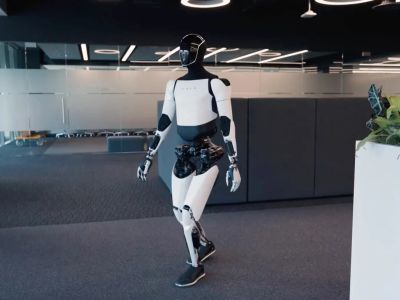
Optimus
Sensors & Perception
Optimus uses a sensor suite including RGB cameras, stereo cameras, IMU, gyroscope, force sensors, and temperature sensors, relying heavily on Tesla's FSD-based vision system. NEO Beta incorporates RGB-D stereo cameras with fisheye lenses, LiDAR, IMUs, force-torque sensors, joint-position encoders, microphones, and proximity sensors, reflecting a multimodal approach for environment perception and interaction.

NEO Beta
AI Capabilities
Optimus runs on Tesla's custom operating system integrating AI and Full Self-Driving technology to enable fully autonomous operation with optional remote supervision. NEO Beta utilizes a Linux-based OS with ROS 2 and a proprietary AI SDK/API, supporting autonomous AI control alongside teleoperation override. Both robots support advanced AI but Optimus leverages Tesla's extensive automotive AI expertise for adaptability and predictive functions.
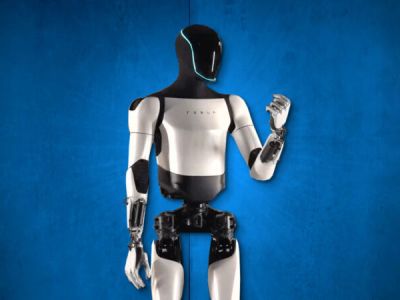
Optimus
Battery & Power Efficiency
Optimus offers approximately 8 hours of operational use per charge, suitable for extended tasks without frequent recharging. In contrast, NEO Beta’s battery life is unspecified but is estimated between 2 to 4 hours of use, indicating shorter operational periods. This difference impacts long-term practicality, with Optimus better suited for longer continuous operation.

NEO Beta
Use-Case Suitability
Optimus targets a broad range of applications including manufacturing, logistics, elder care, and domestic assistance, reflecting its versatile industrial and household capabilities. NEO Beta focuses on home assistance, elderly care support, household task automation, and serves as a research platform for embodied AI, emphasizing consumer and domestic environments. Their use cases overlap but diverge in scale and complexity.
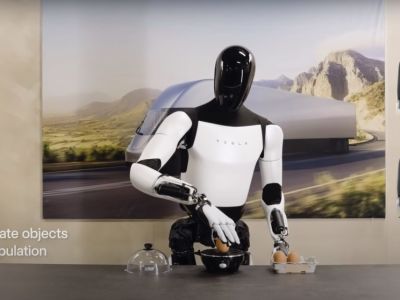
Optimus
Software Ecosystem
Optimus runs Tesla’s proprietary OS tightly integrated with FSD AI, enabling seamless interaction with Tesla’s AI infrastructure and vehicle technologies. NEO Beta runs on a Linux-based OS with ROS 2 and offers a proprietary AI SDK/API, supporting open robotics frameworks and developer customization. This reflects Optimus’s closed but deeply integrated system versus NEO Beta’s more modular and developer-accessible approach.

NEO Beta
Safety Features
Both robots incorporate emergency stop mechanisms and collision detection for safe human interaction. Optimus includes compliant actuators and obstacle detection integrated with Tesla’s AI for enhanced safety, while NEO Beta features torque-limit safeguards and an emergency-stop button. These measures ensure operational safety, with Optimus leveraging more extensive fail-safe systems.
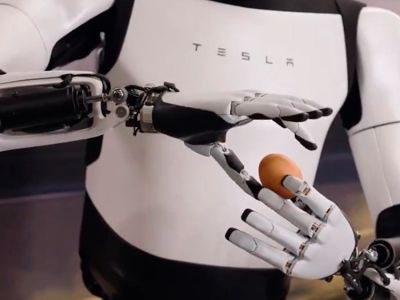
Optimus
Pricing & Value
Optimus is priced between $20,000 and $30,000, reflecting its advanced AI integration and longer battery life. NEO Beta is priced at $20,000, offering a more affordable entry with a lighter design and higher running speed but with shorter battery life. Pricing reflects each robot’s positioning, with Optimus targeting broader industrial and domestic roles and NEO Beta focusing on consumer home use.
Capabilities & Operational Tasks
Head-to-head comparison of what Optimus and NEO Beta can do, their applications, and capabilities.
What Can Optimus & NEO Beta Do?
197 tasks listed for both, 1 only for Optimus, 11 only for NEO Beta.
Technical Specifications
Optimus and NEO Beta differ on 31 of the 46 specifications listed for both.
Functional Utility & Use Cases
4 Comparative Metrics
Manipulation & Load Capacity
4 Comparative Metrics
Kinematic Architecture & Dexterity
4 Comparative Metrics
Related Comparisons
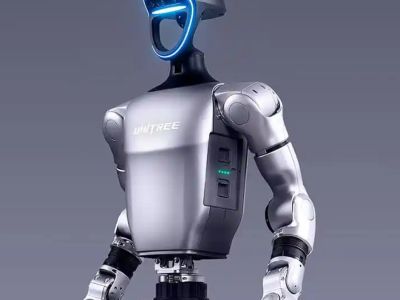
Optimus vs Unitree G1
Compare Optimus vs Unitree G1 for humanoid mobility, dexterity, autonomy, and payload capacity.
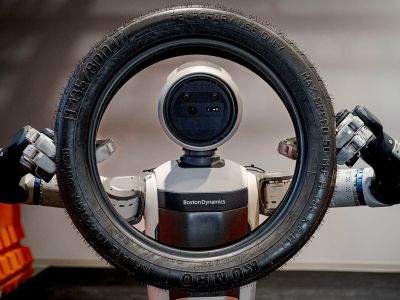
Optimus vs Atlas (Electric 2025)
In-depth comparison of Optimus and Atlas (Electric Atlas, 2025), covering hardware capabilities, teleoperation, and enterprise readiness.
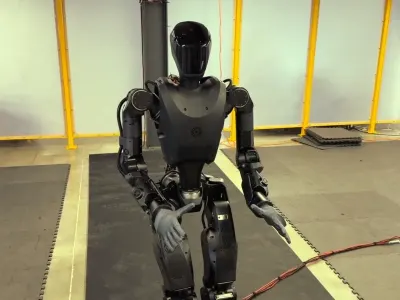
Optimus vs Phantom MK1
Optimus or Phantom MK1? See which humanoid robot performs better for manufacturing, logistics, defense, dexterity, autonomy, and payload in enterprise deployments.
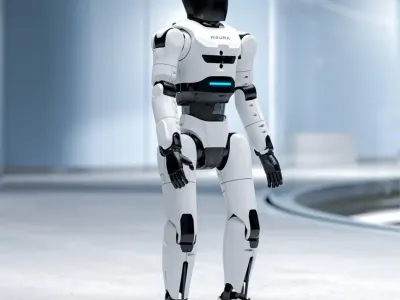
Optimus vs 4NE-1 Mini
Which humanoid robot is better? Optimus vs 4NE-1 Mini compared for dexterity, AI capabilities, payload, and industrial vs research use cases.
Verdicts reflect our research and opinion. Confirm specifications with the manufacturer before buying.