Optimus vs EngineAI SE01 at a glance
Optimus has more degrees of freedom (40 against 32 for EngineAI SE01), which allows finer movement. Optimus is priced at $20,000–$50,000 and EngineAI SE01 at $20,000–$30,000, so their price ranges overlap. Optimus is quicker, with a top speed of 2.2 m/s versus 2 m/s for EngineAI SE01.
Which one fits your use?
Based on the uses each robot is built and marketed for. Open a use to see the specs that matter for it.
| Comparing for… | Optimus | EngineAI SE01 |
|---|---|---|
| Suited | Suited | |
| Suited | Suited | |
| Not listed | Suited | |
| Not listed | Suited |
- Pick EngineAI SE01 for research labs and education and training.
- Both suit warehouse and logistics work and factory and manufacturing work, so compare the specs for that use.
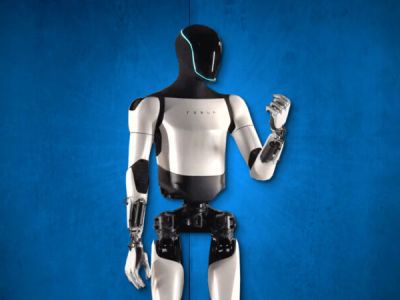
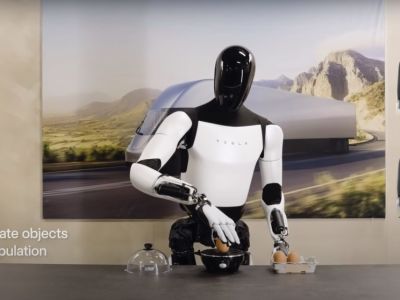
Tesla's Optimus is positioned as a general-purpose humanoid robot targeting manufacturing, research, logistics, infrastructure inspection, and remote operations. It leverages Tesla's Full Self-Driving (FSD) vision system and custom AI for fully autonomous operation with optional remote supervision. Key differentiators include its taller dimensions at 173cm, 8-hour battery life, and integration with Tesla's proprietary OS, enabling extended operational use compared to shorter-duration competitors.
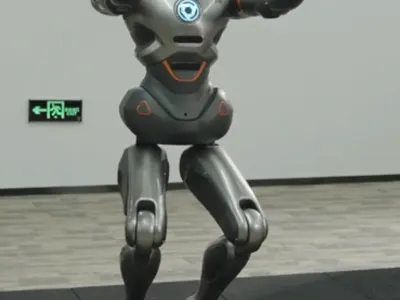
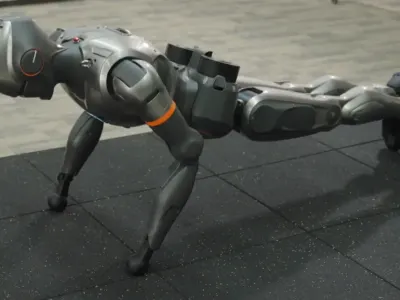
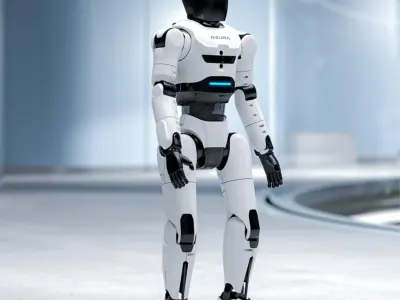
EngineAI's SE01 targets industrial labor, precision assembly, research, education, customer service, and logistics, with a focus on human-like gait and affordability in the $20,000-$30,000 range. It employs LiDAR and depth-camera SLAM for 3D obstacle avoidance and supports AI autonomous control alongside teleoperation via API. Distinguishing features encompass a slimmer 27cm depth profile, extensive sensor array including 360-degree LiDAR and 6 HD cameras, and ROS-compatible software on Linux.
Detailed Analysis
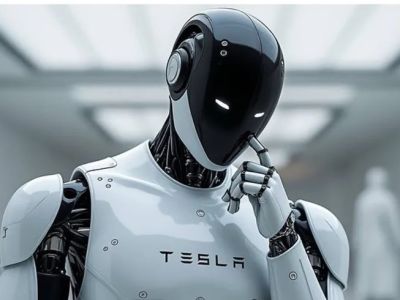
Optimus
Design & Build Quality
Optimus measures 173cm x 55cm x 38cm and weighs 57kg, providing a robust full-height humanoid form factor. SE01 is slightly shorter at 170cm x 52cm x 27cm and lighter at 55kg, offering a slimmer profile potentially suited for tighter spaces. Both feature compliant actuators in Optimus and force sensors in SE01 joints, emphasizing durability for industrial applications.
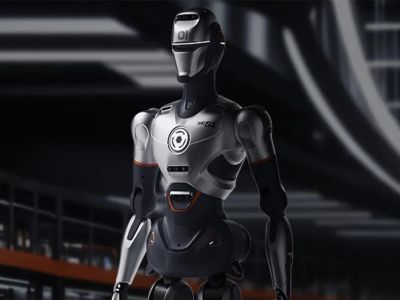
EngineAI SE01
Mobility & Navigation
Optimus achieves a maximum speed of 8 km/h using Tesla FSD-based vision with stereo cameras and internal proprioception. SE01 reaches 7.2 km/h via LiDAR and depth-camera SLAM-based 3D obstacle avoidance. Optimus edges in top speed, while SE01's 360-degree LiDAR supports comprehensive environmental mapping.
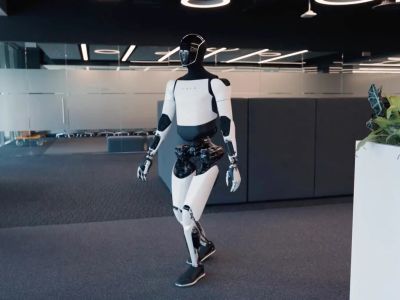
Optimus
Sensors & Perception
Optimus relies mainly on cameras, with an IMU, tactile sensing in its fingers and force and torque sensing in its feet and joints. SE01 equips high-precision stereo RGB cameras, Intel RealSense D435 depth camera, 360-degree LiDAR, 6 HD cameras, IMU, gyroscope, force sensors, and temperature sensors. SE01 offers broader camera coverage for 3D perception, while Optimus prioritizes integrated force/torque feedback.
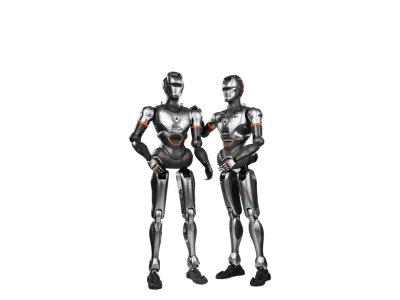
EngineAI SE01
AI Capabilities
Optimus runs on Tesla custom OS with AI and FSD integration for fully autonomous control and remote supervision. SE01 uses proprietary Engine Sense stack on Linux with ROS-compatible API, supporting AI autonomous control and teleoperation. Both enable independent task execution, though Optimus emphasizes vision-based autonomy akin to Tesla's automotive tech.
Optimus
Battery & Power Efficiency
Optimus provides approximately 8 hours of operational use per charge. SE01 delivers about 2 hours per charge but is designed for over 10 years of lifespan. Optimus supports longer single-session runtime, suiting prolonged tasks, while SE01 prioritizes longevity.
EngineAI SE01
Use-Case Suitability
Optimus targets manufacturing, research, logistics, infrastructure inspection, and remote operations. SE01 addresses industrial labor, precision assembly, research, education, customer service, and logistics handling. Overlaps exist in research and logistics, with Optimus leaning toward inspection and SE01 toward assembly and service roles.
Optimus
Software Ecosystem
Optimus integrates Tesla's custom OS with FSD AI, forming a closed ecosystem. SE01 employs Engine Sense on Linux with ROS-compatible API and SDK for cross-platform development. SE01's openness aids integration, contrasting Optimus's proprietary stack.
EngineAI SE01
Pricing & Value
Optimus is priced at $20,000-$50,000, reflecting broader capability range. SE01 costs $20,000-$30,000, offering entry at the lower end. SE01 provides tighter pricing for similar industrial uses.
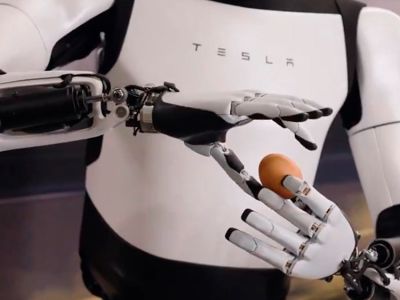
Optimus
Safety Features
Optimus incorporates emergency stop, obstacle detection, and compliant actuators. SE01 includes emergency stop button, power disconnect interlocks, and collision avoidance. Both prioritize reactive safety measures.
Capabilities & Operational Tasks
Head-to-head comparison of what Optimus and EngineAI SE01 can do, their applications, and capabilities.
What Can Optimus & EngineAI SE01 Do?
125 tasks listed for both, 3 only for Optimus, 4 only for EngineAI SE01.
Technical Specifications
Optimus and EngineAI SE01 differ on 32 of the 47 specifications listed for both.
Functional Utility & Use Cases
4 Comparative Metrics
Manipulation & Load Capacity
4 Comparative Metrics
Kinematic Architecture & Dexterity
4 Comparative Metrics
Related Comparisons
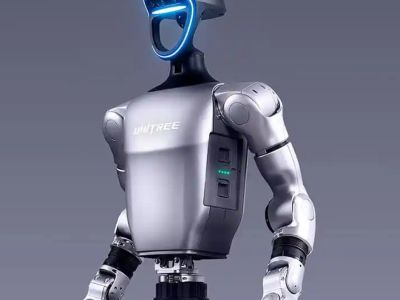
Optimus vs Unitree G1
Compare Optimus vs Unitree G1 for humanoid mobility, dexterity, autonomy, and payload capacity.
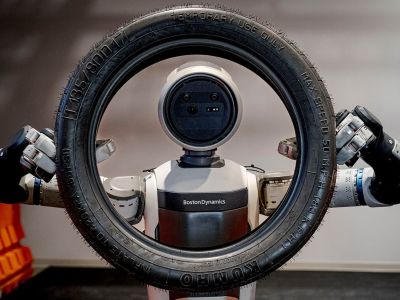
Optimus vs Atlas (Electric 2025)
In-depth comparison of Optimus and Atlas (Electric Atlas, 2025), covering hardware capabilities, teleoperation, and enterprise readiness.
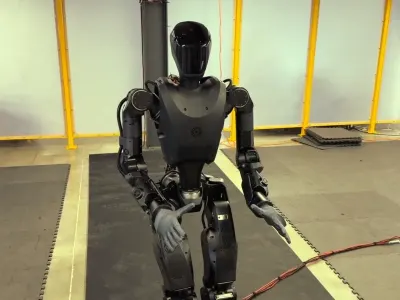
Optimus vs Phantom MK1
Optimus or Phantom MK1? See which humanoid robot performs better for manufacturing, logistics, defense, dexterity, autonomy, and payload in enterprise deployments.
Optimus vs 4NE-1 Mini
Which humanoid robot is better? Optimus vs 4NE-1 Mini compared for dexterity, AI capabilities, payload, and industrial vs research use cases.
Verdicts reflect our research and opinion. Confirm specifications with the manufacturer before buying.