Star1 vs Phoenix at a glance
Star1 is quicker, with a top speed of 3.6 m/s versus 1.4 m/s for Phoenix. Star1 lasts longer on a charge, about 7 hours against 4 hours for Phoenix. Phoenix has more degrees of freedom (75 against 55 for Star1), which allows finer movement.
| Key specs | Star1 | Phoenix |
|---|---|---|
| Price | $50,000 | — |
| Height | — | 170 cm |
| Weight | 65 kg | 70 kg |
| Top speed | 3.6 m/s (stronger) | 1.4 m/s |
| Runtime | 7 hours (stronger) | 4 hours |
| Degrees of freedom | 55 | 75 (stronger) |
| Payload | 20 kg | — |
| Availability | — | Order via sales quote |
Last updated:
Which one fits your use?
Based on the uses each robot is built and marketed for. Open a use to see the specs that matter for it.
| Comparing for… | Star1 | Phoenix |
|---|---|---|
| Suited | Suited | |
| Suited | Suited | |
| Suited | Suited | |
| Suited | Not marketed | |
| Suited | Not marketed | |
| Suited | Not marketed | |
| Suited | Suited |
- Only Star1 is marketed for education and training, home help and elder care and hospitality, retail and public-facing roles.
- Both suit warehouse and logistics work, factory and manufacturing work, research labs and hazardous or high-risk work, so compare the specs for that use.
Star1 by Robot Era positions itself in the humanoid robotics market through its focus on native general-purpose embodied intelligence, incubated by Tsinghua University and backed by significant funding. It differentiates with high-speed mobility reaching 6 m/s (21.6 km/h), enabling applications in rugged outdoor environments like security patrols and emergency response. The robot's end-to-end neural network approach for mobility and manipulation, combined with 55 degrees of freedom and robust joint torque, supports industrial tasks such as 3C assembly and automotive logistics.
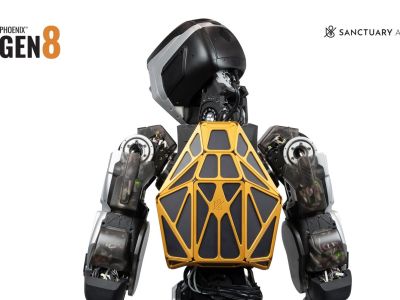
Phoenix by Sanctuary AI targets commercial deployment in industrial and service sectors, leveraging its seventh-generation advancements and partnerships like Microsoft Azure for AI training. It stands out with the proprietary Carbon AI control system, mimicking human brain subsystems for memory, sight, sound, and touch to enable human-like task execution. Key differentiators include best-in-class hand dexterity with over 20 DOF hydraulic actuation and tactile sensing, suited for precise manipulation in automation, healthcare, and research.
Detailed Analysis
Design & Build Quality
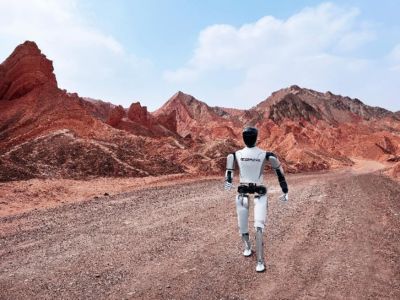
Star1
Star1 measures 171 x 55 x 50 cm and weighs 65 kg, featuring 55 degrees of freedom and 400 N·m joint torque for robust manipulation. Phoenix is slightly shorter at 170 x 55 x 60 cm but heavier at 70 kg, with advanced hydraulic hands offering 20+ DOF for superior dexterity compared to electric actuators in competitors. Both employ similar builds for humanoid form factors, though Star1 emphasizes high-speed structural integrity for dynamic tasks while Phoenix prioritizes precision grip strength.
Mobility & Navigation
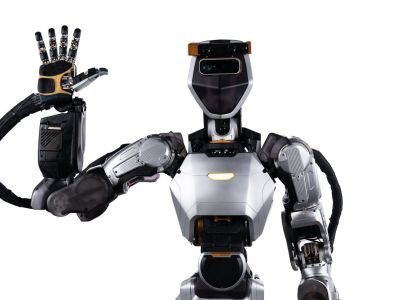
Phoenix
Star1 achieves a top running speed of 3.6 m/s (13 km/h), supporting agile movement across terrains via LiDAR, SLAM, and visual odometry. Phoenix maxes at 5 km/h (1.34 m/s) walking speed, also using LiDAR, SLAM, and visual odometry for navigation. Star1's higher velocity suits fast logistics and outdoor use, whereas Phoenix focuses on stable, deliberate mobility in structured industrial settings. Phoenix reaches 1.4 m/s. Star1's mobility type is legged. Phoenix's mobility type is bipedal legged. Star1 has 55 degrees of freedom, carries 20 kg per arm and can deadlift 25 kg. Phoenix has 75 degrees of freedom and can deadlift 25 kg.
Sensors & Perception

Star1
Star1 integrates RGB cameras, depth cameras, stereo cameras, tactile sensors, IMU, gyroscope, and force sensors for comprehensive environmental awareness. Phoenix includes RGB cameras, embedded micro cameras, tactile sensors with haptic feedback, IMU, gyroscope, force sensors in hands and arms, plus temperature sensors. Phoenix's haptic and temperature sensing enhances fine manipulation, while Star1's broader camera suite aids high-speed perception. Star1 weighs 65 kg. Phoenix stands 170 cm tall and weighs 70 kg. Star1 runs for 7 hours per charge and recharges in 3 hours. Phoenix runs for 4 hours per charge and recharges in 4 hours.
AI Capabilities
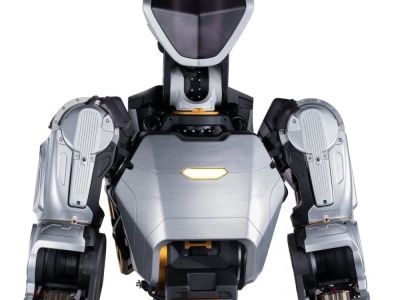
Phoenix
Star1 uses AI automation with end-to-end neural networks for mobility and manipulation, supported by a Linux-based ROS-compatible system. Phoenix employs the Carbon AI control system with Large Behavior Models for human-like cognition, trained on Azure and enabling rapid task learning in under 24 hours. Both offer remote control options, but Phoenix's architecture emphasizes generalization across physical tasks. Star1's control method is listed as AI automation, remote control. Phoenix's control method is listed as AI automation, manual override. Star1 runs linux-based, ROS compatible, proprietary SDK. Phoenix runs linux-based, ROS compatible, proprietary AI framework.
Battery & Power Efficiency

Star1
Real-world tests suggest Phoenix operates approximately 4 hours per charge in active use. Star1's design supports extended outdoor operations without specified charge limits in provided data. This parity positions them for long-term deployments, pending validation of endurance claims. Star1's safety features include emergency stop, obstacle detection and collision avoidance. Phoenix's safety features include emergency stop, collision avoidance and proximity sensors. Star1's sensors include RGB cameras, depth cameras, stereo cameras and tactile sensors. Phoenix's sensors include RGB cameras, embedded micro cameras for vision and temperature sensors.
Use-Case Suitability
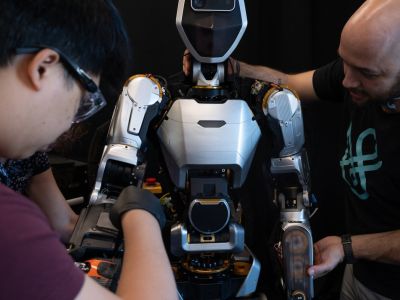
Phoenix
Star1 excels in 3C assembly, automotive logistics, inspection, customer service, and warehousing, with potential for security and emergency response. Phoenix targets industrial automation, data capture, customer service, healthcare assistance, logistics handling, and R&D. Overlapping in service and logistics, Star1 leans toward speed-demanding tasks while Phoenix suits dexterity-focused applications. Star1's listed uses include parcel carrying, factory patrol and physical manipulation. Star1 reaches 3.6 m/s. Star1's body is made from aluminum frame and soft skin elements. Phoenix's body is made from aluminum frame, composite panels and soft materials in hands.
Software Ecosystem

Star1
Star1 runs Linux-based software that is ROS compatible, with a proprietary SDK for development, and it learns through reinforcement learning, motion learning and task programming. Phoenix uses Linux-based, ROS-compatible software integrated with Sanctuary's proprietary AI framework, and it supports reinforcement learning, motion learning and task programming. Both ecosystems support secondary development. Star1 is listed as fully autonomous with end-to-end reinforcement-learning locomotion, and Phoenix as semi-autonomous with teleoperation support.
Safety Features
Phoenix
Star1 has an emergency stop, obstacle detection and collision avoidance, and it is splash resistant for indoor and semi-outdoor use from 0 to 40 °C. Phoenix has an emergency stop, collision avoidance and proximity sensors, and it is splash resistant and rated for 5 to 35 °C indoors and in controlled outdoor settings. Star1 runs at up to 3.6 m/s, while Phoenix walks at about 1.34 m/s and weighs 70 kg, so Phoenix's proximity sensing suits shared spaces.
Capabilities & Operational Tasks
Head-to-head comparison of what Star1 and Phoenix can do, their applications, and capabilities.
What Can Star1 & Phoenix Do?
2013 tasks listed for both, 2 only for Star1, 5 only for Phoenix.
Tap a circle area to filter the lists
Only Star1
Not listed for the other robot
Shared by both
Listed for Star1 and Phoenix
Only Phoenix
Not listed for the other robot
Technical Specifications
Star1 and Phoenix differ on 28 of the 34 specifications listed for both.
Manipulation & Load Capacity
3 Comparative Metrics
Kinematic Architecture & Dexterity
3 Comparative Metrics
Energy & Power Management
7 Comparative Metrics
Frequently Asked Questions
Which uses is each robot marketed for, Star1 or Phoenix?
Only Star1 is marketed for education and training, home help and elder care and hospitality, retail and public-facing roles. Both suit warehouse and logistics work, factory and manufacturing work, research labs and hazardous or high-risk work, so compare the specs for that use.
How much does Star1 cost?
Star1 is listed at $50,000.
Where can I buy Phoenix?
Phoenix is sold through Sanctuary AI's sales team; request a quote.
Which is faster, Star1 or Phoenix?
Star1 is faster, with a top speed of 3.6 m/s (13 km/h), against 1.4 m/s (5 km/h) for Phoenix. Top speed is the maker’s stated maximum, so everyday pace depends on the task and the terrain.
Which has the longer battery runtime, Star1 or Phoenix?
Star1 runs longer on a charge, at about 7 hours against 4 hours for Phoenix. Runtime depends on workload, so treat both as the makers’ stated figures.
Which has more degrees of freedom, Star1 or Phoenix?
Phoenix has more degrees of freedom, with 75 against 55 for Star1. More joints allow finer, more human-like movement, especially in the hands and arms.
Related Comparisons
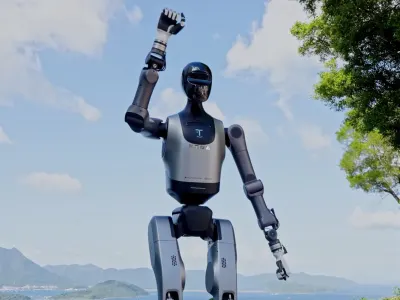
Phoenix vs Walker Tienkung
Compare Phoenix and Walker Tienkung. Detailed analysis of navigation, sensors, and speed.

Star1 vs RobotEra Q5
Head-to-head: Star1 vs Q5. Explore differences in speed, sensors, battery, navigation, and use-case suitability.
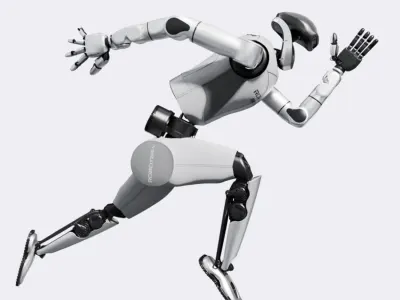
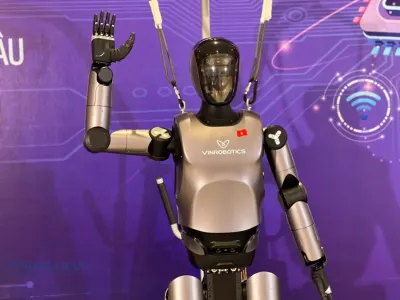
Robot Era L7 vs VR-H3
Compare L7 by Robot Era vs VR-H3 by VinRobotics for humanoid mobility, dexterity, autonomy, and payload capacity in industrial applications.
RobotEra Q5 vs ELIXIS W
Compare Q5 by Robot Era and ELIXIS W by Addverb Technologies. Detailed analysis of sensors, navigation, battery, and price.
Verdicts reflect our research and opinion. Confirm specifications with the manufacturer before buying.