T800 vs Atlas (Electric 2025) at a glance
T800 can be bought now, while Atlas (Electric 2025) is sold through a sales quote. Atlas (Electric 2025) has more degrees of freedom (56 against 25–46 for T800), which allows finer movement. Atlas (Electric 2025) is quicker, with a top speed of 2.5 m/s versus 2 m/s for T800. T800 is lighter at 75–85 kg, compared with 90 kg for Atlas (Electric 2025). Atlas (Electric 2025) is the taller of the two at 190 cm, against 173 cm for T800.
| Key specs | T800 | Atlas (Electric 2025) |
|---|---|---|
| Price | $25,000–$80,000 | — |
| Height | 173 cm | 190 cm |
| Weight | 75–85 kg | 90 kg |
| Top speed | 2 m/s | 2.5 m/s (stronger) |
| Runtime | 3–5 hours | 4 hours |
| Degrees of freedom | 25–46 | 56 (stronger) |
| Payload | 5 kg | 30 kg (stronger) |
| Availability | Available to buy | Order via sales quote |
Last updated:
Which one fits your use?
Based on the uses each robot is built and marketed for. Open a use to see the specs that matter for it.
| Comparing for… | T800 | Atlas (Electric 2025) |
|---|---|---|
| Not marketed | Suited | |
| Not marketed | Suited | |
| Suited | Suited | |
| Suited | Not marketed | |
| Suited | Suited |
- Only T800 is marketed for education and training.
- Only Atlas (Electric 2025) is marketed for warehouse and logistics work and factory and manufacturing work.
- Both suit research labs and hazardous or high-risk work, so compare the specs for that use.
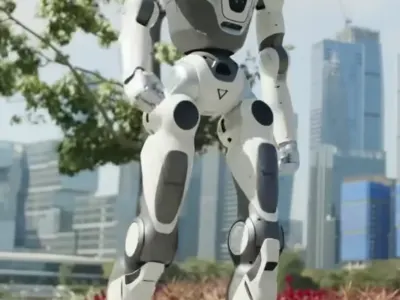
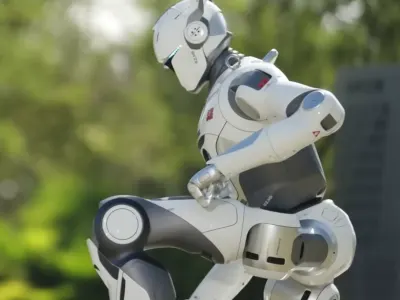
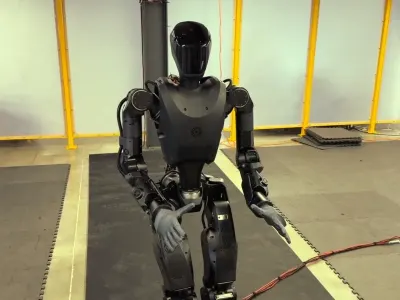
The T800 is a full-size humanoid from EngineAI, a Shenzhen robotics company founded in 2023. It stands 173 cm tall, has 29 joints in the body plus seven in each hand, and runs for up to 4 hours on a swappable solid-state battery. EngineAI shows it kicking, punching and lifting, and also pitches it for warehouses, hotels and shops.
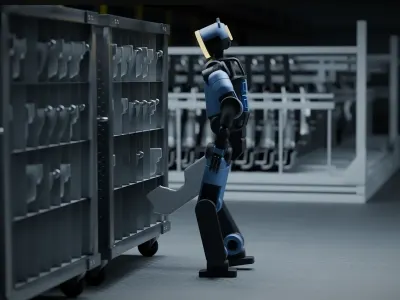
Atlas (Electric 2025) is the all-electric humanoid from Boston Dynamics, the company known for Spot and Stretch. The production version, shown at CES in January 2026, stands 1.9 m tall, weighs 90 kg and has 56 degrees of freedom. It swaps its own battery and is built for factory work. Hyundai and Google DeepMind receive the first units.
Detailed Analysis
Which should you choose, EngineAI T800 or Atlas?
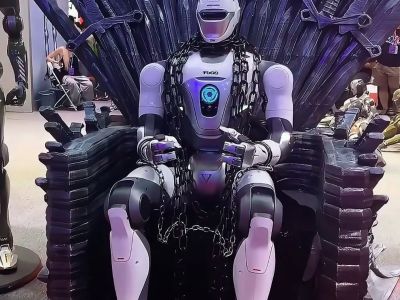
T800
Choose the T800 if you want a lighter, more agile humanoid for demonstrations, logistics trials or customer-facing roles that you can order from EngineAI today. Choose Atlas if you run a factory or warehouse and need a heavy-lifting robot that charges and swaps its own battery, and you can join Boston Dynamics' customer programme. Atlas is stronger, taller and built for enterprise software. The T800 is smaller at 173 cm and 75 kg and is easier to buy, so it suits teams who want to start now.
Which humanoid is bigger and stronger, T800 or Atlas?
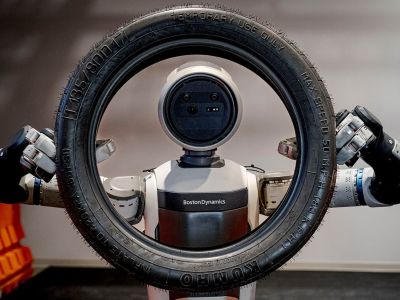
Atlas (Electric 2025)
Atlas is bigger and stronger: it stands 1.9 m and weighs 90 kg, against the T800's 173 cm and 75 to 85 kg depending on configuration. Atlas lifts 30 kg continuously and 50 kg in a single burst, and its reach extends to 2.3 m. The T800 carries 5 kg in its hands, though its leg joints can produce up to 450 newton-metres of torque, which is why it can throw high kicks. In practice, Atlas moves crates and car parts, while the T800 handles lighter items.
How long does each battery last?
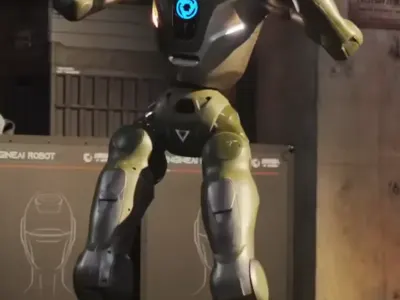
T800
Both robots run for up to 4 hours per charge, according to their makers. The difference is what happens next. Atlas walks to a charging station on its own and swaps its battery in under three minutes, so it can work shift after shift without a person. The T800 uses a modular solid-state battery that is quick to remove, and it needs 2 hours to charge fully. A person or a second pack is needed to keep it running. For round-the-clock work, Atlas has the clear edge.
How many joints and how much movement do they have?
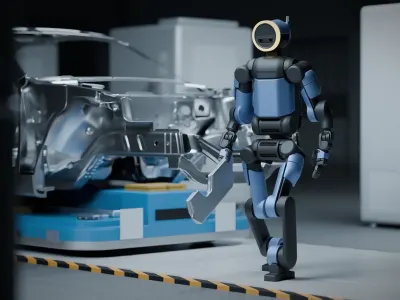
Atlas (Electric 2025)
Atlas has 56 degrees of freedom, meaning 56 separate ways its joints can move, with fully rotating joints that let it turn limbs in ways a human cannot. The T800 has 29 in its body, plus seven in each hand, for 43 in total. More joints give a robot smoother, more flexible movement, so Atlas can reach into awkward spaces. The T800's count is still high for its size and covers martial arts moves, grasping and walking, but it trails Atlas on range.
Which one is easier to program and connect to your systems?
T800
Atlas connects to factory software, while the T800 targets developers. Boston Dynamics' Orbit platform links Atlas to the manufacturing and warehouse systems companies already run, and Atlas can read barcodes and RFID tags. You can steer it autonomously, by remote control or from a tablet. The T800 comes with an SDK and developer interface, supports ROS2, Python and C++, and learns through reinforcement learning. Teams that write their own code will find the T800 open. Companies that want a ready-made enterprise tool will prefer Atlas.
Which is safer and tougher in harsh conditions?
Atlas (Electric 2025)
Atlas is the tougher machine: it has an IP67 rating, which means it can be washed down and survives dust and immersion, and it works from -20 to 40 degrees Celsius. It also uses human detection and fenceless guarding, so people can work near it. The T800 lists force limiting, collision detection and an emergency stop, and cools its leg joints to keep working under heavy load. EngineAI warns users to keep a safe distance because the actuators are so powerful, and it publishes no dust or water rating.
Which humanoid is the better fit for a real job today?
T800
Atlas is the better fit for heavy industrial work, but its production run is already committed. Boston Dynamics says every 2026 unit goes to Hyundai's robotics application centre and Google DeepMind, with more customers from early 2027. Hyundai plans to use Atlas on car plants for tasks such as parts sequencing. The T800 is pitched at logistics, warehouses, hotels and retail, and EngineAI sells it directly. If you need a humanoid working this year, the T800 is the realistic option. If you can wait, Atlas offers more strength and endurance.
Capabilities & Operational Tasks
Head-to-head comparison of what T800 and Atlas (Electric 2025) can do, their applications, and capabilities.
What Can T800 & Atlas (Electric 2025) Do?
166 tasks listed for both, 1 only for T800, 9 only for Atlas (Electric 2025).
Both T800 and Atlas (Electric 2025)
6Only T800
1Only Atlas (Electric 2025)
9Technical Specifications
T800 and Atlas (Electric 2025) differ on 37 of the 38 specifications listed for both.
Manipulation & Load Capacity
4 Comparative Metrics
Kinematic Architecture & Dexterity
3 Comparative Metrics
Energy & Power Management
7 Comparative Metrics
Frequently Asked Questions
Can the EngineAI T800 and Atlas work without a human operator?
Atlas can run autonomously and swaps its own battery, with remote control or a tablet as backups. The T800 supports autonomous and teleoperated modes too, but EngineAI notes that some demonstrated features are still being released over time.
Which robot has the better hands, T800 or Atlas?
The T800 publishes more hand detail: seven degrees of freedom per hand, 5 kg payload and tactile sensing. Atlas lists tactile sensing and 56 degrees of freedom overall, but Boston Dynamics gives no per-hand figure.
Can the T800 or Atlas swap its own battery?
Atlas walks to a charger and swaps its own battery in under three minutes. The T800 has a modular quick-release battery, but nothing from EngineAI says it can swap it on its own.
Can outside developers program the T800 and Atlas?
EngineAI points to an SDK and API for the T800, and its software supports ROS2, Python and C++. Atlas is run through Boston Dynamics' Orbit platform, which links it to factory systems rather than offering open developer tools.
Are the T800 and Atlas safe to work near people?
Atlas uses human detection and fenceless guarding, so staff can work nearby. The T800 has force limiting, collision detection and an emergency stop, yet EngineAI tells users to keep a safe distance because its actuators are powerful.
How do the T800 and Atlas learn new tasks?
Atlas learns from people using VR headsets and motion-capture suits, then shares each new task with every robot in the fleet. The T800 relies on reinforcement learning, motion learning and task programming.
Can I buy T800 or Atlas (Electric 2025) today?
T800 can be bought now, while Atlas (Electric 2025) is sold through a sales quote.
Which is lighter, T800 or Atlas (Electric 2025)?
T800 is lighter at 75–85 kg, compared with 90 kg for Atlas (Electric 2025). Atlas (Electric 2025) is also taller, at 190 cm against 173 cm for T800.
Which uses is each robot marketed for, T800 or Atlas (Electric 2025)?
Only T800 is marketed for education and training. Only Atlas (Electric 2025) is marketed for warehouse and logistics work and factory and manufacturing work. Both suit research labs and hazardous or high-risk work, so compare the specs for that use.
How much does T800 cost?
T800 is listed at $25,000–$80,000.
Where can I buy T800?
T800 is sold by EngineAI.
Where can I buy Atlas (Electric 2025)?
Atlas (Electric 2025) is sold through Boston Dynamics's sales team; request a quote.
Related Comparisons
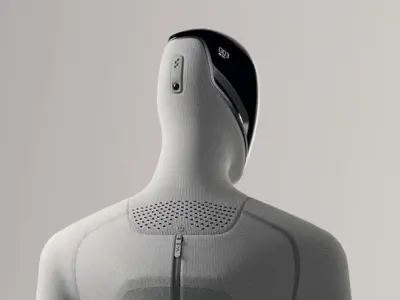
Figure 03 vs Atlas (Electric 2025)
Figure 03 from Figure AI vs Atlas from Boston Dynamics: runtime, charging, lifting, hands and safety compared, with a clear pick by job.

Optimus vs Atlas (Electric 2025)
In-depth comparison of Optimus and Atlas (Electric Atlas, 2025), covering hardware capabilities, teleoperation, and enterprise readiness.
T800 vs Phantom MK1
Compare T800 by EngineAI vs Phantom MK1 by Foundation for humanoid mobility, dexterity, autonomy, payload, and industrial vs defense use cases.
T800 vs 4NE-1 Mini
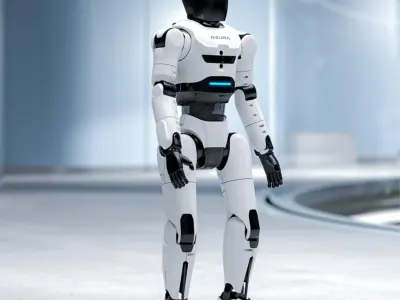
T800 or 4NE-1 Mini? See which humanoid robot performs better for manufacturing, logistics, and research with comparisons on dexterity, autonomy, and payload.
Verdicts reflect our research and opinion. Confirm specifications with the manufacturer before buying.