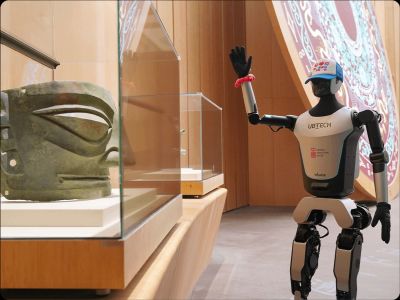
Walker C by UBTECH Robotics is positioned as a lighter, more accessible humanoid for service-oriented environments where safe interaction, navigation, and human-facing tasks matter more than heavy lifting. Its smaller frame, lower weight, and semi-autonomous control stack make it better suited for reception, tour guiding, and light delivery in commercial spaces. Compared with Cruzr S2, Walker C emphasizes interaction efficiency and safe deployment over raw mechanical strength. That makes it a practical option for enterprises that need a humanoid robot for front-of-house workflows.
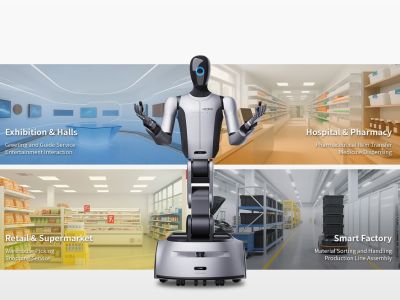
Cruzr S2 by UBTECH Robotics targets a more demanding operational profile, with a larger body, higher payload capacity, and broader industrial positioning. Its semi-autonomous to fully autonomous operating mode, ROS 2 support, and Python SDK suggest stronger flexibility for manufacturing, logistics, and inspection workflows. Compared with Walker C, Cruzr S2 prioritizes task execution, heavier manipulation, and systems integration. That makes it the stronger fit for technical deployments where physical capability and software extensibility are primary requirements.
Detailed Analysis
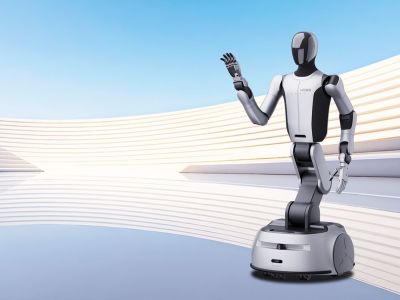
How do Walker C and Cruzr S2 move and balance?
Walker C is the lighter biped, with a 43 kg body and a 6 km/h maximum walking or jogging speed, which supports agile movement in customer-facing environments. Cruzr S2 is heavier at 50-80 kg and reaches 2 m/s, giving it more speed potential in structured industrial settings. Walker C’s smaller dimensions may help it navigate tighter indoor layouts, while Cruzr S2’s larger form likely supports more stable load handling. For mobility alone, Walker C is optimized for service agility, while Cruzr S2 is designed for stronger operational robustness.
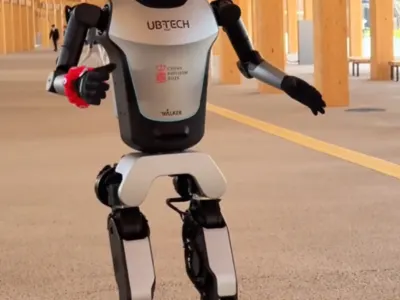
Which robot handles dexterous manipulation better?
Walker C offers 5 kg carrying capacity per arm and a 5-7 kg deadlift capacity, which indicates light-task manipulation rather than heavy object handling. Cruzr S2 is specified at 15 kg per arm and 50-100 kg deadlift capacity, making it far more capable for lifting and transport tasks. Walker C is better aligned with interaction tasks such as handing items or assisting visitors, while Cruzr S2 is built for more demanding physical work. For manipulation strength, Cruzr S2 is the clear choice.
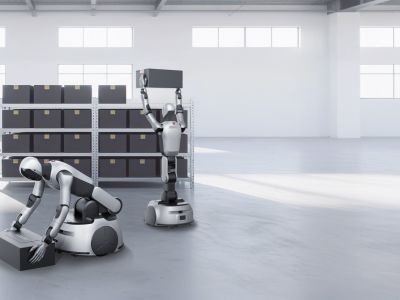
Which humanoid robot is better for industrial manufacturing?
Cruzr S2 is better suited for industrial manufacturing because it combines higher payload capacity, stronger deadlift performance, and software support through Linux, ROS 2, and Python SDK. Walker C is more appropriate for light service tasks, multilingual assistance, and reception workflows where physical load is limited. Walker C may be easier to deploy in public-facing environments, but it does not match Cruzr S2’s industrial readiness. For manufacturing deployments, Cruzr S2 is the more capable platform.

Which robot offers better autonomous learning capabilities?
Walker C uses a proprietary OS with an AI-powered embodied interactive large model, suggesting a strong focus on human interaction and adaptive service behavior. Cruzr S2 is described as semi-autonomous to fully autonomous and includes a Linux-based software stack with ROS 2 and Python SDK support, which is better for customization and systems integration. Walker C may be simpler to operate in controlled service settings, while Cruzr S2 offers broader engineering flexibility. For autonomous learning and developer extensibility, Cruzr S2 is the stronger platform.
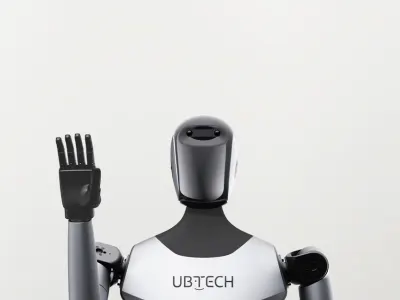
How do their sensor suites affect deployment reliability?
Walker C uses dual RGB-D cameras, dual structured-light 3D cameras, IMU, gyroscope, force sensors, and ultrasonic sensors, which supports safe human interaction and indoor navigation. Cruzr S2 includes RGB cameras, a depth camera, LiDAR, IMU, force/torque sensors, gyroscope, accelerometer, and joint encoders, which gives it a more industrial-grade perception stack. Walker C’s sensing profile is well aligned with service and collaboration tasks, while Cruzr S2 is better equipped for complex navigation and spatial awareness. For sensor-driven reliability, Cruzr S2 has the more extensive stack.
Which robot is more suitable for enterprise service tasks?
Walker C is the better fit for reception, tour guiding, visitor assistance, multilingual customer interaction, and light delivery in commercial settings. Cruzr S2 can also support enterprise operations, but its design priorities are broader and more industrial, especially in manufacturing and logistics. Walker C’s lighter build and collaborative safety features make it easier to place in shared human spaces. For enterprise service workflows, Walker C is the more focused deployment choice.
How do pricing and deployment cost compare?
Walker C is priced at about USD 41,200, based on similar UBTECH humanoid models, which places it in a lower-cost tier relative to Cruzr S2. Cruzr S2 is listed at $80,000, reflecting its larger size, stronger payload, and broader industrial software support. Walker C offers a lower entry cost for service robotics use cases, while Cruzr S2 asks for more capital but delivers more capability. For budget-sensitive deployments, Walker C is the easier entry point.
Analysis Score Summary
Total Score
7
Walker C
VS
Based on Detailed Analysis
Total Score
7
Cruzr S2
📊 Win: 2 points | Trade-off: 1 point each
Scores are summed across every insight: a clear winner earns 2 points, while balanced trade-offs give each robot 1 point. The total reflects how often each robot outperforms the other (or shares the spotlight) throughout the detailed analysis sections.
Capabilities & Operational Tasks
Head-to-head comparison of what Walker C and Cruzr S2 can do, their applications, and capabilities.
What Can Walker C & Cruzr S2 Do?
11Core operational tasks, activities, and physical manipulation duties evaluated side-by-side.
| Task & Description | Model AWalker C5 supported | Model BCruzr S211 supported |
|---|---|---|
| Autonomous task execution | High | High |
| Carrying and transport | — | High |
| Collaborative work | High | High |
| Greeting and guiding visitors | Moderate | Moderate |
| Human interaction | High | High |
| Loading and unloading | — | High |
| Machine operation | — | High |
| Material handling | — | High |
| Move objects | — | High |
| Navigation | High | High |
| Pick and place | — | High |
Technical Specifications
Head-to-head performance data and metrics
| Specification | Model AWalker C | Model BCruzr S2 |
|---|---|---|
Functional Utility & Use Cases4 Comparative Metrics | ||
Control Method | Autonomous navigation with teleoperation capability; AI-powered obstacle detection and whole-body motion control | Teleoperation, autonomous, learned behaviors |
Use Cases | Tour guiding, reception, visitor assistance, multilingual customer interaction, light delivery tasks in commercial environments | Manufacturing, research, logistics, infrastructure inspection, remote operations |
Multi Robot Coord | - | Multi-robot coordination via network |
Pet Friendly | Yes, with safety protocols | Yes, with safety protocols |
Manipulation & Load Capacity4 Comparative Metrics | ||
Carrying Capacity | 5 kg per arm | 15 kg per arm |
Deadlift Capacity | 5-7 kg | 50-100 kg |
Payload Type | Light tools, packages, visitor interaction objects | Tools, sensors, industrial equipment |
Modular Attachments | likely supports end-effector upgrades via open joint control interface | Tool changers, gripper interfaces, sensor mounts |
Kinematic Architecture & Dexterity4 Comparative Metrics | ||
Degrees of Freedom | 20 | - |
Material | Lightweight composite and plastic materials with aluminum structural elements | Aluminum frame, composite joints, polymer covers |
Mobility Type | Legged (bipedal walking) | Wheeled |
Hardware Interface | Joint control interface, USB, Wi-Fi, Bluetooth, CAN bus | USB-C, Ethernet, GPIO, CAN bus |
Functional Utility & Use Cases
4 Comparative Metrics
Manipulation & Load Capacity
4 Comparative Metrics
Kinematic Architecture & Dexterity
4 Comparative Metrics
Frequently Asked Questions
Which humanoid robot has the higher payload and lifting capacity for enterprise tasks?
Cruzr S2 has the higher load capacity. Cruzr S2 carries 15 kg per arm and deadlifts 50-100 kg, while Walker C carries 5 kg per arm and deadlifts 5-7 kg.
How do Walker C and Cruzr S2 differ in autonomy and teleoperation support?
Walker C is semi-autonomous with teleoperation fallback. Cruzr S2 ranges from semi-autonomous to fully autonomous, making Cruzr S2 the more flexible platform for remote or independent operation.
Which humanoid robot is faster and more stable for indoor locomotion?
Walker C reaches 6 km/h and is optimized for lighter indoor movement. Cruzr S2 reaches 2 m/s and is built for heavier industrial use, but Walker C is the more compact service robot.
Which robot offers better arm and hand manipulation for light interaction tasks?
Walker C is better for light interaction tasks, with 5 kg per arm and safe collaborative control. Cruzr S2 supports heavier manipulation, but Walker C is more suitable for visitor-facing handoffs.
Is Walker C ready for reception and multilingual visitor assistance deployments?
Walker C is designed for reception, tour guiding, visitor assistance, and multilingual customer interaction. Its service-focused form factor and safety features make Walker C suitable for front-of-house deployment.
Is Cruzr S2 ready for manufacturing and logistics deployments?
Cruzr S2 is better aligned with manufacturing, logistics, inspection, and remote operations. Its ROS 2 support, Python SDK, and higher lifting capacity make Cruzr S2 more deployment-ready for industrial workflows.
Related Comparisons
Discover similar robot matchups to expand your knowledge and find the perfect solution
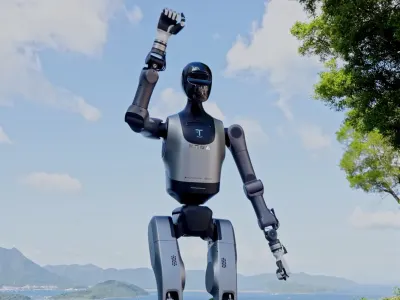
Cruzr S2 vs Walker Tienkung
Which robot wins? Cruzr S2 vs Walker Tienkung compared across navigation, sensors, speed, and software.
Cruzr S2 vs Agibot A2 Lite
Compare Cruzr S2 and Agibot A2 Lite. Detailed analysis of navigation, battery, sensors, mobility, AI, and software ecosystem.
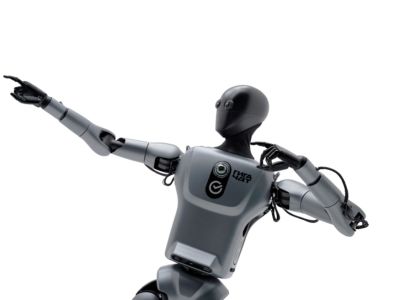
Green vs Cruzr S2
Head-to-head: Green vs Cruzr S2. Explore differences in AI systems, mobility, and sensor suites.
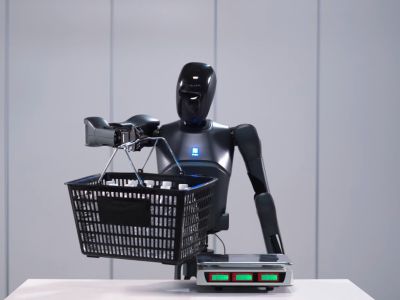
D7 vs Cruzr S2
Compare D7 and Cruzr S2 humanoid robots by Pudu and UBTECH on mobility, manipulation, battery, and industrial use.
Disclaimer
All content, comparisons, and verdicts on this website are based on our research, testing, and opinion. While we strive for accuracy, we do not guarantee the completeness, reliability, or suitability of any information. Performance, specifications, and results may vary depending on usage and conditions. This website and its authors are not responsible for any decisions, actions, or outcomes based on the information provided. Always verify product details with the manufacturer before making purchase or operational decisions.