Nadia
Last updated:
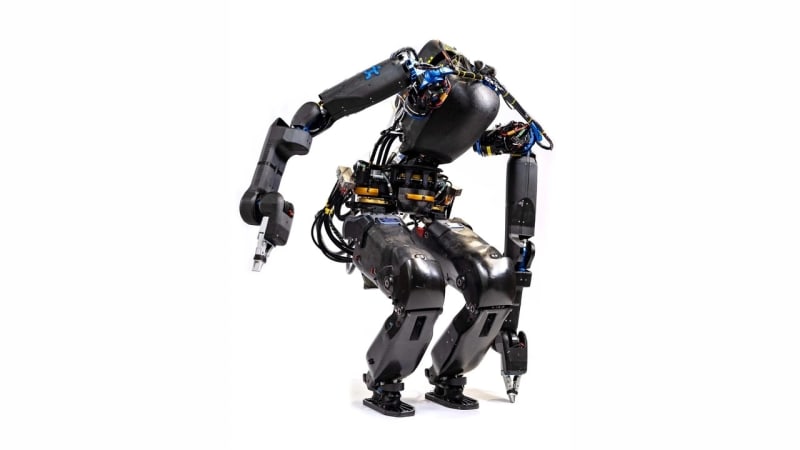
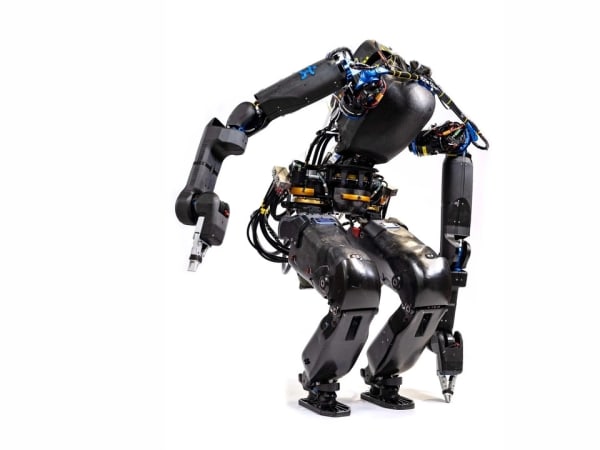
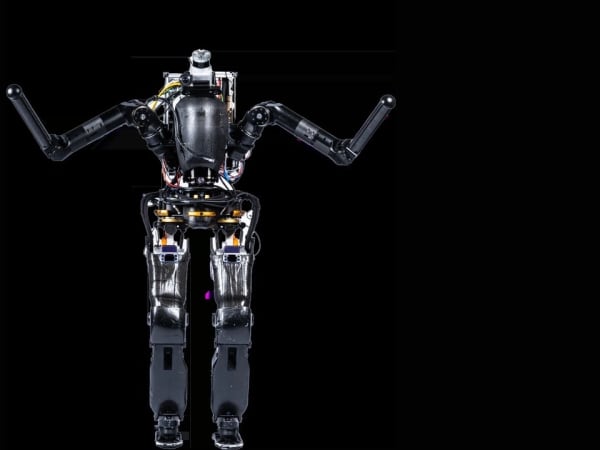
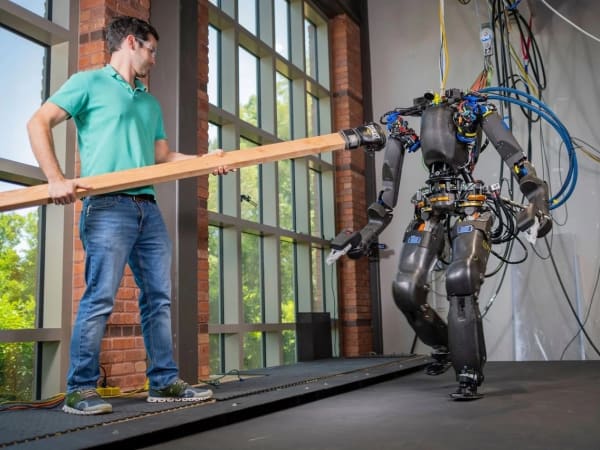
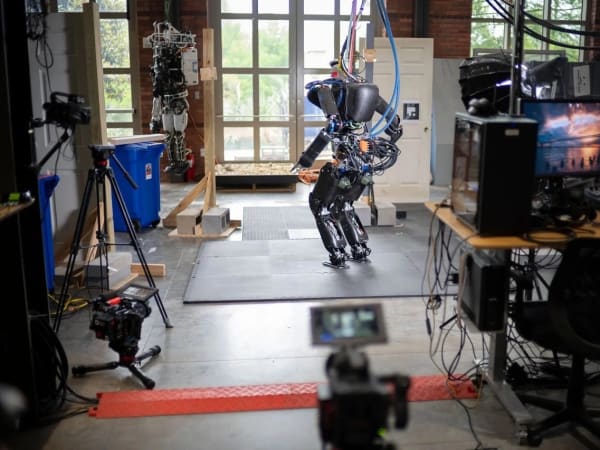
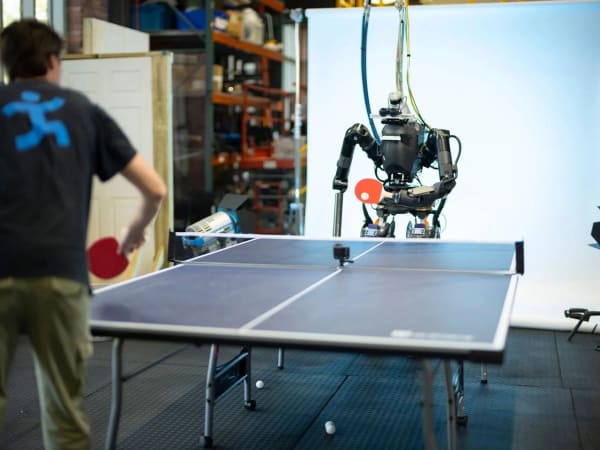
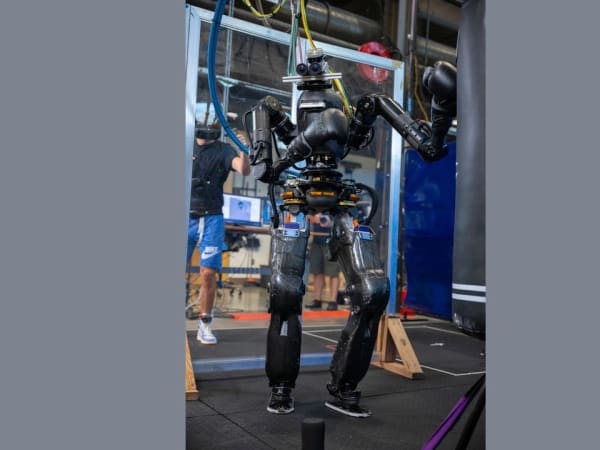
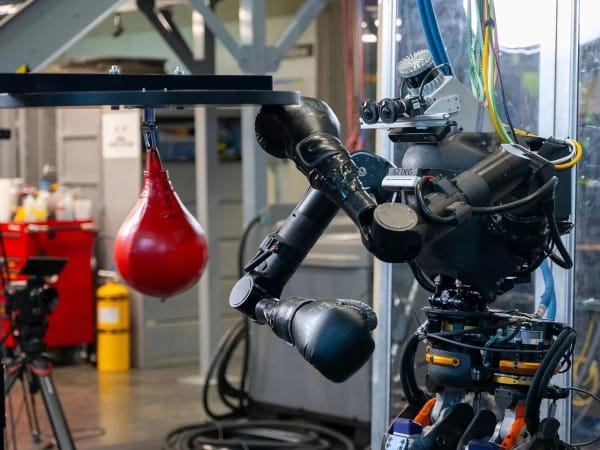
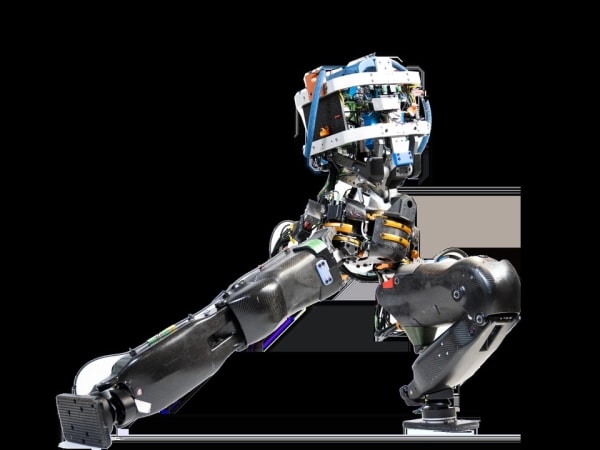
Nadia is a full-size research humanoid built by IHMC Robotics at the Florida Institute for Human and Machine Cognition with collaborators Boardwalk Robotics, Morfey Ltd and H4 Labs. Named after gymnast Nadia Comăneci, it was designed for a human-like range of motion so that it can work in buildings with stairs, ladders and debris, for jobs such as firefighting, disaster response and explosive ordnance disposal. It has 29 joints driven by a mix of Moog hydraulic Integrated Smart Actuators in the legs, custom electric actuators in the pelvis and electric arms (later replaced by an IHMC-designed arm), uses composite materials for a high power-to-weight ratio, and weighs about 100 kg. Nadia became known for push recovery, VR-teleoperated boxing and autonomous ping-pong. It is tethered to off-board power and is now IHMC's legacy platform, succeeded in 2025 by the fully electric Alex.
Quick Overview & Key Facts
Nadia is a humanoid system developed by IHMC Robotics in United States and launched in 2022. Starting price is estimated at Approx. $400,000 – $600,000 (research platform; not for sale). It is currently ranked #357 in most-viewed humanoid robots on Origin of Bots. It supports Tools, debris and light objects in research tasks. Operating battery runtime is rated at Continuous while tethered (off-board power). Primary applications include Research into humanoid mobility and manipulation for firefighting, disaster response and explosive ordnance disposal; VR teleoperation (avatar) research; autonomous behavior research such as door traversal.
What Can Nadia Do?
Core operational tasks and activities demonstrated or performed by Nadia.
Real-World Applications of Nadia
Industries, working environments, and deployment suitability for Nadia.
Nadia Capabilities
Inherent physical, perceptual, and cognitive abilities built into Nadia.
Download Media Cards
Story CardExport high-resolution story cards summarizing Nadia's operational tasks, real-world applications, and capabilities.
Image Gallery
Below images are from IHMC Robotics's official sources
Review Videos
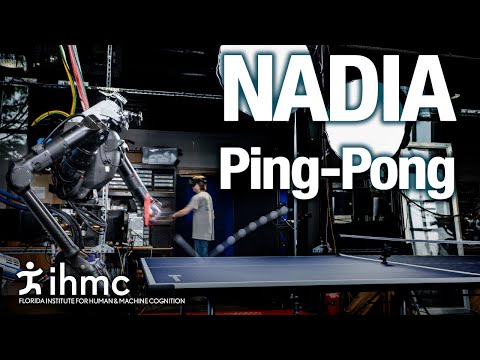
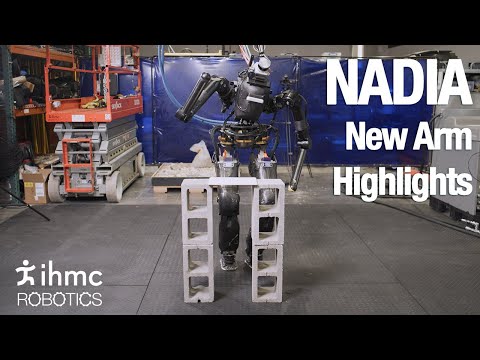
Watch expert reviews and demonstrations of this robot
Robot Specifications
Robot Timeline
Key milestones in this robot's development and rollout
IHMC Robotics shows Nadia recovering from strong pushes using cross-over steps, a whole-body balance capability.
Source: IHMC Robotics (YouTube) ↗
IHMC unveils a new IHMC-designed arm for Nadia, extending the robot's strength and range of motion.
Source: IHMC Robotics (YouTube) ↗
IHMC releases footage of Nadia playing ping-pong with a human player.
Source: IHMC Robotics (YouTube) ↗
IHMC demonstrates high-speed, impact-resilient VR teleoperation with Nadia boxing as an avatar robot.
Source: IHMC Robotics (YouTube) ↗
IHMC introduces Alex as the fully electric successor to Nadia, building on Nadia-era work in behaviors, push recovery and VR teleoperation.
Source: IHMC ↗
More Robots from IHMC Robotics
Explore other robots from this manufacturer
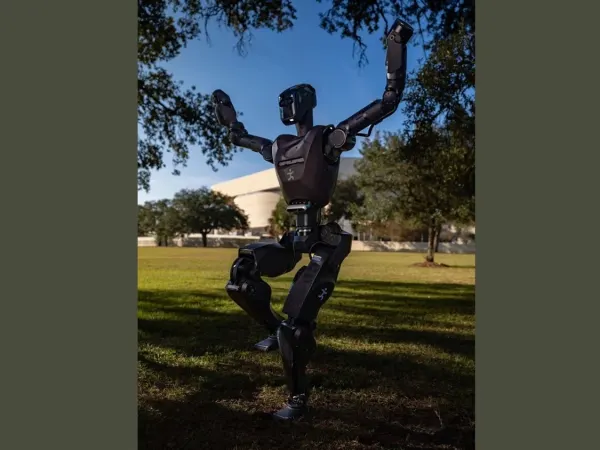
Alex
Manufactured by IHMC Robotics
Alex is a fully electric, full-size bipedal humanoid research robot built by IHMC Robotics at the Florida Institute for Human and Machine Cognition and unveiled in November 2025 as the successor to Nadia. Funded by the Office of Naval Research with the Army Research Laboratory and Army Data Analysis Center, it is designed to leave the lab: onboard computation, perception and power let it walk outdoors and in urban buildings with stairs, ladders and debris. Alex has 29 joints driven by custom, highly backdrivable quasi-direct-drive actuators with cycloidal transmissions, and weighs about 85 kg with its battery (Nadia weighed about 100 kg). IHMC targets dangerous work such as disaster response and military missions, with Alex acting as a human teammate or avatar. In 2026 Alex won the US Army's xTechHumanoid competition. Note: this is IHMC's legged Alex, not the upper-body robot of the same name from spin-off Boardwalk Robotics.
More Humanoid Robots
Discover more robots in the same category

Robots From Other Categories
Discover complementary robots from different categories that work well together

Frequently Asked Questions
Get answers to common questions about this robot
Q1. What is Nadia, and what problem is it designed to solve?
Nadia is a full-size research humanoid from IHMC Robotics in Florida. It was built to move with a human-like range of motion so that robots could one day work in dangerous places such as burning or collapsed buildings instead of people.
Q2. What are the main capabilities and key features of Nadia?
It can walk, crouch, recover from strong pushes, punch and play ping-pong, and it can be teleoperated in virtual reality or run autonomous behaviors such as opening and passing through doors.
Q3. Who is Nadia built for, and which industries can benefit from it?
It is a research platform for IHMC and its sponsors, including US Navy, Army and NASA programs, and for advancing humanoid control, teleoperation and behavior research.
Q4. Is Nadia a commercial product or still a research prototype?
It is a research prototype. IHMC built Nadia in-house with partner companies and does not sell it.
Q5. Is Nadia currently available for purchase, and when is it expected to ship?
No. Nadia is not for sale, and IHMC now treats it as a legacy platform after introducing its successor, Alex.
Q6. How does Nadia actually work in real-world environments?
IHMC's whole-body controller balances the robot and plans its footsteps from camera and lidar data, while hydraulic and electric actuators move its joints. Nadia draws power through a tether, which keeps it in the lab.
Q7. When was Nadia announced or officially launched?
IHMC developed Nadia over several years, showed major capabilities between late 2023 and 2024, and replaced it with Alex in late 2025.
Q8. How is Nadia different from other robots in the same category?
Nadia was designed above all for range of motion, using hydraulic smart actuators and composite materials. It also became a well-known showcase for VR avatar control and fast reactive behaviors.
Q9. Does Nadia require additional development or customization after purchase?
As a research robot, it is continuously developed by IHMC engineers, who add new controllers, arms and behaviors for each project.
Q10. What is the future roadmap or planned upgrades for Nadia?
IHMC's roadmap has moved on to Alex, which carries forward Nadia's lessons with onboard power and electric actuators so the work can go outdoors.
Rating and Reviews
Share your experience and help others decide!
Loading...
User Reviews
No user reviews. Be the first one to review!
User Comments (No Login needed)
Share your thoughts, experiences, or questions about this robot.
Comments are reviewed before posting.