Robots from United States
Discover 106 robots and autonomous systems developed by pioneering robotics manufacturers headquartered in United States.
Select any country to view its robotics innovations.
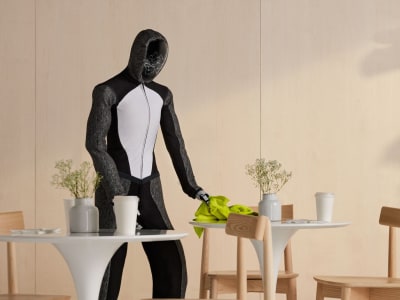
NEO Beta
NEO Beta is a home-focused humanoid standing 1.65 m tall and weighing 30 kg, engineered to blend seamlessly into domestic life. It walks at up to 4 km/h and sprints at 12 km/h, handling payloads of up to 20 kg. Powered by tendon-driven actuators and advanced AI, it performs chores, fetches items, and interacts via voice and touchscreen. Its modular design, soft exterior, and cloud-connected learning enable continuous feature updates and personalized behavior adaptations.
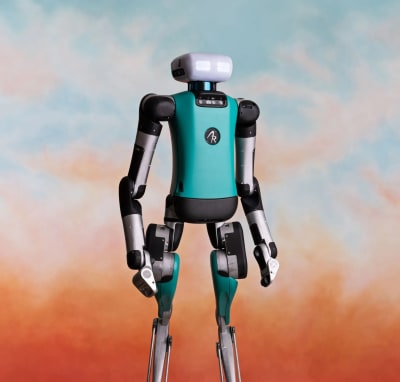
Digit
Digit, developed by Agility Robotics, is a groundbreaking humanoid robot designed to work alongside humans in environments built for people. Standing 5'9" tall and weighing 143 pounds, Digit walks upright on two legs with bird-like agility, allowing it to navigate stairs, tight corridors, and uneven ground. Its lightweight arms with four degrees of freedom enable it to lift and move packages up to 35 pounds, making it ideal for repetitive logistics tasks like tote retrieval and warehouse stacking. Digit is powered by onboard computers, uses LiDAR and depth cameras for navigation, and connects to the Agility Arc cloud platform for autonomous task coordination and fleet management. With a modular design, it can be customized for a wide range of industrial applications. Digit isn’t just a robot—it’s a step toward blending robotics into everyday human workflows, tackling labor shortages while enhancing efficiency and safety in real-world workplaces.
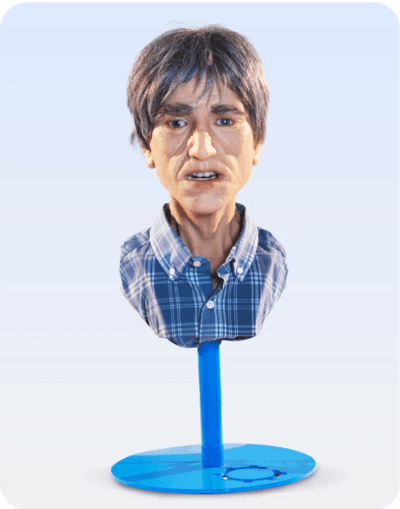
B Series Robot
The B Series Robot is a robotic AI-enabled bust designed for companionship and entertainment. It features 17 motors and 17 degrees of freedom, allowing it to capture subtle expressions with incredible accuracy. Users can choose from pre-designed faces or create fully customized designs. The robot is compatible with various AI platforms and offers multiple facial expressions.
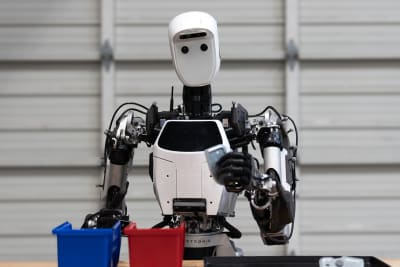
Apollo
Apollo is a next-gen humanoid robot built for real-world work. Standing nearly as tall as a human, Apollo is engineered to perform physical tasks in logistics, manufacturing, and services. With a sleek design, modular build, and the ability to safely interact with humans, Apollo brings a sci-fi vision to life. It’s not just a concept — it’s a practical, strong, and intelligent workforce assistant that can lift 25 kg, move with grace, and even be remotely operated or AI-powered. Apollo is where robotics meets reality.

Aria - Robot Girlfriend
Aria is a hyper-realistic humanoid companion robot designed for interactive communication and AI-powered companionship. Featuring a lifelike face with 17 independent motors, she replicates subtle human expressions and engages users through deep-learning AI. Built on a wheeled base, she navigates indoor environments smoothly, while her modular design allows for interchangeable faces and voices. Aria is tailored for premium personal use, hospitality, and research, combining aesthetic realism with technical versatility.

Stuntronics
The Stuntronics humanoid robot from Disney Imagineering is engineered for superhuman aerial acrobatics, performing untethered flips, twists, and poses up to 60 feet high with precision and repeatability beyond human capability. Featuring a human-scale bipedal design, it uses onboard IMUs, gyroscopes, accelerometers, and laser rangefinders for real-time decision-making during flight, calculating trajectories, adjusting spin, tucking knees, and striking heroic poses mid-air. Evolving from prototypes like Stickman and Mini-Man, this 90-100 pound figure withstands extreme accelerations, employs pneumatic cylinders and electric motors for dynamic control, and enables stunt doubles for characters like Spider-Man in theme park shows. Its autonomous balancing and orientation systems ensure flawless landings every time, revolutionizing entertainment robotics with robust, self-aware performance.
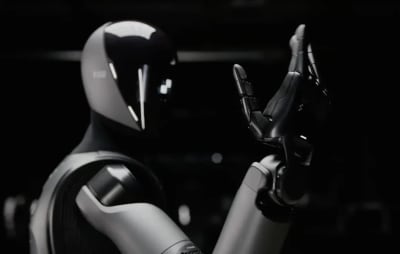
Figure 02
Figure 02 is the second-generation humanoid robot from Figure AI, designed to operate in human-centric environments with full-body mobility and AI-driven interaction. It features integrated wiring, onboard battery, and a vision-language model supported by six RGB cameras. Equipped with dual high-performance GPU modules, Figure 02 is capable of real-time perception, decision-making, and execution. It also has sophisticated five-fingered hands with 16 degrees of freedom, enabling it to manipulate tools and carry objects up to 25 kg. Its applications span across industrial, logistics, and manufacturing sectors.

Optimus
The Optimus by Tesla is an advanced humanoid robot designed for complex task automation. This bipedal platform incorporates cutting-edge motion control, dexterous manipulation, and intelligent autonomous capabilities. It combines state-of-the-art sensors, real-time balance control, and sophisticated software systems for versatile real-world applications in research, industry, and service environments.
Digit 5
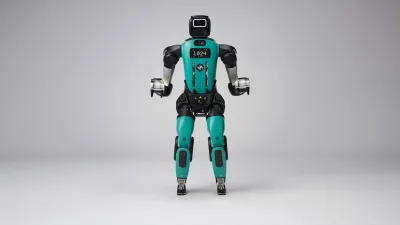
Digit 5 is Agility Robotics’ latest industrial humanoid designed for cooperative, human-scale work in warehouses and factories. It stands 1.81 m tall, weighs 129 kg, and is built to move through standard aisles, doorways, and workstations while handling repetitive material-handling tasks. The robot is engineered for safer operation around people, with improved payload capacity, faster recharge cycles, and a reach height suited to shelving and machine-tending workflows. Digit 5 emphasizes high uptime through autonomous charging and long daily work capacity, making it suitable for continuous logistics and production environments. Its design focuses on stable bipedal locomotion, task flexibility, and scalable deployment in real-world industrial settings.
Atlas
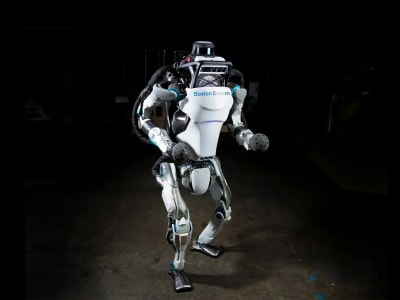
Atlas (Hydraulic) was Boston Dynamics’ flagship hydraulic humanoid research robot, first unveiled in 2013. Renowned for dynamic parkour, backflips, and gymnastics, the hydraulic Atlas served as a world-leading benchmark for dynamic whole-body control before being officially retired in April 2024 in favor of the commercial All-Electric Atlas.
Henry
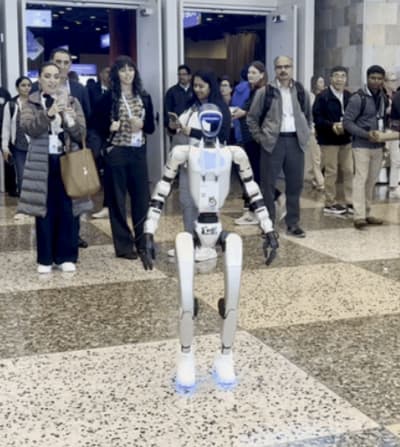
Henry is a software demonstration robot platform utilized by Salesforce at Dreamforce and TDX to showcase cloud-based Agentforce autonomous AI agents interacting in physical environments. Salesforce does not manufacture proprietary robotics hardware; Henry serves as a demonstrator for enterprise AI agent integration.
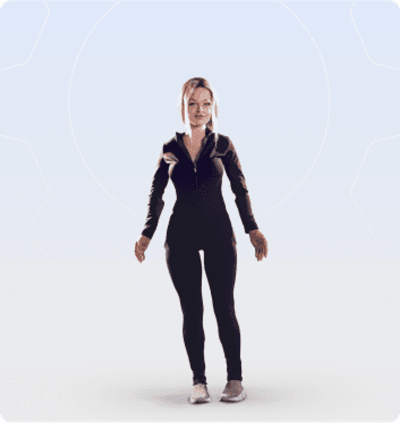
F-Series (Aria)
The F-Series Robot by Realbotix is a full-bodied humanoid robot designed for advanced human interaction. It features a motorized base and advanced torso mechanics with four additional motors, allowing for realistic human-like movements such as twisting, side-to-side, and forward-to-backward motions. The robot includes a driveable base, enabling it to move within its environment. It also offers 15 facial movements and customizable faces and bodies. The robot is equipped with AI capabilities for personalized interactions and can integrate with various AI platforms.
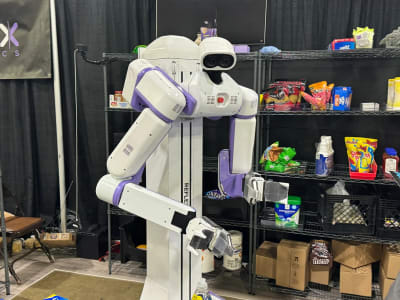
Reflex Humanoid
The Reflex Humanoid by Reflex Robotics is a wheeled mobile manipulator designed for warehouse and logistics tasks, featuring a human-like torso with dual arms offering over twice human strength for lifting more than 25 lbs per arm and 50+ lbs collectively. Its innovative "spine" mechanism adjusts height dynamically from ground level to high shelves, paired with a compact wheeled base under 2 ft x 2 ft for zero-degree turns and tight space navigation. Equipped with a head housing multiple RGB sensors and a 180-degree articulated neck for enhanced vision, it supports teleoperation from up to 3,000 miles via Wi-Fi with low-latency control likened to a video game interface. Boasting 16+ hours of battery life, rapid 60-minute deployment, and swappable three-finger grippers with suction, the robot excels in repetitive tasks like palletizing, tote picking, box closing, and beverage packaging. It learns from human demonstrations to progress toward autonomy, prioritizing stability, affordability, and scalability over bipedal complexity.
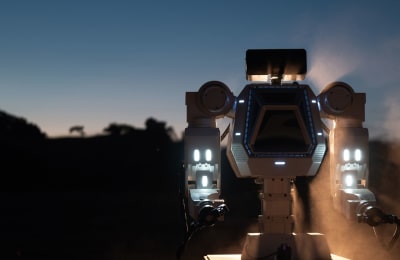
TITAN
Titan by RoboForce is a rugged, AI-powered industrial mobile manipulator engineered to automate challenging tasks in demanding outdoor and industrial environments. Built with modular hardware, dual arms, and a robust wheeled or tracked base, Titan delivers precision to within 1 mm and supports heavy payloads up to 40 kg. Its advanced Domain Intelligence enables autonomous navigation, spatial understanding, and adaptive task execution across sectors like solar, mining, manufacturing, and logistics. With an 8-hour runtime and a scalable design, Titan combines durability, versatility, and cutting-edge AI to elevate industrial automation beyond traditional fixed systems.
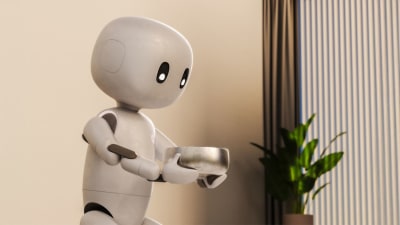
Yogi
Yogi by Cartwheel Robotics is a mid-size bipedal humanoid robot designed for safe, autonomous interaction in human environments. It combines advanced locomotion, expressive motion, and AI-driven perception to navigate indoor spaces, communicate naturally, and assist with tasks requiring physical engagement. Yogi’s design emphasizes safety with soft exteriors and responsive control systems. Its capabilities include dynamic walking balance, autonomous path planning, and gesture recognition. Yogi supports research, service automation, and human-robot collaboration, blending mobility, manipulation, and interactive intelligence for real-world robotics applications.
Nylo
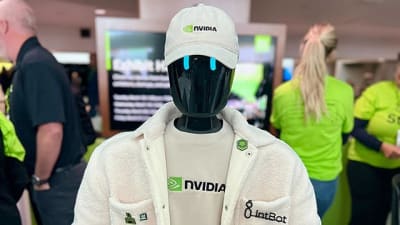
Nylo is a humanoid robot developed by IntBot for service industry applications, featuring advanced AI and an expressive personality to enhance human-robot interaction. Designed for environments such as hospitality, retail, and customer service, Nylo leverages NVIDIA Cosmos for synthetic motion generation and embodied AI, enabling fluid movement, adaptive decision-making, and engaging conversation. The robot supports customizable applications, including order taking, item delivery, and interactive customer engagement. With a focus on embodied AI, Nylo bridges the gap between academic research and real-world deployment, offering a robust platform for developers and enterprises seeking to innovate in service robotics.
Themis V2
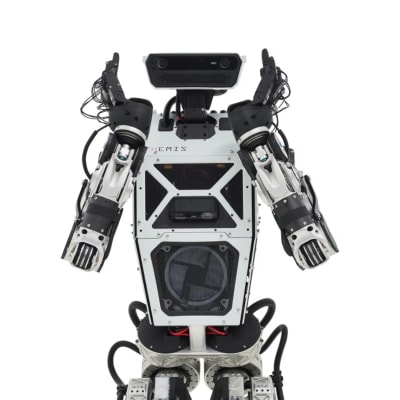
Themis V2 is a full-sized humanoid robot engineered for industrial, service, and research applications, standing 1.6 meters tall with 40 degrees of freedom for human-like agility. It features proprietary BEAR actuators that deliver compliant, back-drivable motion, enabling smooth walking at human speeds and running up to 10 km/h across uneven terrain. Equipped with 6-DoF arms and 7-DoF dexterous hands supporting 15 kg payloads, it excels in two-handed manipulation tasks like logistics handling, light assembly, and precise inspection. Onboard 200 TOPS AI processing powers real-time perception via stereo cameras and high-frequency IMU, facilitating autonomous navigation, balance recovery, and adaptive grasping without cloud dependency. Hot-swappable batteries ensure continuous operation, while ROS-based Humanoid OS integrates LLMs for intelligent task execution and safe human collaboration, positioning Themis V2 as a versatile platform for dynamic real-world deployment.

Olaf
Olaf is a next-generation humanoid robotic character developed by Walt Disney Imagineering, designed to bring the animated snowman from Frozen to life with unprecedented realism. Utilizing advanced AI, deep reinforcement learning, and a proprietary simulation framework, Olaf moves with fluid, expressive motions that mimic squash-and-stretch animation principles. The robot features a deformable "snow costume" that shifts with movement, fully articulated facial features, and real-time environmental awareness via stereoscopic cameras and spatial AI. Olaf can walk, gesture, interact with guests, and perform complex, stylized movements like the moonwalk, all while maintaining narrative consistency through supervised autonomy. This blend of artistry and engineering sets a new benchmark for emotive, interactive humanoid robots in entertainment.
Nori A3
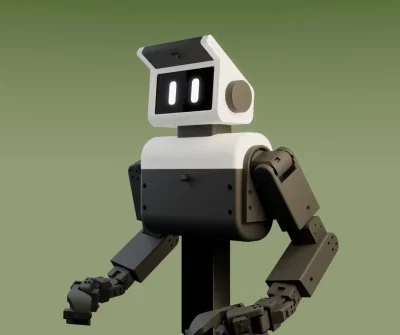
Nori A3 is a $1,688 wheeled bimanual home robot from San Francisco startup Nori Robotics (Y Combinator, Summer 2026). A three-stage telescoping column carries its head and two 7+1-DoF arms from floor level to counter height, and owners train it at home and share skills through a marketplace. Its first units shipped on July 21, 2026, and a limited second batch ships in fall 2026.
Bruce
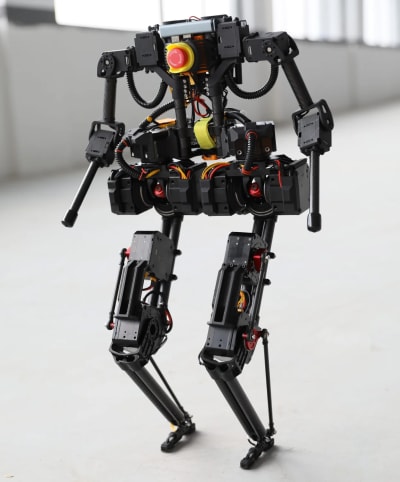
Bruce is a compact, kid-sized humanoid robot designed as an open-platform for advanced robotics research and education. Standing at 70cm tall and weighing just 4.8kg, it features a lightweight carbon fiber composite structure for durability and agility. With 16 degrees of freedom, including 5 DOF per leg and 3 DOF per arm, Bruce excels in dynamic bipedal locomotion such as walking, running, jumping, and even advanced maneuvers like single-leg hopping or yaw rotations. Powered by proprietary Koala BEAR proprioceptive actuators with liquid cooling, it delivers explosive power and real-time compliance for unstructured environments. Equipped with a high-frequency 6-DOF IMU, 4 contact sensors, and a 6TOPS onboard computer supporting deep learning frameworks, Bruce enables autonomous navigation, whole-body control, and sensor-based adaptation. Its modular, repairable design and open-source software/hardware foster rapid prototyping in locomotion, perception, and human-robot interaction, making it ideal for testing algorithms in real-world scenarios.
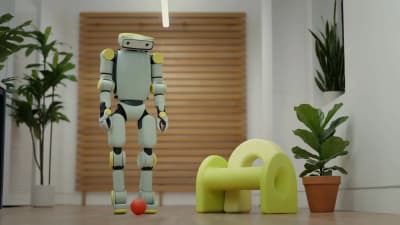
Sprout
Sprout by Fauna Robotics is a compact, lightweight humanoid robot designed for safe human interaction and developer-friendly applications in research, education, and commercial development. Standing at 107 cm tall and weighing 22.7 kg, it features 29 degrees of freedom for full-body articulation, including 6 DoF arms with floor-to-countertop reach, 5 DoF compliant legs for low-impact bipedal locomotion, and a 2 DoF neck for expressive gaze. Equipped with NVIDIA Jetson AGX Orin compute, ZED 2i stereoscopic vision, time-of-flight sensors, IMU, microphone array, and a full-color 360-degree facial LED array with motorized eyebrows, Sprout enables out-of-the-box mapping, navigation, voice interaction, walking, kneeling, crawling, jumping, dancing, and fall recovery. Its soft deformable exterior, back-drivable motors, and dedicated safety subsystem ensure collaborative operation in shared human spaces, while swappable batteries provide 3-3.5 hours runtime and LEGO-compatible customization fosters modular innovation in manipulation, task planning, and human-robot interaction.

Melody (M-Series Robot)
The M-Series Robot is a modular upper-body humanoid platform built for conversational interaction, customer service, and experiential installations, featuring interchangeable faces and body panels for rapid customization. It delivers articulated head, neck, torso, and arm motion, with integrated cameras and microphones supporting perception and conversational AI integration. Designed for retail, hospitality, telepresence, and companion use, the platform emphasizes flexibility and scalability. Realbotix positions the M-Series as an AI-agnostic social robot, offered for commercial orders with configurable options, deployment support, and defined delivery timelines to meet diverse business requirements across global markets, industries, environments, partners, worldwide
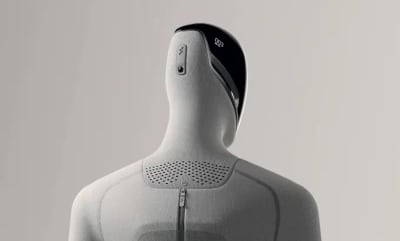
Figure 03
Figure 03 is Figure AI’s third-generation general-purpose humanoid robot, designed for home and service tasks such as laundry, dish handling, cleaning, and human-adjacent assistance. It uses the Helix vision-language-action system for autonomous task execution and improved close-range manipulation. The platform emphasizes safer home operation with soft coverings, advanced tactile hands, a redesigned vision stack with wider field of view and lower latency, and wireless inductive charging. Figure positions the robot as fully autonomous, wire-free, and optimized for learning from large-scale real-world interaction data. Its bipedal architecture, human-like proportions, and dexterous hands target everyday environments that require navigation through tight spaces, stairs, and variable household layouts.
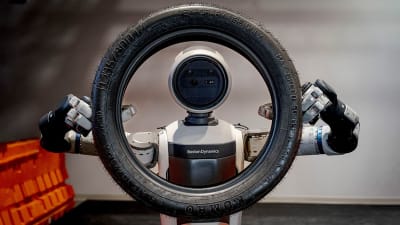
Atlas (Electric Atlas, 2025)
Atlas (Electric Atlas, 2025) is Boston Dynamics' fifth-generation humanoid robot, fully electric and designed for real-world industrial and research applications. It features advanced all-electric actuators that provide superior strength and a broader range of motion than previous models, including 360-degree rotation at key joints. Atlas integrates sophisticated sensor arrays such as LiDAR, stereo and RGB cameras, and depth sensors, enabling real-time perception and environmental awareness. Its software leverages AI, machine learning, and large behavior models for autonomous whole-body manipulation and locomotion, allowing it to perform complex tasks like packing, sorting, and adapting dynamically to unexpected physical challenges. The robot is built with lightweight titanium and aluminum 3D printed parts for optimal strength-to-weight ratio and supports integration with Boston Dynamics’ fleet management software, Orbit.
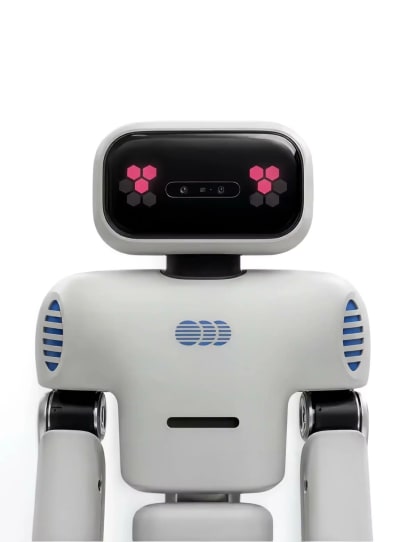
ROBO T1
ROBO T1 (Robo-T) is the first robot from Los Angeles startup Robo Robotics: a teachable, mobile, bimanual humanoid with two 6-degree-of-freedom arms and grippers, designed and assembled in Los Angeles. Your team shows it a task once, and remote operators step in when judgment is needed, teaching it to handle the next case on its own. Robo says it can hold up to 10 pounds and do warehouse, healthcare and grocery work for under $10 an hour, or be bought in fleet configurations starting at $12,000.
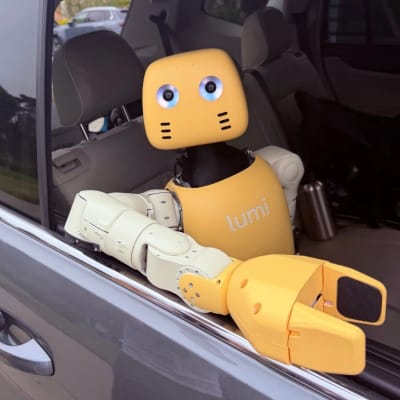
Lumi
Lumi is a yellow, rounded interactive humanoid from San Francisco software company Lightberry, introduced on August 27, 2026. It combines Lightberry's custom sensors and software with a Unitree G1 base to create a robot that entertains crowds, holds long conversations, tells stories, takes photos, looks up information and guides people. It has 34 degrees of freedom, stands 1.3 m tall, runs Lightberry OS on an NVIDIA Jetson Thor, and the first 100 Founder Edition units ship in 2026 at $39,990.
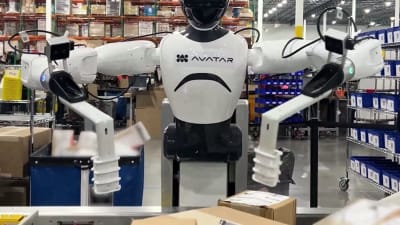
Avatar
Avatar is the humanoid-form robot worker from San Francisco startup Avatar Robotics. A white torso with a glossy black head and two gripper-equipped arms stands on a mobile pedestal base with a touchscreen, and works alongside trained remote human operators and improving AI autonomy on warehouse and manufacturing jobs such as sorting, packing, kitting and picking. Avatar Robotics launched commercially in December 2025, says its robots have packed, sorted and helped ship more than 900,000 products, and sells the work as an hourly Robots-as-a-Service.

Walden
Walden is the wheeled semi-humanoid factory robot from Walden Robotics, the Toyota Research Institute spin-out that came out of stealth on July 15, 2026 with $300 million at a $1.1 billion valuation. A humanoid torso with two arms and two-finger grippers sits on a statically stable wheeled base with a lift column, so it can work at benches and machines without the fall risk of legged robots. Powered by Large Behavior Models and diffusion-policy learning from TRI, it has worked eight-hour shifts in a Toyota plant in North America since February 2026, doing machine tending, tool setting, parts kitting and assembly tasks.
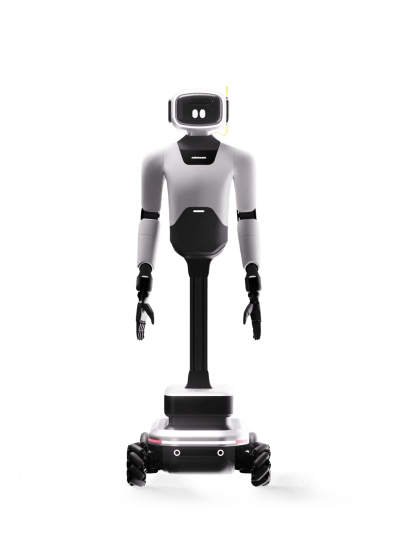
R Noid
R Noid is a production-ready service humanoid robot designed for real-world deployment in logistics, warehousing, hospitality, and light manufacturing environments. Standing 170 cm tall, it features dual 7-DOF arms with 4 kg payload capacity per arm, omni-directional mobility at human-scale speeds, and an expressive dual-screen display for communication and branding. Equipped with advanced perception systems and collaborative safety features, R Noid operates autonomously alongside human workers in dynamic indoor and outdoor environments. Its modular gripper interface, robust connectivity, and cloud-integrated task orchestration enable flexible deployment across warehouses, kitchens, retail spaces, and logistics operations where it handles repetitive material handling and service tasks safely and efficiently.
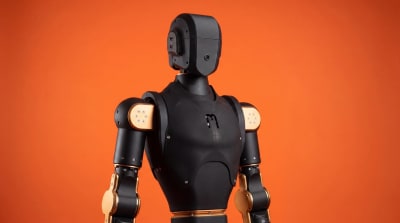
Asimov v1
The Asimov v1 is Menlo Research’s first open-source humanoid robot, designed as a DIY kit for developers, researchers, and educators. Standing 1.2 meters tall and weighing 35 kg, it features 25 actuated joints plus 2 passive toe joints for bipedal locomotion. Powered by 120 N·m electric actuators, it supports zero-shot simulation-to-real transfer via MuJoCo. The robot includes a 2MP monocular camera, 4-channel microphone array, embedded speakers, and dual processors (Radxa CM5 for control, Raspberry Pi 5 for networking). Its open hardware (CERN-OHL-S-2.0) and software (GPL-2.0) enable full customization, making it a cost-effective alternative to proprietary humanoid platforms.
Feather
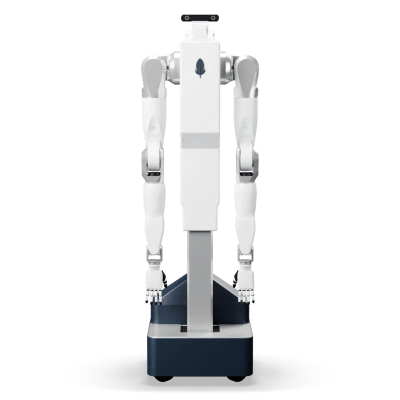
Feather is an open, modular, wheeled bimanual humanoid platform from US startup Feather Robotics, built for physical-AI companies, manufacturing integrators and researchers. Two 7-degree-of-freedom, 1 m arms sit on a torso that raises and lowers 600 mm, mounted on a holonomic base that moves in any direction at up to 1.3 m/s, with dual hot-swappable batteries for about 10 hours of work and an open Python and ROS 2 SDK. It ships now from $29,990 (launch price, regular $32,990), and its makers say it is already working as a cook in restaurants and cleaning science labs.
Origin
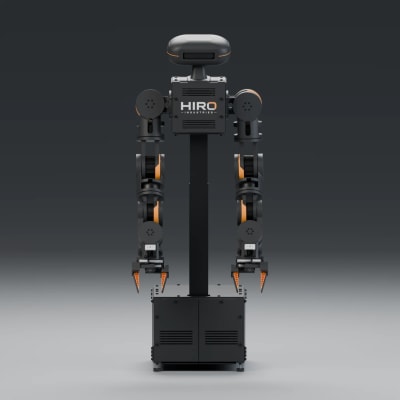
Origin is the first robot from HIRO Industries of Corvallis, Oregon: a stationary, human-scale dual-arm robot designed for human workstations. Two seven-joint arms with compliant parallel grippers, a lifting column and three RGB-D cameras (one in the head, one on each wrist) bring two hands and a view of the work to a shared workspace, giving it 17 degrees of freedom in total. HIRO is developing it around packing, kitting and light assembly, and invites manufacturers to start with a single task through an early design partnership. It is not yet a finished product, and HIRO has not published a price, size, weight or payload.
FF Master
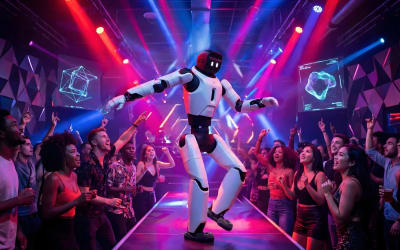
The FF Master is an athletic, human-scale embodied AI humanoid robot designed for adaptive interaction, educational support, and assistance in indoor environments. Standing compact at 131 cm, it features 25 to 30 degrees of freedom (excluding hands) and a peak torque of 120 N·m, enabling dynamic motion for walking, climbing stairs, and navigating uneven terrain. Powered by a swappable 500 Wh battery, it offers approximately 2 hours of runtime per charge with a rapid 1.5-hour charging time. The robot integrates expressive AI with visual SLAM navigation, Wi-Fi/Bluetooth connectivity, and a magnesium-aluminum-polyurethane composite body. Tailored for family fun to professional development, the FF Master supports teleoperation and learned behaviors, making it a versatile companion for research, entertainment, and interactive learning.
HECTOR V2
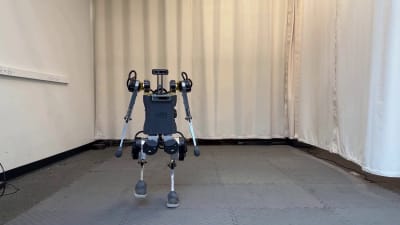
HECTOR V2 (Humanoid for Enhanced ConTrol and Open-source Research) is a compact, dynamic mini-humanoid testbed developed by Laser Robotics to push the limits of extreme dynamic locomotion and open-source robotics research. Standing 0.85 meters (85 cm) tall and weighing just 15 kg, HECTOR V2 features 20 actuated degrees of freedom (5 DoF per leg, 4 DoF per arm, plus actuated ankle joints). Built using topology-optimized CNC aluminum and engineering plastics, the robot achieves exceptional structural rigidity and ease of servicing. Validated under extreme real-world stress tests (including sprints across the rugged Mojave Desert), HECTOR V2 provides fully open-sourced simulation software, reinforcement learning controllers, and a modular architecture that easily switches between biped and humanoid configurations.
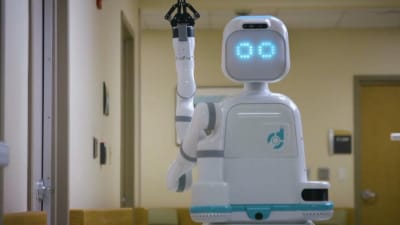
Moxi
Moxi is a humanoid robot designed specifically for hospital environments to assist clinical staff by automating non-patient-facing tasks. It features a robotic arm with a gripper capable of picking up and delivering medical supplies, lab samples, medications, and personal belongings. Moxi autonomously navigates hospital hallways using advanced sensors and AI, avoiding obstacles and interacting safely with people. It supports workflow automation, reducing nurses’ time spent on menial tasks and improving operational efficiency. Moxi’s social intelligence includes LED eyes for communication and voice lines to alert staff, making it a collaborative and friendly teammate in healthcare settings. Its software is adaptable to evolving hospital needs, enabling dynamic task additions.
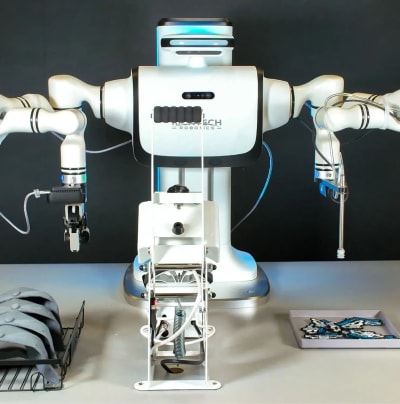
Dex
Dex is a next-generation industrial humanoid robot designed for real-world work environments, combining advanced AI with a mobile wheeled base. It features multi-camera vision systems for precise task execution, including depth and arm-mounted cameras, enabling it to perform complex manipulation and navigation tasks. Dex is optimized for industrial applications such as manufacturing, logistics, and service roles, with capabilities for autonomous operation, teleoperation, and learned behaviors. Its humanoid design allows it to interact safely and effectively alongside humans, with integrated safety features and collaborative modes. Powered by Nvidia Jetson Thor, Dex leverages AI for enhanced perception, decision-making, and adaptability in dynamic environments.
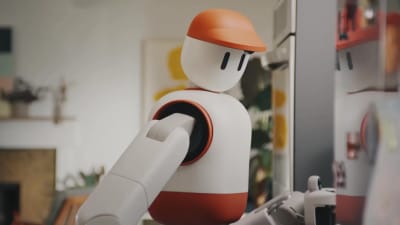
Memo
Memo is a home-focused humanoid-style robot developed by Sunday Robotics to autonomously perform domestic chores such as dishwashing, laundry folding, tidying, and espresso preparation. Standing 1.7 meters tall on a wheeled base, it features a torso with two multi-DoF arms and dual grippers, capable of reaching from floor level up to around 2.1 meters (7 feet). Designed for family environments, Memo emphasizes safety and stability through a low center of gravity, compliant control, and a soft silicone exterior. It learns from real household data via Sunday’s Skill Capture Glove, mastering long-horizon tasks in unstructured homes.
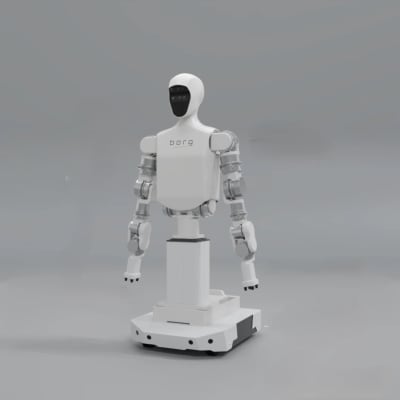
Borg 01
The Borg 01 is a modular humanoid robot from Detroit-based Borg Robotics, engineered for industrial and logistics tasks with a focus on adaptability and efficiency. Standing at 173 cm tall and weighing 62 kg, it autonomously switches between bipedal walking for narrow spaces and a wheeled base for faster, more efficient movement across factory floors and warehouses. Key features include quick-change end effectors like vacuum grippers, mechanical claws, dual grippers, and five-fingered hands, supporting payloads up to 12 kg for versatile manipulation. Powered by advanced AI neural networks, it adapts to new tasks and environments without infrastructure changes, integrating into existing workflows. With 23 degrees of freedom, in-house high-torque actuators, and up to 12 hours runtime in wheeled mode via swappable batteries, Borg 01 targets manufacturing labor shortages, offering seamless operation in crowded aisles alongside Borg's ecosystem of autonomous pallet jacks and forklifts.
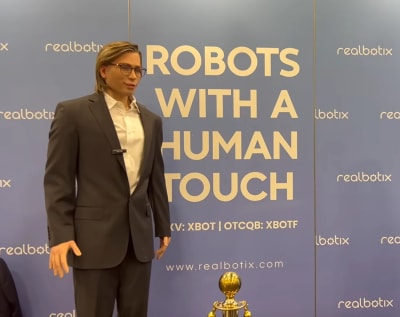
David
David is Realbotix's newest fully modular humanoid companion robot, unveiled at CES 2026, designed for emotional interaction and customization like building blocks. Featuring a magnetically swappable face for quick expression changes, advanced AI vision for face recognition and human emotion interpretation, and conversational AI powered by models like Gemini and ChatGPT, David creates personalized emotional connections with memory systems. Mounted on a remote-controlled wheeled base for mobility without bipedal walking, it emphasizes stationary utility for 24/7 operation in homes, events, or workplaces. Customizable with extra heads, voices, and user AI integration, David's lifelike expressions—joy, surprise, neutral—and social capabilities make it ideal for companionship, greeter roles, training, and engagement, prioritizing reliability over dynamic locomotion.
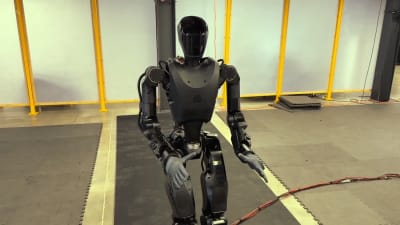
Phantom MK1
The Phantom MK1 is a robust humanoid robot engineered for industrial, warehouse, and defense applications, standing at human scale with advanced manipulation capabilities. Featuring proprietary cycloidal actuators that deliver high torque up to 160 Nm while remaining back-drivable for safe human interaction, it excels in precise grasping and tool use with 19 upper body degrees of freedom and five-fingered hands. Its camera-first vision system, powered by large language models, enables natural language commands like "pick that up" to translate into fluid whole-body motions without bulky LiDAR. Capable of 1.7 m/s walking speed, 20 kg payload, and near-24/7 operation, the Phantom MK1 navigates human environments seamlessly, handling assembly, inspections, logistics, and reconnaissance. Bipedal design with active balance supports rough terrain and confined spaces, prioritizing reliability, speed, and adaptability over gimmicks for real-world productivity.

EVE
EVE is a versatile wheeled humanoid robot from 1X Technologies, engineered for safe collaboration in professional and domestic spaces. Standing at 188 cm tall with a human-like upper body, it features 25 degrees of freedom driven by proprietary Revo1 quasi-direct-drive motors and cable transmission for silent, low-friction operation. EVE achieves a top speed of 14.4 km/h, carries 15 kg payloads, and operates up to 6 hours on a 1.05 kWh lithium-ion battery. Equipped with high-resolution HDR cameras for panoramic vision, it employs the Redwood AI stack and 1X OS for embodied learning via imitation from teleoperation. Its soft exterior ensures safety during human interaction, while multi-terrain wheels enable navigation of elevators, doors, and complex environments. Ideal for logistics, security, manufacturing, and healthcare, EVE learns tasks autonomously, improving efficiency in shared spaces through vision-language models and shared autonomy.
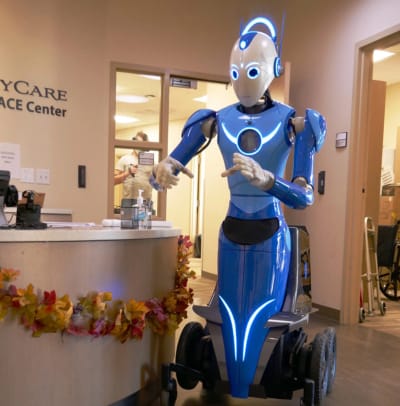
Beomni 1.0
Beomni 1.0 is a wheeled humanoid robot designed for versatile remote operation and AI-assisted tasks across industries like healthcare, manufacturing, agriculture, and eldercare. Featuring human-like upper body with articulated head, shoulders, waist, arms, and dexterous hands with opposable thumbs, it lifts up to 15.88 kg per arm for heavy loads while performing delicate actions like pinching salt or opening bottles. Four-wheel base enables traversal over mud, sand, snow, and rough terrain. Initially teleoperated via VR headset and gloves with low-latency stereo vision, haptic feedback, and 3D audio, its evolving AI brain learns from demonstrations to achieve semi-autonomy and full autonomy. Advanced sensors support object recognition, navigation, and multitasking, promoting safer, more productive human-robot collaboration without physical presence requirements.
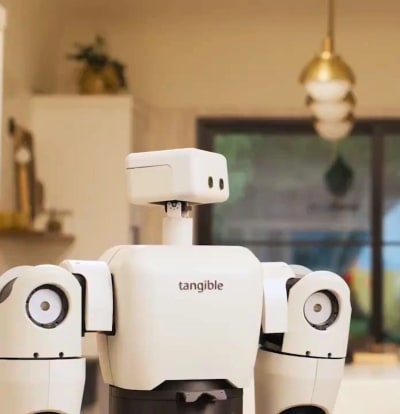
Eggie
Eggie is a friendly wheeled humanoid robot from Tangible Robots, featuring an egg-shaped design with a smooth mobile base for efficient navigation and stability in home environments. Standing at 160 cm tall, it boasts dexterous five-fingered hands capable of contact-rich manipulation tasks like cleaning spills, folding laundry, watering plants, and handling fragile items. Powered by dual 1080p depth+RGB cameras and LLM cloud integration, Eggie excels in AI-driven interaction, education, and light service. Trained on real-world human data from sensor exoskeletons, it emphasizes compliance, whole-body control, and human-like dexterity. With 20 degrees of freedom, a 7-hour runtime, and low latency under 200ms, Eggie bridges industrial rigidity and domestic companionship, thriving in unpredictable settings through tactile feedback and expressive arms.
R Top
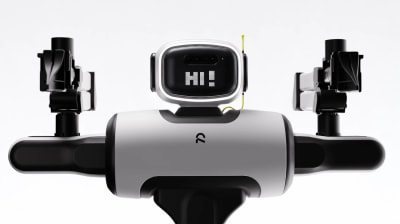
The R Top from Robot.com is a stationary humanoid robot engineered for precision tasks on fixed surfaces such as tabletops and workbenches. Featuring dual 6-DOF arms with 9lbs payload capacity per arm, it excels in repetitive, delicate manipulation like package handling, kitchen assistance, and assembly work. Designed with human-safe principles and advanced AI integration via the RobotOS platform, R Top enhances productivity in logistics, hospitality, and service environments. Its configurable static base ensures stability for intricate operations, while seamless synchronization with mobile counterparts like R Noid enables ecosystem-wide efficiency. Emphasizing practical utility over spectacle, it incorporates precise grippers and sensors for safe human-robot collaboration, reducing worker fatigue on monotonous physical tasks and improving overall workflow safety.
Sudo R1
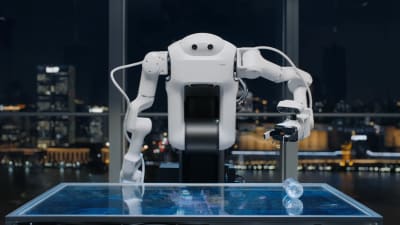
The Sudo R1 by Sudo Robotics is an advanced humanoid robot designed for complex task automation. This bipedal platform incorporates cutting-edge motion control, dexterous manipulation, and intelligent autonomous capabilities. It combines state-of-the-art sensors, real-time balance control, and sophisticated software systems for versatile real-world applications in research, industry, and service environments.
Eno
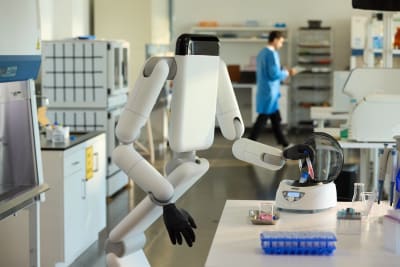
Eno is Genesis AI’s first general-purpose robot, designed as a bi-dexterous mobile manipulator rather than a classic legged humanoid. It combines a wheeled base, an adjustable torso, and highly dexterous arms and hands to perform multi-step tasks in factories, laboratories, logistics sites, and later service environments. Genesis says Eno is built around its GENE robotics foundation model, which is intended to give the robot memory, reasoning, and task adaptation across changing conditions. Public reporting indicates the robot emphasizes practical work over humanoid appearance, with an optional chest display for status and reasoning transparency, and hand hardware focused on manipulation, touch, and safety.

FF Futurist
FF Futurist is Faraday Future’s full-size professional humanoid robot for embodied AI applications in workplaces, service settings, and interactive environments. It is designed to combine bipedal mobility, human-scale proportions, dexterous manipulation, and multi-sensor perception for tasks that require natural human-robot coexistence. The platform emphasizes professional use cases such as reception, logistics support, event hosting, inspection, and general assistance. Officially published specifications describe a 169 cm-tall robot with a 69 kg mass, 28 body degrees of freedom plus dexterous hands, up to 8 kg payload, and a maximum speed of 1.2 m/s. It is positioned as a premium humanoid platform with proactive motion control, perception-driven autonomy, and an ecosystem-oriented software stack.
Moby 3
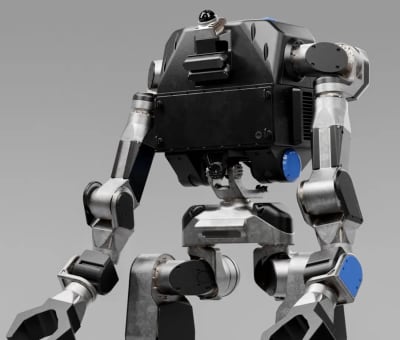
Moby 3 is an industrial humanoid robot engineered by Noble Machines to automate hazardous, physically demanding tasks across construction, logistics, manufacturing, and energy sectors. Built around a "whole-body AI" architecture, Moby learns new tasks through natural language instructions, demonstrations, and gesture-based training, eliminating traditional programming. Its rugged form factor features strong aluminum and composite limbs capable of navigating stairs, scaffolding, and cluttered workspaces while lifting up to 27 kg. The robot integrates 34 degrees of freedom with dexterous multi-fingered hands for manipulating industrial tools. Powered by an NVIDIA Jetson Orin edge AI stack, Moby coordinates locomotion, manipulation, and balance in real time, adapting to terrain changes and shifting payloads. Designed for "4D jobs"—dull, dirty, dangerous, and declining—Moby prioritizes practical strength and environmental mobility over human-like aesthetics, enabling autonomous and teleoperated modes for five-hour shifts.
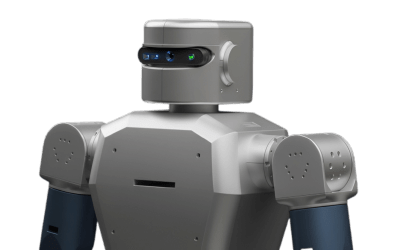
Domo
Domo is a compact, developer-focused humanoid robot engineered by ROTAKU for embodied AI research, locomotion policy training, and whole-body control experiments. Standing approximately 90 cm tall with a weight of 20 kg, it features 23 degrees of freedom and delivers 70 Nm of motor torque, enabling dynamic bipedal walking and manipulation tasks. The platform supports reinforcement learning, imitation learning, and sim-to-real workflows, with optional NVIDIA Jetson Orin NX compute, VR-based teleoperation, and dexterous hand attachments. Designed for labs, universities, and startups, Domo is not a consumer home robot but a scalable research platform for testing AI-driven physical behaviors in real-world environments.
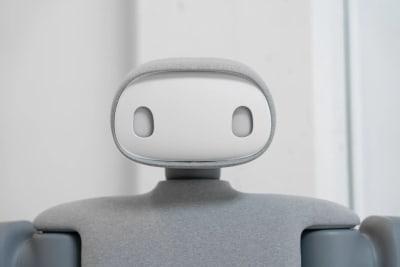
Isssac 1
Isaac 1 is a practical mobile home service robot designed from the ground up for residential use, featuring dual humanoid arms mounted on a wheeled base. Unlike traditional humanoid robots that rely on bipedal locomotion, Isaac 1 utilizes a motorized wheeled platform for autonomous navigation between rooms, ensuring stability and efficiency in home environments. It autonomously performs household chores such as folding laundry, making beds, sorting clutter, and straightening cushions, with remote human teleoperation available as a backup for complex tasks. The robot offers an 8-hour battery life, charges in approximately 2 hours, and connects via Wi-Fi for seamless operation. Its design includes soft, swappable fabric shells in five pastel colors, providing a friendly aesthetic and passive safety for children and pets while blending into home decor.
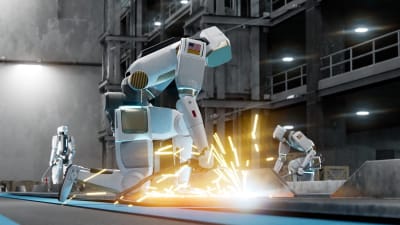
Persona Humanoid
Persona Humanoid is an industrial-grade bipedal robot engineered for heavy-duty applications in shipyards, construction sites, and manufacturing facilities. Built on a modular platform, it performs skilled physical tasks including welding, grinding, inspection, and material handling with extreme dexterity. The robot operates autonomously in complex, uneven environments, adapting to dynamic conditions while supporting human workers. Powered by advanced embodied AI and trained on extensive datasets, it features robust navigation, force-sensitive manipulation, and long runtime for multi-shift operations. Designed for safety and endurance, Persona Humanoid integrates seamlessly into industrial workflows, offering a transformative solution for repetitive, high-value labor where precision and reliability are critical.
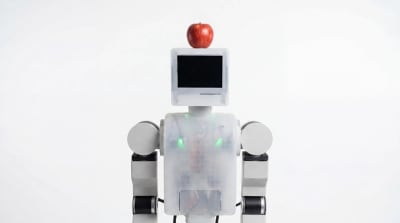
Eden-1
Eden-1 is a semi-humanoid robotic platform engineered for manufacturing and logistics environments, designed to fill human-designed workstations without complex integration. It features a distinctive translucent torso that reveals internal mechanics, emphasizing its plug-and-play architecture for rapid deployment. The robot stands 5'6" tall and supports a maximum load of 30 lb, with each arm capable of carrying 3–5 kg for dual-arm manipulation tasks. Eden-1 operates for 4–6 hours on a single charge, balancing runtime with industrial shift demands, and leverages autonomous navigation to perform tasks requiring less than five minutes of human effort. Its design prioritizes reliability and scalability, enabling companies to hire physical agents by hourly usage rather than purchasing hardware outright.
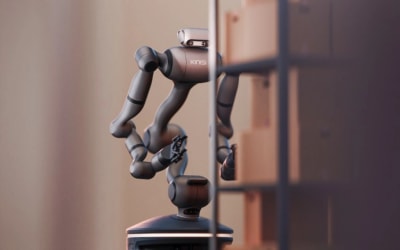
Kinsi 01
Kinsi 01 is a wheeled humanoid robot engineered by Kinsi Robotics for high-throughput logistics and warehouse automation. Standing 162 cm tall, it combines LLM-driven intelligence with a stable wheeled base to achieve speeds up to 14.4 km/h, significantly outperforming unstable bipedal prototypes in shared spaces. The robot features dual arms with a 10 kg payload capacity per arm, enabling precise pick-and-place, sorting, and assembly tasks. Powered by hot-swappable batteries, it offers an 8-hour runtime for continuous shifts. Equipped with stereo depth cameras and a 180° LiDAR array, Kinsi 01 utilizes visual SLAM for autonomous navigation and obstacle avoidance. Its onboard NVIDIA Jetson computing ensures rapid local decision-making without cloud dependency, while imitation learning allows operators to teach tasks via simple demonstration, eliminating the need for complex coding.
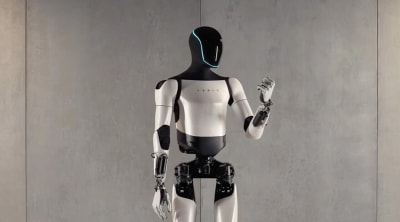
Optimus Gen 3
Tesla Optimus Gen 3 is a general-purpose humanoid robot designed for both industrial and future home applications, featuring advanced bipedal locomotion and unprecedented hand dexterity. While the main body retains the Gen 2 chassis (173 cm tall, 57 kg), the "Gen 3" designation specifically refers to the upgraded 22-degree-of-freedom hands powered by 50 actuators, a 4.5x increase over previous versions. This robot excels in factory tasks such as sorting battery cells, moving items between bins, and handling fragile objects like eggs without damage. Powered by a 2.3 kWh battery and Tesla's adapted Full Self-Driving AI, it achieves walking speeds of 5–8 km/h and can carry payloads up to 20 kg per arm or deadlift 68 kg. With a runtime of 10–12 hours, Optimus Gen 3 represents a critical step toward mass-producing affordable, autonomous humanoids for repetitive and dangerous tasks.
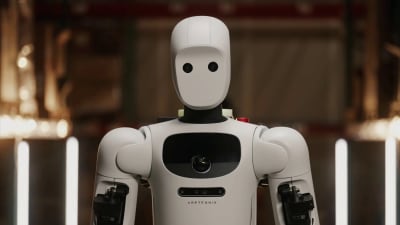
Apollo 2
Apollo 2 is a next-generation modular humanoid robot engineered for the demanding realities of warehouse logistics and manufacturing. Standing 5'8" (172 cm) tall and weighing 160 lbs (73 kg), it matches human scale to operate safely alongside workers. The robot features a swappable battery architecture enabling approximately 4 hours of operation per pack, supporting continuous "7x22" workflows with minimal downtime. It can lift and carry payloads up to 55 lbs (25 kg), making it ideal for moving crates, totes, and boxes. Apollo 2 supports dual mobility modes: bipedal legs for human environments and a wheeled base for warehouse floors. Powered by Apptronik's proprietary high-efficiency actuators and a three-layer software stack including Artemis motion control, it targets six key applications such as goods-to-person retrieval, packout, and machine tending.
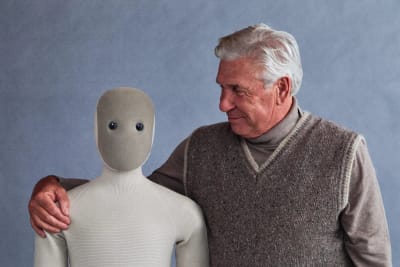
NEO Home Robot
NEO Home Robot is a human-scale bipedal humanoid designed for domestic assistance, light manipulation, and conversational interaction. It stands about 5 feet 6 inches tall, weighs 66 pounds, and is built to move through homes with narrow doorways and everyday clutter. The robot is optimized for safe household work, combining compliant tendon-driven actuation, high-dexterity hands, and quiet operation. It can walk, turn in place, and perform object handling tasks such as carrying groceries, retrieving items, and assisting with routine chores. NEO also emphasizes teleoperation-backed autonomy, making it useful for supervised learning, home support, and future general-purpose service applications.
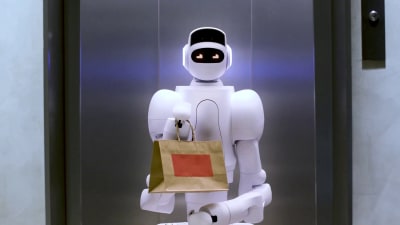
Aeo
Aeo is the premier dual-armed mobile service humanoid robot developed by Aeolus Robotics, designed to alleviate severe labor shortages across eldercare, healthcare, and commercial property facilities. Deployed extensively across Japan, Taiwan, Hong Kong, and North America, Aeo combines a dynamic wheeled base with two third-generation 7-DoF articulated arms capable of simultaneous, independent tasks. One arm can manipulate door handles or elevator buttons while the second delivers food, runs medication, or operates a germicidal ultraviolet disinfection lamp. Equipped with third-party developer integration (Asratec, Malibu AI), Aeo uses AI vision algorithms to assess resident posture, detect open windows or lost luggage, and navigate safely around vulnerable people.
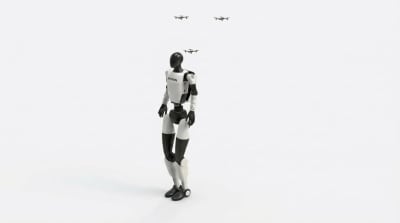
NETRION-C
NETRION-C is the civilian and industrial edition of the NETRION humanoid robotics platform, developed by VISION ONE. Sharing the core modular architecture of the NETRION program, NETRION-C is optimized for commercial manufacturing plants, logistics distribution hubs, automated scientific laboratories, and human-collaborative workflows. Standing 175 cm tall and weighing 78 kg, the robot delivers whole-body balance, compliant bimanual manipulation, and seamless integration with existing enterprise industrial automation architectures. Its Edge-AI Vision framework powers real-time semantic scene understanding, collision-free trajectory generation, and safe worker interaction compliant with international industrial safety mandates.

NETRION-M
NETRION-M is the military and defense variant of the NETRION humanoid robotics platform, developed by U.S. Army Veteran-owned technology firm VISION ONE. Selected as a finalist for the U.S. Army Humanoid Autonomy Program in 2026, NETRION-M is engineered for defense logistics, maintenance, munitions handling, and human-machine tactical teaming across forward operating bases, supply depots, and contested environments. The platform features ruggedized high-torque actuators, MIL-STD hardened ballistic enclosures, anti-jam secure communications, and edge-AI vision architectures that operate reliably in GPS-denied, degraded, and hazardous conditions to reduce physical risk to warfighters.