Robots from Japan
Discover 43 robots and autonomous systems developed by pioneering robotics manufacturers headquartered in Japan.
Select any country to view its robotics innovations.
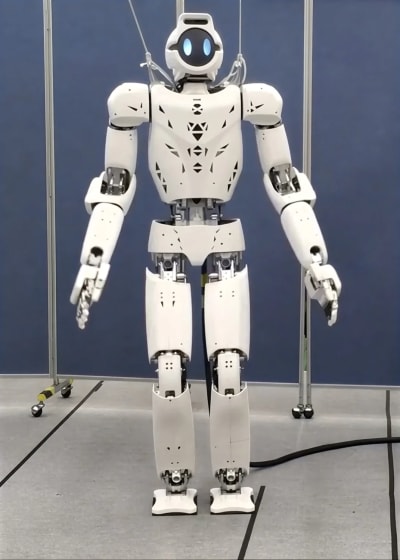
Kaleido 8.0
The Kaleido 8.0 is an advanced humanoid robot developed by Kawasaki Heavy Industries as part of its Robust Humanoid Platform program. As the eighth generation in the Kaleido series, it focuses on real-world task execution through stable bipedal locomotion, force-sensitive joints, and real-time balance correction. The robot is designed for collaborative work with humans, enabling coordinated object handling and adaptive movement in dynamic environments.
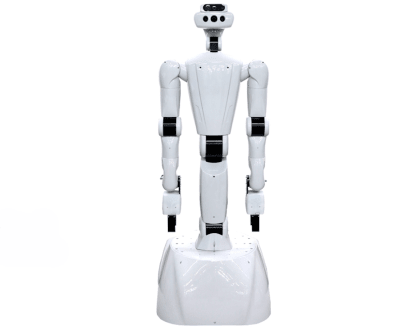
Torobo
Torobo is a torque-controlled upper-body humanoid robot designed for advanced AI and robotics manipulation research, mounted on a 4-axis omnidirectional wheeled mobile base. Standing 166 cm tall and weighing 160 kg (standard configuration with base, battery, and compute; earlier prototypes weighed approx. 120 kg), it is equipped with dual 7-axis arms, a 3-axis waist, and a 3-axis neck, providing 24 active degrees of freedom. High-precision torque sensors in all arm and waist joints enable compliant impedance control, force limiting, and sensitive collision detection for safe human collaboration and delicate contact tasks like hammering, sawing, and wiping. Torobo executes ROS-based trajectory planning and MuJoCo simulation, integrating modular depth sensors and omnidirectional wheeled navigation for structured research, industrial automation, and assistive healthcare environments.

CUE7
CUE7 is Toyota's advanced research humanoid robot designed to demonstrate precision motion, perception, and AI-driven athletic performance through basketball tasks. Standing 7 feet 2 inches tall and weighing 163 pounds, the robot represents a complete redesign philosophy emphasizing embodied AI over pre-programmed instructions. CUE7 integrates reinforcement learning with model predictive control, enabling dynamic movements including dribbling, shooting, and natural posture transitions. The platform combines real-time visual recognition, distance calculation, and trajectory optimization to execute complex athletic maneuvers with high repeatability. Its lightweight construction, dual-wheel inverted base, and human motion-trained behaviors create surprisingly natural movement patterns that mirror human athletes rather than mechanical systems.
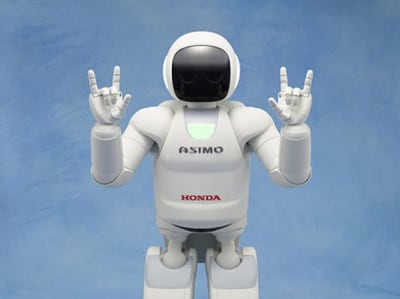
ASIMO 2.0
ASIMO (Advanced Step in Innovative MObility) is a pioneering bipedal humanoid robot developed by Honda. The second-generation model (ASIMO 2.0) was introduced in 2005, and the final version in 2011. While Honda officially concluded the ASIMO development project in 2018, ASIMO remains a foundational milestone in humanoid robotics and dynamic bipedal locomotion history.
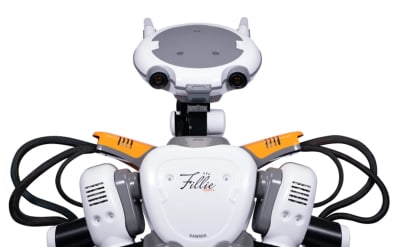
NEXTAGE Fillie
The NEXTAGE Fillie is a compact collaborative humanoid robot designed for safe human-robot interaction in industrial and research settings. Featuring a humanoid form with dual arms, it excels in assembly tasks, object manipulation, and environment recognition using integrated stereo cameras on the head and optional hand cameras. With 15 degrees of freedom across arms, neck, and waist, it offers precise movements with 1.5kg payload per arm and 0.03mm repeatability. Its smaller, lighter design compared to predecessors enables quicker motions while maintaining curved arm shapes to prevent pinching. Equipped with LED status indicators on "feelers" for visibility, Fillie supports image-based navigation and versatile end-effectors for tasks like reception, inspection, and logistics. Ideal for manufacturing side-by-side with humans, it emphasizes likeable aesthetics, cost-performance, and expandability for R&D or production automation.
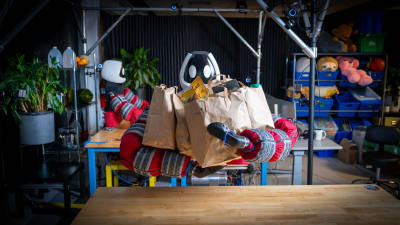
Punyo
Punyo is a soft humanoid robot developed by Toyota Research Institute for whole-body manipulation research, emphasizing safe human-robot interaction in assistive scenarios like aging in place. Its upper body features compliant materials covering hands, arms, and chest, integrated with tactile sensors and air-filled bladders for adaptive stiffness and force sensing during contact-rich tasks. Underneath lies a rigid structure with two precise robot arms, torso frame, and waist actuator, enabling hybrid precision and compliance. Punyo's "paws"—inflatable latex bubbles with internal cameras detecting dot pattern deformations—facilitate gripperless grasping of bulky objects by hugging to the torso or slinging onto shoulders. Trained via teleoperation, diffusion policy learning from demonstrations, and example-guided reinforcement learning, it handles groceries, furniture, dishwashers, and doors. With a wheeled base for mobility, ROS2 support, and focus on household chores, Punyo prioritizes safety, dexterity, and natural movements over rigid manipulation.
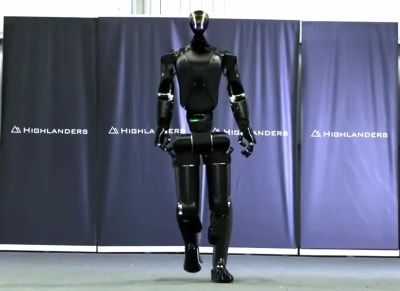
HL Ninja
HL Ninja, also called HL Human or simply "N", is Highlanders' bipedal general-purpose humanoid, revealed as a prototype in June 2025 after the company's Ninja v1 and v2 walking testbeds. Standing about 1.4 m tall with 19 degrees of freedom, it is built to work in factories, logistics sites and disaster scenes using existing tools, passages and equipment. In July 2026 Highlanders and Mitsubishi Motors agreed to co-develop it, with production targeted at Mitsubishi's Kyoto plant from early 2027.
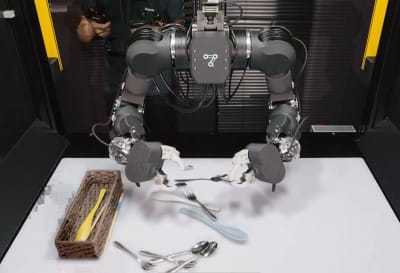
Ena
Ena is a next-generation physical AI humanoid service robot developed by Tokyo-based robotics company Enactic (founded by Hiro Yamamoto). Engineered to live alongside humans in chaotic and dynamic environments like care homes and domestic dwellings, Ena builds upon Enactic's OpenArm physical AI manipulation platform. The robot is designed with a safe, compliant exterior to prevent accidental injury while executing fine-motor domestic tasks such as washing dishes, sorting laundry, and preparing items. Leveraging an ultra-fast teleoperation-to-autonomy flywheel, Ena trains Vision-Language-Action (VLA) neural policies with as few as 30 to 50 human demonstrations, transitioning from remote supervisory assistance to end-to-end autonomous physical intelligence.
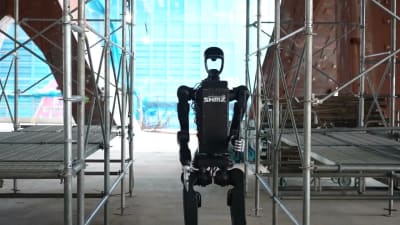
Shimizu Humanoid
The Shimizu Humanoid is a bipedal humanoid robot that Shimizu Corporation, one of Japan's largest builders, is trialling on its own construction sites as part of a full-scale 'AI robot' (physical AI) programme announced on July 8, 2026. In a trial at the Torch Tower site in Tokyo (Tokiwabashi Project), the robot autonomously walked a pre-set route at 1.0 m/s while holding a camera, sensing and judging site conditions. Shimizu is developing it with technical cooperation from Sony and others, and plans to analyse its footage with a multimodal large language model. Shimizu has not published the robot's maker, model or specifications.
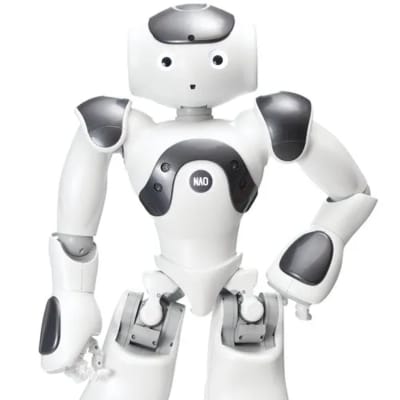
NAO
NAO is a compact bipedal humanoid robot renowned for its interactive capabilities in education, research, and healthcare. Standing at 58 cm with 25 degrees of freedom, it features human-like proportions enabling fluid walking, waving, dancing, and sitting motions. Equipped with dual HD cameras for face and object recognition, four directional microphones for speech interaction in 20+ languages, and an array of sensors including sonars, inertial units, force-sensitive resistors, and tactile sensors, NAO perceives its environment intuitively. Powered by NAOqi OS on an Intel Atom processor, it supports programmable behaviors via Choregraphe suite, including fall detection/recovery and balancing. Its LED eyes and expressive gestures foster engaging human-robot interaction, making it ideal for STEM teaching, autism therapy, RoboCup competitions, and social robotics studies. Robust polycarbonate construction ensures durability for repeated use in dynamic settings.
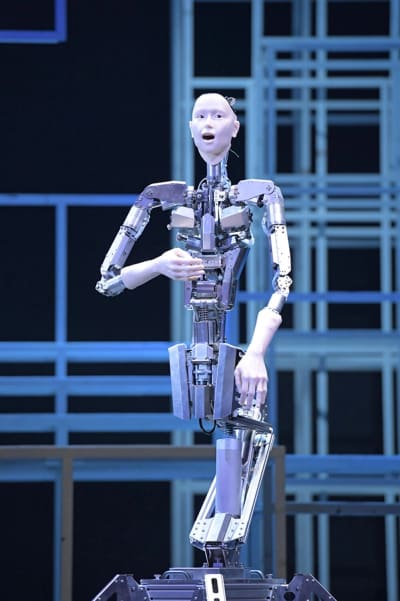
Alter 3
Alter 3 is an advanced humanoid robot engineered for exploring artificial life, expression, and human-robot interaction through dynamic, autonomous movements. Featuring 43 pneumatic actuators, it generates spontaneous gestures, facial expressions, and simulated locomotion like walking or running without bipedal mobility. Integrated with GPT-4 for interpreting verbal instructions into physical actions, it mimics human behaviors, emotions, and even non-human entities such as ghosts or animals. Equipped with eye cameras for visual learning and a vocal mouth for sound production, Alter 3 excels in artistic performances, including orchestra conducting and opera participation. Its exposed mechanical structure emphasizes minimalism, using central pattern generators and neural networks for unpredictable, evolving interactions that challenge perceptions of life and creativity in robotics.
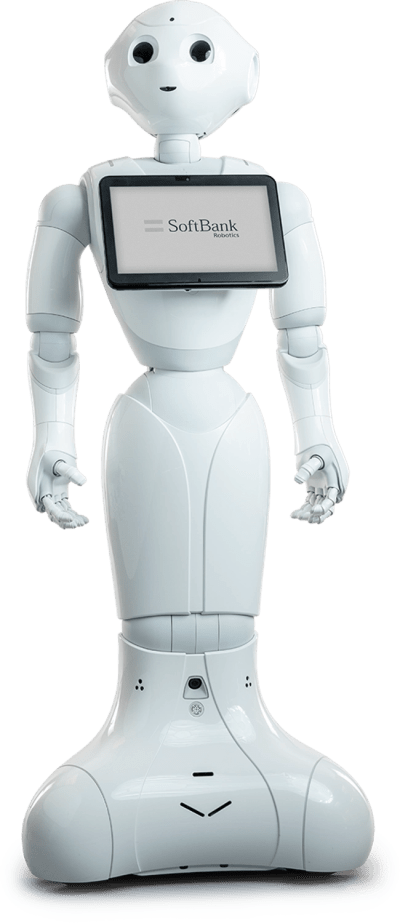
Pepper
Pepper is a humanoid social robot engineered for human interaction, featuring expressive facial animations via LED eyes and gestures powered by 20 DC motors. Standing at 120 cm with omnidirectional wheeled mobility reaching 3 km/h, it navigates indoor spaces using laser scanners, sonars, and cameras for obstacle avoidance and people detection. Equipped with dual 5MP HD cameras, a 3D depth sensor, four microphones, and touch sensors, Pepper recognizes faces, emotions, and voices in over 20 languages. Its chest-mounted 10.1-inch tablet enables touch interactions, while NAOqi OS supports Python, C++, Java, and Choregraphe for custom behaviors. Ideal for retail, education, healthcare, and hospitality, Pepper engages users through speech synthesis, dialogue engines, and emotional responses, fostering natural collaboration without true bipedal walking but mimicking humanoid proportions for approachability.
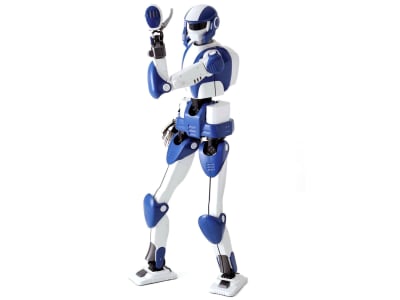
HRP-4
The HRP-4 is a lightweight, slim humanoid robotics platform developed for advanced research in human-robot collaboration and bipedal locomotion. Standing at 151 cm tall and weighing just 39 kg, it features 34 degrees of freedom, including 7 DOF per arm for precise object manipulation and 6 DOF per leg for stable walking. Equipped with low-power motors under 80W for enhanced safety around humans, it performs natural movements like waist twisting, one-footed balance, and dexterous five-fingered hand grasping. Cameras and microphones enable face recognition, object tracking, and voice command response. Designed as a successor to HRP-2 and HRP-3, HRP-4 supports indoor navigation in human environments, with flexible joints for athletic poses and tasks. Its compact, human-proportioned body facilitates safer interaction, object handling up to 0.5 kg per arm, and motion control software from AIST, accelerating humanoid R&D for practical applications like assistive work.
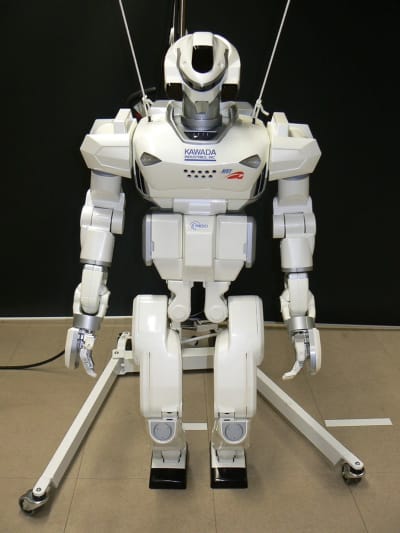
HRP-3
The HRP-3 humanoid robot, developed by Kawada Industries in collaboration with AIST and Kawasaki Heavy Industries, represents a significant advancement in bipedal robotics for harsh environments. Standing at 160 cm tall and weighing 68 kg, it features 36-42 degrees of freedom, enabling complex manipulations and stable locomotion on slippery or uneven surfaces. Designed for disaster relief, construction, and industrial tasks, HRP-3 boasts dustproof and water-resistant construction, allowing operation under heavy rain or dust. Enhanced leg-arm coordination supports carrying heavy loads, while autonomous/remote hybrid control improves task efficiency. Equipped with stereo cameras, gyroscopes, accelerometers, and force sensors, it navigates challenging terrains, recovers from falls, and performs collaborative work with humans. Its robust hardware and advanced software make it a pioneer in practical humanoid applications beyond laboratories.
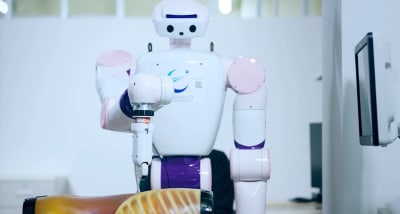
AIREC
AIREC is a humanoid robot developed by Waseda University under Japan's JST Moonshot Program, specializing in elderly care and medical assistance. Standing 154 cm tall and weighing 150 kg, it features bipedal design with advanced AI for real-time human movement recognition, force adjustment, and adaptive behaviors. Key capabilities include patient repositioning to prevent bedsores, assisting with dressing like putting on socks, joint rehabilitation, biometric data acquisition (heart rate, blood pressure, body temperature), ultrasound examinations, and basic cooking motions. Powered by deep neural networks for predictive joint movements and embodied intelligence, AIREC integrates multimodal learning from human demonstrations, enabling natural physical interactions, emotional expression, and semi-autonomous caregiving tasks in nursing environments. Variants like Dry-AIREC emphasize safe, pain-free support for daily activities, bridging the gap in Japan's aging society.

Cinnamon 1
Cinnamon 1 is a next-generation mass-produced bipedal humanoid robot developed by Donut Robotics, designed for noisy industrial environments like construction sites and factories. It features autonomous AI powered by a Vision-Language-Action (VLA) system, enabling it to interpret visual, linguistic, and contextual cues to perform tasks independently. A standout capability is its world-first "Silent Gesture Control," allowing operators to command the robot via hand gestures instead of voice, ensuring functionality in high-decibel settings. Built on an OEM platform with custom AI integration, Cinnamon 1 aims to replace human labor in security, light manufacturing, and customer service roles, with domestic Japanese production planned for future iterations.
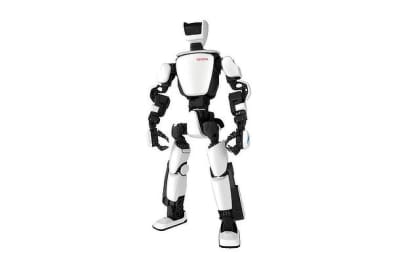
Toyota T-HR3
Toyota T-HR3 is a third-generation research humanoid robot developed by Toyota's Frontier Research Center to explore friendly and safe human-robot coexistence, remote medical care, and disaster response. Standing 154 cm tall and weighing 75 kg, T-HR3 is controlled by a synchronized Master Maneuvering System (MMS) chair that mirrors human operator motions in real time via VR headsets and data gloves. It features 32 degrees of freedom across its frame with 29 proprietary Torque Servo Modules developed by Toyota and Tamagawa Seiki, incorporating ultra-thin Cr-N alloy force-torque sensors. The platform provides force feedback so operators can feel contact forces, hold delicate balloons without bursting them, or perform tasks over low-latency 5G wireless networks.