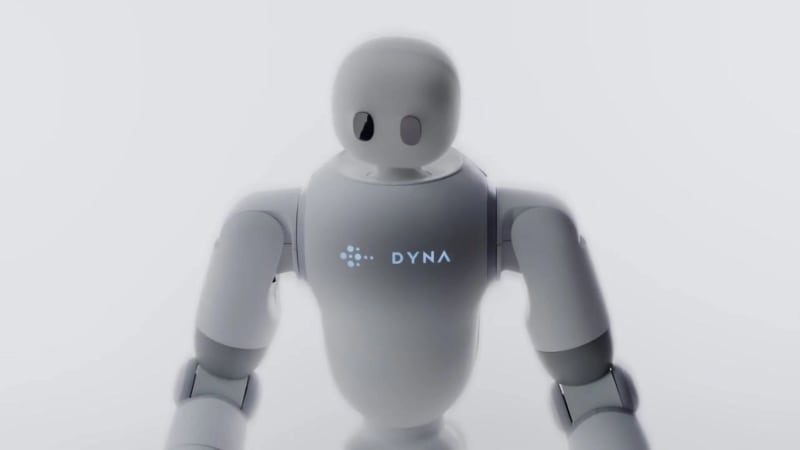
Taku
Last updated:
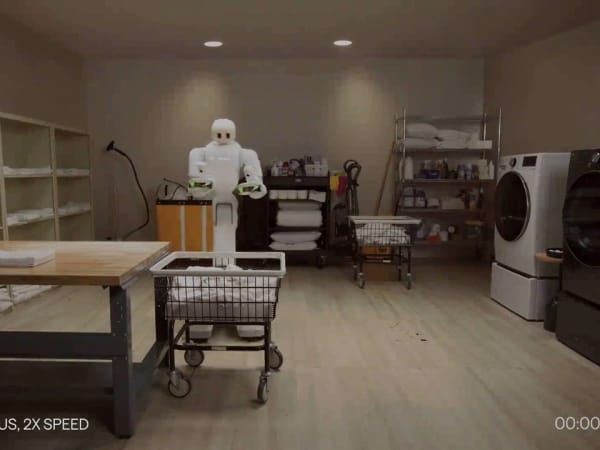
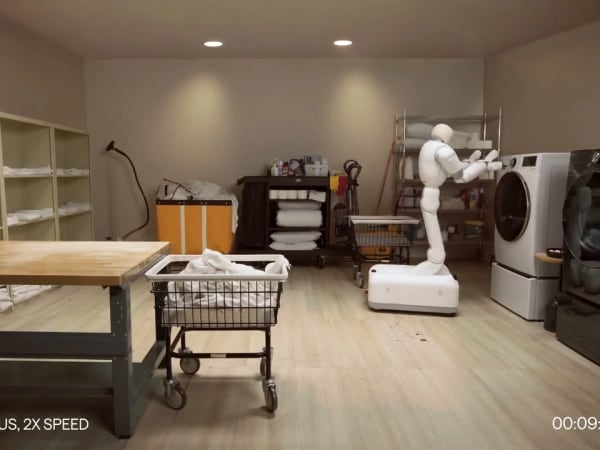
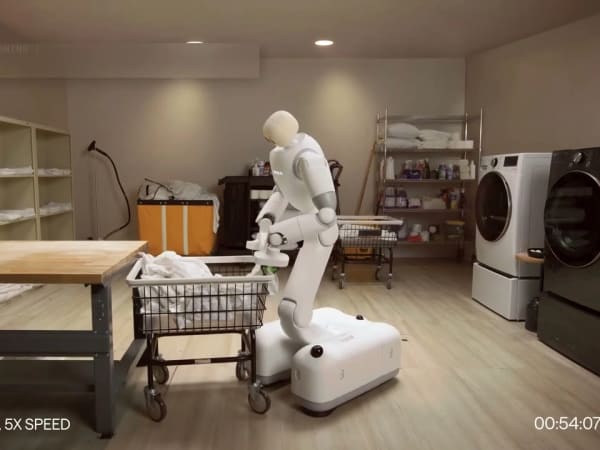
Taku is a wheeled semi-humanoid robot from DYNA Robotics, introduced on September 29, 2026 as the body of Dyna-2.1, a "physical agent" built to take over whole workflows rather than single tasks. Its name comes from the Japanese word takumi (master craftsman). Taku has a human-shaped upper body with two 7-DoF arms and parallel grippers, a folding lower body that lets it crouch to low shelves and reach above head height, and a stable base on four steerable wheels. Three model layers control it: a vision-language workflow orchestrator, an improved DYNA-2 world-action policy and a reinforcement-learned whole-body controller. In an uncut one-hour demo it ran a hotel laundry room on its own: loading washers, moving towels to the dryer, then folding, stacking and shelving them. DYNA says the same system already works in hotels, restaurants and laundromats.
Quick Overview & Key Facts
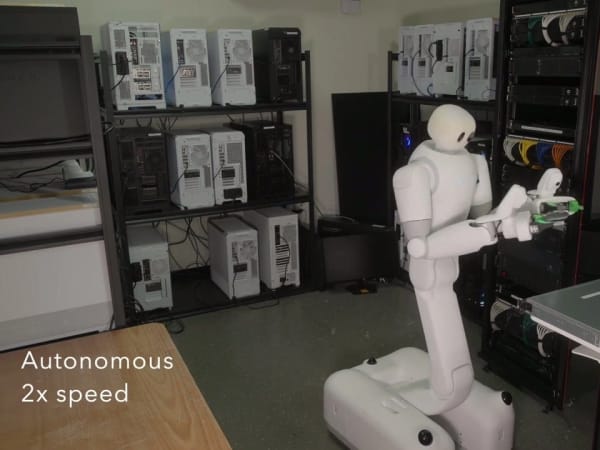
Taku is a humanoid system developed by DYNA Robotics in United States and launched in 2026. Starting price is estimated at $60,000 – $120,000. It is currently ranked #339 in most-viewed humanoid robots on Origin of Bots. It supports Towels and linens, laundry baskets, detergent pods, folded stacks, food and drink items, servers and light commercial objects. Operating battery runtime is rated at Approx. 4–8 hours per charge. Primary applications include Hotel and commercial laundry rooms (washer and dryer loading, towel folding, stacking and shelving), hotel housekeeping, restaurant and food-service tasks such as plating and chopping, stocking shelves, retrieving items from refrigerators, and data-center server servicing.
What Can Taku Do?
Core operational tasks and activities demonstrated or performed by Taku.
Real-World Applications of Taku
Industries, working environments, and deployment suitability for Taku.
Taku Capabilities
Inherent physical, perceptual, and cognitive abilities built into Taku.
Download Media Cards
Story CardExport high-resolution story cards summarizing Taku's operational tasks, real-world applications, and capabilities.
Image Gallery
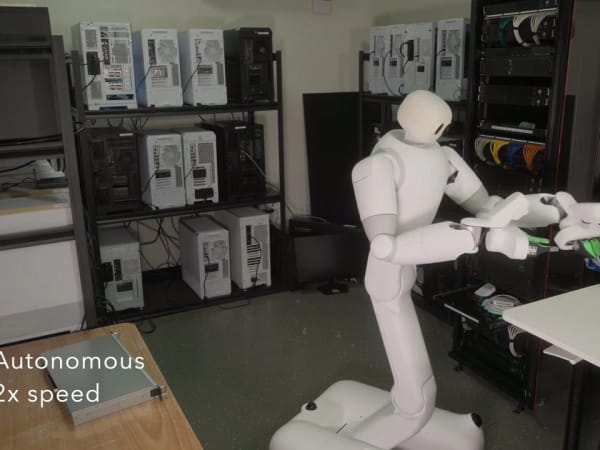
Below images are from DYNA Robotics's official sources
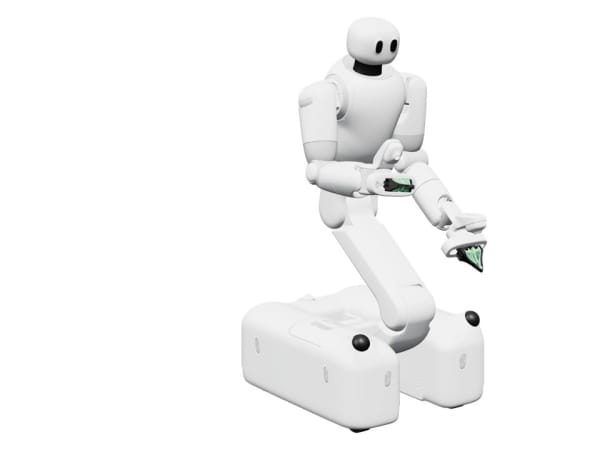
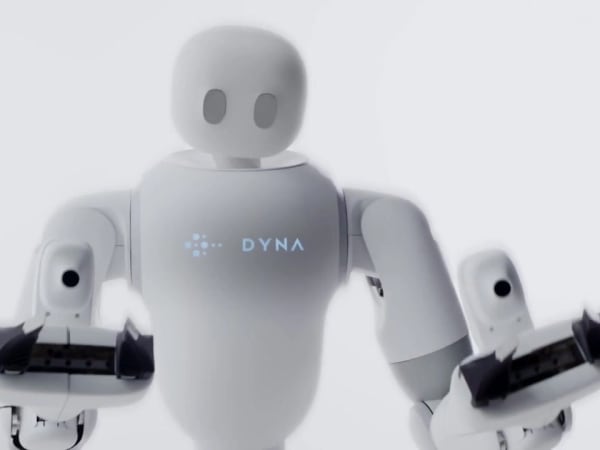
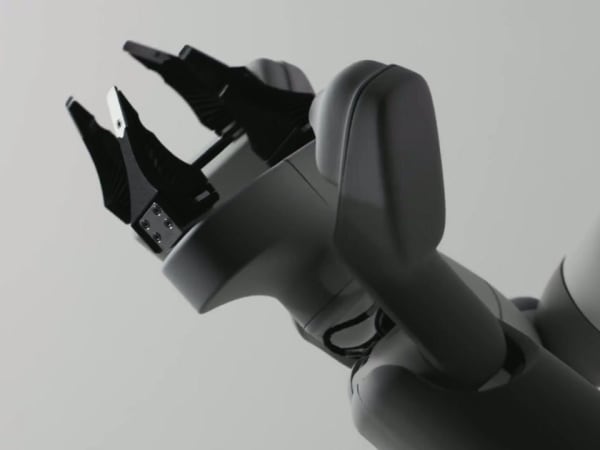
Review Videos
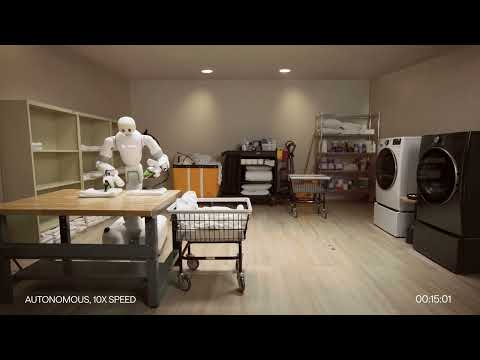
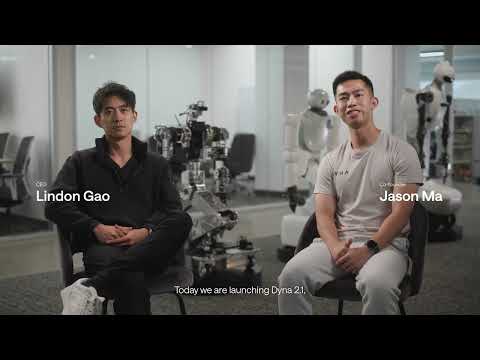
Watch expert reviews and demonstrations of this robot
Robot Specifications
Robot Timeline
Key milestones in this robot's development and rollout
DYNA Robotics releases DYNA-1, its first production-ready robot foundation model, which folds napkins for 24 hours without an intervention on the folding task, laying the groundwork for Taku.
Source: DYNA Robotics ↗
DYNA Robotics closes a $120 million Series A led by CRV, First Round Capital and RoboStrategy to scale its robot foundation models toward general-purpose robots.
Source: The Robot Report ↗
DYNA publishes DYNA-2, a world-action model pre-trained on about one million hours of human video, the policy that later drives Taku.
Source: DYNA Robotics ↗
DYNA introduces Taku, a wheeled semi-humanoid, with the Dyna-2.1 physical agent and an uncut one-hour autonomous hotel laundry-room workflow.
Source: DYNA Robotics ↗
More Humanoid Robots
Discover more robots in the same category
Robots From Other Categories
Discover complementary robots from different categories that work well together
Frequently Asked Questions
Get answers to common questions about this robot
Q1. What is Taku, and what problem is it designed to solve?
Taku is a semi-humanoid robot from DYNA Robotics, named after the Japanese word for a master craftsman. It is built to take over complete workplace workflows, such as running a hotel laundry room, so that a person can hand off the job and check back later instead of supervising the robot.
Q2. What are the main capabilities and key features of Taku?
Taku combines a human-shaped upper body and two dexterous arms with a folding lower body and a steerable wheeled base, so it can reach from the floor to above head height and move between stations. It is run by the Dyna-2.1 physical agent, which plans the workflow, carries out each step and recovers from its own mistakes.
Q3. Who is Taku built for, and which industries can benefit from it?
It is aimed at commercial operators: hotels, laundromats and commercial laundry, restaurants and food service, and other sites with repetitive handling work such as stocking shelves or servicing servers in a data center.
Q4. Is Taku a commercial product or still a research prototype?
It is a commercial product built for real work. DYNA says the Dyna-2.1 system is already used with customers in hotels, restaurants and laundromats, although Taku itself was only introduced in late 2026.
Q5. Is Taku currently available for purchase, and when is it expected to ship?
DYNA does not sell Taku through a public store or list a price. Businesses can apply for a pilot through the DYNA website, and deployment terms are agreed with each customer.
Q6. How does Taku actually work in real-world environments?
A vision-language model tracks the workflow and decides the next step, a world-action policy turns that step into whole-body motion targets, and a learned whole-body controller moves the arms, torso and wheels to follow them. It watches the machines while it works and handles dropped items or interruptions on its own.
Q7. When was Taku announced or officially launched?
DYNA Robotics introduced Taku together with the Dyna-2.1 physical agent at the end of September 2026, with an uncut demo of the robot running a hotel laundry room autonomously.
Q8. How is Taku different from other robots in the same category?
Most robots in this class are demonstrated on single tasks. Taku is designed and trained for long, non-linear workflows, it learns from human video through a shared body representation, and it chose wheels over legs because the target workplaces need reach and precision more than walking.
Q9. Does Taku require additional development or customization after purchase?
Some site-specific teaching is expected. DYNA says new skills can be learned from a short amount of on-robot data plus human recordings, and that new sites reach their production bar much faster than before, so customers work with DYNA to teach their own procedures.
Q10. What is the future roadmap or planned upgrades for Taku?
DYNA plans to keep widening the range of workflows Taku can take over, to iterate on the hardware without losing earlier training data, and to improve reliability through fleet learning as more sites are deployed.
Rating and Reviews
Share your experience and help others decide!
Loading...
User Reviews
No user reviews. Be the first one to review!
User Comments (No Login needed)
Share your thoughts, experiences, or questions about this robot.
Comments are reviewed before posting.