Agility Robotics Explores Wheeled Humanoid Variants to Complement Bipedal Digit Fleet
Robot Details
Digit • Agility RoboticsPublished
September 25, 2026
Reading Time
4 min read
Author
Origin Of Bots Editorial Team
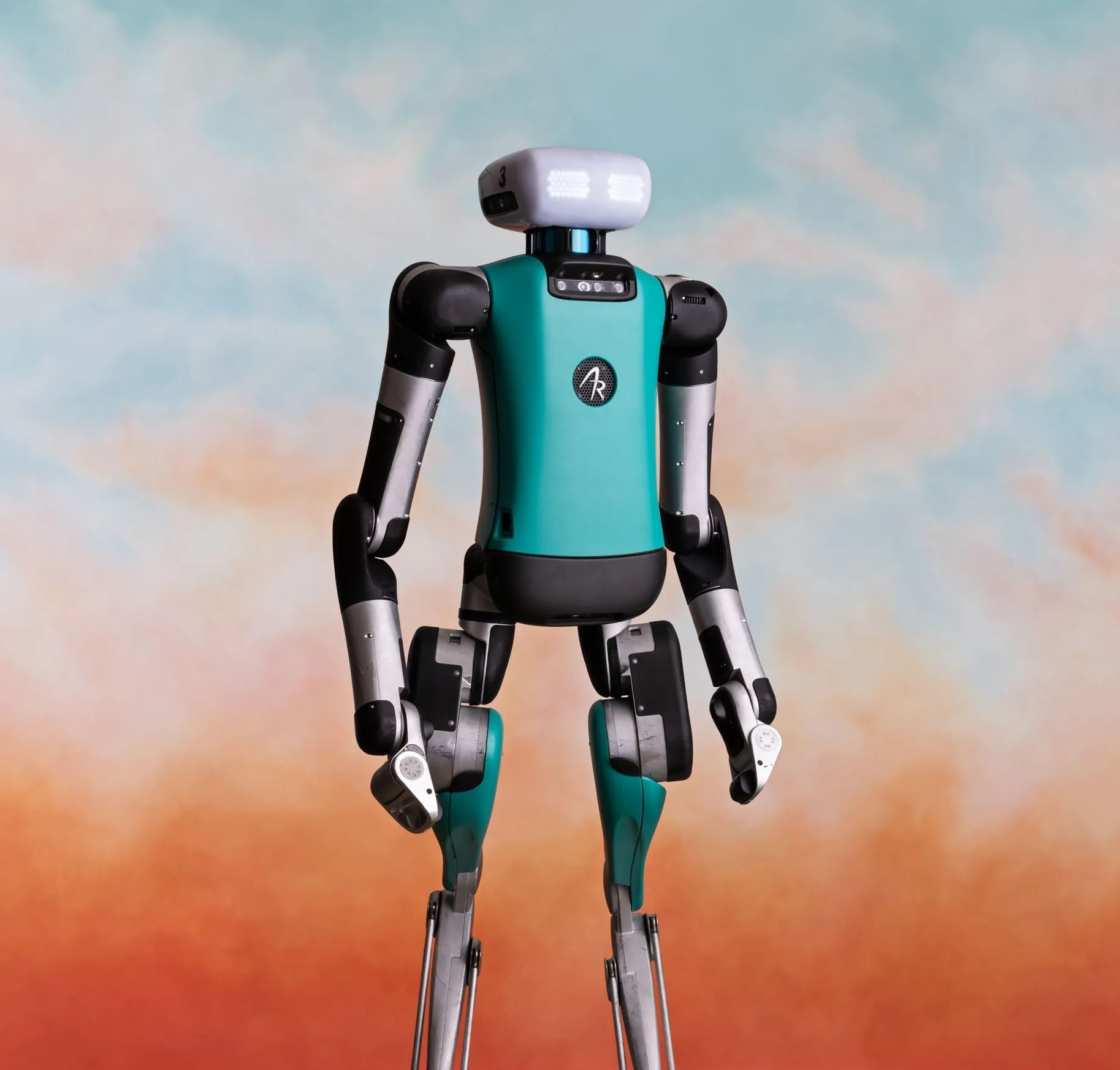
Teaser Reveal Sparks Industry Speculation on Wheeled Mobility
When Agility Robotics officially unveiled its fifth-generation humanoid Digit 5, a brief visual near the conclusion of the broadcast captured global attention. The promotional sequence displayed an anthropomorphic upper-torso robotic manipulator mounted securely atop an autonomous wheeled base. Industry observers immediately questioned whether the pioneer of dynamic legged locomotion was reconsidering its exclusive commitment to bipedalism.
Agility has built its corporate identity and commercial brand around biological legged mechanics for more than a decade. Seeing a wheeled variant emerge from its research laboratories signaled a potential philosophical pivot toward practical warehouse pragmatism. Robotics analysts quickly recognized that introducing wheeled form factors could expand the company's addressable commercial market significantly.
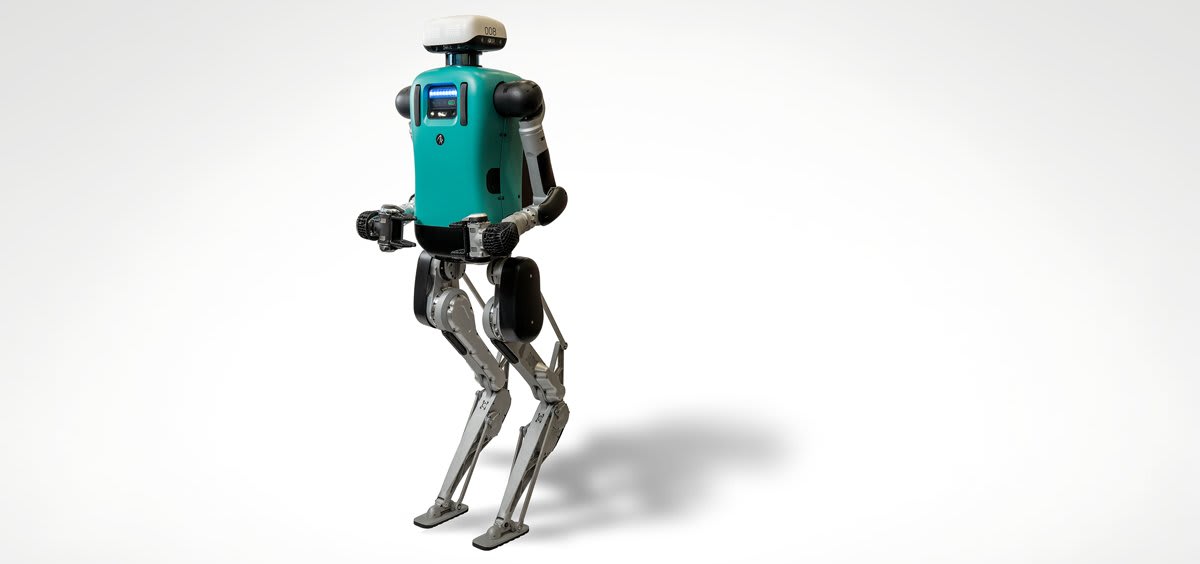
CEO Jonathan Hurst Confirms Multi-Form Factor Exploration
In an exclusive interview with The Robot Report, Agility Robotics Chief Executive Officer and Chief Robot Officer Jonathan Hurst confirmed the development. Hurst affirmed that the company is actively investigating diverse robot form factors, including wheeled mobile manipulators, to meet varied operating requirements. He explained that commercial customers require immediate, reliable material handling solutions tailored to specific facility constraints.
Hurst noted that while legged robotics capabilities advance rapidly, legged systems are not yet optimal for every commercial scenario. Wheeled platforms offer an immediate, cost-effective pathway to bring advanced robotic manipulation into flat-floored enterprise facilities sooner. He characterized the initiative as a pragmatic effort to align robotic engineering with urgent customer deployment timelines.
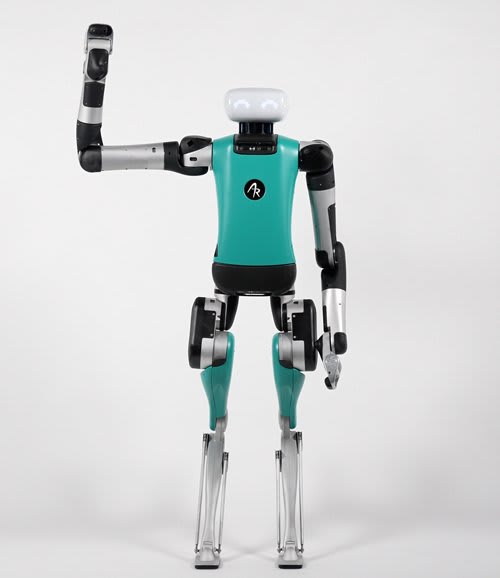
The Evolution from Biomimetic Purity to Commercial Realism
The exploration of wheeled systems marks a notable evolution for an organization deeply rooted in academic biomechanics research. Hurst spent decades studying bird locomotion and animal kinematics before co-founding Agility to commercialize bipedal walking. However, the company has recently shown an increasing willingness to adapt mechanical architecture to harsh commercial realities.
With Digit 5, Agility discarded its iconic backwards-bending knees in favor of forward-bending joints that allow stable static kneeling. Adopting forward joints enabled the robot to squat down safely and shut off its motors when human workers approach. Moving toward wheeled variants further illustrates Agility’s transition from rigid research dogma toward flexible commercial problem-solving.
Overcoming Heavy Payload and Battery Constraints in Logistics
The technical rationale for wheeled humanoids stems directly from the severe physical constraints of industrial logistics environments. Bipedal humanoids expend tremendous electrical energy merely maintaining dynamic balance, particularly when carrying heavy twenty-kilogram tote boxes. Every additional kilogram of carried payload increases the mechanical torque and heat dissipation demanded from hip and knee actuators.
Wheeled bases eliminate the continuous energy drain of balancing, allowing machines to dedicate finite battery reserves to manipulation. Furthermore, wheeled chassis can accommodate substantially larger battery packs and heavier structural counterweights without risking dynamic tip-overs. This enables extended continuous multi-shift operations across smooth warehouse floors where stair-climbing agility is unnecessary.
Unifying Software Stacks: Agility Arc and Onboard AI
Crucially, developing a wheeled variant does not require Agility to abandon its extensive investment in artificial intelligence software. A wheeled humanoid would inherit the upper-body manipulation stack, perception systems, and safety frameworks perfected across Digit generations. Digit 5’s NVIDIA Thor IGX computing module and multi-camera vision networks could translate directly to wheeled mobile manipulation.
Furthermore, both wheeled and legged platforms will integrate seamlessly into Agility Arc, the company's enterprise fleet management portal. Warehouse operators could orchestrate heterogeneous fleets of wheeled and bipedal machines through a single unified scheduling dashboard. This software cohesion maximizes operational efficiency while minimizing system integration overhead for logistics enterprise clients.
Anticipating the State of Humanoids at RoboBusiness 2026
Agility’s strategic evolution will take center stage at the upcoming RoboBusiness conference in Santa Clara, California, on October 20. CEO Jonathan Hurst will participate in the opening keynote alongside robotics pioneer Rodney Brooks to debate the next twenty years of automation. Concurrently, Chief Technology Officer Pras Velagapudi will join leadership from Apptronik and Persona AI on the 'State of Humanoids' panel.
The industry gathering will provide an essential forum to debate whether bipedalism or wheeled mobility will dominate commercial logistics. By publicly acknowledging its wheeled explorations ahead of the conference, Agility has ignited an overdue debate on morphological fitness. Industry peers will scrutinize how Agility balances its pioneering legged legacy against pragmatic commercial market pressures.
The Strategic Outlook for Hybrid Fleet Deployment
Agility’s pragmatic willingness to embrace wheeled mobility reflects an essential maturation in the broader humanoid robotics industry. As venture funding tightens and customer proof-of-concept budgets require quantifiable returns, ideological purity is giving way to utility. Bipedal humanoids will remain vital for multi-level facilities, hazardous environments, and spaces engineered exclusively for human physiology.
However, deploying wheeled dual-arm manipulators in structured warehouses allows robotics companies to capture immediate commercial revenue. This blended approach provides the cash flow and operational data required to fund long-term bipedal foundation model refinement. By diversifying its hardware portfolio, Agility Robotics is positioning itself to lead the physical automation transition across every operational terrain.
Explore Humanoids


Related Articles

XPENG Robotics Unveils XPACE: Simulation Platform Training IRON Humanoids via Video Prediction and Synthetic Failure Recovery

Tesla AI VP Ashok Elluswamy Delivers Candid Reality Check on Optimus Remote Control and Physical Safety Stakes
Boston Dynamics Opens Robotics Metaplant Application Center to Train Atlas Humanoid Fleet for Hyundai Manufacturing

Intel Unveils Open Edge Infrastructure Strategy to Scale Physical AI and Humanoid Robotics
Related Comparisons
Compare Digit with similar robots
Optimus vs Unitree G1
Compare Optimus vs Unitree G1 for humanoid mobility, dexterity, autonomy, and payload capacity.
Unitree G1 vs Unitree H1
Head-to-head: Unitree G1 vs Unitree H1 compared on bipedal balance, AI learning, and real-world deployment.
Optimus vs Atlas (Electric Atlas, 2025)
In-depth comparison of Optimus and Atlas (Electric Atlas, 2025), covering hardware capabilities, teleoperation, and enterprise readiness.

Ameca vs Moya
Which humanoid robot is better? Ameca vs Moya compared for dexterity, AI capabilities, and price.
Learn More About This Robot
Discover detailed specifications, reviews, and comparisons for Digit.
View Robot Details →