Boston Dynamics Puts Atlas on Scooter Wheels to Push Its Motors to the Limit
Robot Details
Atlas (Electric 2025) • Boston DynamicsPublished
November 9, 2026
Reading Time
4 min read
Author
Origin Of Bots Editorial Team
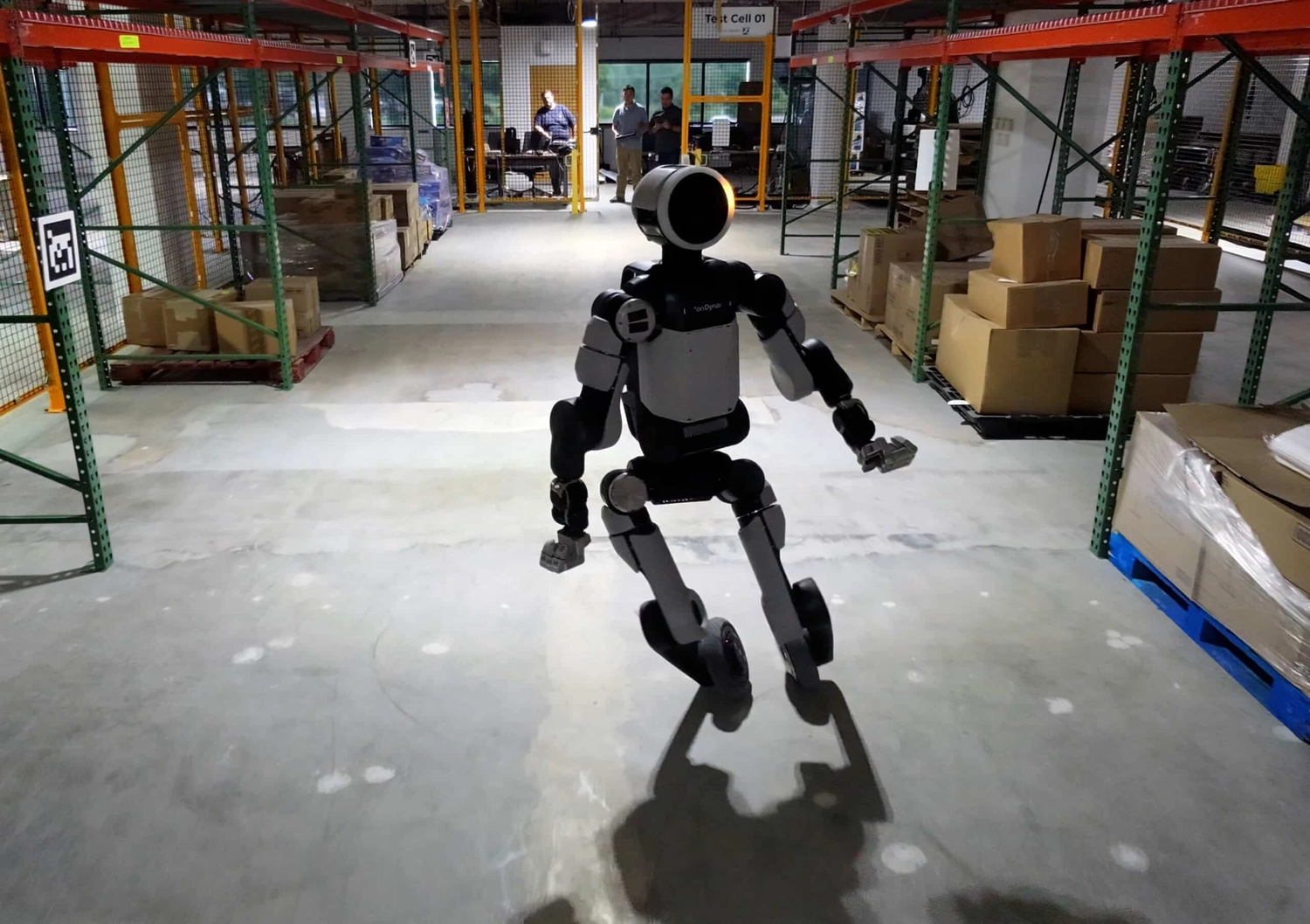
A Humanoid That Traded Its Feet for Wheels
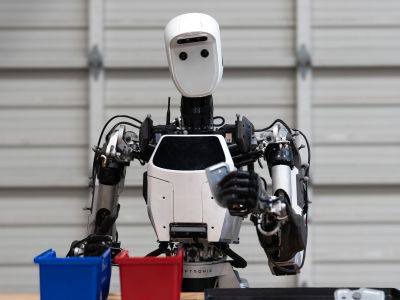
On November 9, Boston Dynamics showed its electric Atlas humanoid doing something no walking robot normally does: rolling. Engineers swapped the robot's feet for scooter wheels and let an AI controller drive it through spins, slides and a jumping 360-degree turn across a warehouse floor.
The company is clear that a wheeled Atlas is not a product it plans to sell. It is a research experiment, and the real target is the robot's motors. Lessons from the project, Boston Dynamics says, are already flowing back into the regular two-legged Atlas being built for factory work.

Why Put Wheels on a Walking Robot
Robots in the real world meet situations a lab cannot fully recreate, a lesson Boston Dynamics says it learned from years of customer data on its Spot robot dog and Stretch warehouse robot. To trust a machine at its limits, engineers first have to drive it there on purpose and watch what happens.
Wheels turned out to be an ideal stress test. Every launch, sharp turn and sudden stop forces the motors to deliver strong twisting force and high speed at the same time, while carrying the full weight of the robot. Walking rarely asks for that kind of sustained effort from the same joints.
One Custom Part and a Scooter Rim
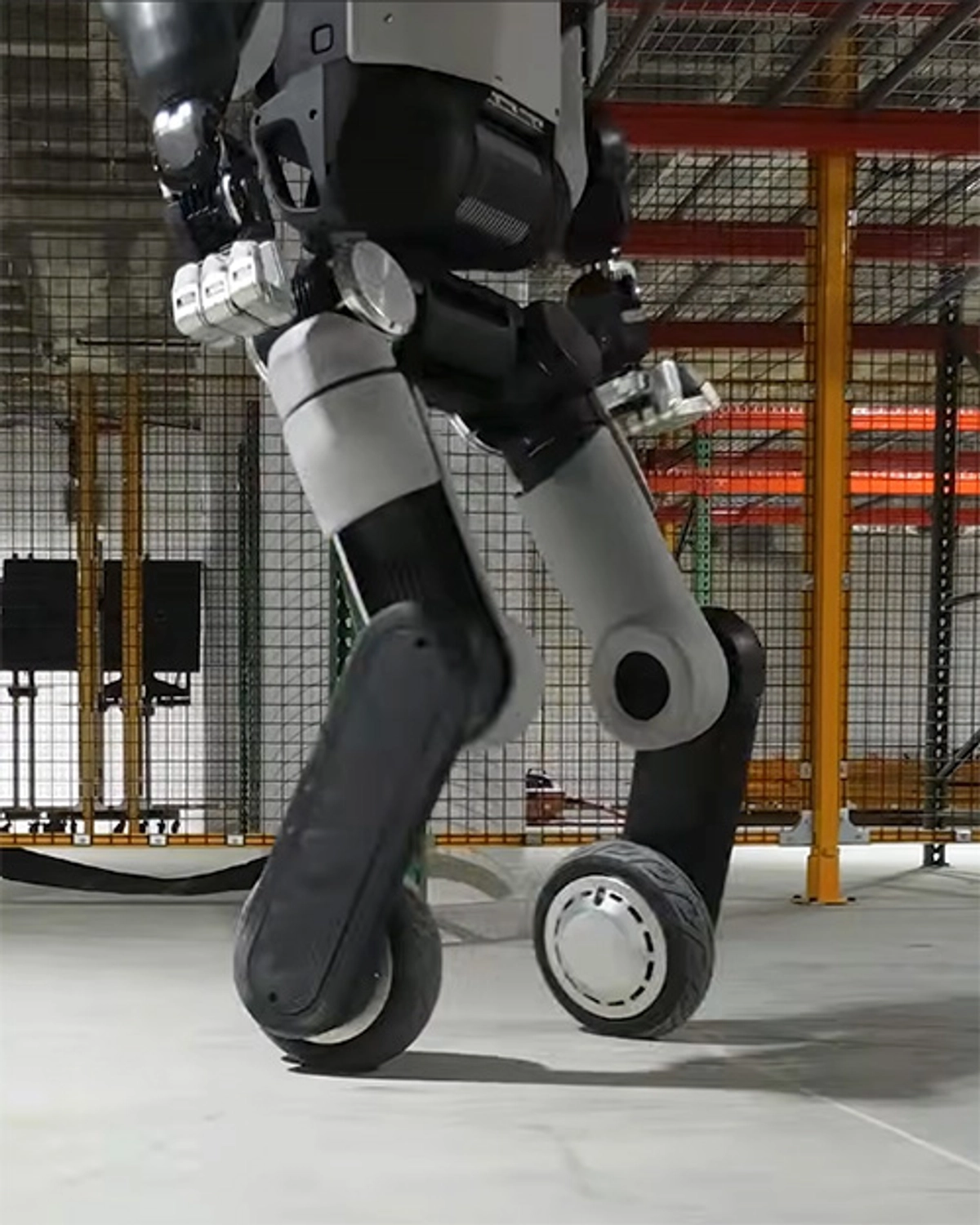
The hardware change was surprisingly small. A single custom adapter bolts an ordinary, off-the-shelf scooter rim onto Atlas's existing ankle actuator, the motor unit that normally tilts its foot. According to the company, that adapter was the only new part in the entire build.
Boston Dynamics credits Atlas's design for the easy swap. The robot was built from the start for high-volume production and simple servicing, so the team says fitting the wheels was about as involved as changing a wheel on a bicycle, a useful sign for how quickly parts could be replaced in the field.
Teaching an Ankle to Spin Forever
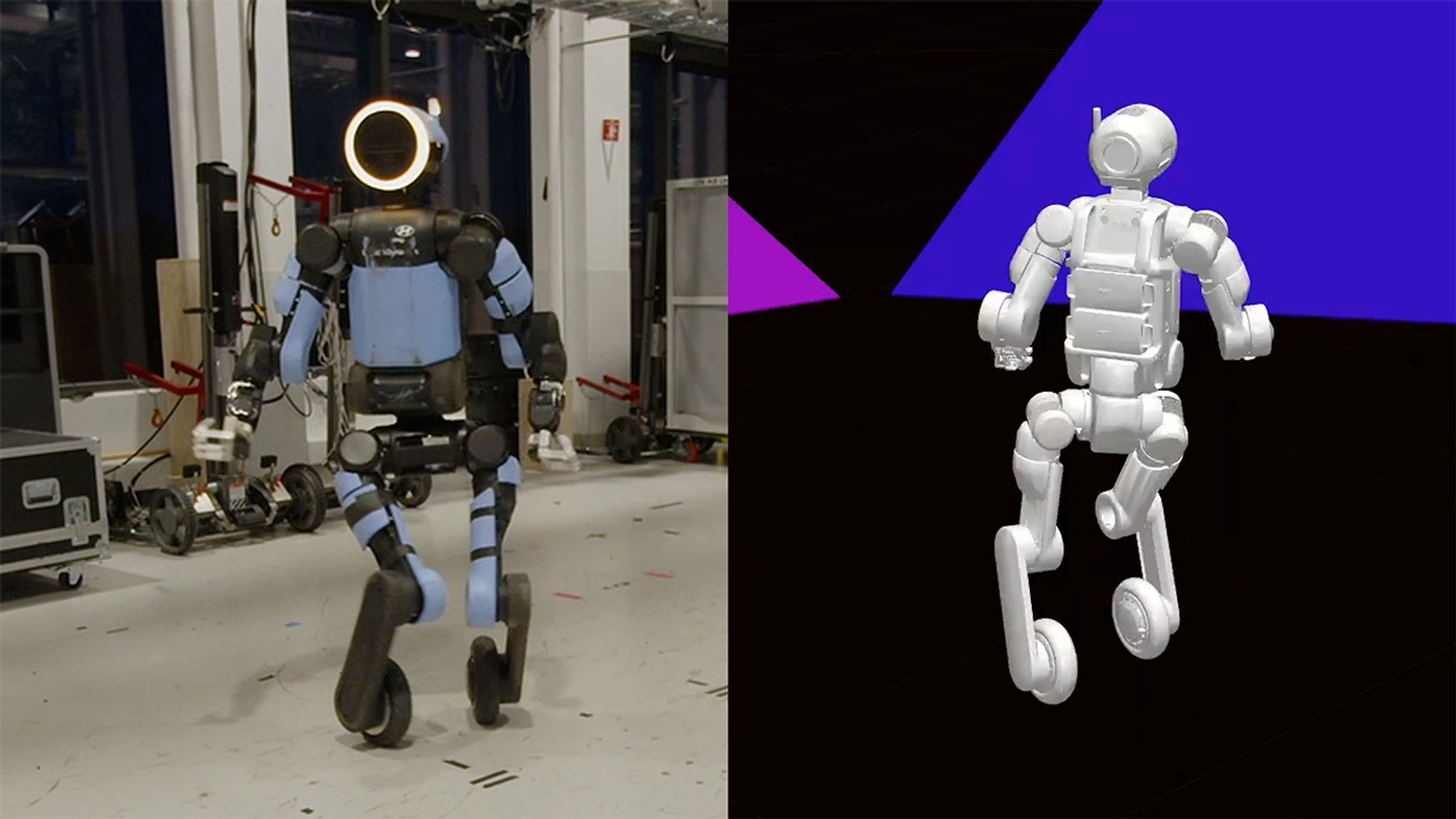
The software trick was just as tidy. Instead of building a new digital model of the robot, the engineers simply described each wheel as an ankle that can keep spinning without stopping. Everything else about Atlas's body stayed the same in the computer model used to train it.
The controller itself was trained with reinforcement learning, a method where a program improves through trial and error, rewarded when it does well. The robot practised across millions of simulated floors before it ever touched a real one, using MuJoCo, a free physics engine shared by Google DeepMind.
Closing the Gap Between Simulation and Reality
The hardest part of this approach is making sure the simulated robot behaves like the real one. If the virtual motors are too perfect, the AI learns moves that the physical machine cannot actually perform. Roboticists call this mismatch the sim-to-real gap, and closing it was the heart of the project.
Andy Wu, the Atlas controls engineer who led the work, specialises in making motors behave predictably. He says the behaviours trained in simulation transferred to the hardware almost perfectly, which he credits to modelling the real motors closely instead of treating them as ideal parts that never strain or slow down.
Tricks the Robot Worked Out on Its Own
Some of the moves came from a library of human motion capture, recordings of real people moving. Wu deliberately picked clips with lots of foot sliding, guessing that wheels would change how the robot handled them. The jumping 360 spin, copied from a human performer, worked on the first try, he says.
The side dash was the bigger surprise. Where a person would skid their feet sideways during a hop, the AI learned without being told to steer and roll the wheels through the move instead. Boston Dynamics describes these as emergent behaviours, skills that appear from training rather than being programmed by hand.
What This Means for the Everyday Atlas
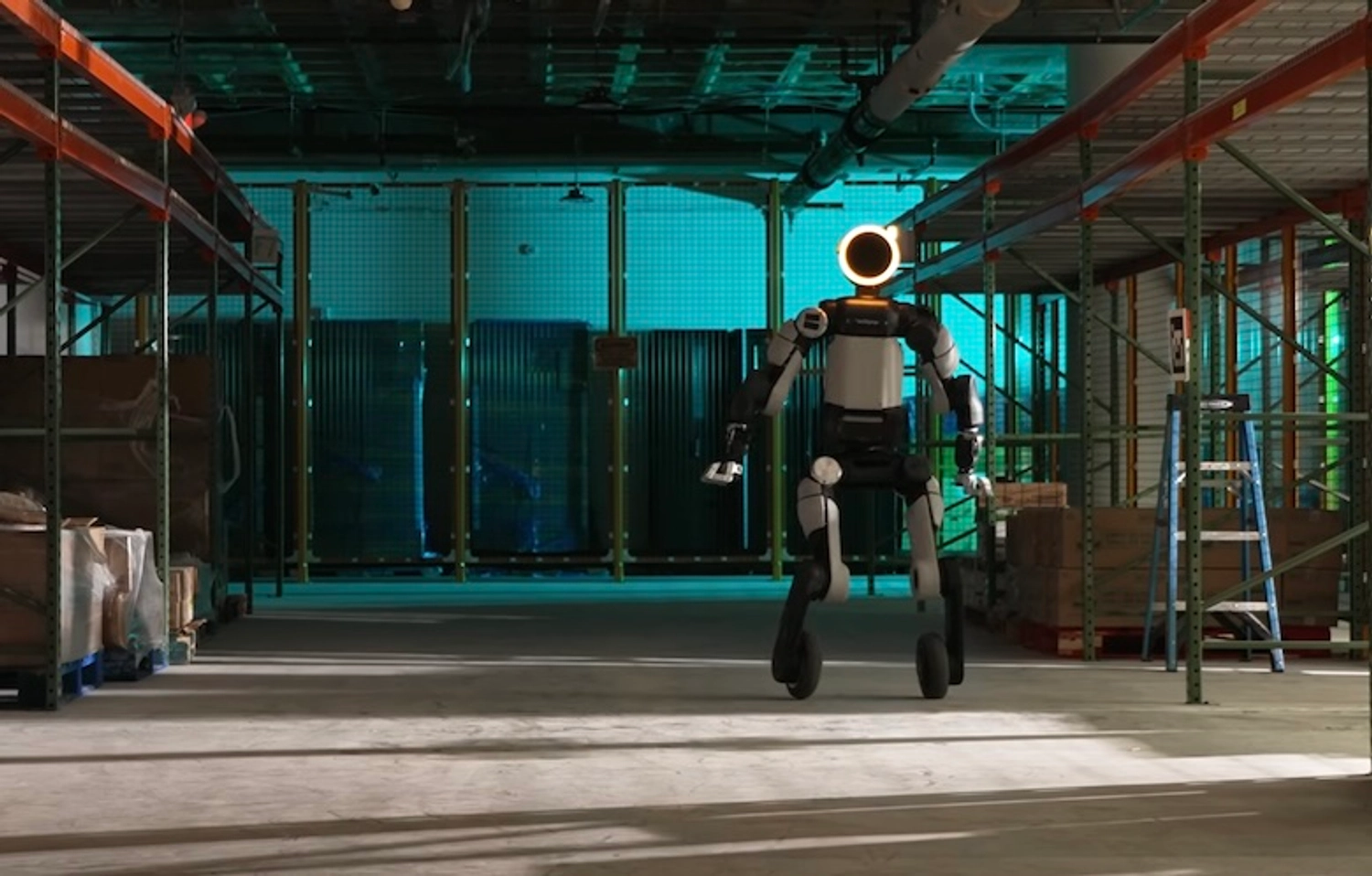
For people who will never see a wheeled Atlas, the payoff is reliability. The company says pairing accurate motor models with whole-body learning makes the robot's control system tougher when things go wrong and widens the range of tasks it can safely attempt in factories and warehouses.
That claim comes from Boston Dynamics itself, and the company has not published measured performance figures, such as top speed or energy use, from the experiment. What it has shown is video of the robot in action alongside an engineer's account of how the system was built and trained.
Next Up: Robots That Cope When a Motor Fails
Wu says his next project is already under way: teaching Atlas to respond sensibly when one of its actuators stops working properly. The idea is to let reinforcement learning discover fallback behaviours on its own, much as it invented the rolling side dash without human instruction.
That work matters because a humanoid working long shifts will eventually suffer a worn or failing joint. A robot that can limp safely to a stop, or finish a task on reduced power, is far easier to trust around people than one that simply freezes or falls when a single part gives out.
Sources
Related Articles
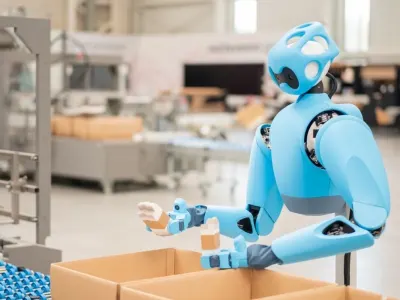
Swiss Startup Embodied AI Unveils AIR, a Humanoid That Learns Factory Jobs on the Shift

Xinhua and UBTECH Unveil Xinyan and Xinyu, Humanoid Robot News Anchors Designed by Zhang Yimou

UBTECH and China Telecom's Device Arm Aim to Put 100,000 Humanoid Robots on the Market
Related Comparisons
Compare Atlas (Electric 2025) with similar robots
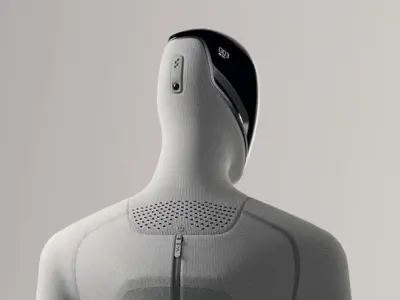
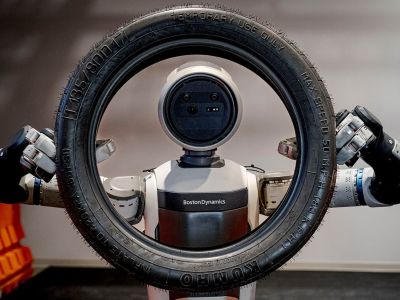
Figure 03 vs Atlas (Electric 2025)
Figure 03 from Figure AI vs Atlas from Boston Dynamics: runtime, charging, lifting, hands and safety compared, with a clear pick by job.

Optimus vs Atlas (Electric 2025)
In-depth comparison of Optimus and Atlas (Electric Atlas, 2025), covering hardware capabilities, teleoperation, and enterprise readiness.
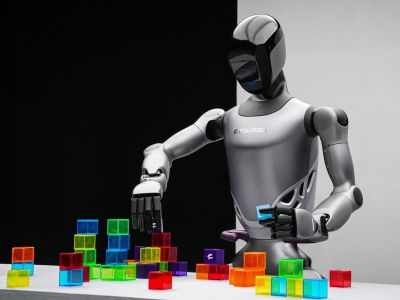
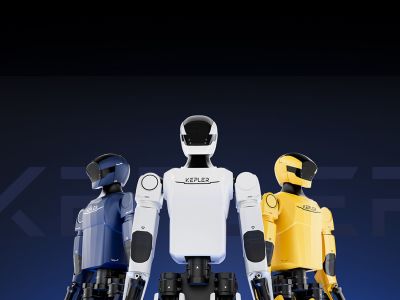
GR-2 vs Forerunner K2
Fourier GR-2 vs Kepler Forerunner K2: payload, battery life, hands and software compared, with a clear pick for labs and for factories.
Walker S1 vs Walker S2
Walker S1 vs Walker S2 from UBTECH: speed, battery swap, sensors and software compared, with a clear pick for each factory need.
Learn More About This Robot
Discover detailed specifications, reviews, and comparisons for Atlas (Electric 2025).
View Robot Details →