Walker S1 vs Walker S2 at a glance
Both Walker S1 and Walker S2 are sold through a sales quote. Walker S2 is quicker, with a top speed of 2 m/s versus 1.4 m/s for Walker S1. Walker S1 is priced at $50,000–$150,000 and Walker S2 at $120,000, so their price ranges overlap.
| Key specs | Walker S1 | Walker S2 |
|---|---|---|
| Price | $50,000–$150,000 | $120,000 |
| Height | 172 cm | — |
| Weight | 76 kg | 73 kg |
| Top speed | 1.4 m/s | 2 m/s (stronger) |
| Runtime | — | 2 hours |
| Degrees of freedom | 41 | — |
| Payload | 15 kg | 15 kg |
| Availability | Order via sales quote | Order via sales quote |
Last updated:
Which one fits your use?
Based on the uses each robot is built and marketed for. Open a use to see the specs that matter for it.
| Comparing for… | Walker S1 | Walker S2 |
|---|---|---|
| Suited | Suited | |
| Suited | Suited | |
| Not marketed | Suited |
- Only Walker S2 is marketed for hazardous or high-risk work.
- Both suit warehouse and logistics work and factory and manufacturing work, so compare the specs for that use.
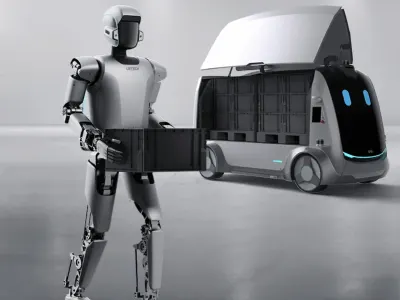
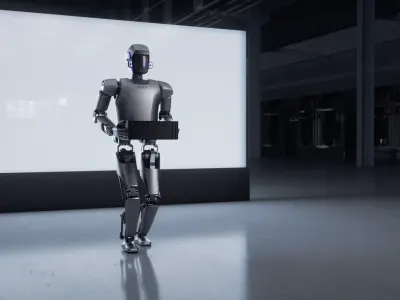
Walker S1 is the 2024 industrial humanoid from UBTECH Robotics, built for factory floors and logistics areas. It has 41 degrees of freedom, meaning 41 separate joint movements, and carries 15 kg continuously. It runs at 5 km/h, plans tasks with a large language model, and finds its way with a two-stage visual mapping system that reads objects as well as walls.
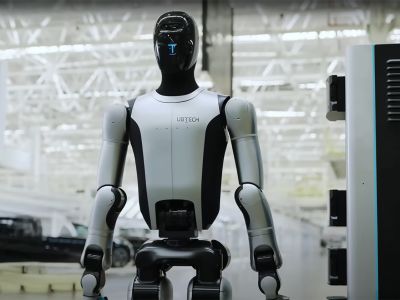
Walker S2 is the 2025 successor from UBTECH Robotics, made for round-the-clock factory work. It walks at up to 7.2 km/h and runs about two hours on two hot-swappable batteries, which the robot can exchange by itself in around three minutes. It adds LiDAR, Wi-Fi 6, a chest touchscreen and a Python and C++ developer kit.
Detailed Analysis
Which should you choose, Walker S1 or Walker S2?
Walker S1
Choose the Walker S2 if you need a robot that keeps working through shifts, because it swaps its own batteries in about three minutes and walks at up to 7.2 km/h. Choose the Walker S1 if you already run it or want the earlier 2024 model with its factory-system links to carts and autonomous vehicles. The S2 is the newer machine by one year, launched in 2025, and adds LiDAR, Wi-Fi 6 and a developer kit. For a new deployment, the S2 is the safer pick.
Which robot walks faster, Walker S1 or Walker S2?
Walker S2
The Walker S2 walks faster, reaching up to 7.2 km/h (2 m/s) against 3 km/h stable walking and 5 km/h running for the Walker S1. That makes the S2's top walking pace faster than the S1's running pace. On a factory floor this shortens trips between a shelf and a workstation, which adds up over a full shift. The S1 is slower but is built for steady, repeatable walking while carrying totes, which suits short, fixed routes. Pace also affects how often the robot reaches a station on time.
How long does each robot run, and can it swap batteries?
Walker S1
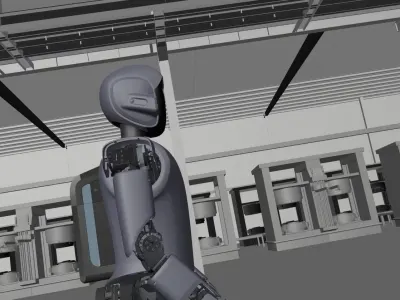
The Walker S2 runs about two hours on a charge and swaps two 48 V hot-swappable battery modules in around three minutes, while the Walker S1 only lists fast charging with no runtime figure. UBTECH says the S2 can pick swap or charging by task priority, so it can work around the clock. A full recharge takes 90 minutes if you prefer to plug in. The S1 has no swap system, so each charge means a pause. For a plant with two or three shifts, that gap decides how many hours of work you actually get.
How much can the Walker S1 and Walker S2 carry?

Walker S2
Both robots are rated at 15 kg, so neither lifts more than the other. The Walker S1 carries 15 kg continuously and lifts a standard tote of 16.3 kg. The Walker S2 handles 15 kg with its waist and arms inside a workspace that reaches from the floor up to 1.8 metres, and its waist turns up to 162 degrees. The real difference is reach: the S2 is designed to bend to the ground and extend high, which suits shelves and bins.
What sensors and navigation do the two robots use?
Walker S1
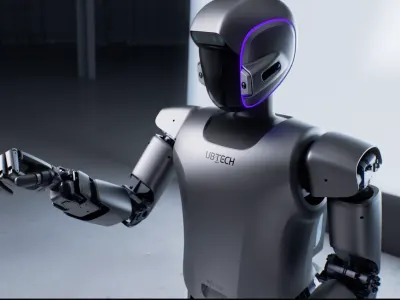
The Walker S2 adds LiDAR and ultrasonic ranging to its cameras, while the Walker S1 navigates with cameras and a two-stage semantic visual mapping system. The S1 carries two RGB-D cameras, two stereo cameras, fisheye cameras and force sensors in both wrists. The S2 uses dual binocular cameras, depth LiDAR and motion sensors in the torso and feet. LiDAR measures distance with laser light and works in poor lighting, so the S2 copes better with changing factory conditions. The S1 reads objects and rooms well, but it lists no laser-based ranging.
Which robot is easier to connect and program?

Walker S2
The Walker S2 is easier to connect, with Wi-Fi 6, Bluetooth 5.2, optional 5G, Ethernet and a REST interface plus a Python and C++ developer kit, while the Walker S1 lists Gigabit Ethernet and USB 3.0 only. The S1 runs UBTECH's ROSA 2.0 framework with large-language-model task planning and links with factory management systems and autonomous carts. The S2 runs a real-time Linux system with BrainNet 2.0 and Co-Agent software, plus a web dashboard, so teams can write their own tasks.
Is the Walker S2 safer around people?
Walker S1
The Walker S2 lists more safety features, with emergency-stop buttons on the front and back, soft-skin covers and proximity sensors that detect people nearby. The Walker S1 lists one emergency-stop button, force sensing in the wrists and ankles, and touch sensing in the hands. Both belong in a fenced industrial area. The S2's soft covers reduce the harm from light contact, and its proximity sensing helps it stop before a collision, which matters for mixed teams. Check each plant's own safety rules before removing any fence.
Do the Walker S1 and Walker S2 work in teams?

Walker S2
Yes, both can be coordinated, but they do it differently. The Walker S1 is described as fully autonomous, with the BrainNet system tying it into factory management, autonomous carts and logistics vehicles. The Walker S2 supports multi-robot coordination and swarm task execution, runs fully on its own, and falls back to remote supervision through a secure web interface. Fleet operators will find the S2's dashboard and remote option easier to manage across many robots. Smaller sites with one or two robots may not notice the difference.
Capabilities & Operational Tasks
Head-to-head comparison of what Walker S1 and Walker S2 can do, their applications, and capabilities.
What Can Walker S1 & Walker S2 Do?
1612 tasks listed for both, 0 only for Walker S1, 4 only for Walker S2.
Both Walker S1 and Walker S2
12Only Walker S2
4Technical Specifications
Walker S1 and Walker S2 differ on 37 of the 38 specifications listed for both.
Manipulation & Load Capacity
3 Comparative Metrics
Kinematic Architecture & Dexterity
4 Comparative Metrics
Energy & Power Management
8 Comparative Metrics
Frequently Asked Questions
Does the Walker S2 have a developer kit that the Walker S1 lacks?
The Walker S2 lists a Python and C++ developer kit with a REST interface and a web dashboard. The Walker S1 runs UBTECH's ROSA 2.0 framework and lists no public developer kit.
Can the Walker S2 change its own battery?
Yes. UBTECH says the Walker S2 swaps its own battery autonomously in about three minutes without human help or shutdown. The Walker S1 has no battery swap system listed.
Which robot is safer to work next to people?
The Walker S2 lists emergency stops front and back, soft-skin covers and proximity sensors. The Walker S1 lists one emergency stop and force sensing. Both are meant for fenced industrial zones.
Is the Walker S2 more autonomous than the Walker S1?
Both run without constant control. The Walker S1 is listed as fully autonomous, while the Walker S2 runs tasks on its own and adds teleoperation as a fallback for exceptions.
How do the Walker S1 and Walker S2 find their way around a factory?
The Walker S1 uses two-stage semantic visual mapping from cameras. The Walker S2 fuses camera mapping with LiDAR and ultrasonic ranging, which helps in changing light and crowded spaces.
Do the Walker S1 and Walker S2 have hands that can grip tools?
Both are built for handling totes and parts. The Walker S1 has touch sensing in the hands, and the Walker S2 carries 15 kg with its arms and waist. UBTECH lists no grip details for either robot.
Can I buy Walker S1 or Walker S2 today?
Both Walker S1 and Walker S2 are sold through a sales quote.
Which costs less, Walker S1 or Walker S2?
Their prices are close: Walker S1 is listed at $50,000–$150,000 and Walker S2 at $120,000.
Which uses is each robot marketed for, Walker S1 or Walker S2?
Only Walker S2 is marketed for hazardous or high-risk work. Both suit warehouse and logistics work and factory and manufacturing work, so compare the specs for that use.
How much does Walker S1 cost?
Walker S1 is listed at $50,000–$150,000.
How much does Walker S2 cost?
Walker S2 is listed at $120,000.
Where can I buy Walker S1?
Walker S1 is sold through UBTECH Robotics's sales team; request a quote.
Where can I buy Walker S2?
Walker S2 is sold through UBTECH Robotics's sales team; request a quote.
Related Comparisons
Walker S1 vs Kaleido 8.0
Walker S1 vs Kaleido 8.0: UBTECH's factory humanoid against Kawasaki's robust bipedal humanoid, compared on size, mobility, sensors, AI and best uses.

Walker S1 vs AgiBot G2
Walker S1 vs AgiBot G2: UBTECH's factory humanoid against AgiBot's wheeled precision-assembly humanoid, compared on size, mobility, sensors, AI and best uses.
Walker S1 vs Walker Tienkung
Walker S1 vs Walker Tienkung: UBTECH's factory humanoid against UBTECH's full-size research humanoid, compared on size, mobility, sensors, AI and best uses.

Walker S1 vs Elf-Xuan 2.0
Walker S1 vs Elf-Xuan 2.0: UBTECH's factory humanoid against AheadForm's lifelike-face humanoid, compared on size, mobility, sensors, AI and best uses.
Verdicts reflect our research and opinion. Confirm specifications with the manufacturer before buying.