UBTECH’s U1 Series pushes humanoids toward teleoperation-first companionship
Robot Details
U1 Series • UBTECH RoboticsPublished
June 11, 2026
Reading Time
3 min read
Author
Origin Of Bots Editorial Team
A new humanoid bet
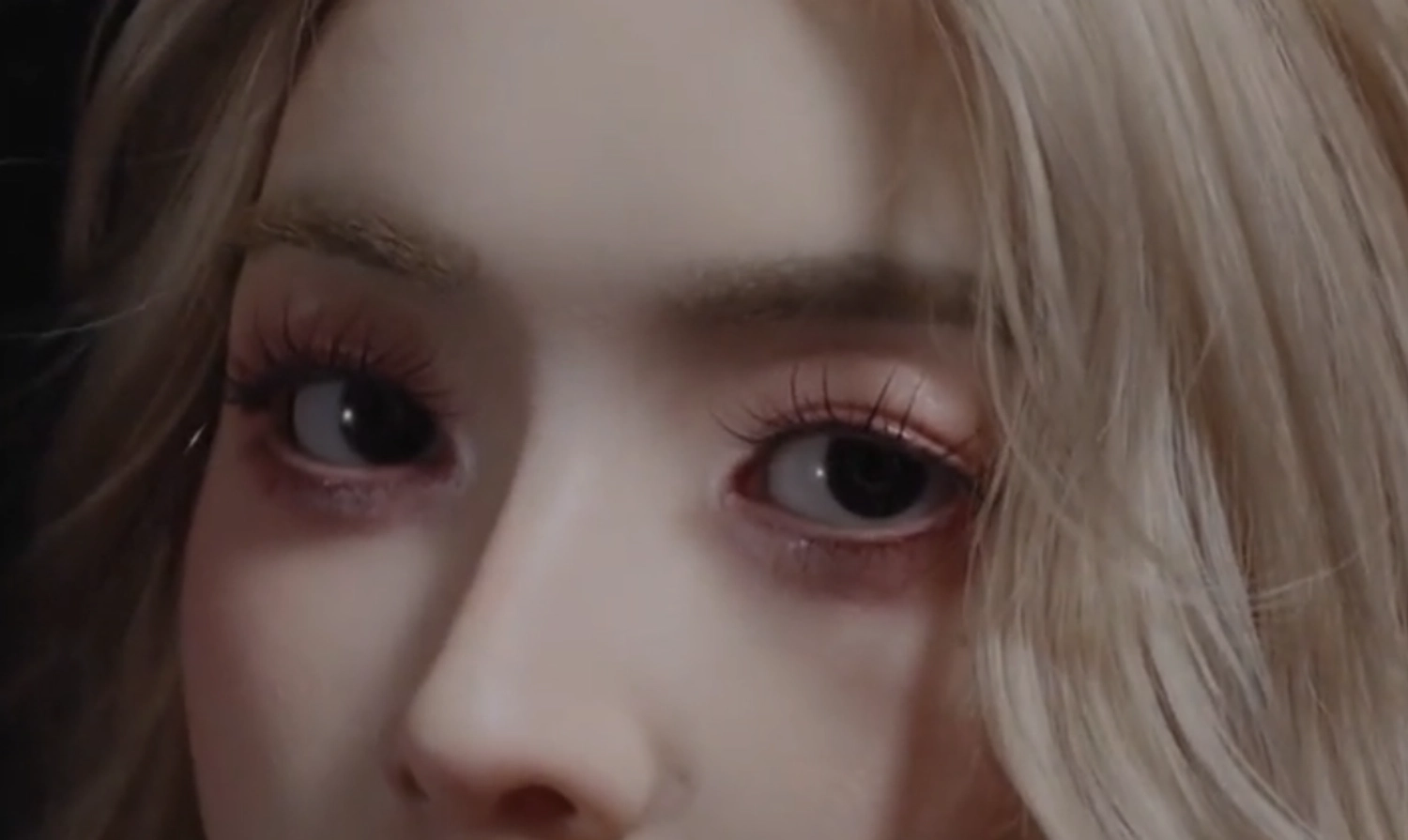
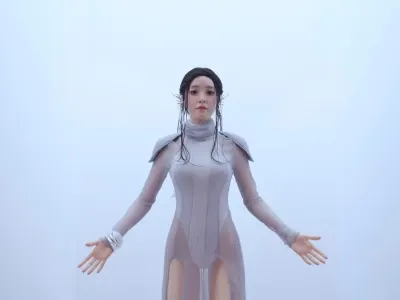
UBTECH Robotics has moved the U1 Series into public view with pre-sales and a planned full unveiling on June 30, positioning the line as a consumer-facing humanoid built around emotional interaction and lifelike presence rather than industrial lifting. The broader challenge it addresses is familiar across humanoids: how to make full-body motion, balance, and human-centered interaction feel natural enough for real-world use in shared spaces.
Why it stands out
What distinguishes U1 is not just its humanoid form, but the way UBTECH is packaging that form for human interaction: a highly customized appearance, locally encrypted memory, and an emotional growth model intended to support long-term personalization. The series also appears aimed at short, controlled sessions rather than continuous work, which fits a teleoperation-first model more than a fully autonomous one. That matters because the most difficult part of humanoids is no longer merely walking, but making motion, presence, and responsiveness feel coherent in close proximity to people. U1’s pitch is less about replacing labor than about making embodied interaction commercially legible. U1 is more significant as a human-interface test case than as a labor robot.

How it works
In category terms, the technical flow is straightforward: human motion input, likely from operator control or guided interaction, is processed by the robot’s AI stack, then translated into joint actuation with balance correction as it moves through a space. That chain is what enables humanoids to imitate posture, recover stability, and preserve expressive motion while remaining upright. The available reporting suggests UBTECH is emphasizing onboard interaction software and localized memory, which would support a more personalized front end even if the underlying movement remains tightly constrained.
Home interaction first
The clearest deployment scenario is a controlled home or reception setting where the robot is expected to greet, respond, and maintain a social presence rather than complete physically demanding work. In that environment, the value lies in natural-looking movement, recognizable human scale, and repeatable interactions that do not require open-ended autonomy. The pre-sale framing suggests U1 is being positioned for exactly that kind of human-centric space, where teleoperation and scripted assistance can coexist with limited autonomy.

Specs as enablers
Reported materials describe the U1 Series as a full-size humanoid with roughly human proportions, estimated at about 170 x 45 x 30 cm, which supports its use as a socially legible, room-scale robot. Its legged, bipedal mobility is the key enabler for navigating spaces designed for people, while the likely sensor stack, including cameras, depth sensing, LiDAR, and inertial sensors, would support indoor localization and balance control. The software layer is described as a proprietary UBTECH stack with possible ROS or ROS2 integration, which would make motion, perception, and interaction development more practical for structured deployments.
Rivals Edge Check
| Robot | Key Advantage | Where U1 Series Wins | Target Use |
|---|---|---|---|
| Honor D1 (Lightning) | Likely stronger emphasis on dynamic motion and performance-oriented humanoid capabilities | U1 offers a more consumer-facing, emotionally framed interaction model | Human-centered social interaction |
| Honor A1 | Likely positioned for broader humanoid mobility and general-purpose service tasks | U1’s customization and companionship angle are more specific | Reception and guided interaction |
| Walker C1 | Likely better aligned with established service or industrial humanoid workflows | U1’s lifelike presentation is aimed at closer social acceptance | Assisted service in shared spaces |
| NIX | Likely differentiated by its own humanoid mobility and interaction profile | U1 appears more tightly marketed around emotional companionship | Personalized service scenarios |
What the market signals
UBTECH’s U1 rollout signals that the humanoid market is testing a shift away from pre-programmed motion libraries and toward teleoperation-first systems that can be personalized for close-range interaction. That is a notable commercial pivot because it lowers the burden of full autonomy while still using the humanoid form factor as the product’s main value proposition. If this model gains traction, the next competitive frontier may be less about who can build the most capable walker and more about who can package embodied presence in a way customers will actually buy.
Explore Humanoids
Related Articles
Kinetix AI’s KaiBot pushes humanoid robots toward tactile teleoperation
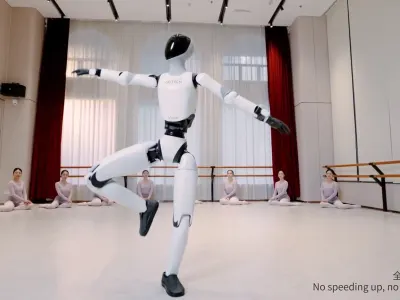
UBTECH’s Walker C1 steps into the public eye as a service humanoid built for human-facing spaces
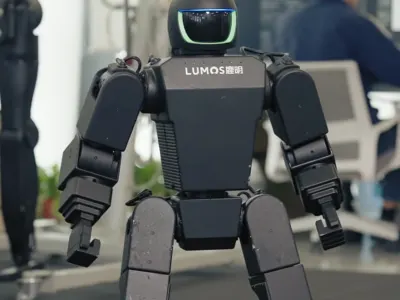
Lumos Robotics opens NIX to developers as compact humanoid demos expand beyond performance
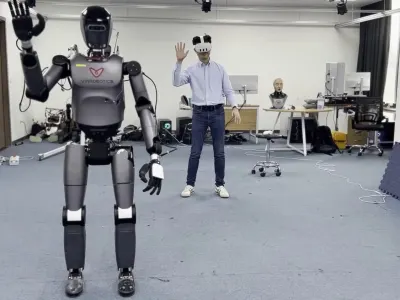
VinDynamics unveils Dyno humanoid robot at ICRA 2026 and Computex Taipei 2026
Related Comparisons
Compare U1 Series with similar robots
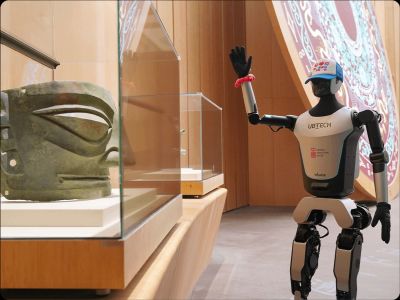
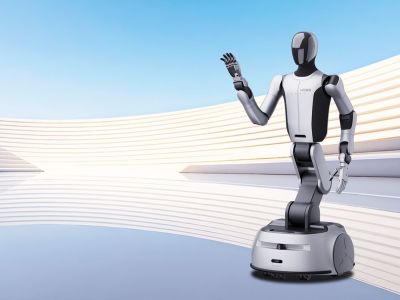
Walker C vs Cruzr S2
Walker C vs Cruzr S2: UBTECH's walking reception humanoid against its wheeled assembly and service humanoid, compared on build, hands and uses.
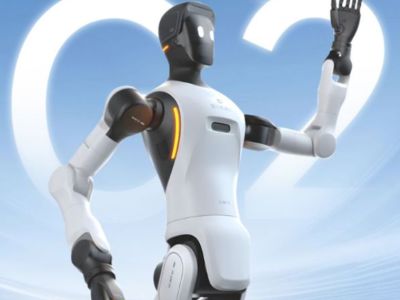
AgiBot G2 vs Cruzr Y1
Compare AgiBot G2 vs Cruzr Y1 for humanoid mobility, dexterity, autonomy, and payload capacity.
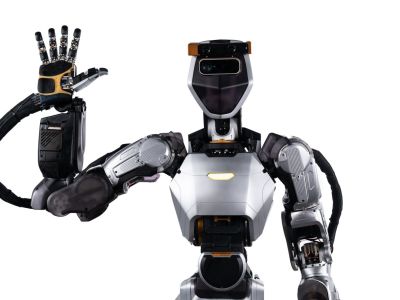
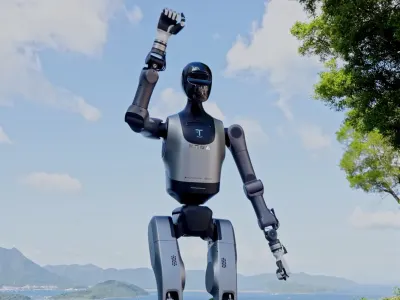
Phoenix vs Walker Tienkung
Compare Phoenix and Walker Tienkung. Detailed analysis of navigation, sensors, and speed.
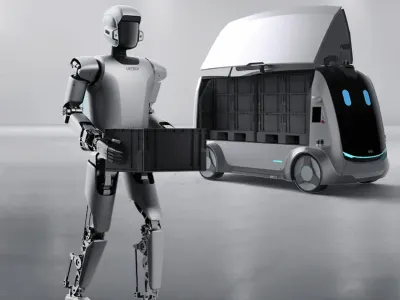
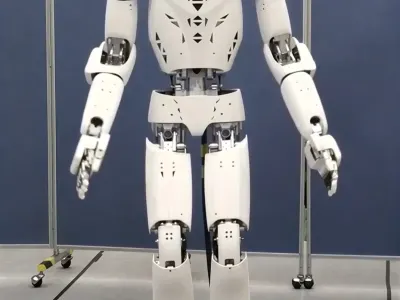
Walker S1 vs Kaleido 8.0
Walker S1 vs Kaleido 8.0: UBTECH's factory humanoid against Kawasaki's robust bipedal humanoid, compared on size, mobility, sensors, AI and best uses.
Learn More About This Robot
Discover detailed specifications, reviews, and comparisons for U1 Series.
View Robot Details →